
Lamborghini Temerario: History, Specs, V8 Hybrid & Performance
Explore the Lamborghini Temerario's history, 920 CV V8 hybrid powertrain, performance, transmission, Spyder, Alleggerita and GT3 variants.
HEAD-TO-HEAD MUSCLE CAR VS COMPARISON
Compare 0-60, peak horsepower, torque, and quarter-mile times across iconic builds.
Lamborghini Temerario: History, Specifications, Variants and Performance
The Lamborghini Temerario is a mid-engine plug-in hybrid
sports car manufactured by the Italian automaker Automobili Lamborghini.
Introduced in August 2024, it succeeded the Lamborghini Huracán and became the
second production model in the company's High Performance Electrified Vehicle
(HPEV) lineup, following the V12-powered Revuelto.
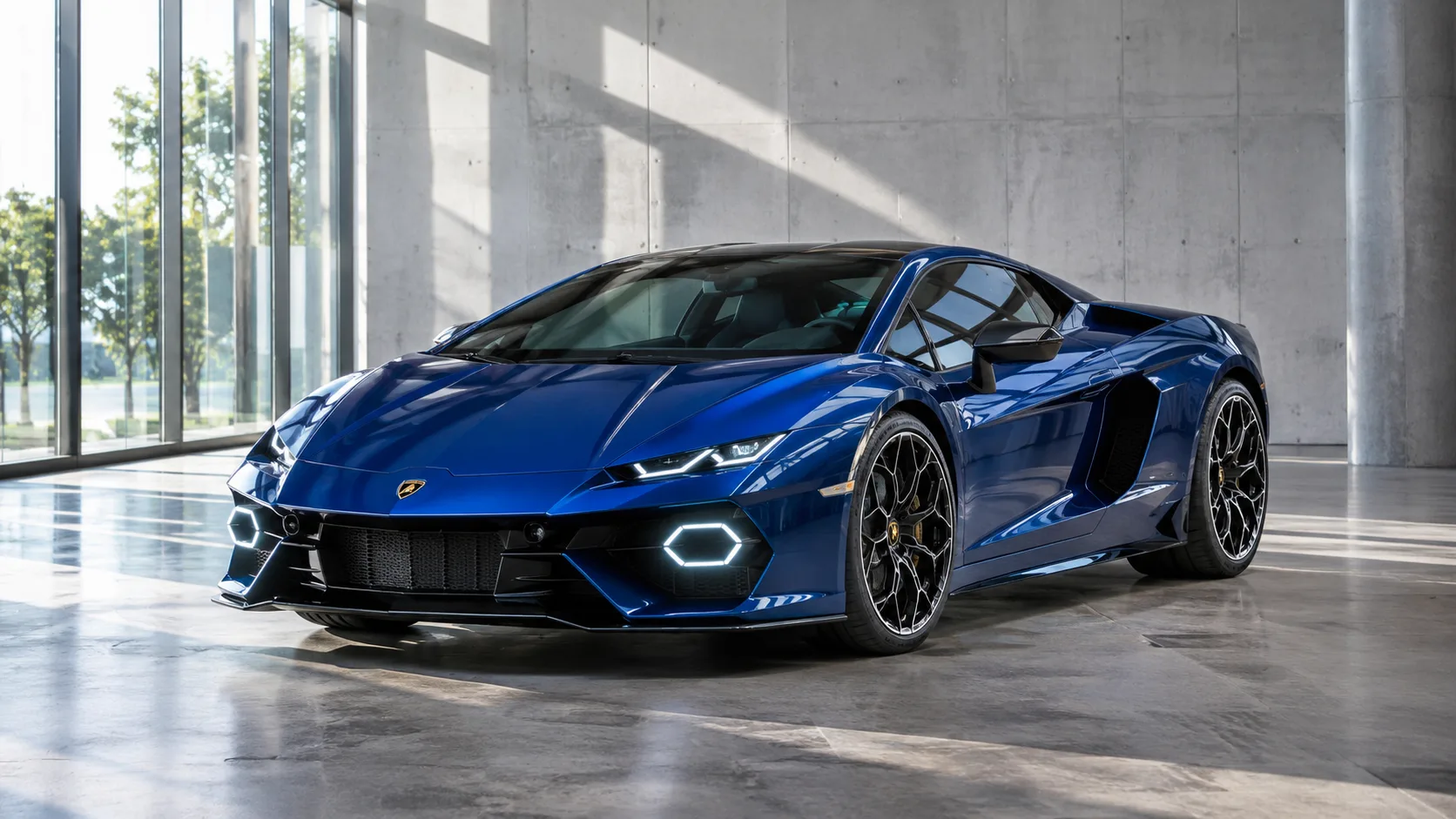
The Temerario uses a newly developed 4.0-liter twin-turbocharged V8 engine
paired with three electric motors. The hybrid powertrain produces a combined
output of 920 CV (677 kW; approximately 907 hp), while the combustion engine
alone produces 800 CV. Lamborghini lists a 0–100 km/h (0–62 mph) acceleration
time of 2.7 seconds and a top speed of 343 km/h (213 mph) for the coupe.
The model represents a major change from the Huracán, which used a naturally
aspirated V10 throughout its production run. With the Temerario, Lamborghini
adopted turbocharging and electrification while retaining a high-revving
internal-combustion engine. The car also introduced a new aluminum spaceframe,
updated vehicle-dynamics technology and a redesigned cabin.
An open-top version, the Temerario Spyder, debuted in November 2026. The
range also includes the lightweight Alleggerita configuration, the
limited-edition Temerario Tricolore and the competition-focused Temerario GT3.
History
Lamborghini developed the Temerario as the successor to the Huracán, its
V10-powered mid-engine sports car. The Huracán had been introduced in 2014 and
became one of the company's major production models, with several versions
including the LP 610-4, Performante, EVO, STO and Sterrato.
The Temerario was announced in July 2024 before its public unveiling at
Monterey Car Week in California on 16 August 2024. Its introduction marked the
replacement of the Huracán's naturally aspirated V10 with a new twin-turbocharged
V8 hybrid system.
The car was developed as part of Lamborghini's Direzione Cor Tauri
electrification strategy. Rather than moving directly to an all-electric
powertrain, the company chose a plug-in hybrid arrangement that combines a
combustion engine with electric motors.
The Temerario also marked the return of a V8-powered mid-engine Lamborghini
sports car. The company's previous mid-engine V8 production model was the
Jalpa, whose production ended in 1988.
Lamborghini presented the Temerario as a new model rather than a heavily
revised version of the Huracán. Its engine, chassis architecture, hybrid system
and body structure were developed around a different technical package.
Name
The name Temerario follows Lamborghini's long-standing practice of
naming its cars after famous fighting bulls or figures associated with
bullfighting.
According to Lamborghini chairman and CEO Stephan Winkelmann, Temerario was
the name of a fighting bull that appeared in 1875. The Spanish and Italian word
temerario can be translated as "reckless,"
"daring" or "fearless," depending on context.
The name therefore continues a tradition established by earlier Lamborghini
models such as Miura, Espada, Islero, Urraco and Murciélago, many of which were
named after bulls or bullfighting history.
Design
The Temerario was designed by Lamborghini Centro Stile, the company's
in-house design department. Its exterior combines the brand's angular styling
with a more compact and sculpted body shape.
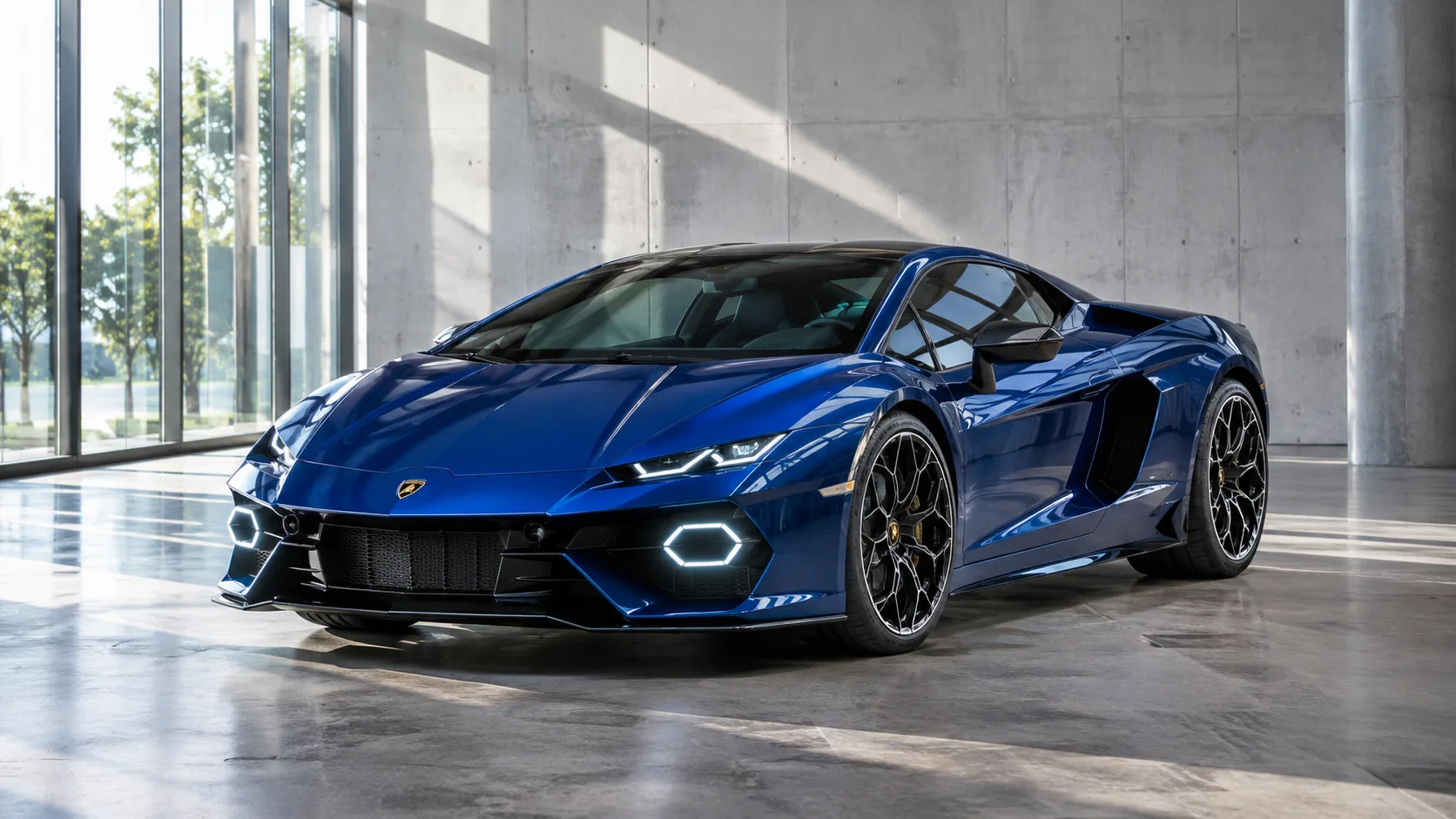
At the front, the car features a low nose, narrow headlamp units and
distinctive hexagonal daytime running lights. Large openings in the front
bumper help manage airflow and supply cooling air to the vehicle's systems.
The side profile is defined by short overhangs, a low roofline and large air
intakes positioned behind the doors. These openings direct air toward the
engine and cooling systems. The body also incorporates sculpted surfaces
designed to guide airflow along the sides and toward the rear.
At the back, the exposed engine area forms a prominent part of the design.
Lamborghini uses a functional rear spoiler and aerodynamic components to manage
airflow and generate downforce.
The overall design is different from that of the Huracán. Although both cars have a mid-engine layout, the Temerario has its own body structure, lighting design, proportions and aerodynamic details.
Interior
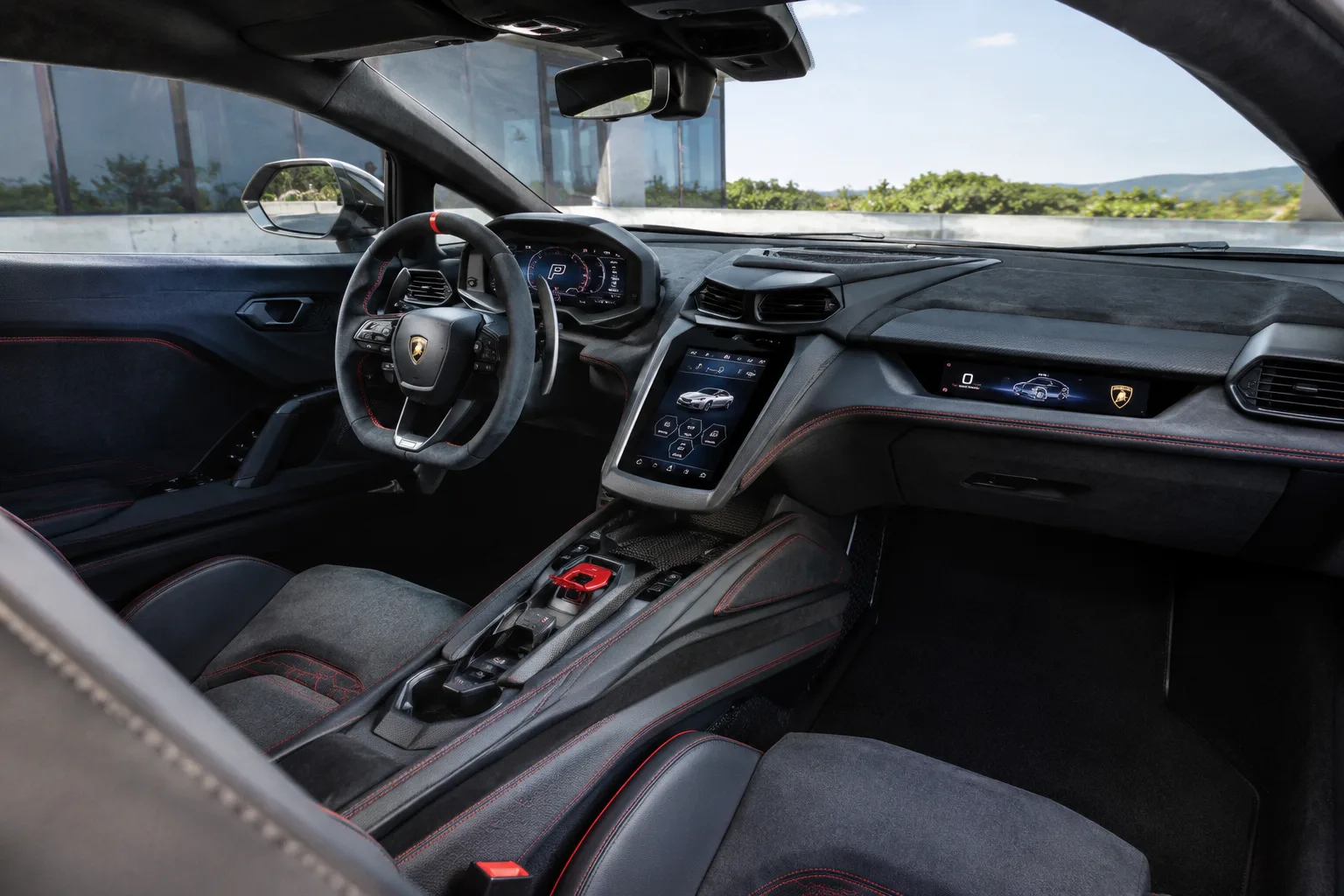
The Temerario has a driver-focused cabin with a digital instrument display,
central infotainment screen and a separate passenger display. The arrangement
gives the driver access to vehicle information while allowing the front passenger
to view selected performance and navigation data.
The steering wheel incorporates controls for driving modes and vehicle
functions. The dashboard and center console use angular shapes that follow the
exterior design language.
Lamborghini's interface is designed around its "Feel like a pilot"
concept. The displays provide information about the vehicle's powertrain,
driving settings and other functions without relying entirely on a single
central screen.
The cabin also includes connectivity features and storage areas intended to
make the car more practical for regular road use. Compared with the Huracán,
the Temerario was developed with greater attention to interior space and
everyday usability.
Platform and Chassis
The Temerario is built around an all-aluminum spaceframe. Lamborghini
developed the structure to accommodate the hybrid powertrain while providing
the rigidity required for high-performance driving.
The chassis was designed specifically for the Temerario rather than carried
over unchanged from the Huracán. Its structure incorporates mounting points and
packaging provisions for the V8 engine, electric motors, battery and
transmission.
The car uses a double-wishbone suspension layout. Its chassis and electronic
systems work together with the vehicle-dynamics control software to manage
handling, traction and stability.
The Spyder version uses a revised structure to compensate for the absence of
a fixed roof. Lamborghini states that the Spyder's chassis has improved
torsional and bending stiffness compared with the Huracán Spyder.
Powertrain
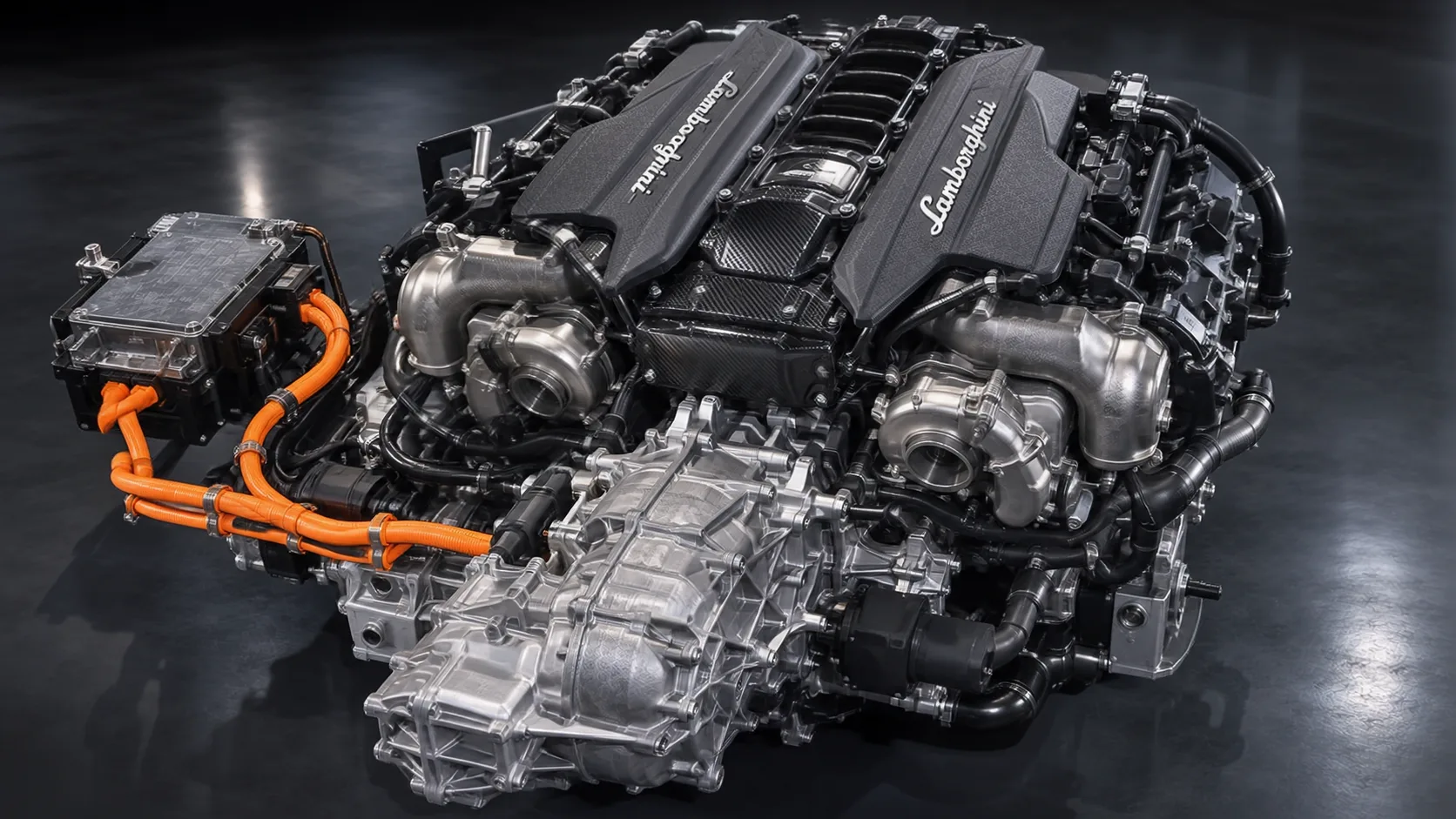
The Temerario is powered by a 3,995.2 cc (4.0-liter) twin-turbocharged V8
engine. The engine was developed specifically for the model and uses a
90-degree cylinder arrangement with a 180-degree flat-plane crankshaft.
The combustion engine produces 800 CV (588 kW) between 9,000 and 9,750 rpm. Its
maximum torque is 730 Nm (538 lb-ft), available between 4,000 and 7,000 rpm.
Lamborghini lists a maximum engine speed of 10,000 rpm. When Launch Control
is activated, the engine's limit can extend to 10,250 rpm.
Several components were selected for high-speed operation and reduced
reciprocating mass. These include titanium connecting rods, aluminum cylinder
heads and finger followers with diamond-like carbon (DLC) coatings. The engine
also uses a dry-sump lubrication system.
The two turbochargers are positioned inside the 90-degree V of the engine,
creating a hot-V layout. This arrangement helps package the turbocharging
system within the engine compartment.
Hybrid System
The V8 is supported by three axial-flux electric motors. Two motors are
installed on the front axle, while the third is positioned between the
combustion engine and the transmission.
The front electric motors provide drive to the front wheels, while the V8
and rear electric motor deliver power to the rear axle. This arrangement gives
the Temerario an electrified all-wheel-drive system.
The hybrid system uses a lithium-ion battery with high-specific-power pouch
cells. It supplies energy to the electric motors and allows the car to operate
in electric-only mode under suitable conditions.
The electric motors also contribute to acceleration and power delivery. When
the combustion engine and all three motors operate together, the system
produces a combined output of 920 CV (677 kW; approximately 907 hp) and 800 Nm
of torque.
The difference between the engine's 730 Nm and the system's 800 Nm figures
reflects the separate outputs of the combustion engine and the complete hybrid
powertrain.
Transmission
Power is delivered through an eight-speed dual-clutch transmission.
Lamborghini describes the gearbox as an eight-speed unit and positions it
transversely behind the V8 engine.
The transmission is designed to work with the hybrid powertrain and its rear
electric motor. It provides the gear ratios for the combustion engine while the
electric motors contribute their torque through the hybrid system.
The Temerario uses an electrified all-wheel-drive layout. Unlike a
conventional system that depends entirely on a mechanical connection to the
front axle, the two front electric motors can drive the front wheels
independently.
This configuration gives Lamborghini additional control over power delivery
and traction at the front axle.
Performance
Lamborghini quotes a 0–100 km/h (0–62 mph) acceleration time of 2.7 seconds
for the Temerario coupe. The company lists a top speed of 343 km/h (213 mph).
The manufacturer also gives a braking distance of 32 metres for a stop from
100 km/h.
The engine's high operating speed is one of the defining features of the
car. Its 10,000-rpm limit is unusually high for a turbocharged production V8,
while the electric motors provide additional response during acceleration.
These figures are manufacturer-published specifications. Independent test
results may differ depending on road surface, weather, tires, vehicle
configuration and testing conditions.
Aerodynamics
Lamborghini developed the Temerario's aerodynamic package to balance
downforce, cooling and drag. The front bumper, underbody, side surfaces and
rear spoiler all contribute to airflow management.
The body includes functional air openings and aerodynamic elements designed
to direct air toward the cooling systems and control airflow around the rear of
the car.
Lamborghini states that the Temerario produces 103 percent more aerodynamic
load than the Huracán EVO. With the optional Alleggerita package, the claimed
increase rises to 158 percent compared with the Huracán EVO.
These percentages are manufacturer comparisons and should not be interpreted
as independent measurements.
Driving Modes and Vehicle Dynamics
The Temerario uses Lamborghini Dinamica Veicolo Integrata (LDVI) 2.0 to
coordinate the car's electronic systems and driving characteristics.
The available driving modes include Città, Strada, Sport, Corsa and Corsa
ESC Off. The hybrid system also offers Recharge, Hybrid and Performance
operating strategies.
In Città mode, the car can operate using electric power alone, with output
of up to 190 CV (140 kW), according to Lamborghini.
The system also includes a three-level Drift Mode. It allows the driver to
select different levels of controlled oversteer assistance, depending on the
selected setting.
The combination of driving modes and hybrid strategies gives the driver
different ways to configure the powertrain and electronic systems for urban
driving, everyday roads and track use.
Variants
Temerario Coupe
The coupe is the original body style introduced in August 2024. It uses the
920-CV hybrid powertrain, an eight-speed dual-clutch transmission and
electrified all-wheel drive.
It has a fixed roof and serves as the main body style in the Temerario
range.
Temerario Alleggerita
The Alleggerita package is an optional lightweight configuration intended
for buyers seeking a more track-focused car.
It uses carbon-fiber-reinforced polymer components and other weight-saving
measures. Lamborghini states that the package reduces weight by more than 25 kg
compared with the standard configuration.
The company also claims a 67 percent increase in downforce and a 62 percent
improvement in aerodynamic efficiency compared with the standard Temerario
configuration.
The Alleggerita is a package rather than a separate powertrain variant. Its
main purpose is to reduce weight and improve aerodynamic performance.
Temerario Tricolore
Lamborghini introduced the Temerario Tricolore in August 2026 as a special
edition celebrating Italian identity and the company's heritage.
The model uses distinctive Italian tricolor design elements and special
exterior and interior details. Its position in the range is primarily defined
by its exclusive specification and appearance rather than a separate engine
architecture.
The Tricolore continues Lamborghini's use of special-edition models to mark
important occasions and celebrate aspects of the company's Italian origins.
Temerario Spyder
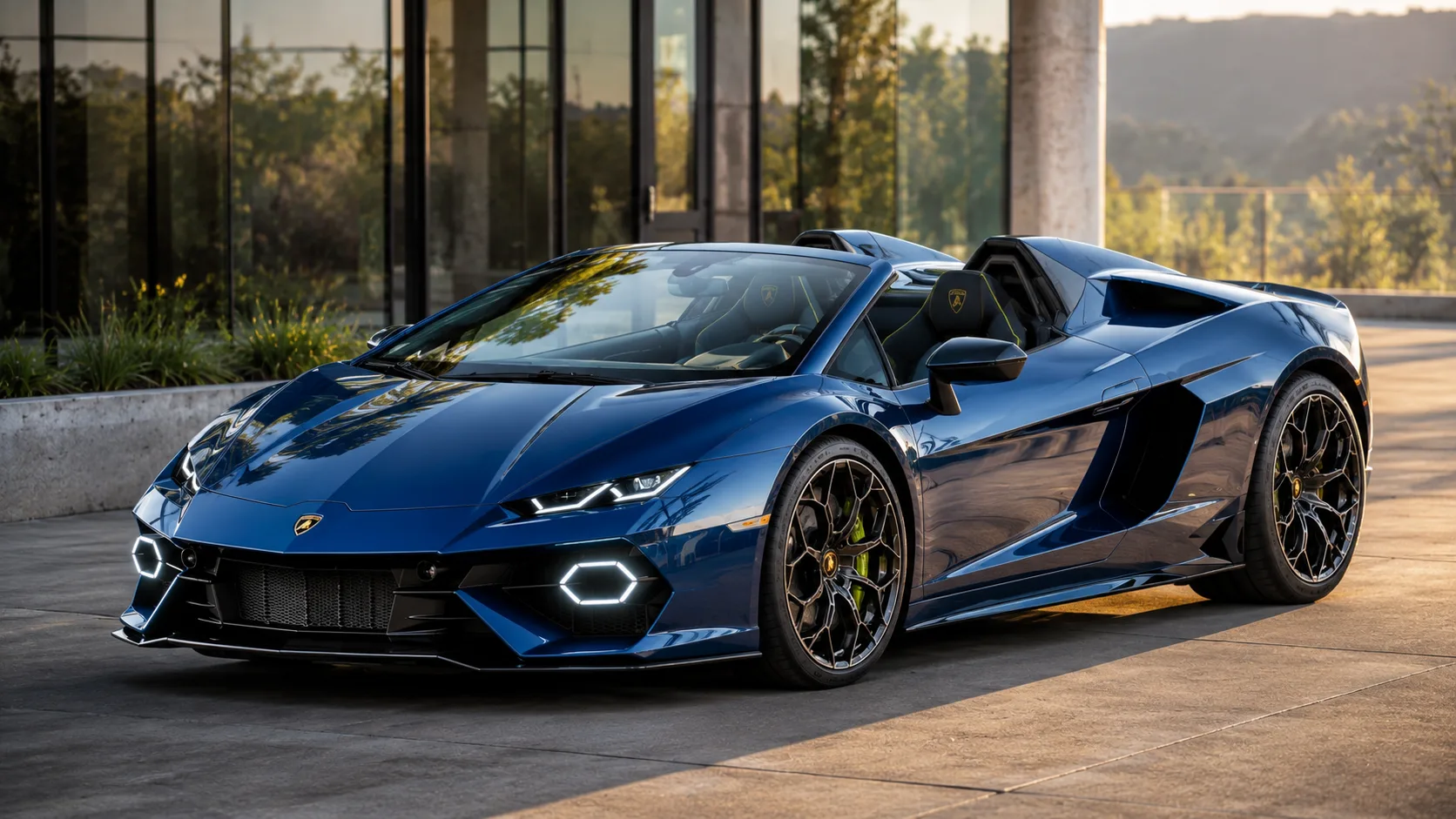
The Temerario Spyder was unveiled on 19 November 2026 in Los Angeles and
Sant'Agata Bolognese. It is the open-top version of the Temerario and retains
the coupe's 4.0-liter twin-turbo V8 and three-motor hybrid system.
The Spyder produces a combined 920 CV (677 kW; approximately 907 hp) and 800
Nm of torque. Lamborghini lists a 0–100 km/h time of 2.8 seconds, a 0–200 km/h
time of 7.3 seconds and a top speed of 343 km/h.
Its most distinctive feature is a fully electric retractable hardtop.
Lamborghini describes it as the first retractable hardtop fitted to one of its
Spyder models. The roof uses ten electric actuators and stores vertically
behind the seats.
An electronically adjustable rear window allows occupants to alter airflow
and the amount of engine sound entering the cabin. The Spyder also includes an
integrated neck warmer with three levels of airflow.
Lamborghini states that the Spyder's all-aluminum spaceframe improves static
torsional rigidity by 6 percent, dynamic bending stiffness by 9 percent and
dynamic torsional rigidity by 6 percent compared with the Huracán Spyder.
At its unveiling on 19 November 2026, Lamborghini listed the Temerario
Spyder as under approval and not yet available for sale.
Motorsport
Temerario GT3
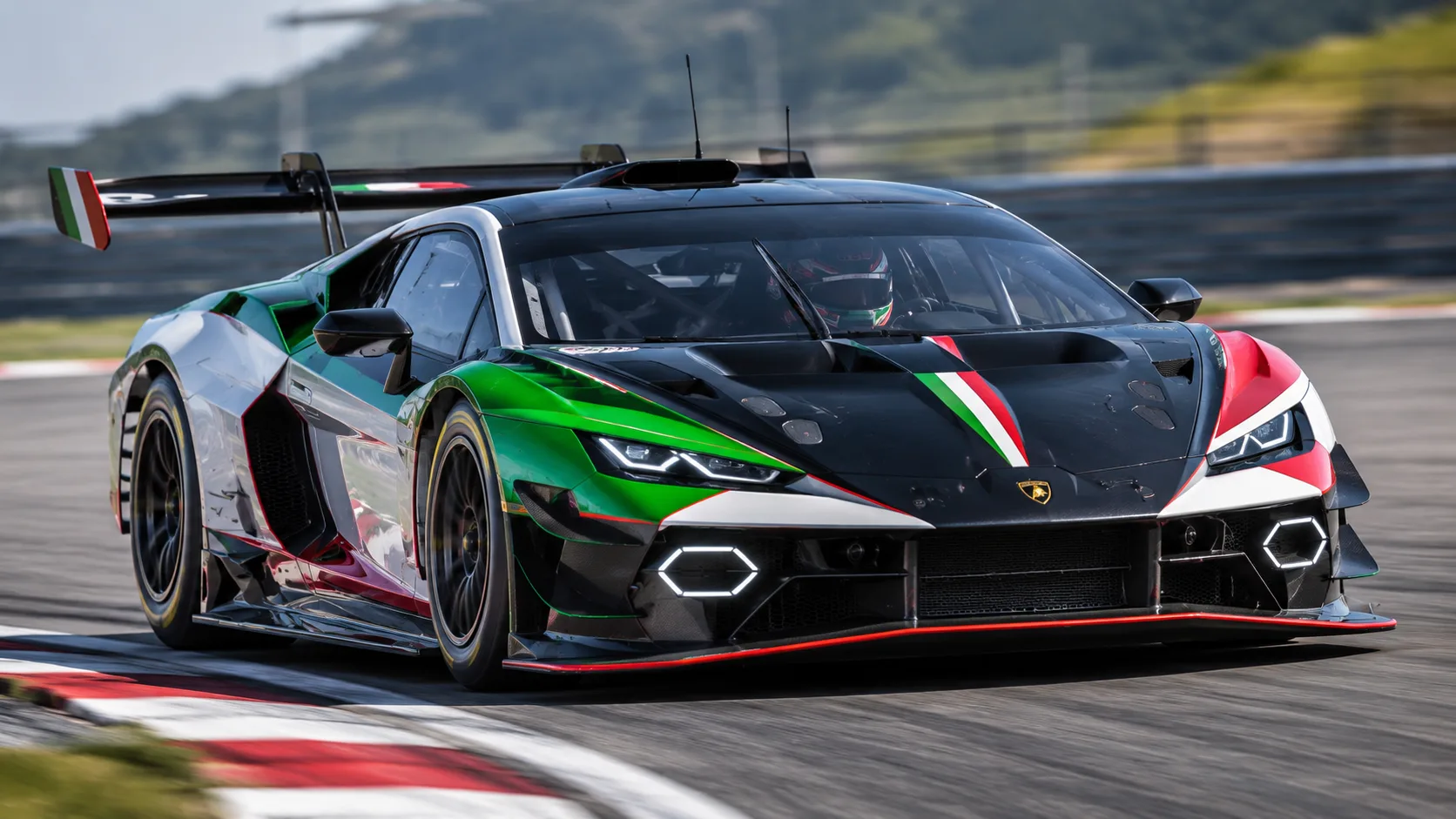
The Temerario GT3 is the racing version developed by Lamborghini Squadra
Corse for customer competition in the GT3 category.
It uses an engine based on the Temerario's 4.0-liter V8 architecture, but
the competition car has a different technical configuration from the road-going
hybrid model. Its powertrain does not use the complete three-motor hybrid
system found in the production car.
The GT3 version was developed to meet the regulations governing the
category. Its engine output and other technical specifications are subject to
competition rules, including Balance of Performance adjustments.
Lamborghini describes the Temerario GT3 as the first GT3 car designed and
developed entirely in-house by its Squadra Corse department. It represents the
company's move from the Huracán GT3 platform to a new V8-based competition car.
Production and Availability
The Temerario was introduced in 2024 as the production successor to the
Huracán. Lamborghini has presented the coupe as part of its HPEV range and has
continued to expand the lineup through special configurations and the Spyder
body style.
The Temerario Spyder made its global debut on 19 November 2026. At the time
of its announcement, Lamborghini stated that the model was under approval and
was not yet available for sale.
Lamborghini has not published a complete production total for the Temerario
in the official model information referenced for this article. For that reason,
no total production figure is stated here.
Technical Specifications
The following table summarizes the manufacturer-published specifications for
the Temerario coupe. Figures for the Spyder are listed separately where they
differ.
|
Specification |
Lamborghini Temerario Coupe |
|
Vehicle layout |
Mid-engine, plug-in hybrid |
|
Engine |
4.0-liter twin-turbocharged V8 |
|
Displacement |
3,995.2 cc |
|
Configuration |
90-degree V8 |
|
Crankshaft |
180-degree flat-plane |
|
Bore × stroke |
90 × 78.5 mm |
|
Compression ratio |
9.3:1 |
|
Combustion engine output |
800 CV (588 kW) |
|
Combustion engine torque |
730 Nm |
|
Combined system output |
920 CV (677 kW; approximately 907 hp) |
|
Combined system torque |
800 Nm |
|
Electric motors |
Three axial-flux motors |
|
Battery |
Lithium-ion, pouch-cell type |
|
Transmission |
Eight-speed dual-clutch |
|
Drivetrain |
Electrified all-wheel drive |
|
Maximum engine speed |
10,000 rpm |
|
Launch Control engine limit |
10,250 rpm |
|
0–100 km/h |
2.7 seconds |
|
Top speed |
343 km/h |
|
Braking, 100–0 km/h |
32 metres |
|
Chassis |
All-aluminum spaceframe |
Temerario Spyder performance figures
|
Specification |
Temerario Spyder |
|
Combined system output |
920 CV (677 kW) |
|
Combined system torque |
800 Nm |
|
0–100 km/h |
2.8 seconds |
|
0–200 km/h |
7.3 seconds |
|
Top speed |
343 km/h |
|
Roof |
Electrically operated retractable hardtop |
|
Roof actuators |
Ten |
Frequently Asked Questions
What replaced the Lamborghini Huracán?
The Lamborghini Temerario replaced the Huracán. It was introduced in August
2024 with a new twin-turbocharged V8 plug-in hybrid powertrain.
How much horsepower does the Lamborghini Temerario produce?
The hybrid system produces 920 CV, equivalent to approximately 907
mechanical horsepower. The V8 engine alone produces 800 CV.
What engine is used in the Temerario?
The Temerario uses a 3,995.2 cc twin-turbocharged V8 engine with a
180-degree flat-plane crankshaft.
Is the Lamborghini Temerario a plug-in hybrid?
Yes. It combines a twin-turbocharged V8 with three electric motors and a
lithium-ion battery.
How many electric motors does the Temerario have?
It has three axial-flux electric motors. Two are mounted on the front axle,
and the third is positioned between the V8 engine and transmission.
What transmission does the Temerario use?
The car uses an eight-speed dual-clutch transmission.
What is the top speed of the Lamborghini Temerario?
Lamborghini lists a top speed of 343 km/h (213 mph) for both the coupe and
Spyder.
What is the Temerario Alleggerita?
The Alleggerita is a lightweight package that uses carbon-fiber components
and other weight-saving measures to improve the car's aerodynamic and
track-focused performance.
What is different about the Temerario Spyder?
The Spyder is the open-top version of the Temerario. It uses a fully
electric retractable hardtop that stores vertically behind the seats and
retains the 920-CV hybrid powertrain.
Is the Temerario GT3 a hybrid race car?
The Temerario GT3 uses an engine based on the road car's V8 architecture,
but its competition powertrain does not use the full three-motor hybrid system
of the production model.
References
1. Lamborghini –
Temerario Official Model Page
2. Lamborghini
– Temerario 2026 Digital Brochure
3. Lamborghini –
Temerario Spyder: Unfiltered Performance, 19 November 2026
4. Lamborghini
– Temerario Spyder Global Debut, 19 November 2026
5. Lamborghini
– Temerario GT3 and HPEV information
6. Car
and Driver – Lamborghini Head of Design on the Temerario
7. MotorTrend
– 2027 Lamborghini Temerario Spyder First Look
Editorial Verification Notes
·
Engine displacement, output, torque,
transmission, battery, performance and chassis information are based primarily
on Lamborghini's published technical material.
·
Lamborghini uses CV as its published power unit.
The approximate 907 hp conversion refers to mechanical horsepower and should
not be confused with 920 hp.
·
The coupe's 0–100 km/h figure is 2.7 seconds;
the Spyder's published figure is 2.8 seconds.
·
Alleggerita aerodynamic and weight figures are
manufacturer-reported comparisons.
·
Spyder availability status reflects
Lamborghini's announcement on 19 November 2026, which described the vehicle as
under approval and not available for sale.
·
No total production figure is included because a
complete official figure was not confirmed in the sources used for this
article.
Information checked against available manufacturer material as of
November 20, 2026.
Have thoughts, dyno data, or build feedback?
Join automotive enthusiasts in the paddock below to debate engineering, lap times, and modifications.
Community Pulse
How does this machine make you feel? Drop your reaction!

VehicleDrugs Editorial
VehicleDrugs Editorial Team
A passionate collective of automotive purists, track drivers, and mechanical engineers uncovering high-octane engineering breakthroughs worldwide.
🏁 Pit Crew Discussions
Drop your telemetry, debate the engineering, or talk track times with fellow petrolheads.
The Pit Lane is Quiet
Be the first driver to drop your opinion on this machine!