Ford vs Ferrari: The Failed Deal Behind the GT40’s Le Mans Revenge
Discover how Ford’s failed attempt to acquire Ferrari led to the GT40, the 1966 Le Mans victory, and one of motorsport’s most famous rivalries.
HEAD-TO-HEAD MUSCLE CAR VS COMPARISON
Compare 0-60, peak horsepower, torque, and quarter-mile times across iconic builds.
Ford vs Ferrari: The Failed Deal Behind the GT40’s Le Mans Revenge
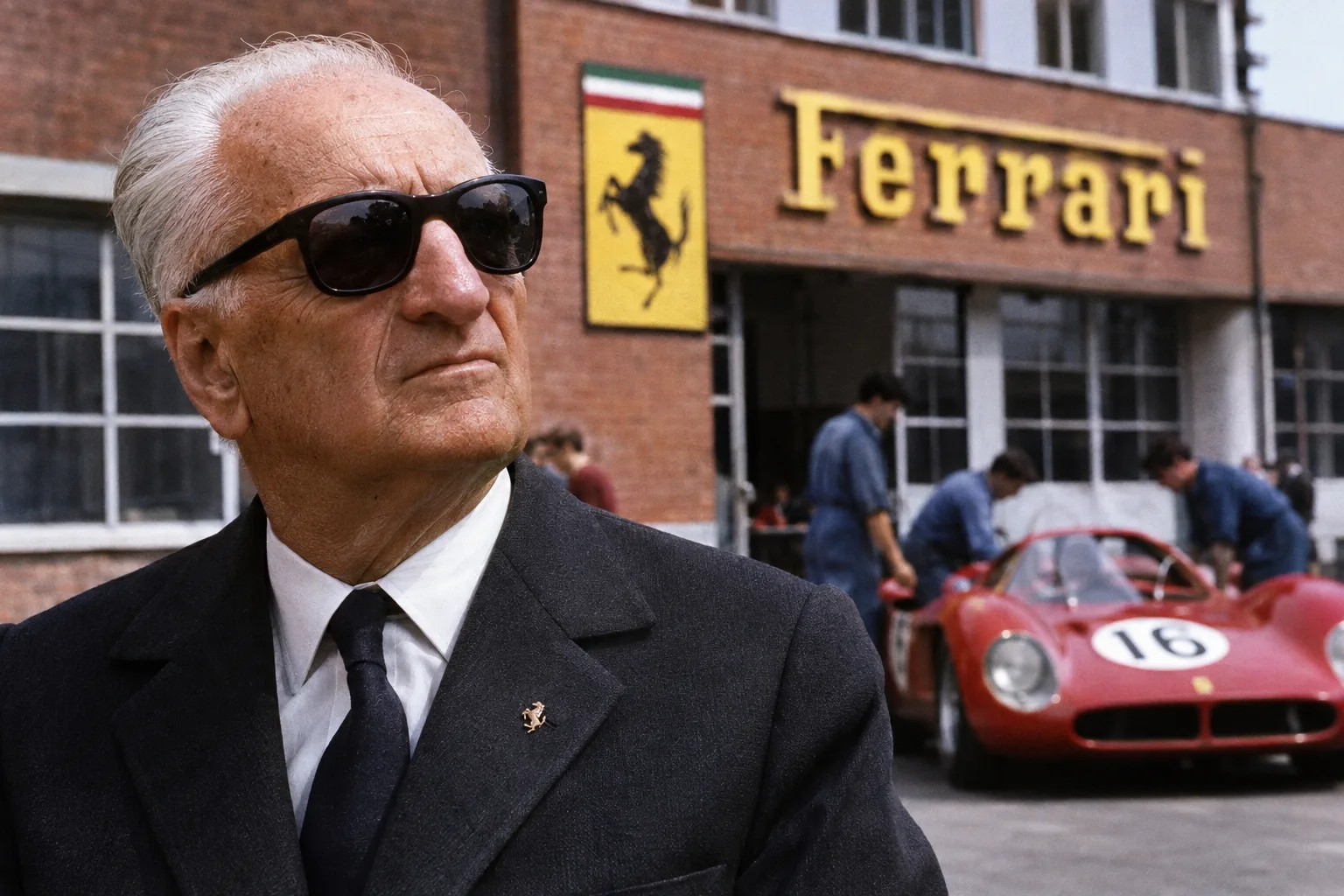
In the spring of 1963, Ford set out to acquire Ferrari. The proposed deal would have brought together two very different automotive powers: an American manufacturer with enormous industrial resources and an Italian company whose reputation had been built through competition.
The negotiations progressed through April and May. However, Enzo Ferrari ultimately withdrew from the proposed agreement. Ferrari’s historical account describes his decision as an effort to preserve the independence of its racing operation.
On May 22, 1963, a newswire announcement confirmed that negotiations between the two companies had been suspended by mutual agreement. Ford’s attempt to acquire Ferrari had failed. The competition between them, however, was only beginning.

Building the Ford GT40
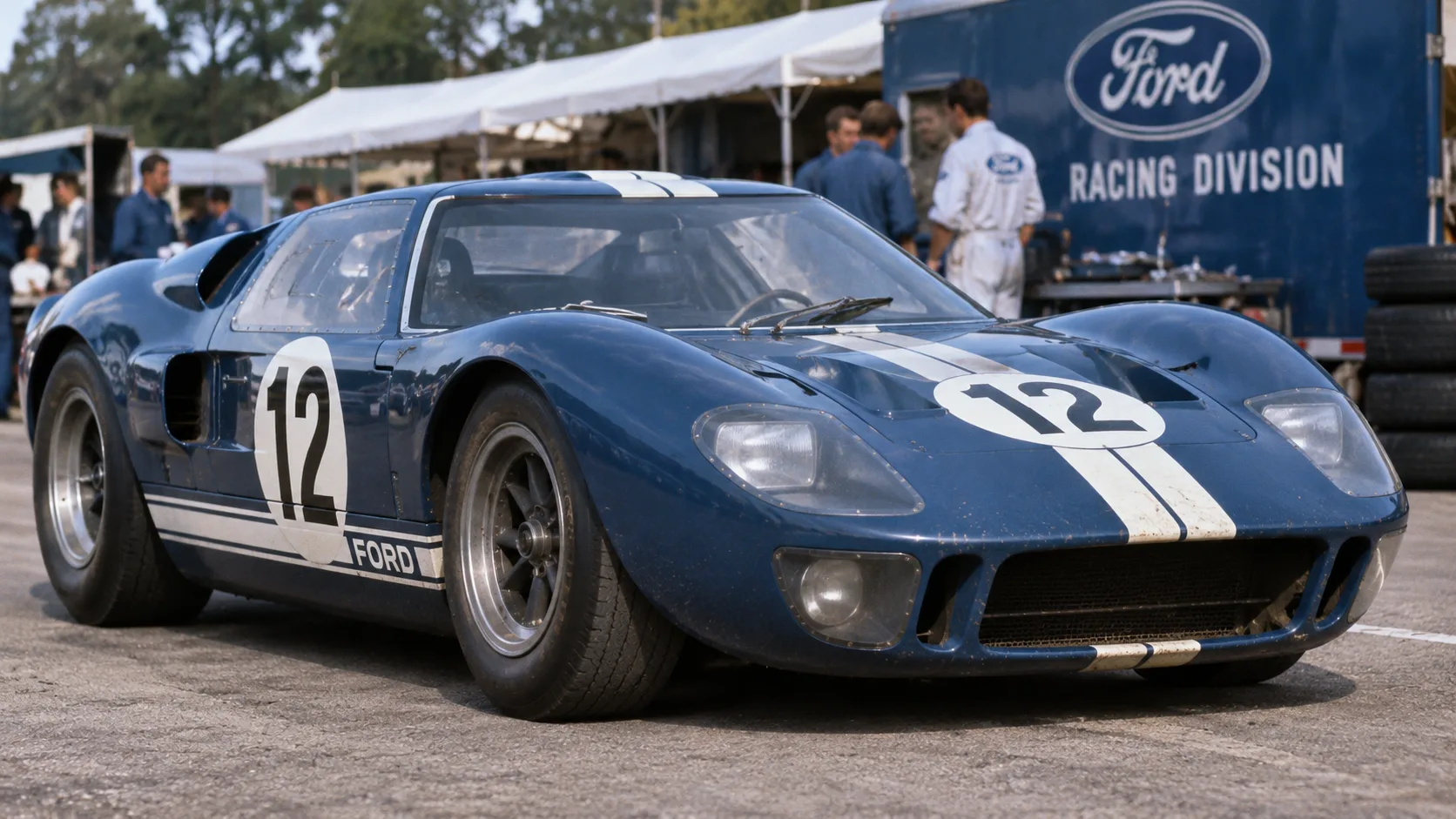
Following the failed negotiations, Ford moved toward developing a car capable of challenging established European manufacturers in endurance racing.
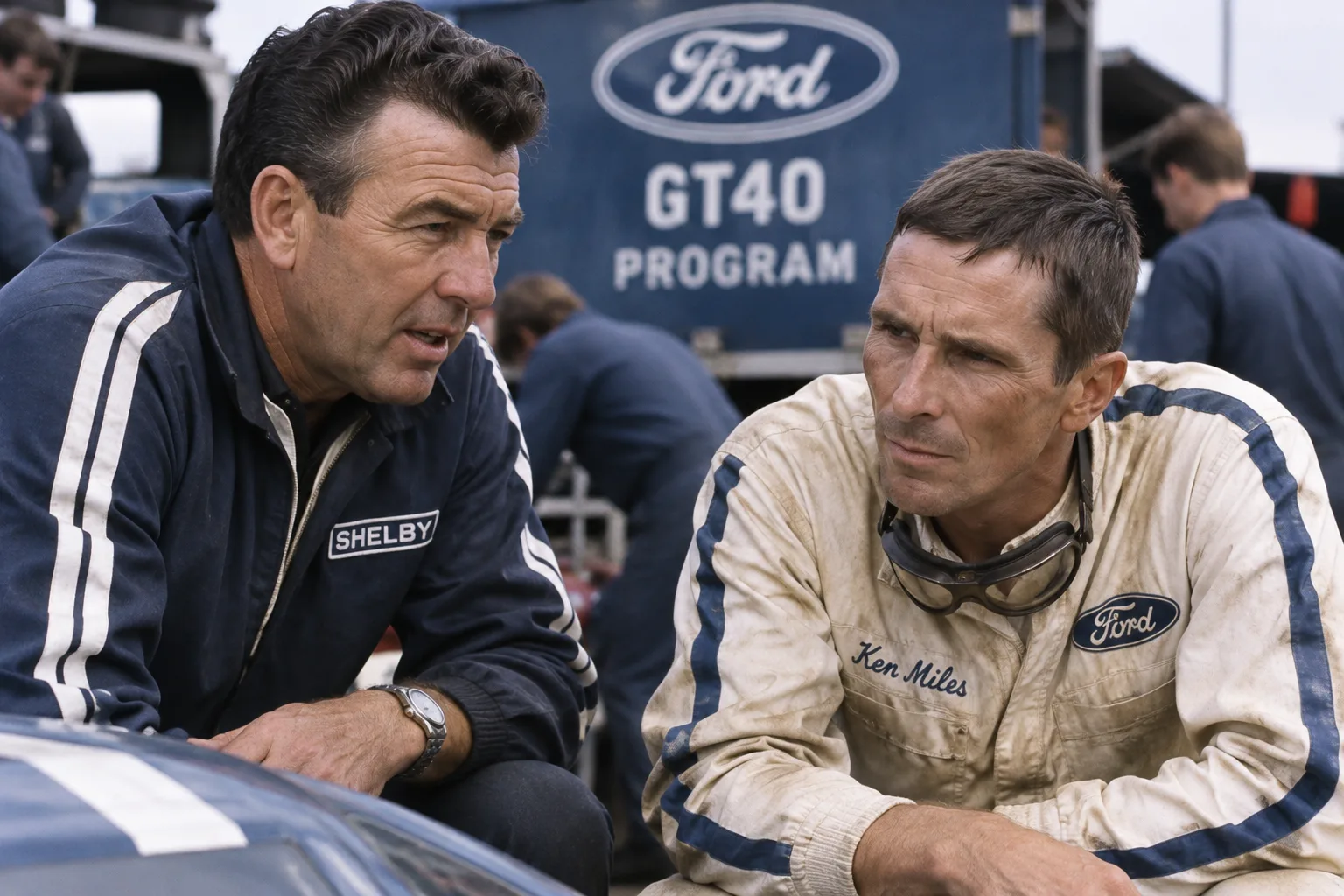
Ford established its High Performance and Special Models Operation Unit and circulated an internal GT Program document on June 12, 1963. Engineer Roy Lunn had already prepared preliminary design work. Ford selected Eric Broadley, the engineer behind the Lola GT, to contribute to the project, while John Wyer was appointed race manager. Carroll Shelby also became an important figure in the program.
Development work initially took place in Broadley’s garage in Bromley, England. The operation later moved to Slough, where Ford Advanced Vehicles was established.
One of the defining dimensions of the new car was its height. Ford’s history records that Roy Lunn lowered the design by two inches from Broadley’s Lola-based concept, bringing the car’s height to approximately 40 inches. That measurement became the origin of the GT40 name.
A Difficult Beginning at Le Mans
The GT40 showed speed during its early competition appearances, but speed alone was not enough to win a 24-hour endurance race.
At the 1964 24 Hours of Le Mans, Ford’s cars encountered serious reliability problems. Ford’s historical account blames the Colotti gearboxes for the failures that ended the cars’ races. All three Ford entries had retired by the 12-hour mark.
The result exposed how much work remained. Ford needed a more reliable car, stronger technical coordination and a development program capable of surviving the demands of endurance competition.
Ferrari, meanwhile, continued its remarkable run at Le Mans. The Italian manufacturer had won six consecutive editions from 1960 through 1965, establishing a level of dominance Ford was determined to challenge.
Ford Reorganizes for 1966
Ford changed the structure of its racing effort ahead of the 1966 season. A Le Mans Committee was established to coordinate the company's work, while Holman & Moody joined Shelby American in the GT40 program.
The Ford GT40 Mk II was developed around a 427-cubic-inch V8. The development effort involved substantial work on the car’s body, suspension, fuel system and braking equipment.
Ford’s historical account describes extensive engine testing during the development process. By the end of May 1966, an engine producing 485 horsepower at 6,400 rpm was reported to have completed repeated 48-hour dynamometer runs.
Ken Miles played a major role in the development of the GT40. Born in Sutton Coldfield, England, Miles later moved to the United States and became one of the most important drivers and development engineers in Ford’s racing effort. His testing experience and technical feedback helped shape the cars that competed against Ferrari.
Daytona and Sebring: Ford Builds Momentum
Ford entered 1966 with strong results in American endurance racing.
At the 24 Hours of Daytona, Ford secured a podium sweep. Ken Miles and Lloyd Ruby took the overall victory, giving the manufacturer an important result ahead of its next major challenge.
The 12 Hours of Sebring followed in March. Ford again swept the podium, with Miles and Ruby taking the win. The race was not without drama: Dan Gurney and Jerry Grant had been leading before an engine failure stopped their car approximately a quarter of a mile from the finish.
These results gave Ford momentum before its return to Le Mans, where Ferrari had dominated for six consecutive years.
Le Mans, June 18–19, 1966
Ford arrived at the 1966 24 Hours of Le Mans with eight factory cars. The Automobile Club de l’Ouest’s historical account records seven factory Ferrari entries.
The race began on June 18 and continued into June 19. Ford’s GT40 Mk IIs faced Ferrari’s prototypes over the demanding 24-hour contest.
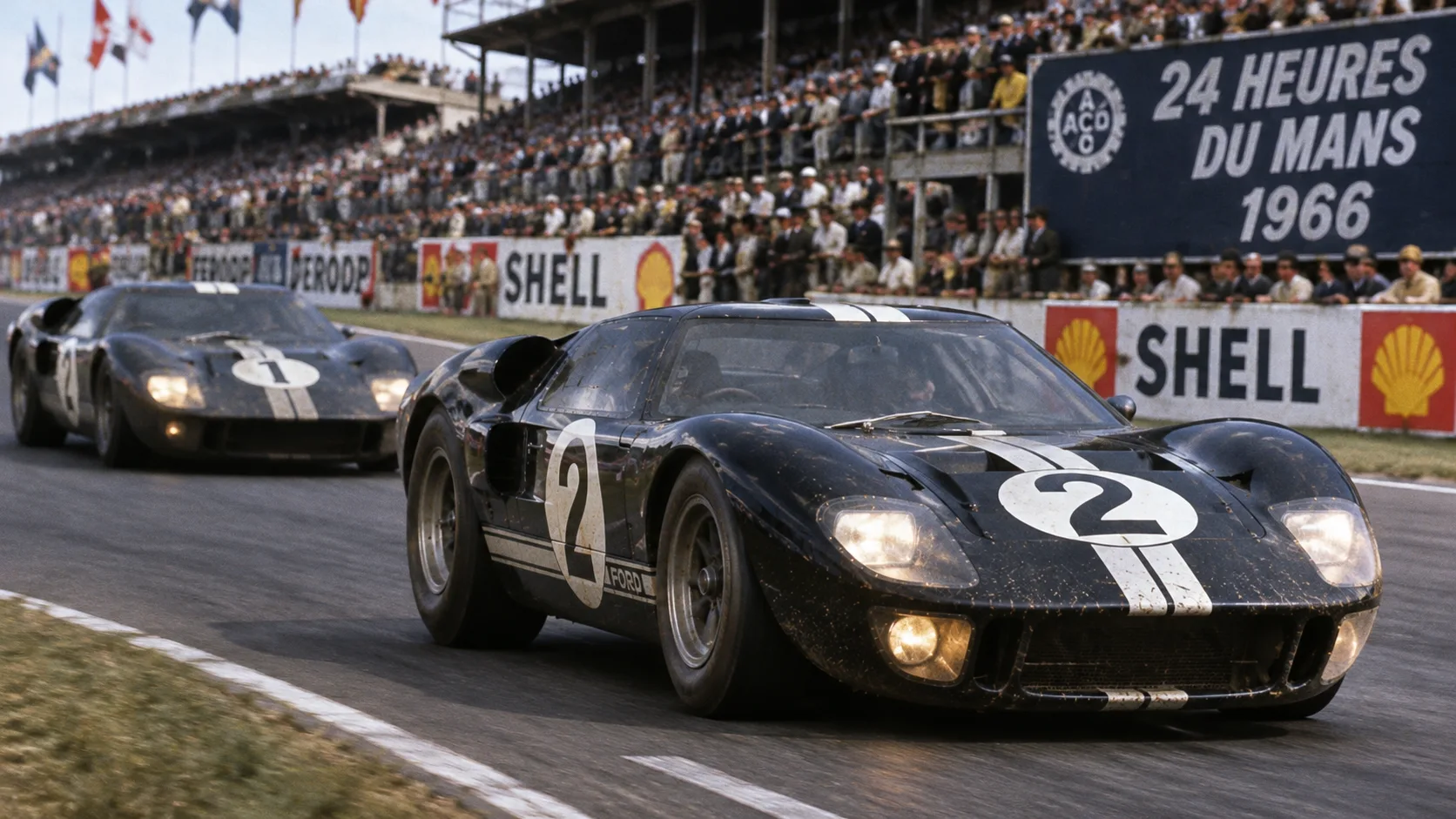
Mechanical problems gradually removed Ferrari’s factory prototypes from contention. None of Ferrari’s three 330 P3 prototypes made it to the finish, according to Ford’s historical account. Ford, meanwhile, maintained a strong challenge and ultimately secured the first three positions.
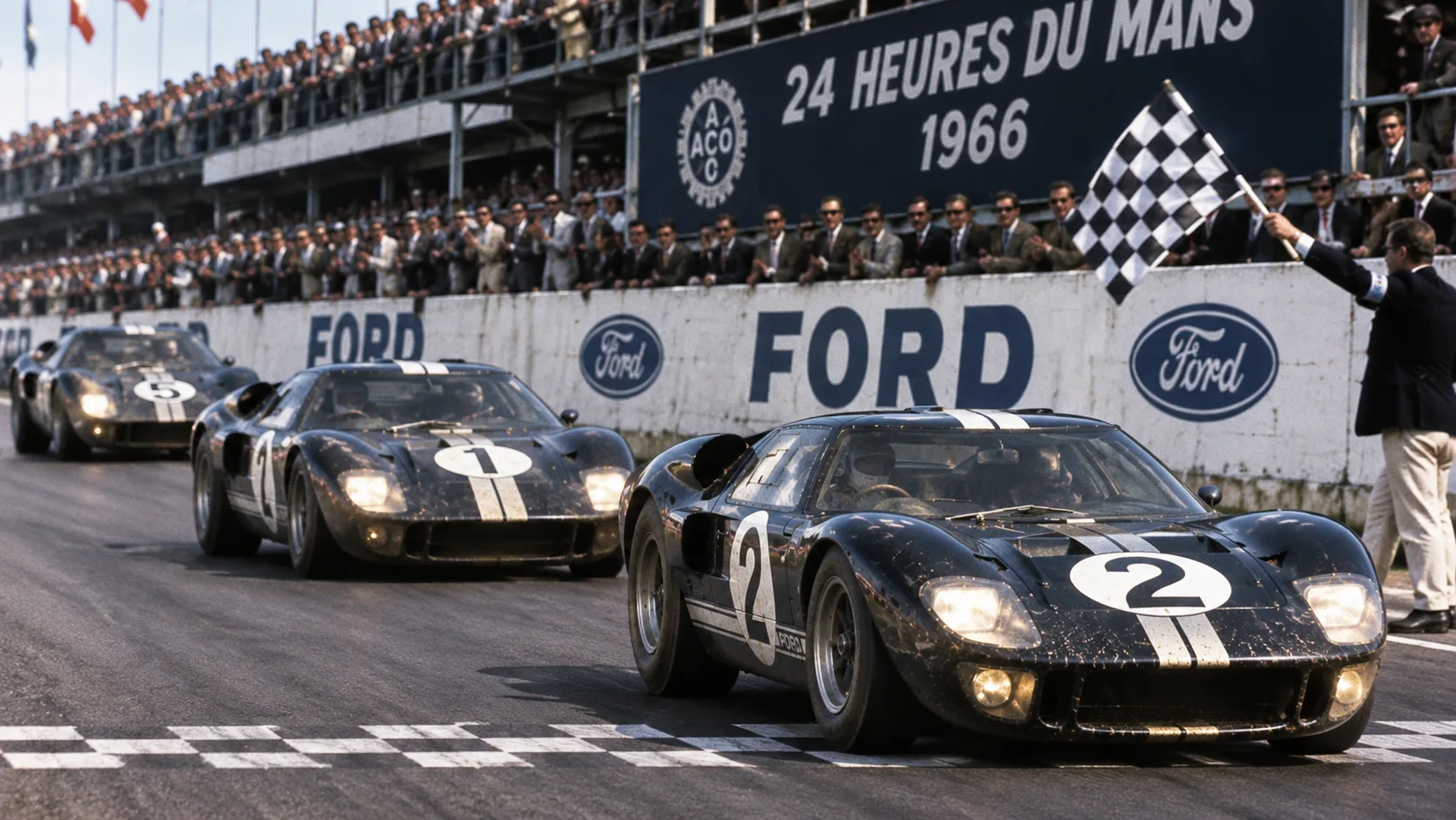
The contest became an internal battle between Ford’s own leading cars. The No. 1 GT40 Mk II was driven by Ken Miles and Denny Hulme, while Bruce McLaren and Chris Amon shared the No. 2 car.
The Finish That Changed the Result
With Ford heading toward its first overall Le Mans victory, the company wanted a finish that would provide a memorable image of its achievement.
Ford’s management instructed the leading cars to finish together. The intention was to create a formation finish featuring the two leading GT40s.
However, the result depended on more than the cars’ physical positions at the finish line.
The Automobile Club de l’Ouest’s historical analysis explains the official distance calculation. The No. 1 car of Miles and Hulme had started second on the grid, while the No. 2 car of McLaren and Amon had started fourth, 14.28 meters behind it.
Lap data showed that the No. 2 car crossed the finish line approximately half a second ahead of the No. 1 car, representing about six meters. When the starting-grid difference was included, the official distance margin became slightly more than 20 meters.
The No. 2 car was therefore classified ahead of the No. 1 car.
The third Ford, driven by Ronnie Bucknum and Dick Hutcherson, finished eleven laps behind the leading pair.
The official result was:
1st: Bruce McLaren / Chris Amon — Ford GT40 Mk II, No. 2
2nd: Ken Miles / Denny Hulme — Ford GT40 Mk II, No. 1
3rd: Ronnie Bucknum / Dick Hutcherson — Ford GT40 Mk II, No. 5
The outcome meant that Miles and Hulme did not receive the victory despite being central to Ford’s development effort and leading the race during important stages.
The Death of Ken Miles
Ken Miles died on August 17, 1966, while testing Ford’s J-car at Riverside International Raceway in California. He was 47 years old.
His death came about two months after Ford’s historic Le Mans victory. Miles had been one of the most influential people in the development and testing of the GT40, and his contribution to Ford’s racing program remains a major part of the car’s history.
Ford’s Le Mans Success Continued
Ford’s 1966 victory did not end the GT40 story.
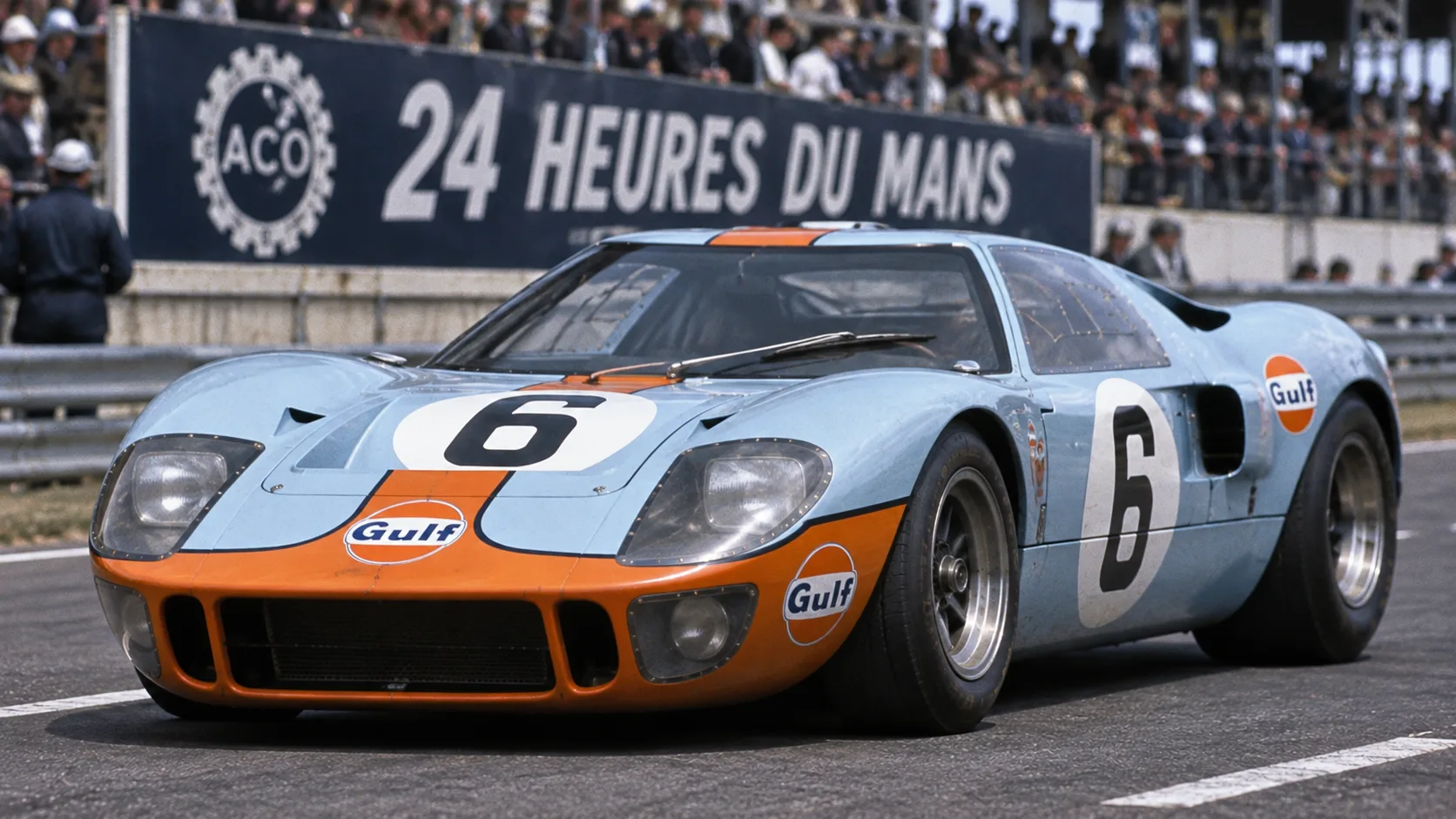
The manufacturer’s Le Mans success continued in the following years, while the racing operation evolved. John Wyer’s team became particularly important to the GT40’s later achievements, with Gulf Oil backing associated with the famous blue-and-orange racing colors.
In 1968, Pedro Rodríguez and Lucien Bianchi won Le Mans in a GT40 entered by John Wyer’s team. The race had been postponed to September that year.
The same team returned to victory in 1969. Jacky Ickx and Jackie Oliver won in a Gulf-liveried GT40, securing another Le Mans success for the model.
Ferrari Finds a New Partner
While Ford was establishing its place in endurance-racing history, Ferrari was entering a new chapter as a company.
In June 1969, Enzo Ferrari and Fiat chairman Gianni Agnelli reached an agreement. Fiat acquired a 50 percent stake in Ferrari, with the agreement announced on June 21, 1969.
The arrangement marked an important change in Ferrari’s corporate history, bringing Fiat into the company as a major shareholder.
Why the Ford vs Ferrari Story Still Matters
The Ford-Ferrari rivalry was more than a competition between two manufacturers. It involved engineering, corporate ambition, racing strategy and the determination to challenge an established champion.
Ford’s first GT40 efforts exposed serious reliability problems. The company responded by reorganizing its program, working with experienced racing specialists and developing a more competitive car.
The 1966 Le Mans victory ended Ferrari’s six-year winning streak. The finish became one of endurance racing’s most discussed moments because of Ford’s staged finish and the way the distance rules were applied.
The GT40’s later victories in 1968 and 1969 extended the story beyond the original Ford factory effort. Its place in motorsport history was secured not simply by its speed, but by the engineering and persistence required to make it a winning endurance racer.
Frequently Asked Questions
Why did Ford want to acquire Ferrari?
Ford sought to acquire Ferrari as part of its ambitions in performance and
international motorsport. The proposed agreement would have connected Ford’s
industrial resources with Ferrari’s established racing operation.
Why did the Ford-Ferrari deal fail?
Ferrari’s historical account says Enzo Ferrari withdrew from the proposed
agreement to preserve the independence of the company’s racing operation.
Why was the Ford GT40 called the GT40?
The name refers to the car’s approximate height of 40 inches.
Who won the 1966 24 Hours of Le Mans?
Bruce McLaren and Chris Amon won in the No. 2 Ford GT40 Mk II. Ken Miles and
Denny Hulme finished second.
How close was the 1966 Le Mans finish?
The ACO calculates the official distance margin at slightly more than 20
meters. Its calculation includes approximately six meters at the finish line
and a 14.28-meter difference between the cars’ starting positions.
How many consecutive Le Mans victories did Ferrari achieve from 1960
to 1965?
Ferrari won six consecutive editions of the 24 Hours of Le Mans from 1960
through 1965.
When did Ken Miles die?
Ken Miles died on August 17, 1966, during a test at Riverside International
Raceway in California. He was 47.
When did Fiat acquire a stake in Ferrari?
The agreement for Fiat to acquire a 50 percent stake in Ferrari was announced
on June 21, 1969.
Sources
· Ford Motor Company — Ford GT40 Origins: https://corporate.ford.com/articles/history/ford-gt40-origins/
· Ford Motor Company — The Le Mans Committee and the 1966 Victory: https://corporate.ford.com/articles/history/ford-gt40-origins-le-mans-committee-victory/
· Automobile Club de l’Ouest — Le Mans ’66: What Really Happened?: https://www.24h-lemans.com/en/news/le-mans-66-what-really-happened-55729
· Automobile Club de l’Ouest — Ford and Ferrari Face Off at Daytona and Le Mans (1966): https://www.24h-lemans.com/en/news/ford-and-ferrari-face-off-at-daytona-and-le-mans-1-2-1966-53292
· Automobile Club de l’Ouest — 1966: Ford’s First Wins at Le Mans and Sebring: https://www.24h-lemans.com/en/news/1966-fords-first-wins-at-the-24-hours-of-le-mans-and-the-12-hours-of-sebring-23975
· Automobile Club de l’Ouest — Gulf 1967–1975: The Ford GT40 Years: https://www.24h-lemans.com/en/news/gulf-1967-1975-1-the-ford-gt40-years-45681
· Motorsports Hall of Fame of America — Ken Miles: https://www.mshf.com/hall-of-fame/inductees/ken-miles.html
· Ferrari — A New Partner, 1969: https://www.ferrari.com/en-ES/history/moments/1969/a-new-partner
Have thoughts, dyno data, or build feedback?
Join automotive enthusiasts in the paddock below to debate engineering, lap times, and modifications.
Community Pulse
How does this machine make you feel? Drop your reaction!

VehicleDrugs Editorial
VehicleDrugs Editorial Team
A passionate collective of automotive purists, track drivers, and mechanical engineers uncovering high-octane engineering breakthroughs worldwide.
🏁 Pit Crew Discussions
Drop your telemetry, debate the engineering, or talk track times with fellow petrolheads.
The Pit Lane is Quiet
Be the first driver to drop your opinion on this machine!