
1957 Chevrolet Bel Air: History, 283 V8 & Specifications
Explore the 1957 Chevrolet Bel Air's iconic design, 283 V8 engine options, Ramjet fuel injection, Turboglide transmission, and classic American history.
HEAD-TO-HEAD MUSCLE CAR VS COMPARISON
Compare 0-60, peak horsepower, torque, and quarter-mile times across iconic builds.
1957 Chevrolet Bel Air: The Classic American Car That Defined an Era
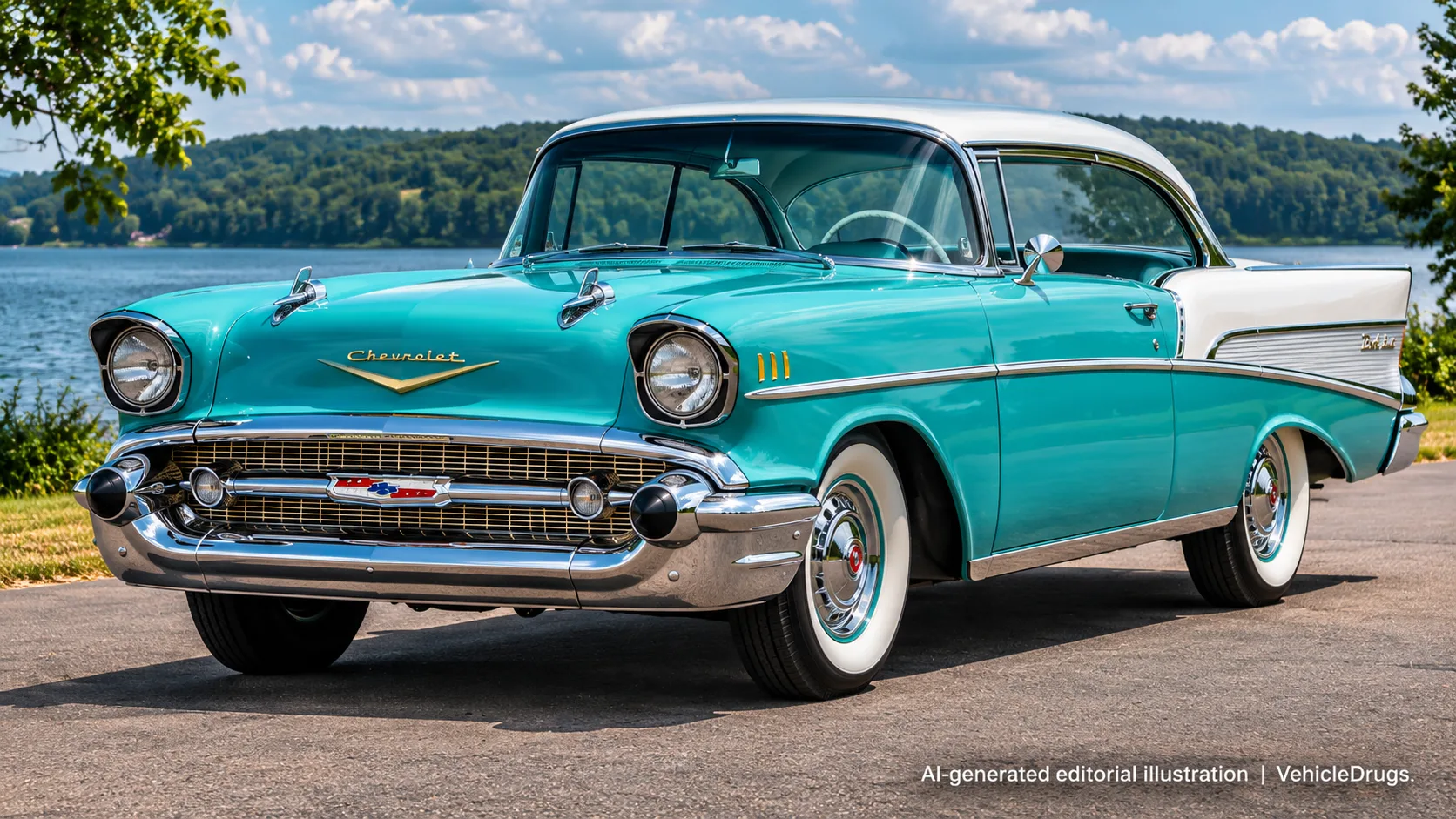
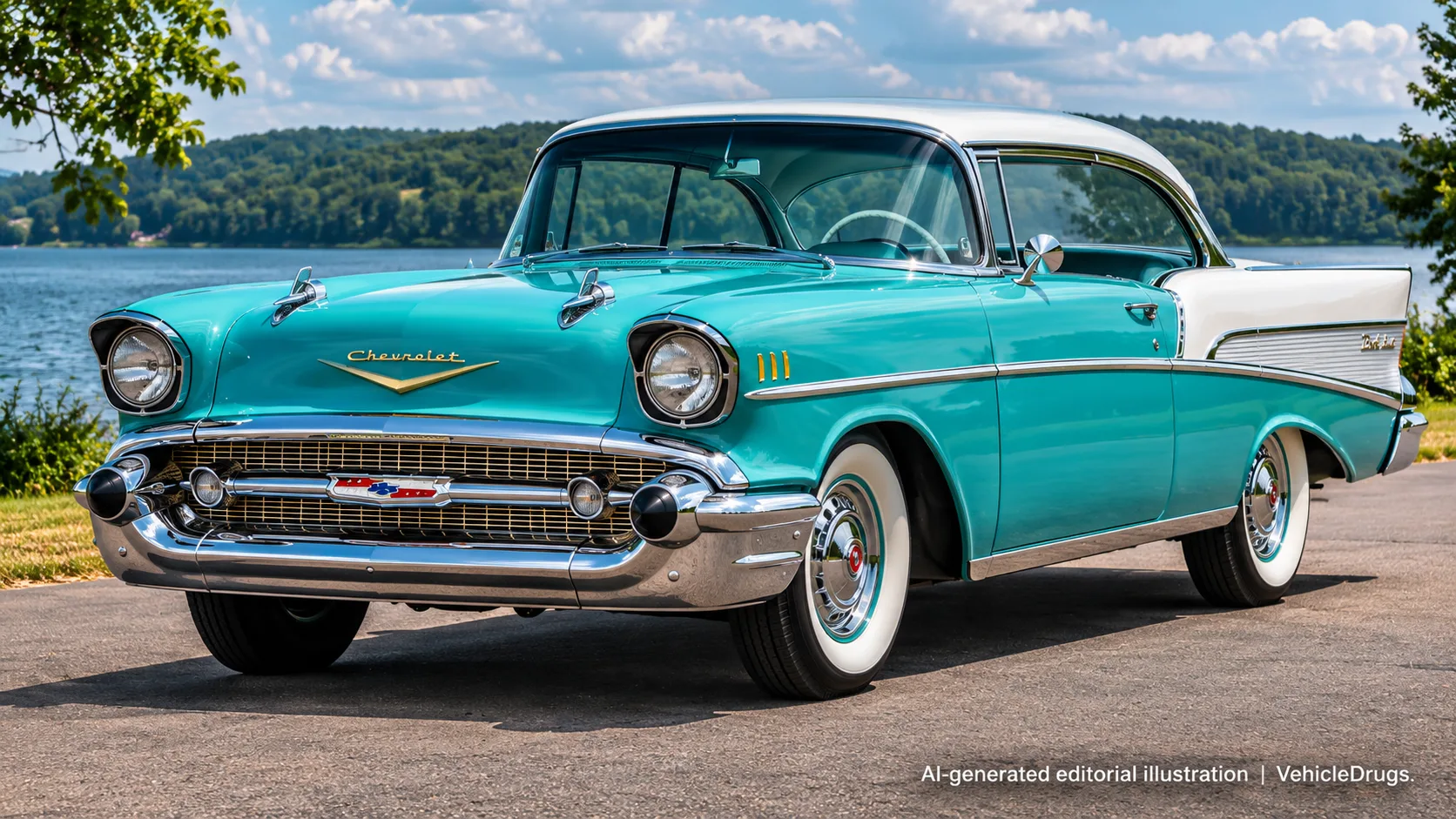
The 1957 Chevrolet Bel Air combined distinctive 1950s styling with innovative V8 power, becoming one of America's most recognizable classic cars.
Few American
cars are as instantly recognizable as the 1957 Chevrolet Bel Air. With its
sweeping rear fins, distinctive chrome details, bold front grille, and
unmistakable two-tone paint schemes, the Bel Air became one of the defining
symbols of 1950s American automotive design.
But the 1957
Bel Air was more than an attractive car. It represented an important stage in
Chevrolet's engineering development, introducing a larger 283-cubic-inch
small-block V8, an advanced mechanical fuel-injection option, and the
innovative Turboglide automatic transmission.
Today, the
1957 Chevrolet Bel Air remains one of the most recognizable postwar American
classics. Its combination of distinctive styling, multiple body styles, and
period performance options continues to attract collectors and enthusiasts.
Quick Specifications: 1957 Chevrolet Bel Air
The
following reference specifications describe the 1957 Bel Air Convertible
displayed in General Motors' Heritage Collection. Other Bel Air body styles and
engine configurations had different specifications.
|
Manufacturer |
Chevrolet,
General Motors |
|
Model Year |
1957 |
|
Vehicle
Class |
Full-size
American passenger car |
|
Engine in
GM Heritage example |
283 cu in
(4.6L) OHV V8 |
|
Horsepower
in GM Heritage example |
245 hp |
|
Transmission |
Depended
on engine and factory configuration |
|
Drivetrain |
Rear-wheel
drive |
|
Wheelbase |
115 inches |
|
Listed
Vehicle Weight |
3,405 lb |
|
Original
Base Price |
$2,611 |
The engine,
horsepower, weight, wheelbase, and price above refer specifically to GM's
documented Bel Air Convertible example. They should not be treated as universal
specifications for every 1957 Bel Air.
The 1957 Chevrolet Bel Air and Its Place in American
Automotive History
The Bel Air
name had already become an important part of Chevrolet's full-size
passenger-car lineup before 1957. However, the 1957 model received a
distinctive redesign that helped establish its lasting reputation.
Chevrolet's
1957 passenger-car range included three main series: the premium Bel Air Series
2400, the Two-Ten Series 2100, and the One-Fifty Series 1500.
The Bel Air
occupied the premium position among these regular passenger-car series. Its
seven available body styles included two-door and four-door sedans, a two-door
Sport Coupe, a four-door Sport Sedan, a convertible, the Nomad, and a four-door
six-passenger station wagon.
This variety
allowed Chevrolet to offer the Bel Air name across several different types of
family and personal-use vehicles.
The 1957
redesign also reflected Chevrolet's effort to make its cars appear longer,
lower, and more luxurious. The company's engineering documentation described
extensive changes to the sheet metal, grille, bumpers, hood, and rear quarter
panels.
The Styling That Made the 1957 Bel Air Famous
The exterior
design is one of the strongest reasons the 1957 Bel Air remains so
recognizable.
The Front-End Design
The front of
the 1957 Chevrolet featured a redesigned grille and integrated bumper
arrangement. The grille used a lattice-pattern aluminum screen, with a central
bar carrying the Chevrolet medallion and parking lamps at its ends.
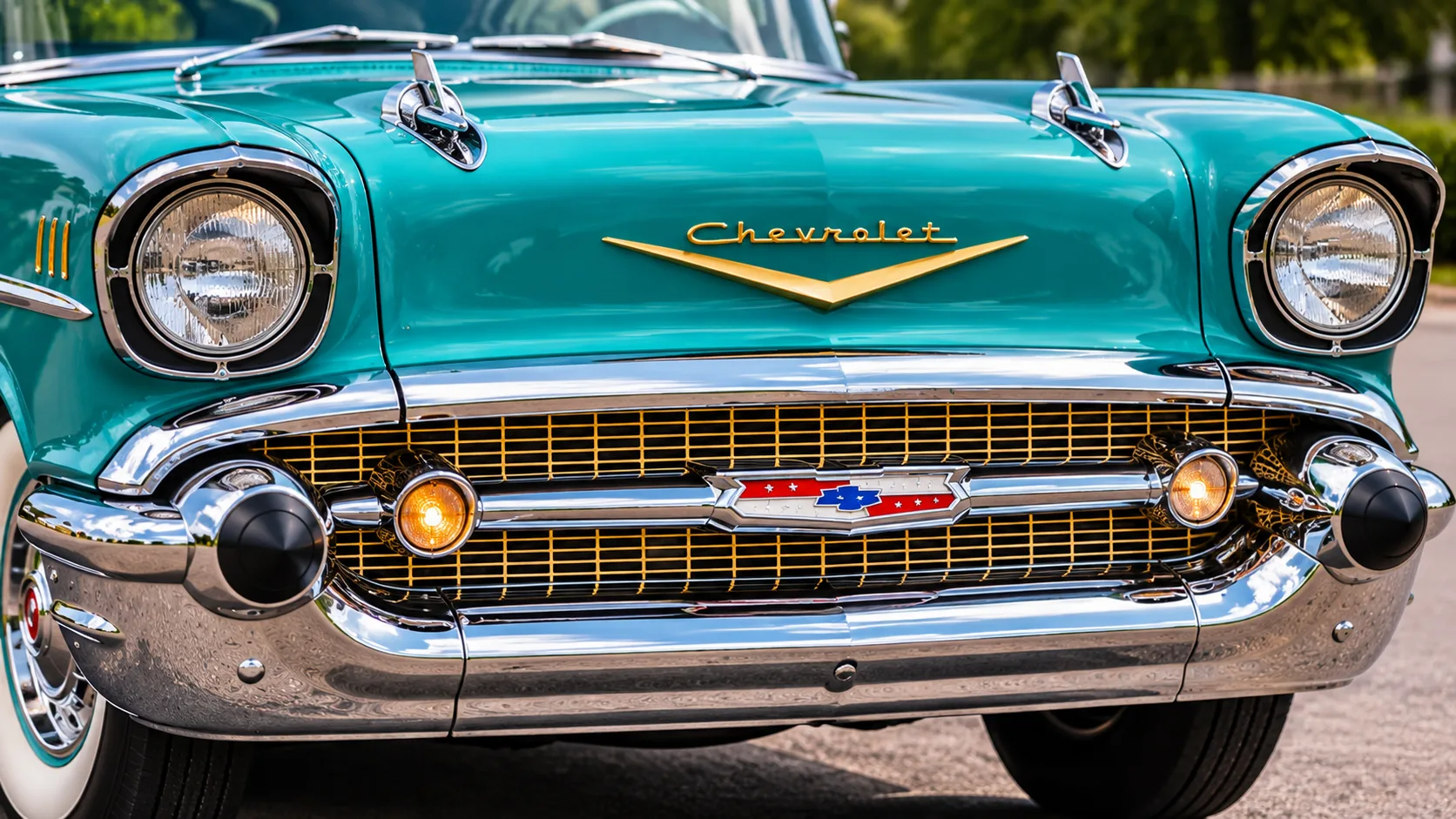
The 1957 Chevrolet Bel Air featured a redesigned front end with a distinctive grille, chrome detailing, and signature hood ornaments.
The front
bumper was designed as part of the overall body appearance rather than as a
visually separate component.
The car also
received a flatter hood and twin hood ornaments. These details helped
distinguish the 1957 design from the earlier 1955 and 1956 Chevrolet models.
The Rear Fins and Side Trim
The
redesigned rear quarter panels featured sweeping fins that emphasized the car's
long, horizontal proportions.
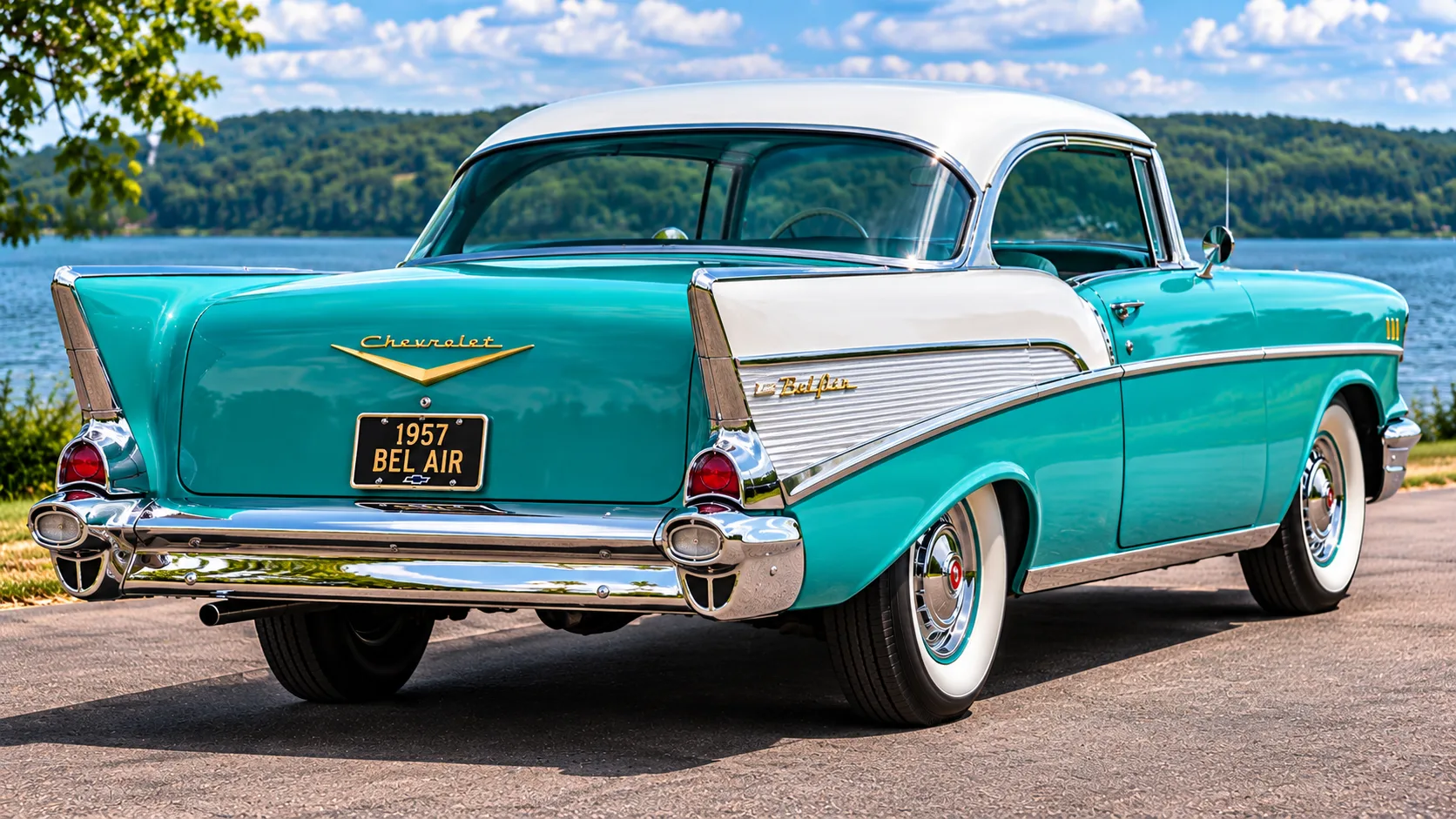
The sweeping rear fins, distinctive taillights, and bright chrome trim helped make the 1957 Chevrolet Bel Air instantly recognizable.
The Bel Air
also received distinctive bright trim and an anodized, fluted insert within its
side-trim treatment. These premium exterior details helped separate it visually
from the Two-Ten and One-Fifty series.
Two-tone
paint was another important part of the Bel Air's identity. Chevrolet offered a
wide selection of exterior colors and combinations for the 1957 model year.
Body Proportions
The 1957
Chevrolet passenger-car redesign gave the sedan and coupe models a reported
overall length of 200 inches and a 115-inch wheelbase.
The
engineering changes also included a lower cowl and a larger windshield
visibility area. These were functional changes as well as styling improvements.
Engine Options: From the Blue Flame Six to the 283 V8
One of the
most interesting aspects of the 1957 Bel Air is its range of available
powertrains.
Chevrolet
offered three basic engine families across its 1957 passenger-car range: a
235.5-cubic-inch six-cylinder engine, a 265-cubic-inch V8, and the new
283-cubic-inch V8.
The exact
engine and horsepower rating depended on the factory configuration.
235.5-Cubic-Inch Blue Flame Six
The standard
six-cylinder engine was Chevrolet's 235.5-cubic-inch Blue Flame unit.
The 1957
engineering documentation listed its output at 140 horsepower. It provided a
conventional alternative for buyers who prioritized everyday passenger-car use
over V8 performance.
265-Cubic-Inch Turbo-Fire V8
The optional
265-cubic-inch Turbo-Fire V8 continued into the 1957 model year.
Chevrolet's
engineering document listed the engine at 162 horsepower in its specified
configuration.
This engine
provided buyers with a V8 alternative before moving to the larger 283-cubic-inch
engine family.
283-Cubic-Inch Small-Block V8
The most
significant engine development for 1957 was the introduction of the larger
283-cubic-inch small-block V8.

Chevrolet introduced the 283-cubic-inch small-block V8 for 1957, offering several factory configurations with different horsepower ratings.
Chevrolet
offered several versions with different carburetion, camshaft, compression, and
fuel-delivery arrangements.
The
documented output ratings included:
|
283 V8 Configuration |
Period Factory-Rated Output |
|
Two-barrel
carburetor |
185 hp |
|
Four-barrel
carburetor |
220 hp |
|
Dual
four-barrel carburetors, hydraulic cam |
245 hp |
|
Dual
four-barrel carburetors, competition cam |
270 hp |
|
Ramjet
mechanical fuel injection |
Up to 283
hp |
period gross horsepower ratings, not modern SAE net horsepower figures.
The 245-hp and 270-hp configurations used dual four-barrel carburetors. The 270-hp version also received a competition camshaft and high-speed valve-train components.<o:p></o:p>
The 283-hp
configuration combined mechanical fuel injection with a high-performance camshaft.
It helped Chevrolet promote the achievement of one horsepower per cubic inch.
An important
distinction: the 283-hp rating was not standard equipment on every Bel Air. It
represented a high-performance engine configuration, and buyers needed to
specify the appropriate optional powertrain.
Rochester Ramjet Fuel Injection: An Important 1957
Innovation
The 1957
Chevrolet's mechanical fuel-injection system was one of its most technically
interesting features.

Chevrolet's Rochester Ramjet mechanical fuel-injection system helped make the 283 V8 one of the most technically significant American engines of 1957.
Known as
Rochester Ramjet fuel injection, the system replaced the conventional
carburetor arrangement with a mechanical fuel-metering system.
Chevrolet's
engineering documentation explained that the system was designed to provide a
more consistently accurate fuel-air mixture.
For 1957,
the fuel-injected 283 was available in different performance configurations,
including a 250-hp version and a high-performance 283-hp version.
The 283-hp
rating became particularly memorable because it matched the engine's
283-cubic-inch displacement.
This was an
important marketing and engineering milestone for Chevrolet. It also
demonstrated that the company was exploring fuel-delivery technology beyond
conventional carburetion during the 1950s.
However, the
presence of fuel injection should not be assumed from the appearance of a car.
A genuine factory fuel-injected example requires supporting documentation and
correct component identification.
Transmission Choices and the Innovative Turboglide
The 1957
Chevrolet lineup offered several transmission choices depending on engine and
equipment configuration.
Available
choices included a three-speed manual transmission, an overdrive option, the
Powerglide automatic, and the new Turboglide automatic transmission.
Powerglide
Powerglide
was Chevrolet's established two-speed automatic transmission. It provided an
automatic-driving option for buyers who preferred convenience.
Turboglide
The
Turboglide was a particularly unusual development for 1957.
Unlike a
conventional stepped automatic transmission, its design used a multi-turbine
torque converter and planetary gearsets to provide a smooth progression of
torque multiplication.
Chevrolet
highlighted the transmission's smooth operation and its downhill speed-control
feature, called the Hill Retarder.
The system
was designed to reduce the sensation of conventional automatic gear changes and
provide a different driving experience.
Manual Transmission Options
Chevrolet
also continued to offer manual transmission configurations.
The specific
transmission pairing depended on the selected engine. High-performance 283
versions had different transmission restrictions from the regular passenger-car
engines.
This is why
an accurate description of a particular Bel Air should identify the actual
factory engine and transmission combination rather than assume every 1957
example used the same setup.
Interior Design and Available Comfort Features
The Bel
Air's appeal was not limited to its exterior.
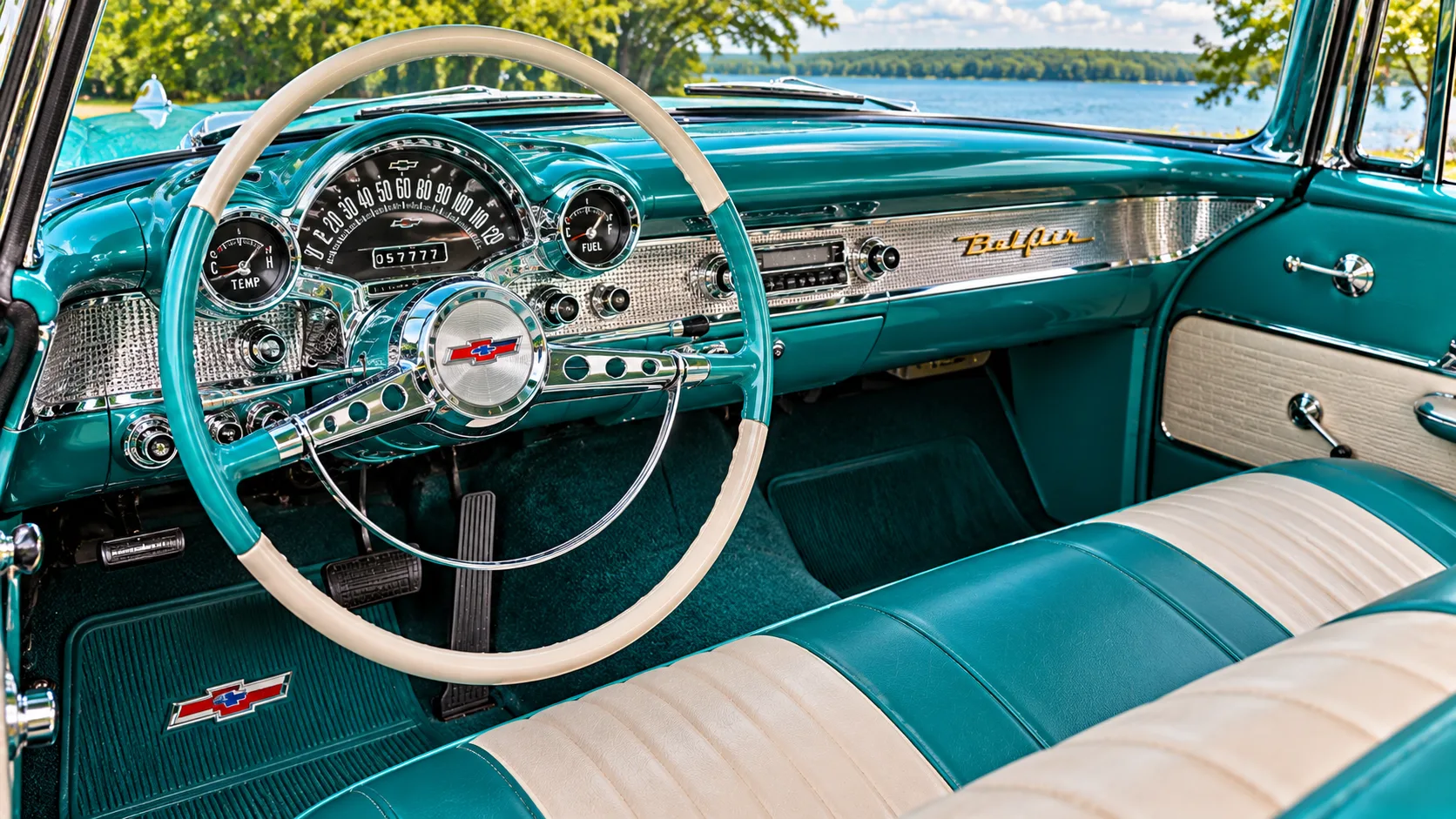
The 1957 Chevrolet Bel Air featured a distinctive interior with a chrome-accented dashboard, two-tone steering wheel, and premium trim details.
Chevrolet
revised the 1957 interior with updated instrument panels, a new offset-spoke
steering wheel design, and revised seating materials and upholstery.
The premium
Bel Air series also offered distinctive interior trim and appointments.
Depending on
the selected equipment, buyers could order features such as power steering,
power brakes, power windows, power seats, and air conditioning.
These were
optional features rather than universal equipment on every Bel Air.
The
combination of premium appearance and available comfort equipment helped make
the Bel Air attractive to buyers who wanted a stylish full-size American car
without moving into a more expensive luxury brand.
Production History and Collectibility
The 1957 Bel
Air was produced in several body styles, including sedans, coupes,
convertibles, and station wagons.
General
Motors' Heritage Collection identifies 47,000 Bel Air convertibles produced for
the 1957 model year.
That figure
is specifically for the convertible body style. It should not be confused with
total Bel Air production across all body styles.
The Bel Air
Convertible featured in GM's Heritage Collection is documented with a
283-cubic-inch V8 rated at 245 horsepower, a 115-inch wheelbase, a listed
weight of 3,405 pounds, and an original base price of $2,611.
Its
recognition by the Antique Automobile Club of America further demonstrates the
historical importance of this particular surviving example.
Today,
collectors evaluate 1957 Bel Airs according to body style, originality,
condition, factory equipment, documentation, and restoration quality.
A correctly
documented factory fuel-injected car or a well-preserved convertible may
attract particular interest, but condition and authenticity remain essential
when assessing any individual vehicle.
Why the 1957 Chevrolet Bel Air Still Matters
The 1957
Chevrolet Bel Air represents more than a memorable design from the 1950s.
It brought
together several important elements of American automotive development:
- A distinctive body design with
sweeping rear fins and extensive chrome detailing.
- A premium full-size
passenger-car series with several body styles.
- The new 283-cubic-inch
Chevrolet small-block V8.
- High-performance engine
configurations reaching 270 gross horsepower with carburetion.
- Rochester Ramjet mechanical
fuel injection, with the highest-rated 283-hp configuration.
- The innovative Turboglide
automatic transmission.
- A wide selection of optional comfort
and convenience equipment.
Its
significance comes from the way Chevrolet combined styling, engineering, and
choice in a single passenger-car range.
More than
six decades later, the 1957 Bel Air remains a recognizable symbol of American
postwar automotive culture.
Frequently Asked Questions
1. What engines were available in the 1957 Chevrolet
Bel Air?
The 1957
Chevrolet passenger-car range offered a 235.5-cubic-inch six-cylinder engine,
an optional 265-cubic-inch Turbo-Fire V8, and several versions of the new
283-cubic-inch V8. Exact availability and ratings depended on the selected
configuration.
2. How much horsepower did the 1957 Chevrolet Bel Air
produce?
Horsepower
varied by engine. The six-cylinder engine was rated at 140 hp, while the 265 V8
was listed at 162 hp. The 283 V8 versions ranged from 185 hp to 270 hp with
carburetion, while the highest-rated fuel-injected configuration reached 283
hp.
3. Did the 1957 Chevrolet Bel Air have a 283 V8?
Yes. The
283-cubic-inch small-block V8 was an important optional engine for the 1957
Chevrolet passenger-car range. It was available in several configurations.
4. Was the 1957 Bel Air fuel-injected?
A mechanical
fuel-injection system called Rochester Ramjet was available as an option on
selected 283 V8 configurations. It was not standard equipment on every Bel Air.
5. What was special about the 283-hp 283 V8?
Its
factory-rated horsepower matched its 283-cubic-inch displacement. This allowed
Chevrolet to promote the achievement of one horsepower per cubic inch.
6. What transmissions were available for the 1957 Bel
Air?
Depending on
the engine and configuration, choices included a three-speed manual, overdrive,
Powerglide automatic, and Turboglide automatic transmission.
7. How long was the 1957 Chevrolet Bel Air?
The 1957
Chevrolet sedan and coupe models were listed at 200 inches in overall length,
with a 115-inch wheelbase. Individual body styles had different dimensions.
8. How many 1957 Chevrolet Bel Air convertibles were
produced?
General
Motors' Heritage Collection lists 47,000 Bel Air convertibles produced for the
1957 model year.
9. What was the original price of a 1957 Chevrolet Bel
Air Convertible?
The specific
convertible example in GM's Heritage Collection is listed with an original base
price of $2,611. Prices varied by body style and optional equipment.
10. Why is the 1957 Chevrolet Bel Air so collectible?
Its
distinctive styling, wide selection of body styles, important 283 V8 engine
options, fuel-injection technology, and place in American automotive history
have made it a highly recognizable classic.
Final Thoughts
The 1957
Chevrolet Bel Air remains one of the most memorable American cars of its
generation.
Its sweeping
rear fins and distinctive chrome made it visually unforgettable, while its
283-cubic-inch V8 options and Rochester Ramjet fuel injection demonstrated
Chevrolet's engineering ambitions.
It was a
full-size passenger car that offered buyers a remarkable combination of design,
comfort, and performance choices.
For
collectors and classic-car enthusiasts, the 1957 Bel Air continues to represent
an important chapter in the history of Chevrolet and American automotive
culture.
Sources and References
- General Motors Heritage
Collection – 1957 Chevrolet Bel Air Convertible
https://www.gm.com/heritage/collection/chevrolet/1957-chevrolet-bel-air-convertible - Chevrolet Engineering
Achievements – 1957 Passenger Car Features (October 1956)
https://trifivechevys.com/docs/Chevrolet-Engineering-Features-1957.pdf - MotorTrend / Super Chevy – 1957
Chevrolet History and Performance
https://www.motortrend.com/features/m5lp-0701w-1957-chevrolet-history - 1957 Chevrolet Specifications –
Historical Model and Equipment Reference
https://chevy.oldcarmanualproject.com/chevyresto/57index.htm
Editorial
note: Historical horsepower figures are presented using period factory gross
ratings. Specifications for individual surviving vehicles should be verified
against their original factory documentation and equipment.
Have thoughts, dyno data, or build feedback?
Join automotive enthusiasts in the paddock below to debate engineering, lap times, and modifications.
Community Pulse
How does this machine make you feel? Drop your reaction!

VehicleDrugs Editorial
VehicleDrugs Editorial Team
A passionate collective of automotive purists, track drivers, and mechanical engineers uncovering high-octane engineering breakthroughs worldwide.
🏁 Pit Crew Discussions
Drop your telemetry, debate the engineering, or talk track times with fellow petrolheads.
The Pit Lane is Quiet
Be the first driver to drop your opinion on this machine!