
Classic Chevrolet Malibu History (1964–1983): SS, Z16 & G-Body
Explore classic Chevrolet Malibu history from 1964 to 1983, including Chevelle origins, Malibu SS, the rare Z16, Colonnade styling and G-body models.
HEAD-TO-HEAD MUSCLE CAR VS COMPARISON
Compare 0-60, peak horsepower, torque, and quarter-mile times across iconic builds.
Classic Chevrolet Malibu History: From the Chevelle to the G-Body
(1964–1983)
The Chevrolet Malibu is one of the most recognizable names in American
midsize-car history. Its story began in 1964, when Chevrolet introduced the
Malibu as the top series in its new Chevelle lineup. With a choice of body
styles, comfortable interiors and available V8 power, the Malibu quickly became
an important part of Chevrolet's intermediate-car range.
The classic Malibu story covers two distinct eras. From 1964 through 1977,
Malibu was part of the Chevelle family. In 1978, Chevrolet discontinued the
Chevelle name and introduced a redesigned, standalone Malibu range built around
a smaller rear-wheel-drive platform.
These years included the early Malibu SS, the rare 1965 Z16 package, the
redesigned Chevelle models of the late 1960s, the Colonnade-era cars and the
later G-body Malibu. The 1983 model year marked the end of the rear-wheel-drive
Malibu passenger car.
Understanding these changes is important because the early Chevelle-based
Malibu and the later G-body Malibu were different generations of Chevrolet
engineering, even though they shared the same name.
History of the Chevrolet Malibu
1964: The Malibu Name Debuts
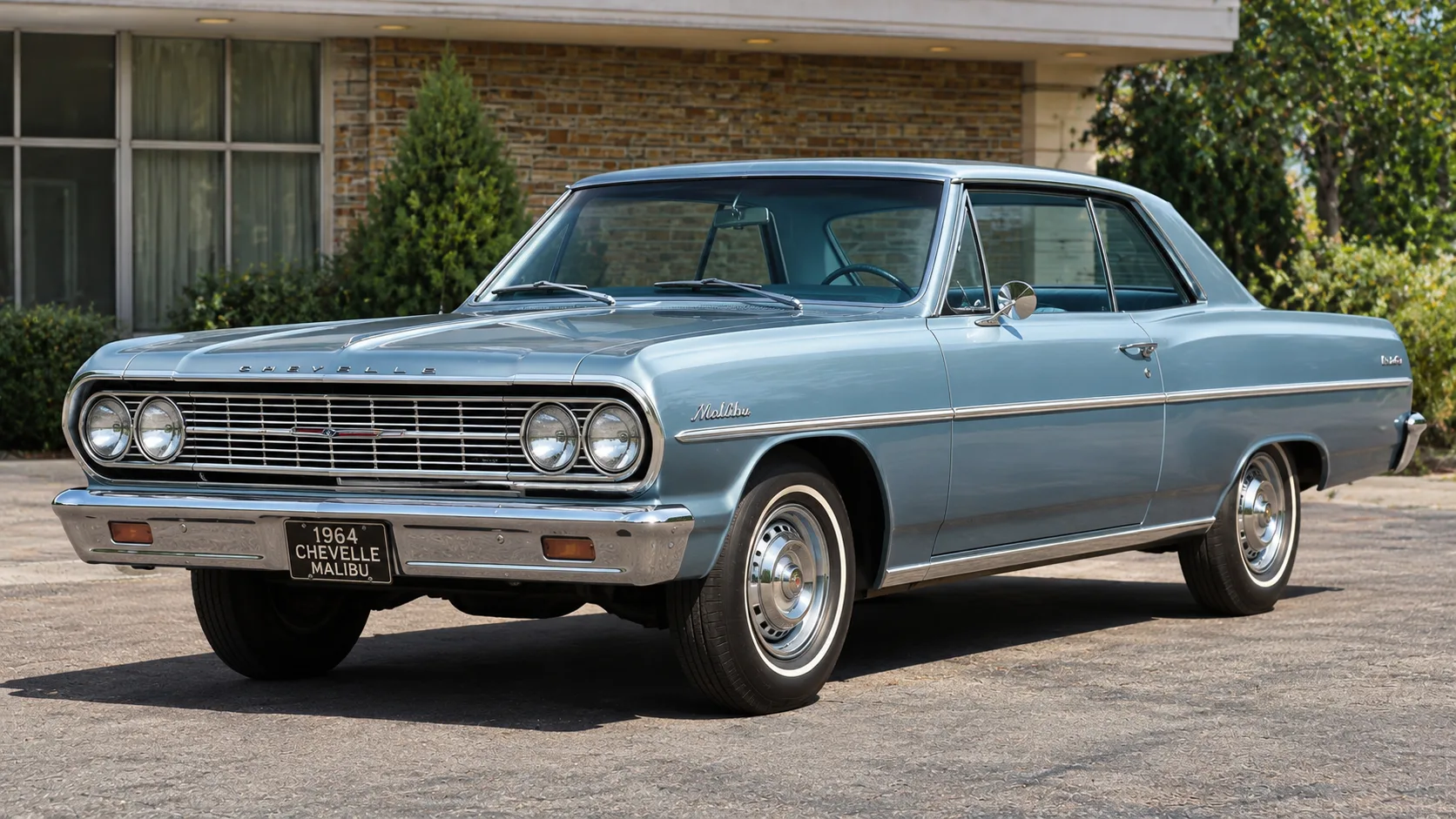
Chevrolet introduced the Chevelle for the 1964 model year as its entry into
the American intermediate-car market. The lineup included several series, with
the Malibu positioned at the top of the regular Chevelle range.
The Malibu offered additional interior and exterior equipment compared with
the lower-priced Chevelle models. Depending on the configuration, buyers could
choose from two-door Sport Coupes, four-door sedans, convertibles and station
wagons.
The Malibu was not a separate standalone model at this stage. It was a
series within the Chevelle family, sharing the broader car's engineering and
rear-wheel-drive layout.
Its combination of intermediate dimensions, traditional mechanical
construction and available six-cylinder and V8 engines made it suitable for
both everyday driving and more performance-oriented configurations.
1964 Malibu Design and Equipment
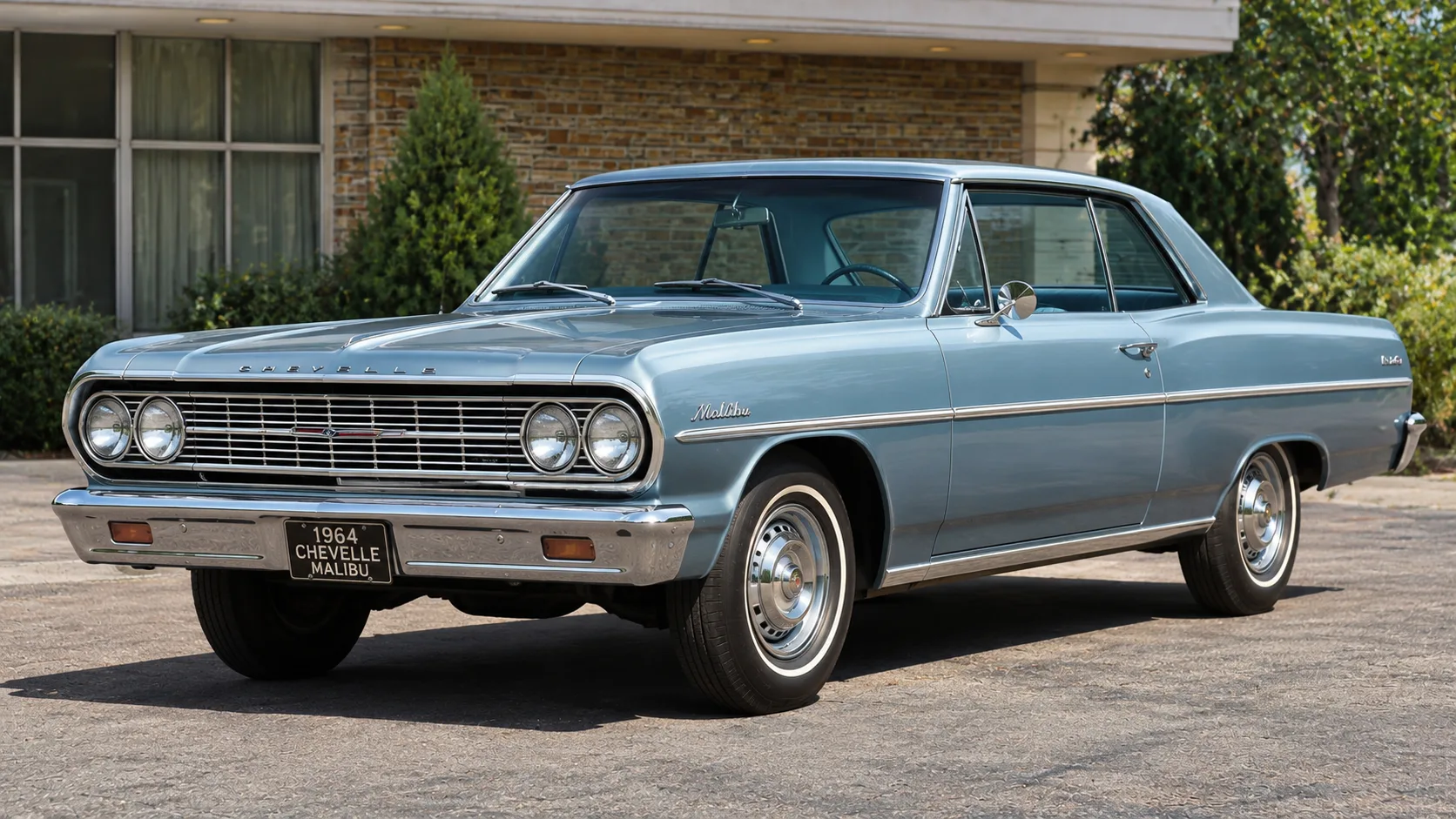
The first Malibu featured a wide front grille, quad headlamps, chrome
bumpers and clean body lines. Its long hood and defined rear deck gave it the
proportions associated with American intermediate cars of the period.
Malibu models received upgraded trim and interior appointments compared with
the basic Chevelle series. Equipment varied according to body style and factory
options.
The two-door Sport Coupe and convertible became particularly recognizable
versions of the original Malibu range.
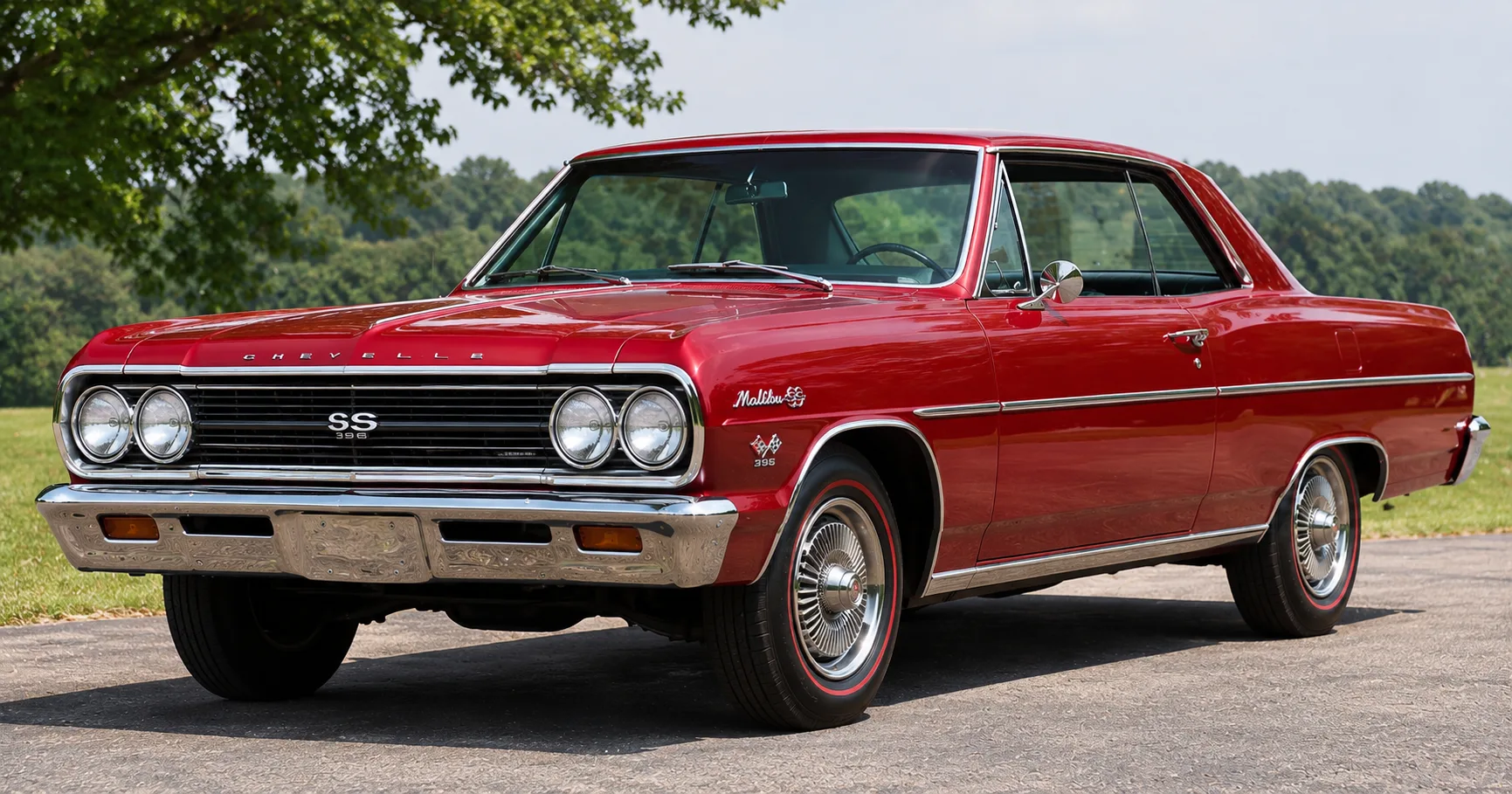
1964–1965 Chevrolet Malibu SS
The Malibu Super Sport, commonly known as the Malibu SS, added a sportier
identity to the Chevelle lineup.
For 1964 and 1965, Malibu SS was a distinct series within the Chevelle
range. It was offered as a two-door Sport Coupe and convertible, with
sport-oriented equipment such as bucket seats, special trim and SS
identification.
However, the original Malibu SS should not be confused with the later
Chevelle SS 396. The early Malibu SS designation covered a sporty series, while
the later SS 396 became a separate performance model identity.
1965 Malibu SS Z16
One of the most important developments in early Malibu history arrived for
1965 with the introduction of the Z16 performance package.
The original Chevrolet factory documentation identifies this configuration
as Malibu SS 396 Equipment – RPO Z16.
The Z16 used a 396-cubic-inch V8 rated at 375 horsepower and 420 lb-ft of
torque. It was paired with a four-speed manual transmission and included
additional performance-related equipment.
|
Factory
specification |
1965 Malibu SS
Z16 |
|
Engine |
396-cubic-inch V8 |
|
Displacement |
6.5 liters |
|
Horsepower |
375 hp |
|
Torque |
420 lb-ft |
|
Transmission |
Four-speed manual |
|
Factory package |
RPO Z16 |
The Z16 is remembered as one of the most significant early Chevelle-based
performance configurations. Its production was extremely limited; collector
histories commonly report 201 examples, although that figure should be treated
as a historical production claim rather than a specification printed on the
factory equipment sheet.
1966–1967: The Chevelle SS 396 Becomes a Separate Series
For the 1966 model year, Chevrolet changed the way it identified its
high-performance intermediate cars.
The Malibu continued as a Chevelle series, while the SS 396 appeared as a
separate series in Chevrolet's model documentation. This distinction is
important when researching original cars.
The SS 396 offered big-block V8 performance and dedicated performance
equipment. Regular Malibu models continued to serve customers who wanted an
upscale intermediate car without choosing the separate SS 396 model.
The two shared the broader Chevelle family, but they should not be treated
as identical factory models.
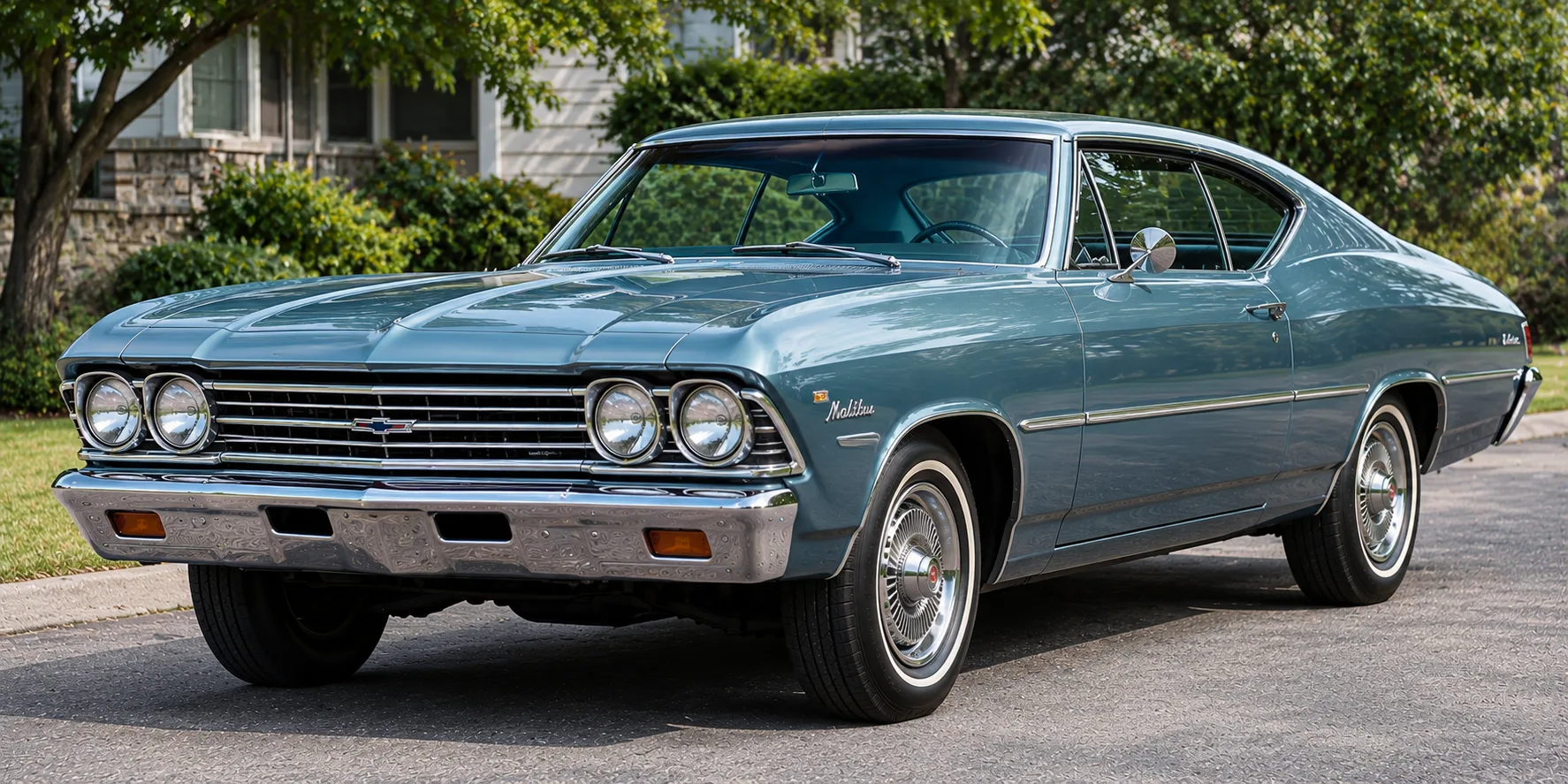
1968–1972: The Redesigned Chevelle Malibu
Chevrolet introduced a completely new Chevelle body and interior for the
1968 model year. The two-door and four-door models also received different
wheelbase lengths.
The redesign gave the Malibu a more sculpted appearance. The two-door models
developed a particularly recognizable profile, while four-door sedans and
station wagons continued to serve family-car buyers.
The rear-wheel-drive layout remained, and Chevrolet continued offering
several engine configurations across the Chevelle range.
1968 Engine Options
The 1968 Chevelle factory documentation lists a range of six-cylinder and V8
engines. These included a 250-cubic-inch six-cylinder and several
327-cubic-inch V8 configurations.
The 396-cubic-inch V8 was associated with the separate SS 396 models, rather
than being a standard engine across the regular Malibu range.
Engine availability depended on the specific series, body style and factory
configuration. A specification listed for one Chevelle model should not
automatically be applied to every Malibu.
1973–1977: The Colonnade Malibu
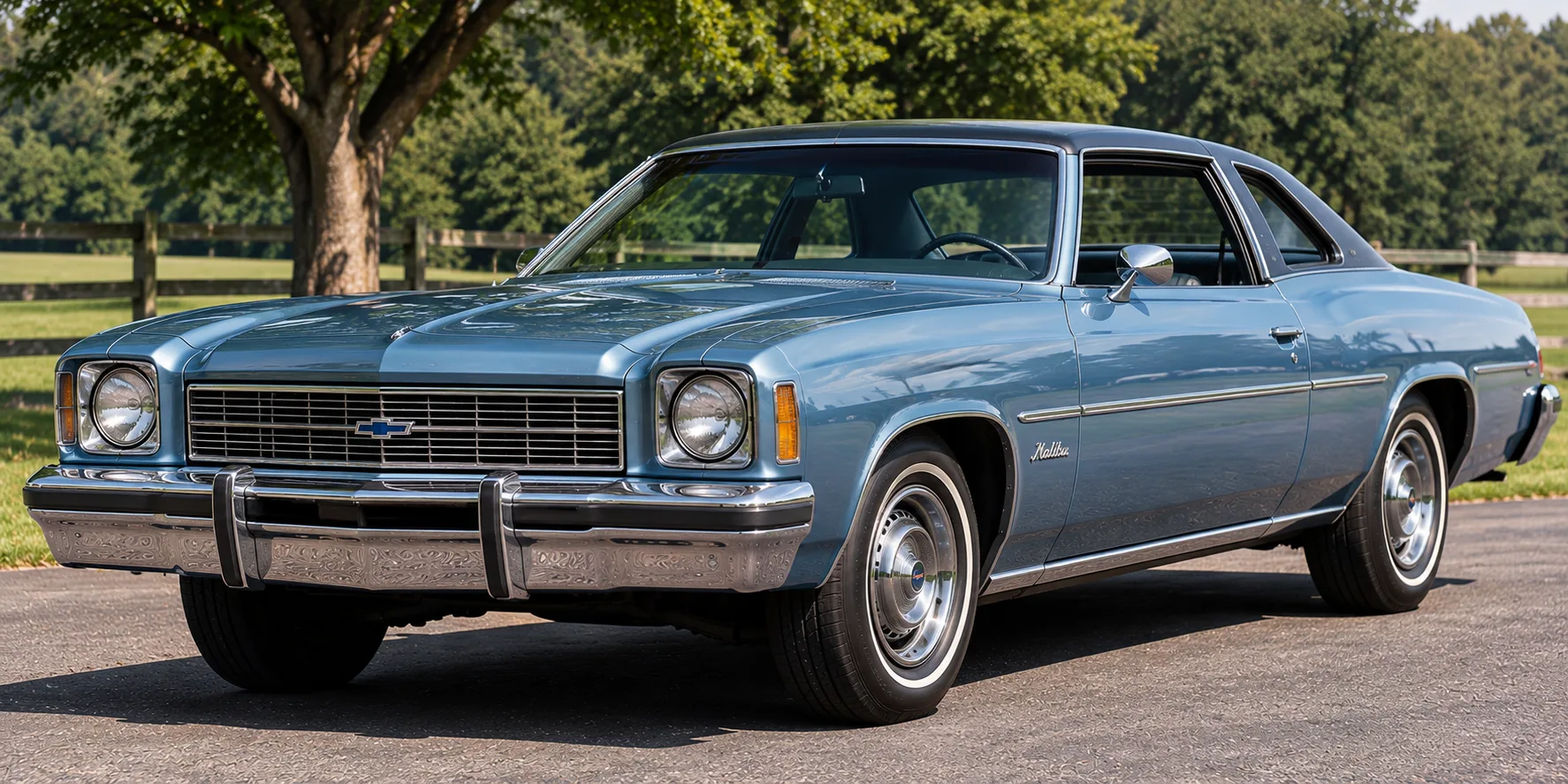
The 1973 model year introduced another major redesign for Chevrolet's
intermediate cars.
The new Chevelle range became longer and wider. Its styling included a
distinctive pillared roof arrangement known as Colonnade styling. The two-door
models used a different roof design from the earlier hardtop-style cars.
Malibu remained a central series within the Chevelle range. Buyers could
choose from coupe, sedan and station-wagon configurations, depending on the
year and trim level.
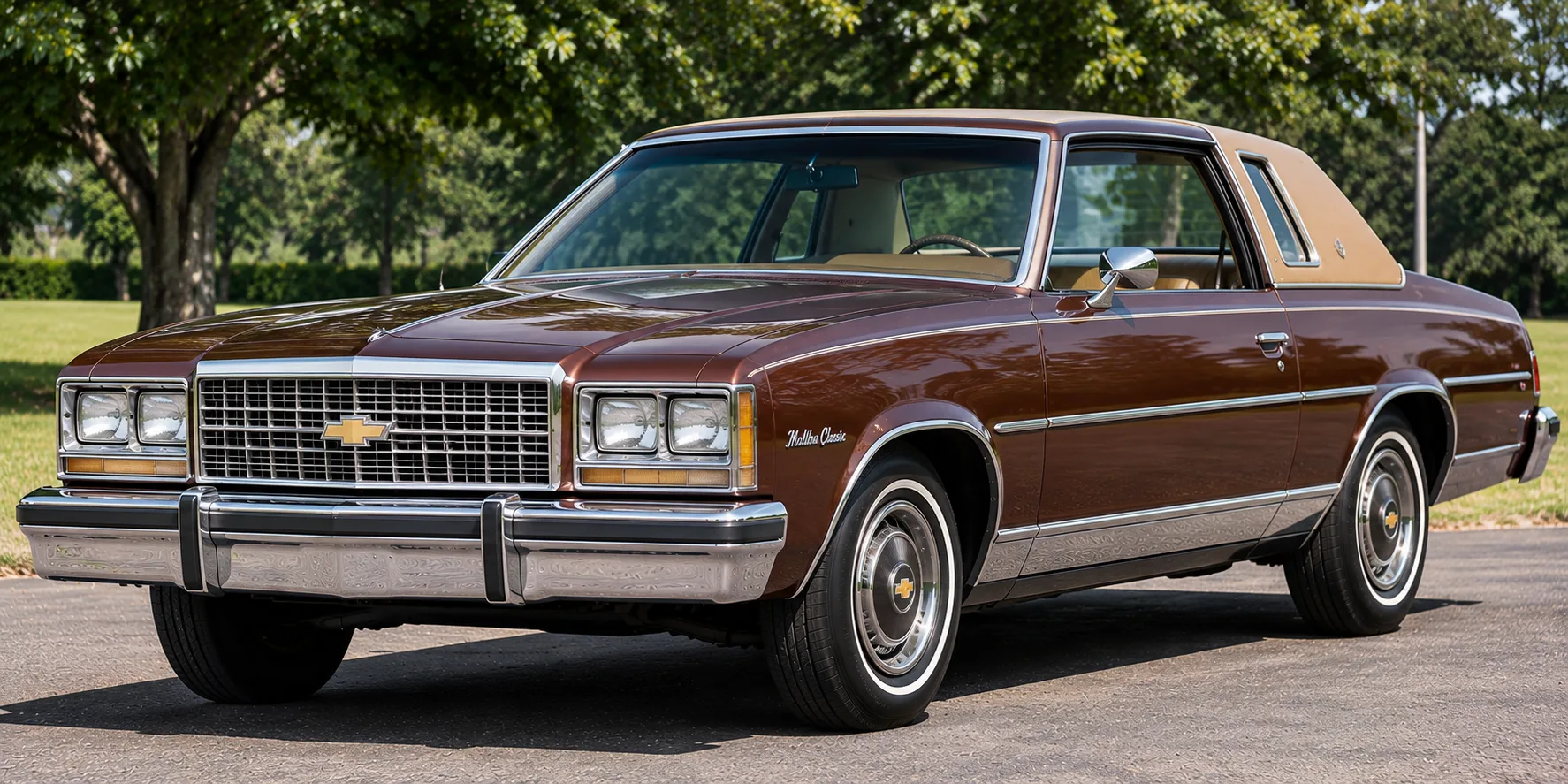
Malibu Classic
The Malibu Classic represented a more highly equipped version of the range.
It focused on comfort and appearance, with additional interior and exterior
appointments.
Equipment differed according to model year and body style. Some versions
featured distinctive roof treatments and more upscale interior trim.
Engine and Regulatory Changes
The Colonnade era also reflected changes in the American automotive
industry.
Chevrolet's historical Malibu timeline records an improved 250-cubic-inch
six-cylinder engine for 1975. The same factory history notes that catalytic
converters were added across the models.
Engine choices varied throughout the 1973–1977 period. Six-cylinder and V8
configurations were available, but the exact engine, horsepower rating and
equipment depended on the individual model year.
These cars should therefore be identified using their year-specific factory
information rather than a single specification applied to the entire
generation.
1978–1981: The Standalone Chevrolet Malibu
The 1978 model year marked the end of the Chevelle name in Chevrolet's
midsize-car lineup.
Chevrolet introduced a new Malibu range, making Malibu the standalone model
name rather than a series within the Chevelle family.
The redesigned car was smaller than the preceding Colonnade models. It used
a 108.1-inch wheelbase and retained a conventional front-engine,
rear-wheel-drive layout.
The new generation is commonly associated with General Motors' G-body era.
It was offered in coupe, sedan and station-wagon body styles.
Although enthusiasts often group the 1978–1983 Malibu models under the G-body name, General Motors originally identified the 1978–1981 cars as A-body models. The rear-wheel-drive intermediate platform received the G-body designation for the 1982 model year, when GM introduced its new front-wheel-drive A-body lineup. The earlier and later cars remained closely related in their basic engineering.
1978 Malibu Body Styles
The 1978 Chevrolet factory information kit identifies three main Malibu body
configurations:
·
Two-door Sport Coupe
·
Four-door Sedan
·
Four-door Station Wagon
The Malibu Classic provided a more upscale version of the range. Depending
on configuration, it was offered in Sport Coupe, Landau Coupe, Sedan and
Station Wagon forms.
The downsized design was part of the wider move toward smaller and more
fuel-conscious American cars.
1978 Engine Options
The 1978 factory documentation lists a 200-cubic-inch V6 as the standard
engine for federal-market Malibu models. A 231-cubic-inch V6 was specified for
certain California-market configurations.
Optional V8 engines included 305- and 350-cubic-inch units, with ratings
varying according to emissions specifications.
These figures belong specifically to the 1978 model year. They should not be
used as universal specifications for every 1978–1983 Malibu.
1982–1983: The Final Years of the Rear-Wheel-Drive Malibu
The Malibu lineup became more limited during its final years.
Chevrolet's official Malibu historical summary explains that the company was
preparing to introduce the front-wheel-drive midsize Celebrity during 1982. As
part of this change, only two Malibu Classic passenger-car models were offered
for 1982: a four-door sedan and a station wagon.
This reflected the broader transition toward front-wheel-drive midsize cars
in the American market.
1983: Final Year of the Malibu Passenger Car
The 1983 model year marked the final year for the rear-wheel-drive Chevrolet
Malibu passenger car.
There is one important distinction: the El Camino, which GM's historical
timeline identifies as a Malibu variant, continued beyond 1983 and remained in
production through 1987.
Therefore, 1983 marks the end of the rear-wheel-drive Malibu passenger-car
line, not the end of every vehicle connected with the Malibu name.
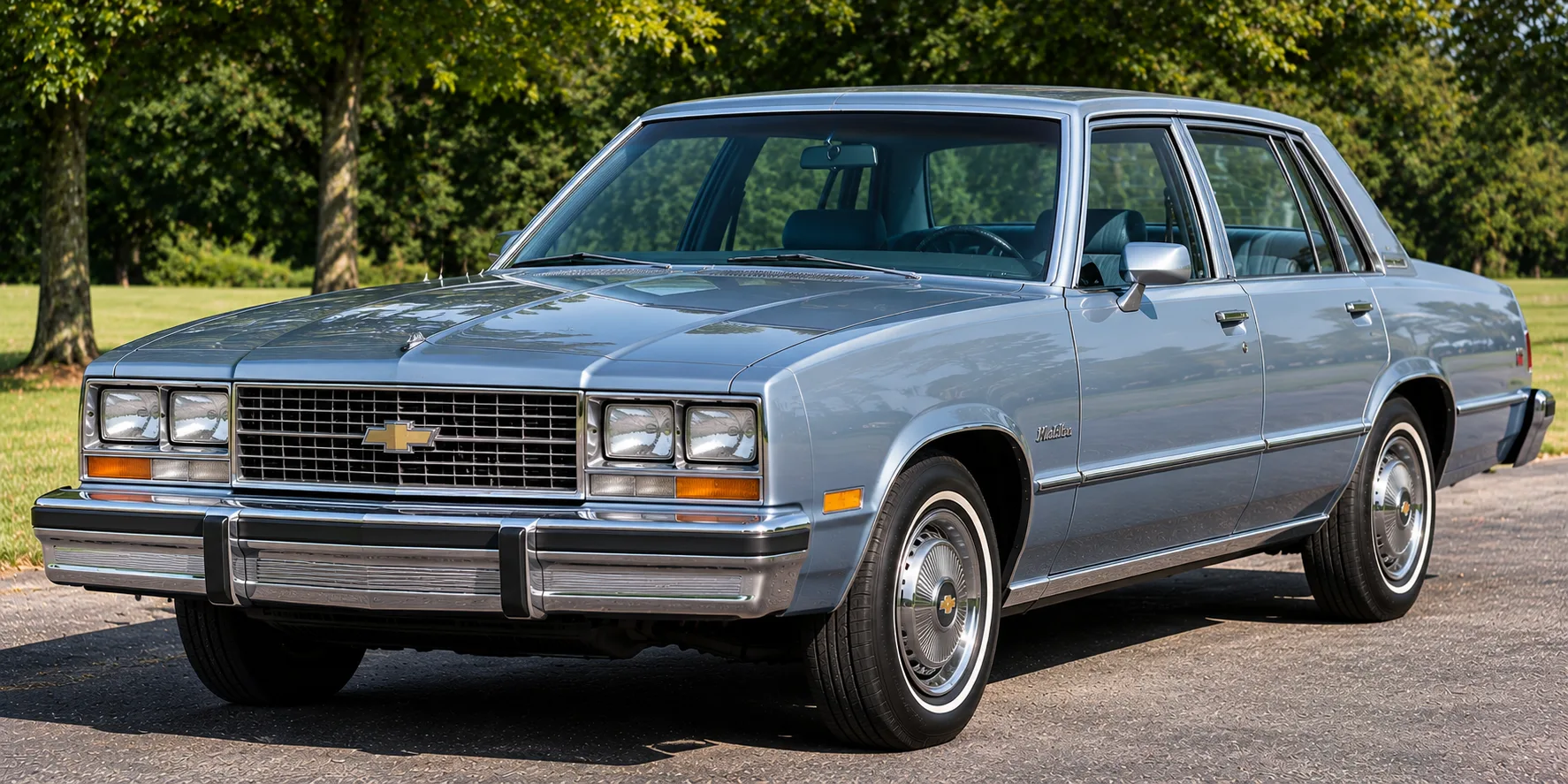
Chevrolet Malibu Engine and Transmission Evolution
Engine choices changed considerably throughout the classic Malibu years.
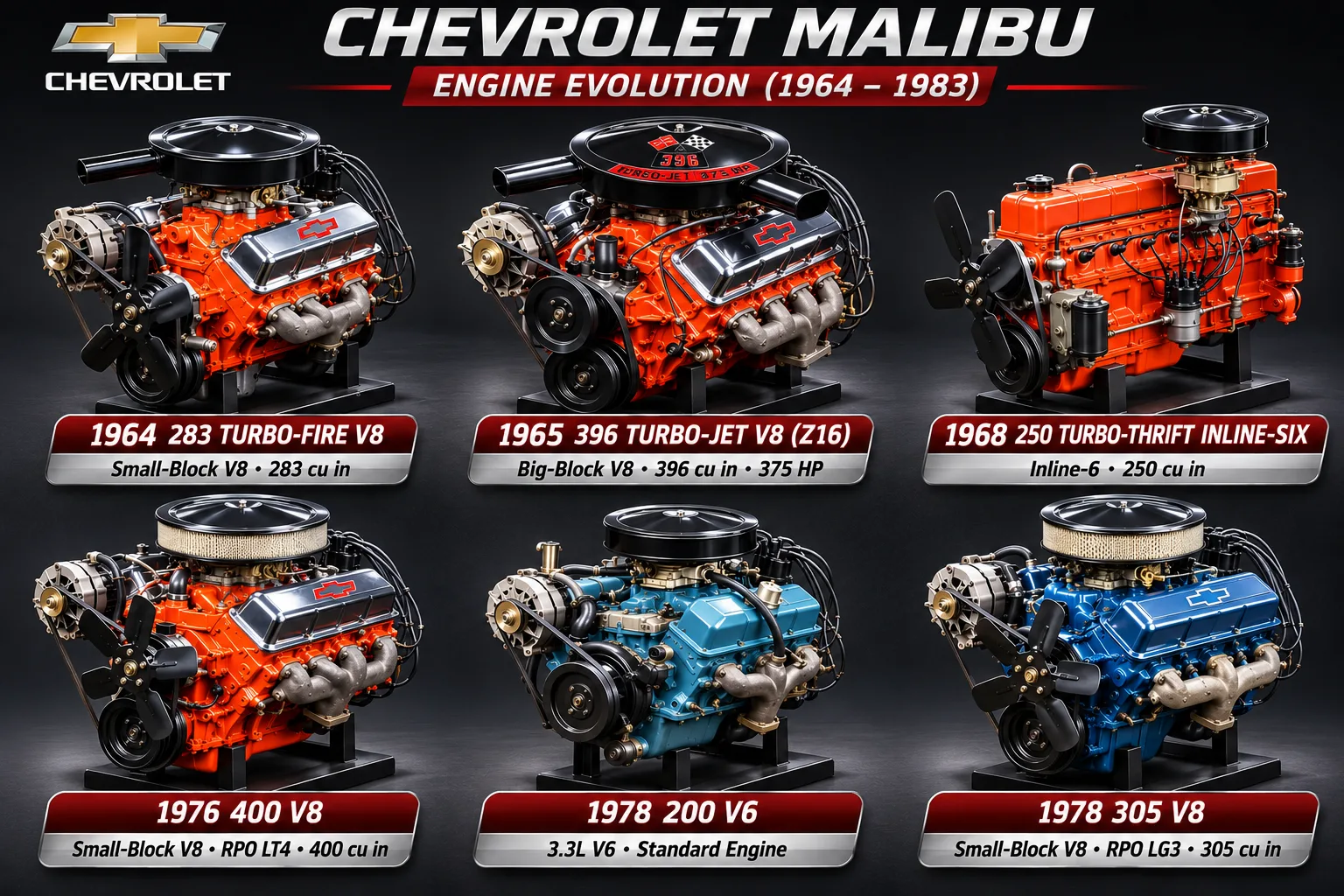
The early Chevelle-based models offered six-cylinder and small-block V8
power. Special performance configurations such as the 1965 Z16 added a
big-block V8. Later Chevelle models continued with different six-cylinder and
V8 options, while the downsized 1978 Malibu used smaller engines alongside
optional V8 configurations.
The following examples illustrate important points in that evolution:
|
Model year |
Representative
powertrain information |
|
1964 |
Chevelle range included six-cylinder and small-block V8
engines |
|
1965 Z16 |
396 V8, 375 hp, 420 lb-ft, four-speed manual |
|
1968 |
250 six-cylinder and 327 V8 choices across the Chevelle
range |
|
1975 |
Improved 250-cubic-inch six-cylinder noted in GM's
historical summary |
|
1978 |
200 V6 standard in federal models; 231 V6 for specified
California models; optional 305 and 350 V8s |
Manual and Automatic Transmissions
Transmission availability changed according to model year and engine.
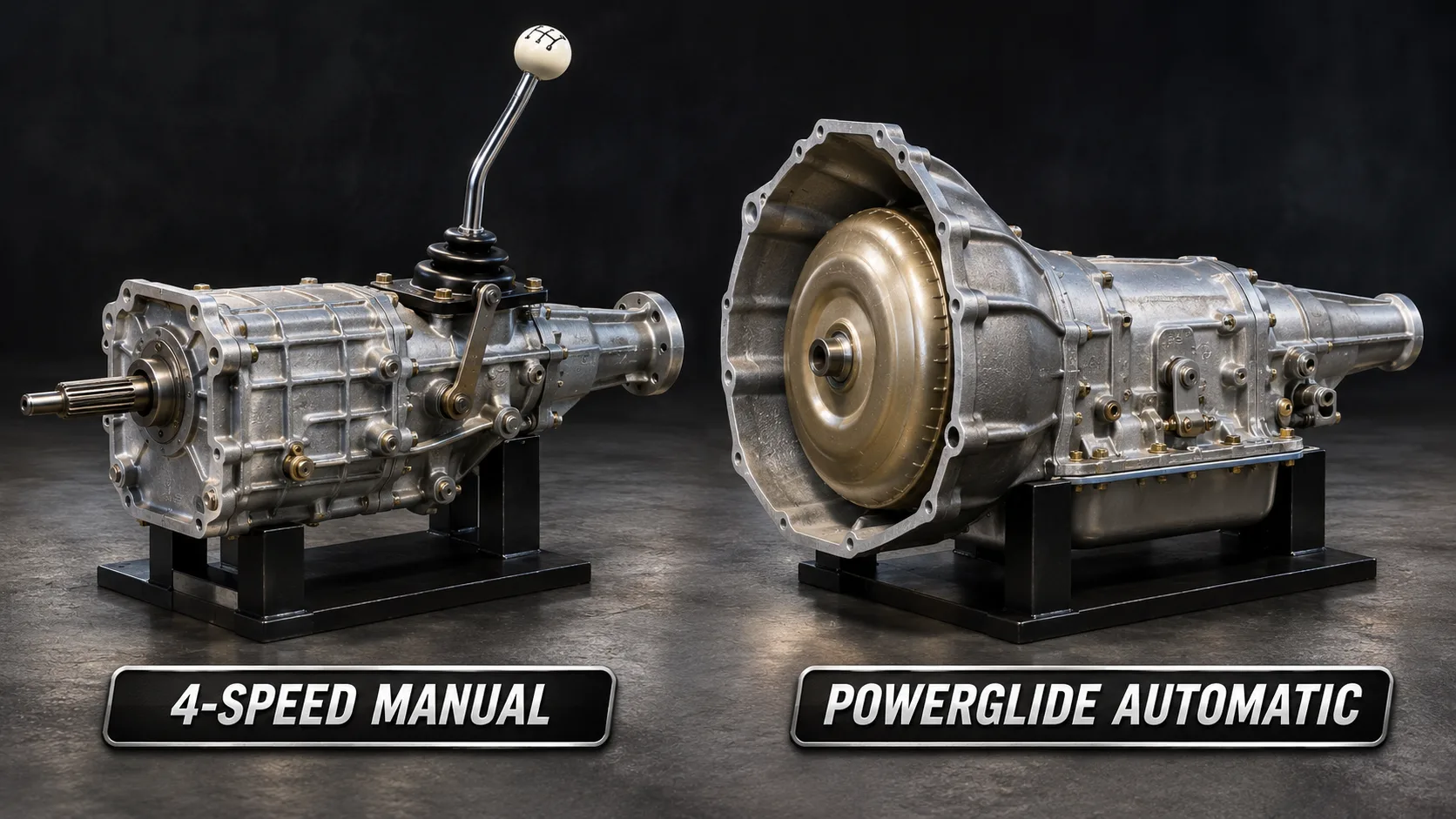
The early Chevelle range offered manual and automatic transmission choices.
The special 1965 Z16 package used a four-speed manual transmission.
Later Chevelle models continued to offer different manual and automatic
arrangements, while the 1978 Malibu factory information listed transmission
combinations according to the selected engine.
It would be inaccurate to claim that every classic Malibu was available with
the same transmission. Engine, transmission and equipment combinations must be
matched to the exact model year.
Rear-Wheel Drive and the G-Body Era
Rear-wheel drive remained a defining characteristic of the classic Malibu
passenger car from its introduction through the 1983 model year.
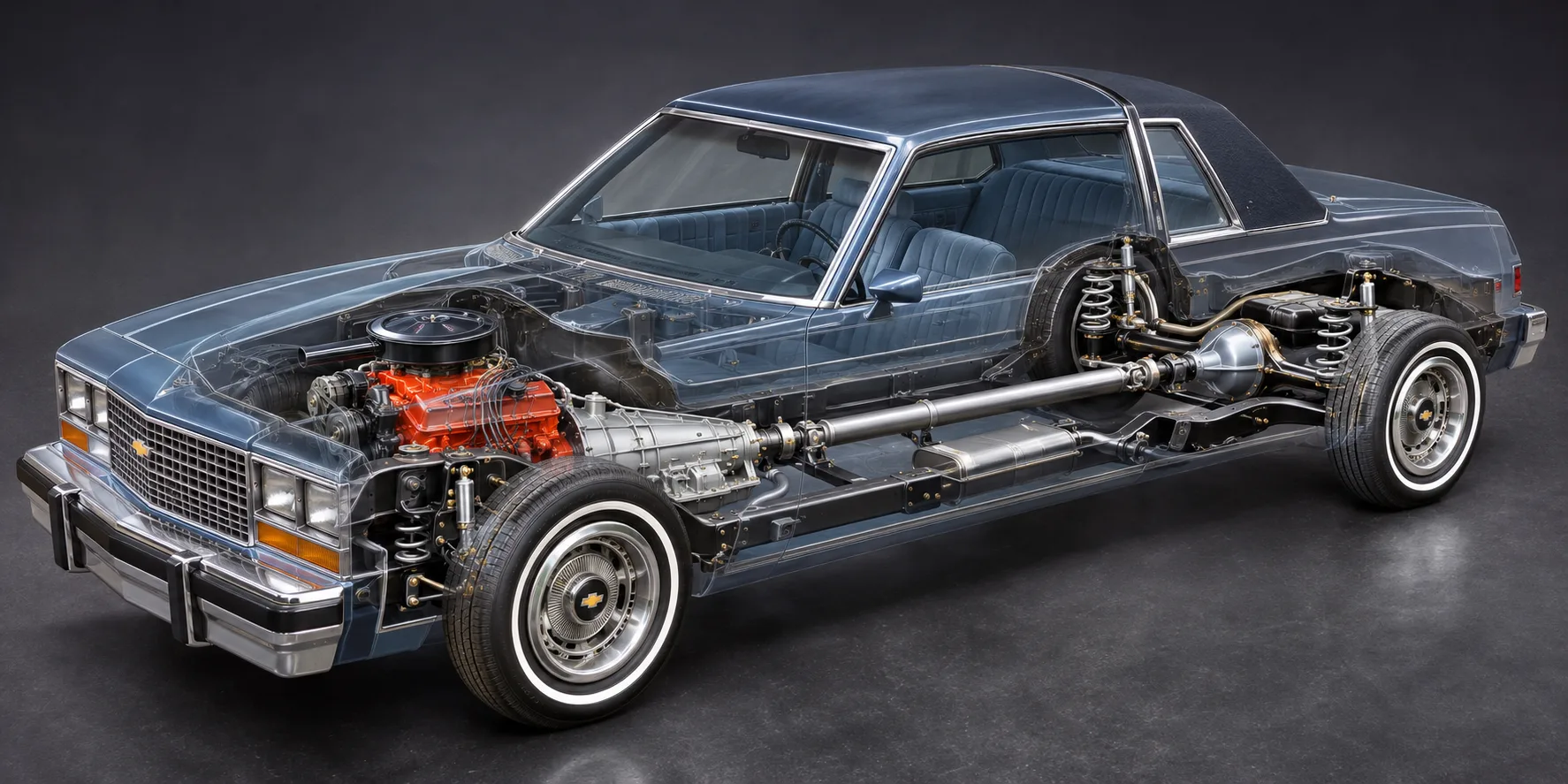
The 1964–1977 cars were Chevelle-based intermediate models. The 1978
redesign brought a smaller standalone Malibu with a 108.1-inch wheelbase.
The later model became associated with GM's G-body family. Its conventional
mechanical layout and available V8 engines helped it develop a strong following
among enthusiasts.
The G-body Malibu also became popular as a basis for modified street and
drag-racing cars. However, modified examples should not automatically be treated
as original factory configurations.
Engine swaps, suspension modifications, aftermarket wheels and other changes
are common among surviving cars. Factory records and year-specific
documentation are more reliable than badges or appearance alone when identifying
an original vehicle.
Classic Chevrolet Malibu Model Timeline
|
Model years |
Malibu identity |
Main development |
|
1964–1965 |
Chevelle Malibu |
Malibu introduced as the top Chevelle series; early Malibu
SS |
|
1965 |
Malibu SS Z16 |
Special RPO Z16 396 V8 package |
|
1966–1967 |
Chevelle Malibu |
SS 396 identified as a separate series |
|
1968–1972 |
Chevelle Malibu |
New body and interior introduced |
|
1973–1977 |
Colonnade Malibu |
Longer and wider body with pillared roof styling |
|
1978–1981 |
Standalone Malibu |
Downsized rear-wheel-drive model line |
|
1982 |
Malibu Classic |
Passenger-car lineup reduced to sedan and wagon |
|
1983 |
Standalone Malibu |
Final year for the rear-wheel-drive Malibu passenger car |
What Makes the Classic Chevrolet Malibu Important?
The classic Malibu represents several stages of American automotive
development.
The early Chevelle-based models combined practical midsize dimensions with
upscale trim and available V8 power. The Malibu SS and the rare Z16 package
connected the name with Chevrolet's early performance history.
The 1968 redesign introduced a new body and interior, while the 1973
Colonnade models reflected changing design and safety priorities.
The 1978 standalone Malibu then moved the name into a smaller
rear-wheel-drive generation. Its G-body construction and available V8 engines
helped it remain popular among Chevrolet enthusiasts.
Today, collectors value these vehicles for different reasons. Some prefer
the early Chevelle-based Malibu and its connection to the muscle-car era.
Others favor the later G-body cars for their proportions, mechanical layout and
customization potential.
Although they share the Malibu name, their design, platforms and factory
specifications are different. That distinction is central to understanding the
classic Chevrolet Malibu.
Frequently Asked Questions
When was the Chevrolet Malibu first introduced?
The Malibu name first appeared for the 1964 model year as the top series in
Chevrolet's new Chevelle lineup.
Was the 1964 Chevrolet Malibu a separate model?
No. The 1964 Malibu was a series within the Chevelle family. It became a standalone
Chevrolet model line for the 1978 model year.
What was the original Malibu SS?
The original Malibu SS was a sport-oriented Chevelle series introduced for
1964. It featured special trim and equipment, including bucket seats and SS
identification.
What made the 1965 Malibu SS Z16 special?
The Z16 package used a 396-cubic-inch V8 rated at 375 horsepower and 420
lb-ft of torque. It also included a four-speed manual transmission and
additional performance equipment.
Was the Chevelle SS 396 the same as the Malibu SS?
No. Chevrolet identified the SS 396 as a separate series for 1966. The early
Malibu SS and the later SS 396 should not be treated as identical factory
models.
When did Malibu become a standalone Chevrolet model?
Chevrolet introduced the standalone Malibu line for the 1978 model year,
after discontinuing the Chevelle name.
Was the classic Chevrolet Malibu rear-wheel drive?
Yes. The classic Chevelle-based Malibu models and the later standalone
Malibu passenger cars used rear-wheel drive through the 1983 model year.
What engines were available in the classic Malibu?
Engine availability varied by year and configuration. The range included
six-cylinder and V8 engines, with the special 1965 Z16 using a 396-cubic-inch
V8.
What was the final year of the rear-wheel-drive Malibu passenger car?
The 1983 model year was the final year for the rear-wheel-drive Chevrolet
Malibu passenger car. The El Camino continued afterward.
What is a G-body Malibu?
The 1978–1983 standalone Malibu is commonly associated with GM's
rear-wheel-drive G-body era. It was smaller than the preceding Chevelle-based
models and used a 108.1-inch wheelbase.
Conclusion
The classic Chevrolet Malibu story began in 1964 as part of the Chevelle
lineup and continued through the final rear-wheel-drive passenger cars of 1983.
During those years, Malibu evolved from an upscale Chevelle series into a
standalone Chevrolet model. Its history includes the early Malibu SS, the rare
1965 Z16, the redesigned Chevelle models of the late 1960s, the Colonnade era
and the downsized G-body generation.
These cars reflected changing American tastes, engineering priorities and
performance expectations. Although they shared a name, each period had its own
distinct design and mechanical identity.
From the first Chevelle-based Malibu to the final 1983 passenger car, the
classic Malibu remains an important chapter in Chevrolet's history.
References
1. General
Motors – GM Heritage Archive: Vehicle Information Kits. Official
archive containing year-specific Chevrolet factory information kits.
https://www.gm.com/heritage/archive/vehicle-information-kits
2. General
Motors – 2001 Chevrolet Malibu Restoration Kit. Official manufacturer
history summarizing the Malibu timeline from 1964 through 1997, including the
1978, 1982 and 1983 changes.
https://news.chevrolet.com/content/dam/company/no_search/heritage-archive-docs/vehicle-information-kits/chevrolet/2001-Chevrolet-Malibu.pdf
3. General
Motors – 1964 Chevrolet Chevelle Vehicle Information Kit. Original
manufacturer documentation for the first Chevelle model year.
https://www.gm.com/content/dam/company/no_search/heritage-archive-docs/vehicle-information-kits/chevrolet/1964-Chevrolet-Chevelle.pdf
4. General
Motors – 1965 Chevrolet Chevelle Vehicle Information Kit. Original
factory documentation for the 1965 Chevelle and Malibu SS range.
https://www.gm.com/content/dam/company/no_search/heritage-archive-docs/vehicle-information-kits/chevrolet/1965-Chevrolet-Chevelle.pdf
5. General
Motors – 1968 Chevrolet Chevelle Vehicle Information Kit. Factory
documentation covering the redesigned 1968 Chevelle range and powertrain
information.
https://www.gm.com/content/dam/company/no_search/heritage-archive-docs/vehicle-information-kits/chevrolet/1968-Chevrolet-Chevelle.pdf
6. General
Motors – 1973 Chevrolet Chevelle Vehicle Information Kit. Factory
documentation for the Colonnade-era redesign.
https://www.gm.com/content/dam/company/no_search/heritage-archive-docs/vehicle-information-kits/chevrolet/1973-Chevrolet-Chevelle.pdf
7. General
Motors – 1976 Chevrolet Chevelle Vehicle Information Kit. Factory
model-year documentation for the later Chevelle Malibu range.
https://www.gm.com/content/dam/company/no_search/heritage-archive-docs/vehicle-information-kits/chevrolet/1976-Chevrolet-Chevelle.pdf
8. General
Motors – 1978 Chevrolet Malibu Vehicle Information Kit. Factory
documentation for the first standalone downsized Malibu.
https://www.gm.com/content/dam/company/no_search/heritage-archive-docs/vehicle-information-kits/chevrolet/1978-Chevrolet-Malibu.pdf
9. General
Motors – 1983 Chevrolet Malibu Vehicle Information Kit. Factory
documentation for the final year of the rear-wheel-drive Malibu passenger car.
https://www.gm.com/content/dam/company/no_search/heritage-archive-docs/vehicle-information-kits/chevrolet/1983-Chevrolet-Malibu.pdf
Historical specification note: Engine availability,
horsepower, torque, transmission combinations and equipment varied by model
year, series, body style and market. The figures in this article are limited to
selected factory-documented examples. Use the relevant year-specific GM vehicle
information kit when identifying or restoring an individual car.
Have thoughts, dyno data, or build feedback?
Join automotive enthusiasts in the paddock below to debate engineering, lap times, and modifications.
Community Pulse
How does this machine make you feel? Drop your reaction!

VehicleDrugs Editorial
VehicleDrugs Editorial Team
A passionate collective of automotive purists, track drivers, and mechanical engineers uncovering high-octane engineering breakthroughs worldwide.
🏁 Pit Crew Discussions
Drop your telemetry, debate the engineering, or talk track times with fellow petrolheads.
The Pit Lane is Quiet
Be the first driver to drop your opinion on this machine!