
1964 Ford Mustang: The Car That Changed America
Discover how the 1964 Ford Mustang changed American car culture with its affordable price, V8 options, record-breaking sales and lasting legacy.
HEAD-TO-HEAD MUSCLE CAR VS COMPARISON
Compare 0-60, peak horsepower, torque, and quarter-mile times across iconic builds.
The 1964 Ford Mustang: The Car That Changed America
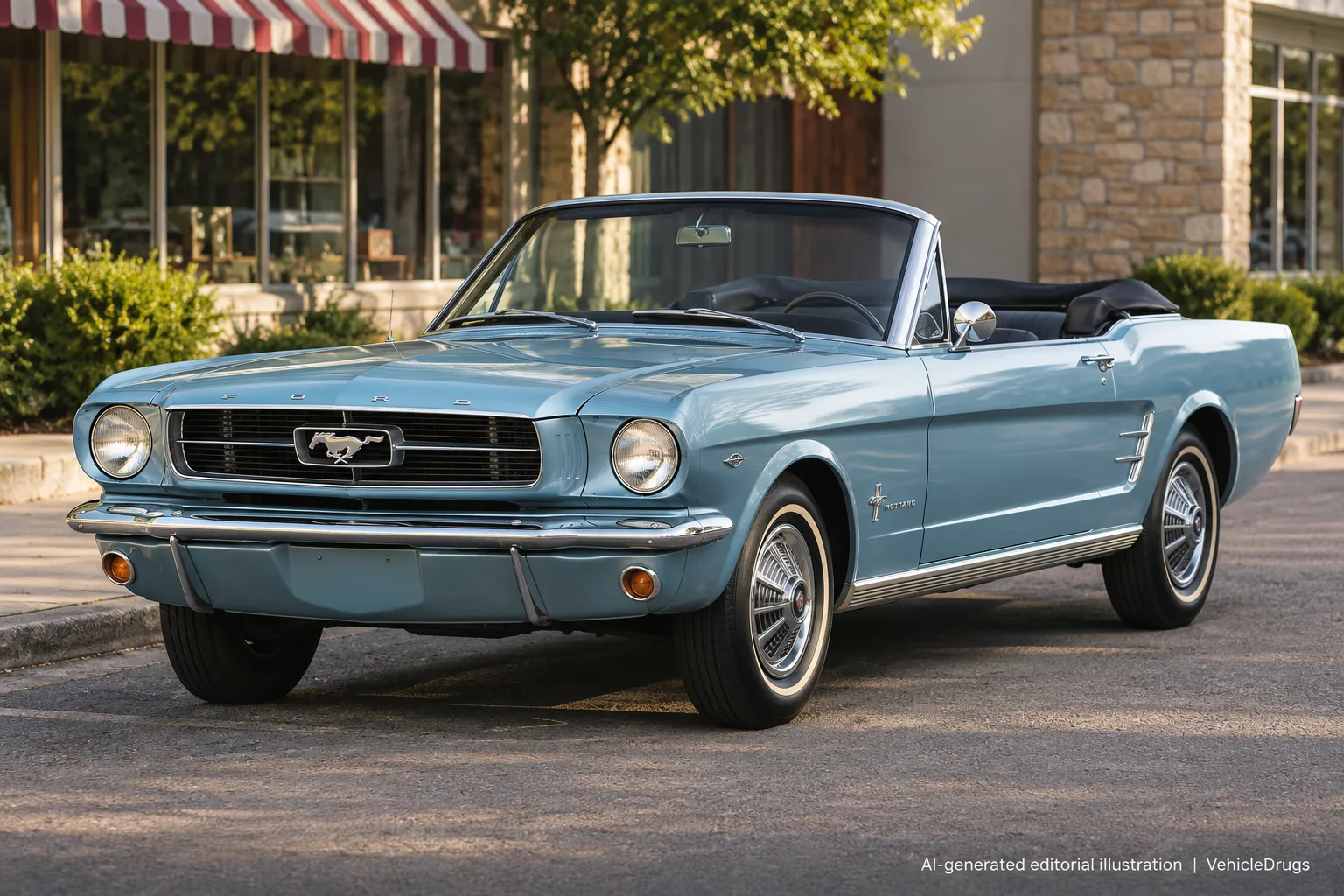
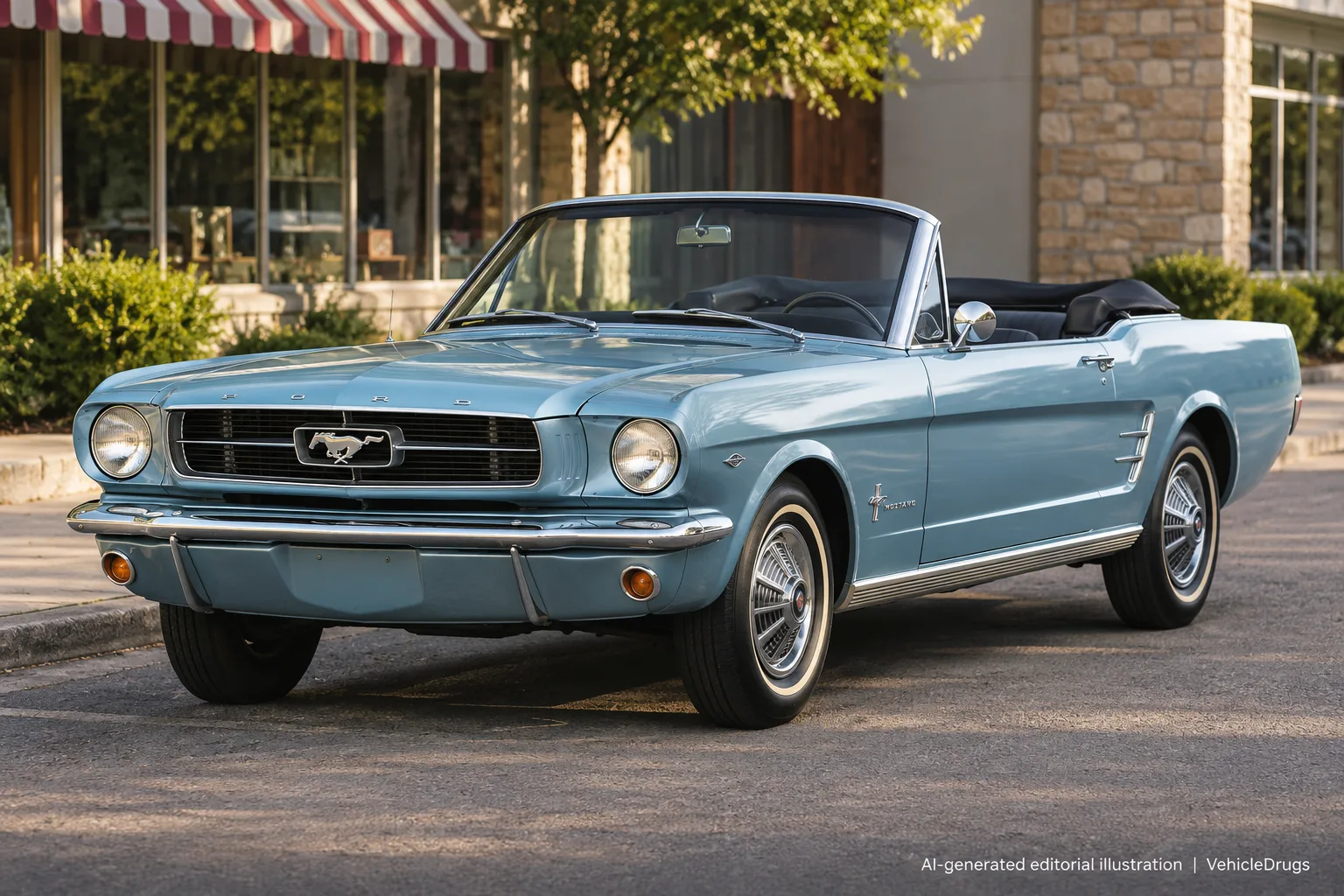
On April 15, 1964, a young Chicago-area teacher named Gail Brown bought a
blue Ford Mustang convertible from a local dealership. The car had not yet
reached its official public launch. Ford's own history identifies Brown, later
known as Gail Wise, as its first known retail customer.
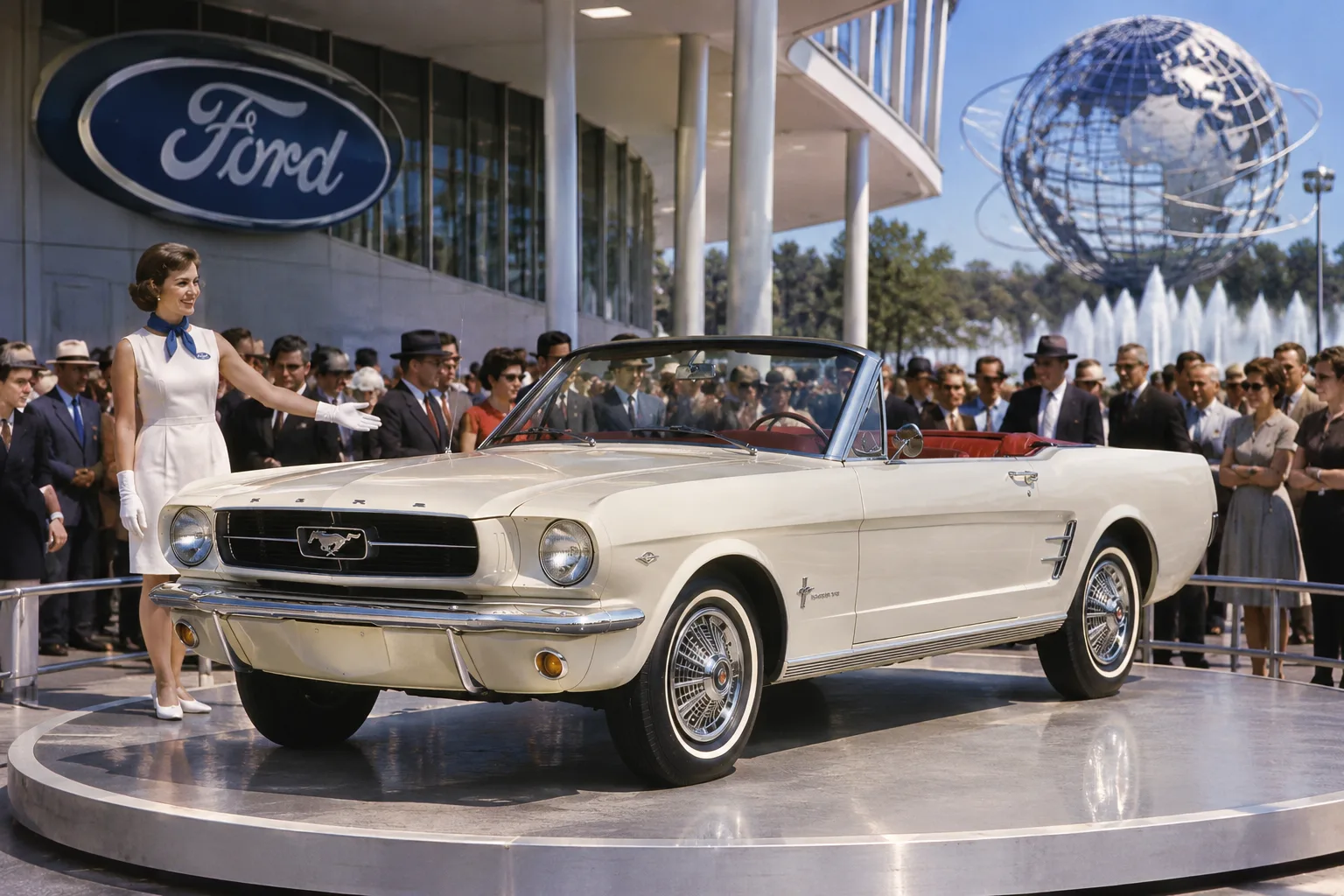
Two days later, on April 17, Ford introduced the Mustang to the public at
the New York World's Fair. The company expected to sell about 100,000 cars a
year. Instead, it received approximately 22,000 orders on the first day. By its
first anniversary, Ford had sold 418,812 Mustangs, making it one of the most
successful new-model launches in American automotive history.
The Mustang was more than a new model. It combined sporty styling, an
accessible starting price, practical passenger space, and a wide range of
engine and equipment choices. That combination helped establish the formula
that became known as the American pony car.
More than six decades later, the first-generation Mustang remains one of the
most recognizable cars in American automotive history. Its story began with
Ford trying to reach a generation of younger buyers who wanted something
different from the cars their parents drove.
Why Ford Wanted a Different Kind of Car
In the early 1960s, Lee Iacocca, who became vice president and general
manager of Ford Division in November 1960, saw enormous potential in the
postwar baby-boom generation. Younger Americans were approaching driving age,
and Ford needed a car that could appeal to their interests.
The company already had the compact Falcon, a practical and relatively
affordable model. Its Thunderbird occupied a more expensive personal-car category.
But there was an opportunity between those two ideas: a sporty-looking car that
ordinary buyers could afford and use every day.
Ford was also dealing with the expensive failure of the Edsel, which had
left the company with a reported $250 million loss. The experience made
approval for another major new vehicle program difficult.
Iacocca quietly assembled a small group of trusted advisers to develop his
proposed youth-oriented car. Rather than meeting in the main offices, the group
gathered at the Fairlane Inn, a motor lodge about two miles from Ford's world
headquarters in Dearborn.
This group became known as the Fairlane Committee.
The committee established several broad requirements. The new car needed
seating for four, an ample trunk, a long hood, and a short rear deck. It also
needed a wide range of options so customers could personalize their vehicles.
The target weight was under 2,500 pounds, and the base price had to remain
below $2,500. Ford also wanted the car ready for an April 1964 introduction at
the New York World's Fair, which offered an opportunity for major public
attention.
Built on the Ford Falcon
One of the most important decisions in the Mustang's development was to use
an existing Ford platform rather than design an entirely new car.
Hal Sperlich, a Ford Special Projects Assistant, is credited by The
Henry Ford's history of the Mustang with the key proposal to build the car
on the Falcon chassis.
Developing a completely new vehicle from scratch could have required
approximately $400 million in development costs. That would have made it
extremely difficult for Ford to meet the project's affordable-price target,
particularly after the Edsel experience.
The Falcon was already an established production model, with a platform
close to the size Ford wanted. Using its foundation helped the company save
time and money while allowing the Mustang to receive its own distinctive body
styling and equipment.
The decision was central to the Mustang's business strategy. Ford could
offer a sporty-looking personal car without carrying the cost of developing
every mechanical component from the beginning.
Finding the Mustang's Look
The Mustang's long hood and short rear deck became two of its most
recognizable design features. The proportions suggested power and speed while
giving the car a compact, sporty appearance.
Throughout the spring and summer of 1962, Ford's designers developed
numerous proposals using sketches and clay models. According to The
Henry Ford's historical account, at least 18 versions were brought forward
before the project team found a direction it considered suitable.
Iacocca then organized an internal design competition. Teams from Ford
Division, Lincoln-Mercury, and Ford's Advance Projects department were asked to
develop proposals for the new car.
Within three weeks, the teams had produced six different designs. The Ford
Division team won the competition with the design that became the production
Mustang.
Ford's 50-year
Mustang milestone history credits Gale Halderman's sketches and subsequent
clay model with establishing the familiar proportions. The Henry Ford's account
also identifies Halderman as the Mustang's design chief.
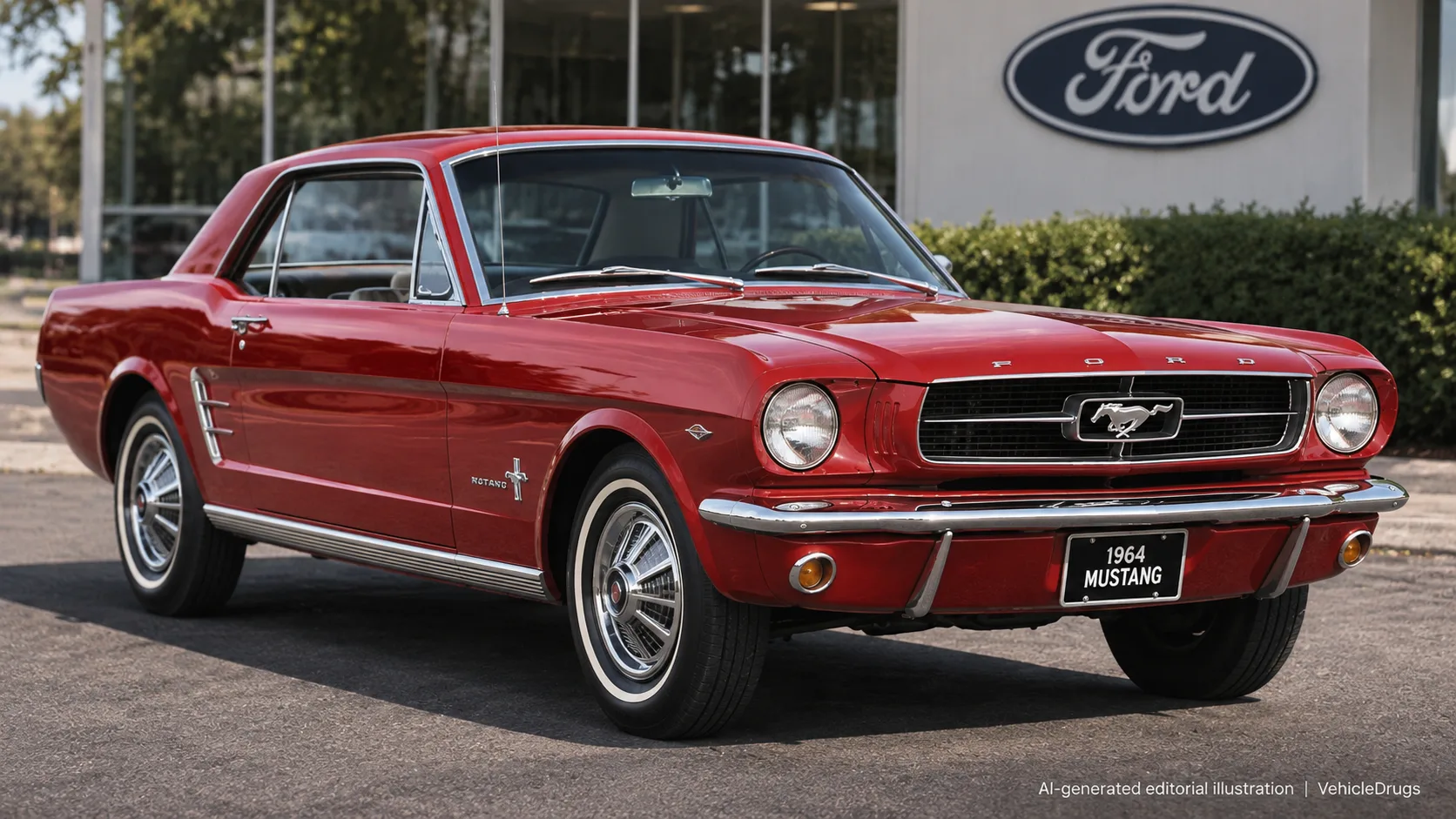
The resulting car featured a long, sweeping hood, a short rear deck,
sculpted body sides, a distinctive grille with the galloping-horse emblem, and
three-section vertical taillights.
Henry Ford II approved the project in September 1962, with three conditions:
the car had to be developed for $45 million rather than the $75 million Iacocca
had requested, gain an additional inch of rear-seat legroom, and succeed in the
marketplace.
Where the Mustang Name Came From
The Mustang name has two connected but separate stories.
The first car to wear the Mustang name was an experimental two-seat,
mid-engine concept introduced in October 1962 at the United States Grand Prix
at Watkins Glen, New York. Race driver Dan Gurney drove the concept around the
circuit.
Ford's milestone history credits designer John Najjar with suggesting the
Mustang name for this experimental car. The name was associated with the P-51
Mustang fighter aircraft of World War II and the small, agile wild horse of the
American West.
A second concept, known as Mustang II, appeared in October 1963 at Watkins
Glen. It provided an early public preview of the design direction for the
upcoming production car.
However, The
Henry Ford makes an important distinction: the Mustang I concept was a
separate project from Iacocca's production Mustang. The production car's name
was selected through its own process.
Ford's advertising agency, J. Walter Thompson, searched for animal names
that could communicate strength, freedom, and the American West. Bronco and
Colt were among the possibilities. Other names considered for the production
car included Monte Carlo, Monaco, Torino, and Cougar, with Cougar eventually
becoming the name of Mercury's Mustang-related model.
Mustang was the name that captured the team's imagination. It suggested open
spaces, independence, and untamed freedom, making it a natural fit for Ford's
new personal car.
The Launch: April 1964
Ford began building anticipation for the new model before the public knew
what it would look like.
On February 6, 1964, Lee Iacocca issued a short press announcement
confirming that Ford would introduce a new line of cars called the Mustang that
spring. The company deliberately withheld further details until the public
introduction.
The first preproduction Mustangs rolled off Ford's Rouge assembly line on
February 10. Approximately 180 early cars were built between February 10 and
March 5. These vehicles helped prepare factory workers for full production and
gave Ford dealers physical cars to display before the public launch.
Twelve of the early Mustangs were also used as ride vehicles in the Magic Skyway
attraction at the New York World's Fair.
Ford's press preview took place on April 14, 1964. The general public saw
the car on April 17 at Ford's Pavilion, also known as the Wonder Rotunda.
The company supported the introduction with an extensive advertising
campaign. Advertisements appeared in approximately 2,600 newspapers, prime-time
television commercials ran across all three major networks, and the Mustang
appeared alongside Lee Iacocca on the covers of both Time and Newsweek.
The World's Fair also gave Ford an unusual way to introduce the vehicle. The
Magic Skyway, designed by Walt Disney and his team, carried visitors through a
themed journey depicting millions of years of life on Earth.
The ride covered nearly half a mile and lasted approximately 12 minutes.
Visitors experienced it in Mustang convertibles, giving them a close look at
the new car's interior and available equipment. Ford reported that almost 15
million people experienced the attraction.
Ford's account of the
Mustang's grand introduction describes how the World's Fair and the Magic
Skyway helped put the new car in front of a huge audience.
What Buyers Got for $2,368
The Mustang's starting price was one of its strongest selling points.
Ford advertised the basic six-cylinder Mustang hardtop at $2,368, FOB
Detroit. This was the suggested retail price for the basic hardtop, before
destination charges, optional equipment, and applicable taxes. The convertible
cost more.
For the basic hardtop, buyers received a 170-cubic-inch six-cylinder engine
and a three-speed manual transmission with a floor-mounted shifter.
Ford's introductory information highlighted equipment that helped make the
Mustang feel more special than an ordinary economy car. Standard features
included front bucket seats, molded nylon carpeting, an all-vinyl interior, a
padded instrument panel, and full wheel covers.
The car was designed with two bucket seats in front and a rear bench seat.
Ford described it as a five-passenger car.
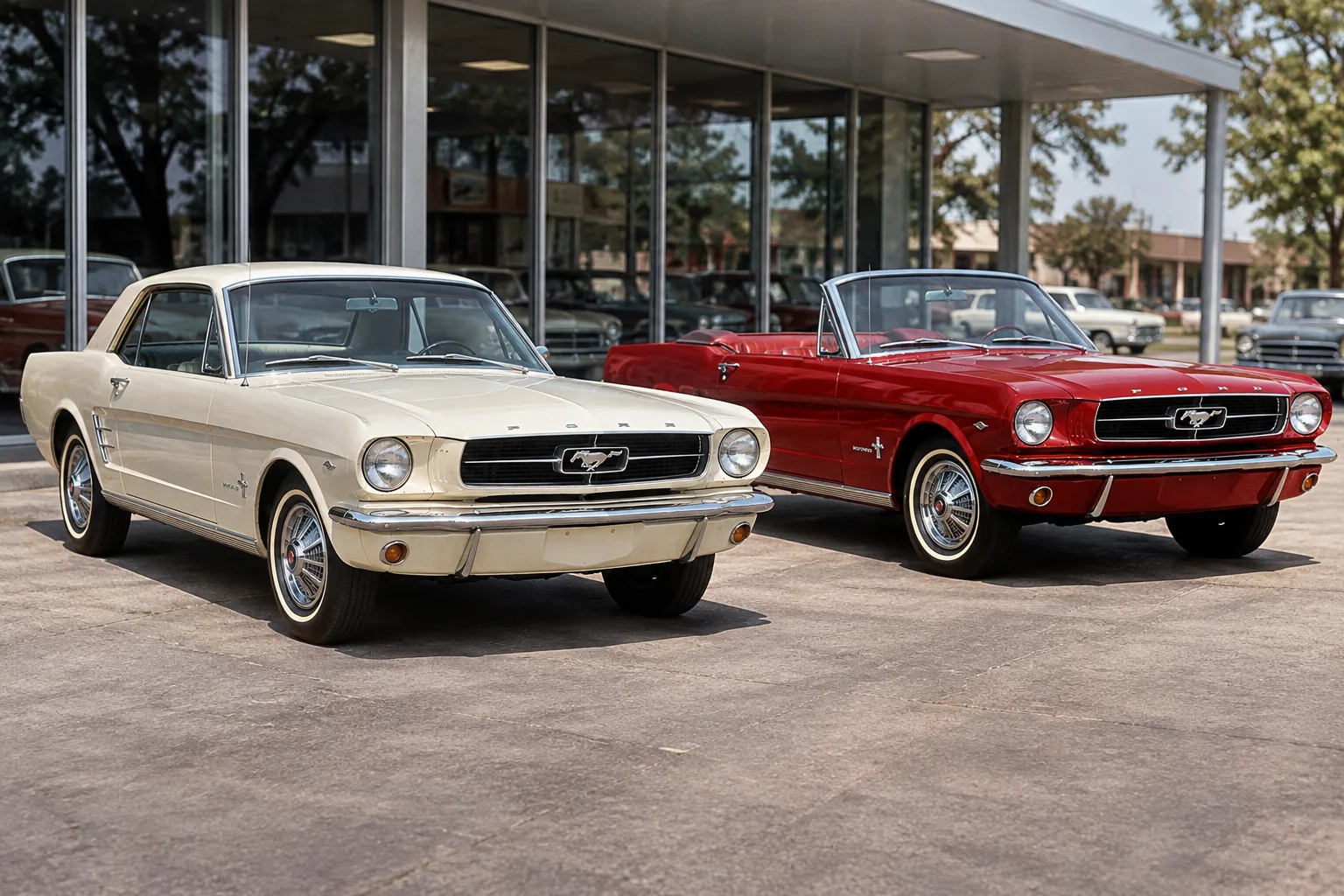
The Mustang initially went on sale in hardtop and convertible body styles.
The fastback joined the lineup in June 1964, giving buyers another choice later
in the year.
Ford's launch
history confirms the $2,368 starting price and the April 1964 introduction.
A reproduction of the original period advertisement also identifies $2,368 as
the suggested retail price for the basic Mustang hardtop.
Engines and Transmissions
The Mustang's appeal was not limited to its styling. Ford offered several
engine choices and transmission combinations, allowing buyers to select a car
that suited their budget and performance expectations.
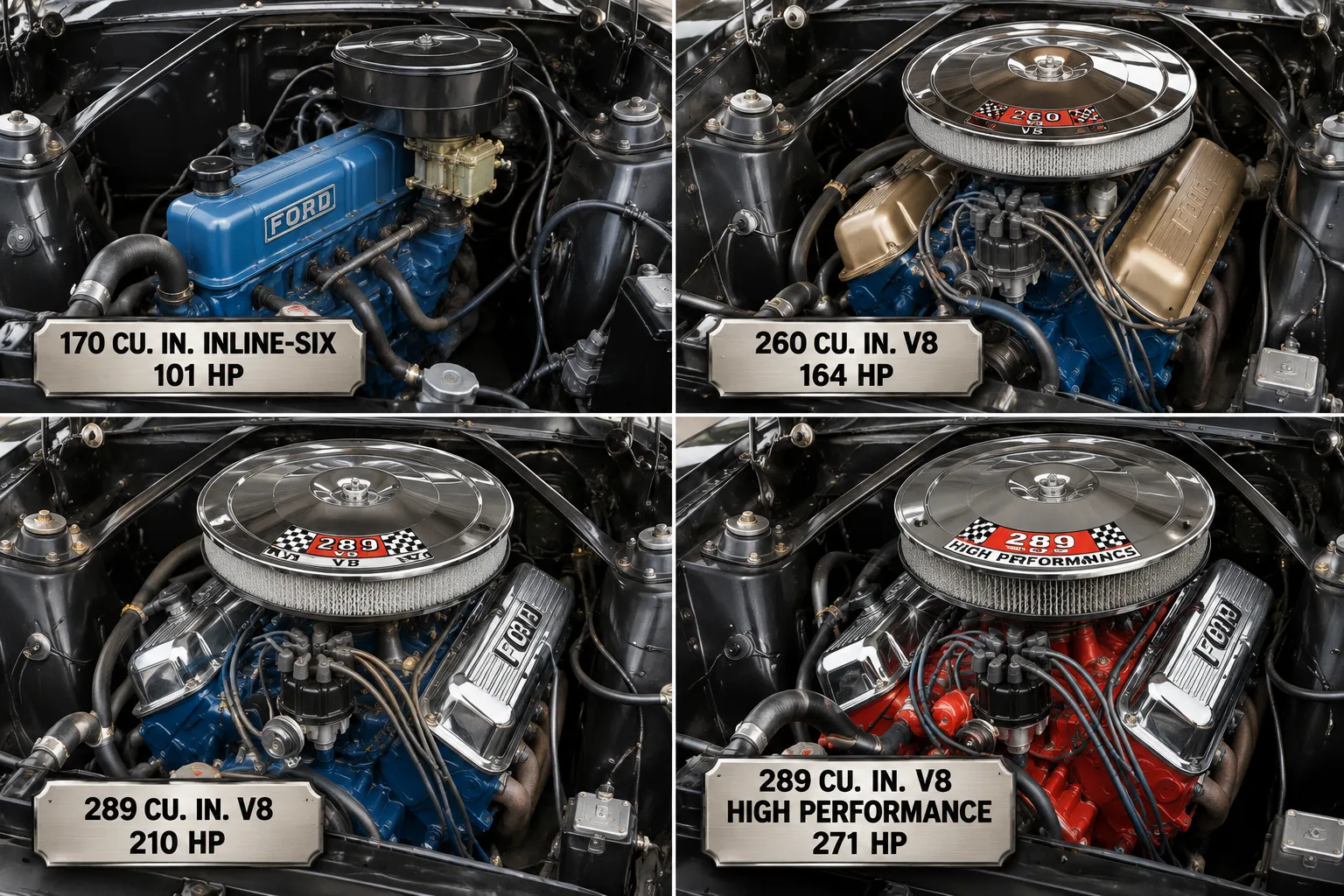
Ford's April 1964 options information listed four engine choices and three
transmission types, providing eight power-team combinations.
|
Engine |
Displacement |
Ford-rated
horsepower |
|
Inline-six |
170 cu. in. |
101 hp |
|
V8 |
260 cu. in. |
164 hp |
|
V8 |
289 cu. in. |
210 hp |
|
289 High Performance V8 |
289 cu. in. |
271 hp |
The 170-cubic-inch six-cylinder was the standard engine. It was paired with
a three-speed manual transmission.
The 260 V8 offered buyers a step up in power. The 289 V8 provided stronger
performance, while the 289 High Performance version delivered the highest
advertised output in the original engine range.
Ford offered a three-speed manual, a three-speed Cruise-O-Matic automatic,
and a four-speed manual. Availability depended on the engine selected. The
Cruise-O-Matic was not offered with the 289 High Performance V8, while the
four-speed manual was not available with the 260 V8.
The result was a Mustang lineup that could serve very different buyers.
Someone looking for affordable everyday transportation could choose the
six-cylinder model, while a customer seeking stronger performance could select
a V8-powered car.
The Mustang: Three Cars in One
Lee Iacocca described the Mustang as “three cars in one.” The idea reflected
the wide selection of optional equipment available to customers.
For drivers interested in performance, Ford offered equipment such as
quick-ratio steering, a limited-slip differential, special handling suspension
components, sports tires, and the Rally-Pac instrument package.
The Rally-Pac combined a tachometer and clock in a compact instrument
assembly. The special handling package included upgraded suspension components
designed to improve the car's road behavior.
Customers interested in comfort and convenience could choose features such
as power steering, power brakes, air conditioning, a center console, a power-operated
convertible top, tinted glass, and a vinyl-covered roof.
Other available equipment included a remote trunk release and a rear-seat
speaker.
This wide range of choices was central to the Mustang's appeal. A buyer
could start with a basic hardtop and add equipment according to personal
preference and budget. Another customer could select a V8, performance options,
and comfort features to create a much more expensive and powerful version of
the same basic car.
The Mustang was not one fixed specification. It was a car buyers could
personalize.
Why Enthusiasts Call It a 1964½ Mustang
Although the Mustang was introduced in April 1964, Ford marketed it as a
1965 model.
The term “1964½ Mustang” became a popular enthusiast and collector
description for the earliest production cars. It is not a separate official
Ford model year.
The nickname is useful because early production Mustangs had features and
running changes that distinguish them from later 1965-model production.
However, the date a car was built and the model year assigned by Ford are not
necessarily the same thing.
Collectors should therefore rely on the vehicle identification number, build
details, original equipment, and documentation rather than the nickname alone.
Two Early Mustangs, Two Different Stories
Two cars from the Mustang's launch period have particularly important
histories, but they represent different milestones.
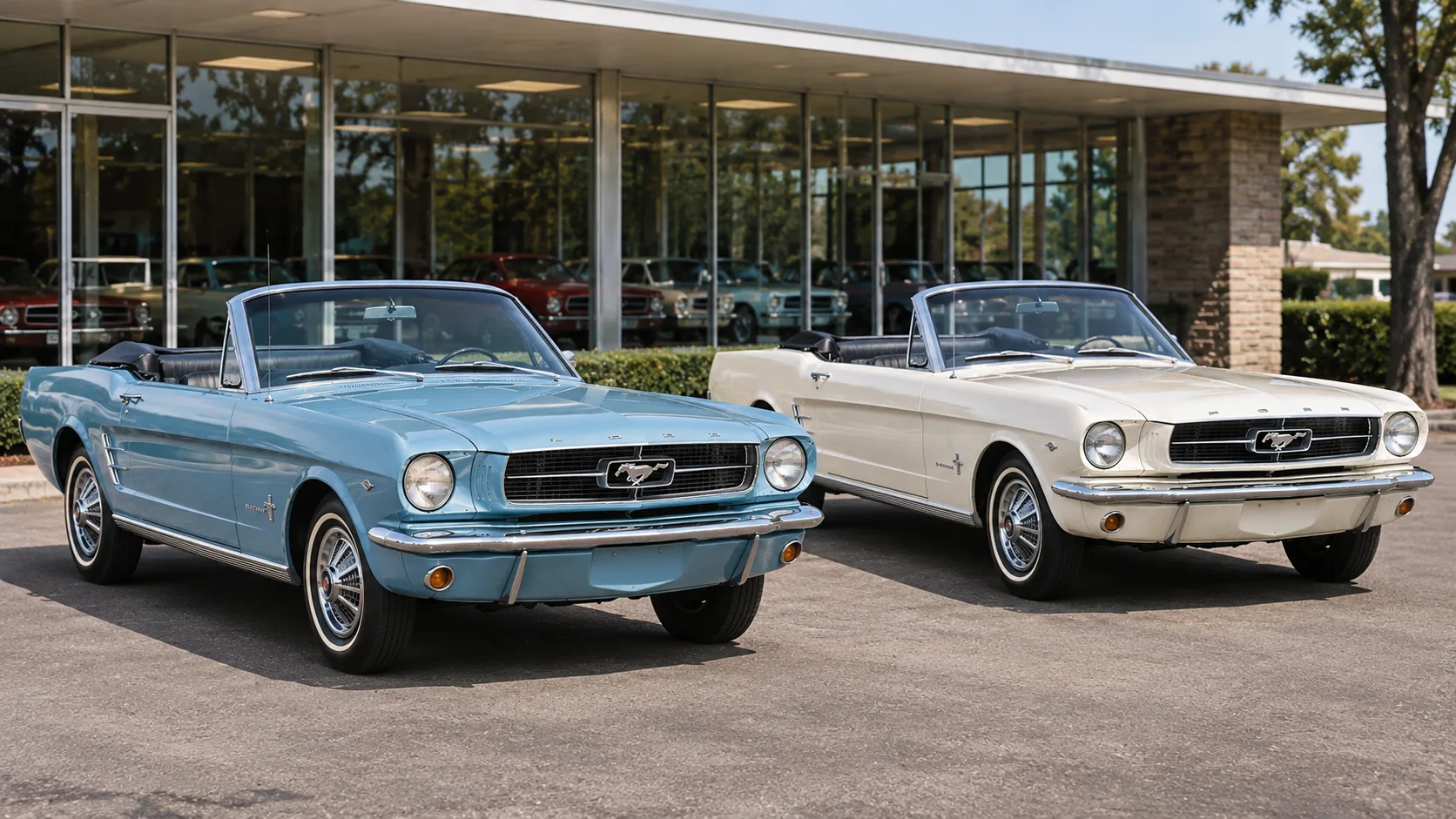
Gail Brown, later known as Gail Wise, bought her blue Mustang convertible
from a Chicago dealership on April 15, 1964. Ford identifies her as its first
known retail customer, while The
Henry Ford's account of the first Mustang buyer describes her as the first
Mustang buyer in the United States.
Her purchase took place two days before the official public launch. She and
her husband, Tom, kept the car for decades, making it one of the most memorable
early Mustang ownership stories.
Mustang Serial No. 1, however, was a different vehicle.
It was a preproduction Wimbledon White convertible with a 260-cubic-inch V8.
The car was part of the early group of vehicles built to prepare Ford's
factories and dealerships for the April launch.
During a Canadian publicity tour, the car reached George Parsons Ford in St.
John's, Newfoundland. On April 14, 1964, Eastern Provincial Airlines pilot
Captain Stanley Tucker bought it, three days before the Mustang's public
introduction.
The car was never supposed to be sold. It was a preproduction vehicle
intended for promotional and preparation purposes. For a short period, Tucker
became the general public's only Mustang owner.
Ford later asked Tucker to return the car, but he initially refused. He
drove it for approximately two years and put around 10,000 miles on it.
In 1966, Ford offered Tucker the one-millionth Mustang in exchange for
Serial No. 1. Tucker agreed and travelled to Dearborn on March 2, 1966, to
collect his new Silver Frost Mustang convertible.
Ford recovered the original car and donated it to The Henry Ford, where it
is preserved today. The museum's detailed account, Stanley
Tucker and Ford Mustang Serial Number One, documents the transaction and
the car's history.
The difference between the two stories is important: Gail Wise is associated
with the first known retail Mustang purchase, while Captain Tucker bought the
famous preproduction Serial No. 1 before the public launch.
A Record-Breaking First Year
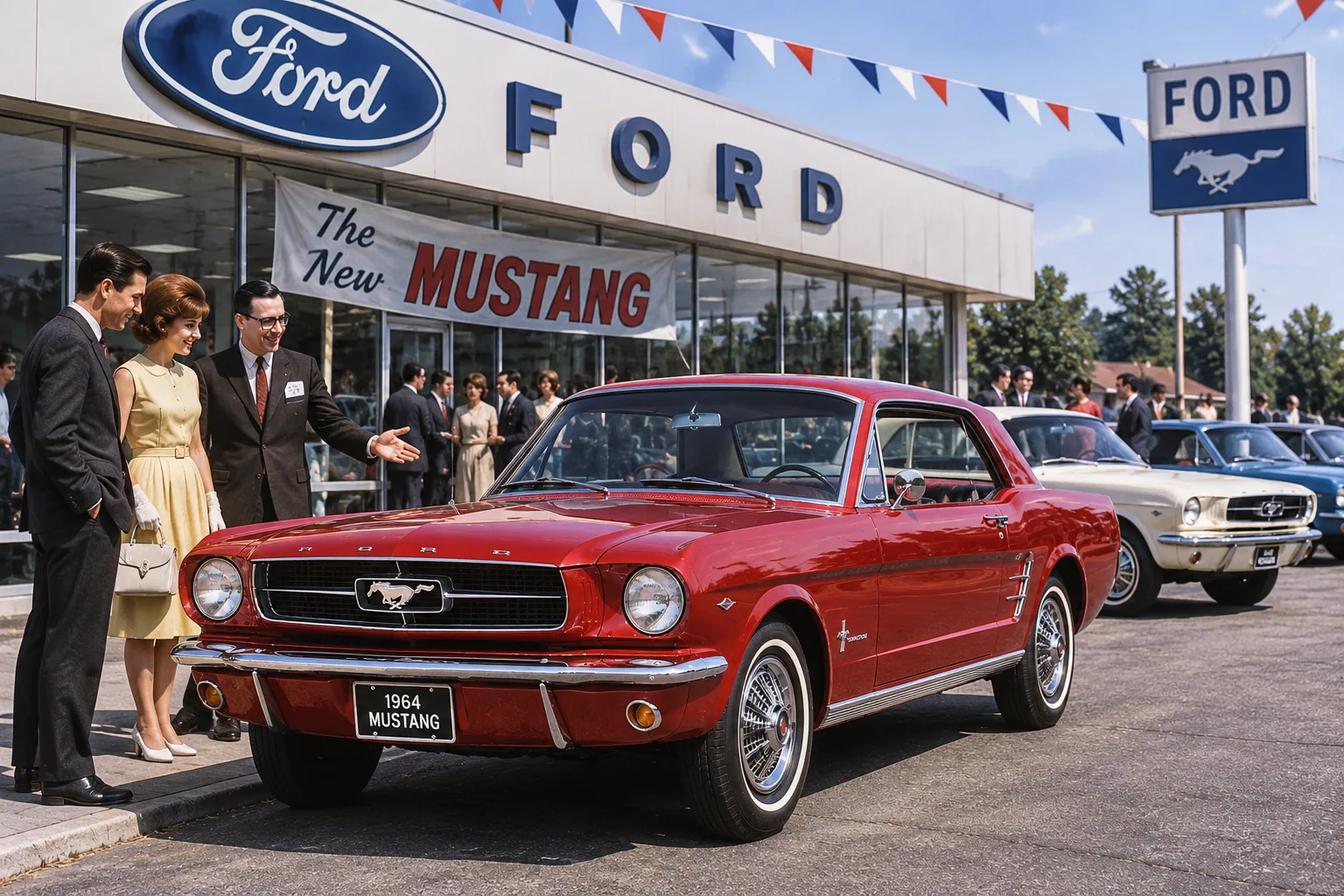
Ford expected to sell approximately 100,000 Mustangs annually. The response
was far stronger.
Ford's milestone history records approximately 22,000 orders on the first
day. The Henry Ford museum reports that 22,000 sales had been tallied before
the first weekend was over.
By the Mustang's first anniversary, Ford reported that 418,812 cars had been
sold. The company's milestone timeline also uses a rounded figure of 417,000
for the first 12 months, while its anniversary entry gives the more precise
418,812 figure.
By the end of the 1965 model year in fall 1965, almost 681,000 Mustangs had
reached owners. To keep up with demand, Ford opened additional Mustang assembly
lines in New Jersey and California.
By March 2, 1966, the company had sold more than one million Mustangs since
launch.
The sales result showed that Ford had identified a major opportunity. Buyers
were responding to a car that looked sporty, remained relatively affordable,
offered useful passenger space, and allowed customers to choose the equipment
they wanted.
From New Ford to Cultural Icon
The Mustang moved beyond the showroom almost immediately.
One of its earliest major movie appearances came in the 1964 James Bond film
Goldfinger. The film featured a white Mustang convertible, helping
place the new Ford in front of a wider entertainment audience.
Music also became part of the Mustang's cultural history. Mack Rice wrote
and recorded “Mustang Sally” in 1965. Wilson Pickett's version, released a year
later, brought the song to a much wider audience.
The Mustang's performance reputation developed quickly as well. In 1965,
Shelby American introduced the Shelby GT350, powered by a specially prepared
289-cubic-inch V8 rated at 306 horsepower.
The GT350 was a separate performance development based on the Mustang,
rather than one of the original standard launch configurations. The
Henry Ford's history of the Shelby Mustang GT350 explains how Carroll
Shelby turned the Mustang into a more serious performance and racing car.
Ford also found unusual ways to promote the car. In October 1965, company
engineers dismantled a 1966 Mustang convertible into four sections small enough
to fit inside the elevators of the Empire State Building. They transported the
pieces to the 86th-floor observation deck and reassembled the car there.
These events helped the Mustang become more than a successful new model. It
became part of the cultural identity of the 1960s.
The Pony-Car Era: Where the Mustang Fits
The Mustang helped establish the market identity now associated with pony
cars: relatively compact American cars with sporty styling, available V8 power,
useful passenger space, and a broad selection of optional equipment.
However, the Mustang was not the first sporty compact car to appear during
the spring of 1964.
Plymouth introduced the Barracuda on April 1, 1964, two weeks before Ford's
Mustang public debut. The Barracuda was based on Plymouth's Valiant and offered
a sporty alternative in the same emerging market. The
Henry Ford's Barracuda collection record confirms the earlier introduction
date.
The Mustang's importance came from the extraordinary success of its overall
formula. Its styling, accessible starting price, personalization options, and
marketing campaign helped make the pony-car concept a major force in the
American market.
The term “pony car” became closely associated with the Mustang, even though
the Barracuda had arrived first.
Other manufacturers later responded with their own competitors, including
the Chevrolet Camaro, Pontiac Firebird, AMC Javelin, and Dodge Challenger.
It is also important to distinguish pony cars from traditional muscle cars.
The original Mustang range included economical six-cylinder versions as well as
V8-powered models. Its defining identity was the combination of compact
proportions, sporty design, accessible pricing, and customer choice.
The Mustang did not invent every part of that formula, but it made the
concept commercially influential.
What Collectors Should Know About Early Mustangs
Early Mustangs remain popular with collectors, but the “1964½” label alone
does not prove that a car is original.
Buyers should check the vehicle identification number, body style,
production information, engine, transmission, and factory equipment. Documentation
is especially important when a seller claims that a car has a factory-installed
289 High Performance V8.
Restoration work can make a car look more original than it really is.
Replacement engines, altered body components, and non-factory options can
affect a vehicle's authenticity and value.
Condition, originality, documentation, and restoration quality all matter.
Anyone considering a significant early-production Mustang should arrange a
specialist inspection before making a purchase.
Why the 1964 Ford Mustang Still Matters
The 1964 Ford Mustang succeeded because it brought together the things a new
generation of American buyers wanted.
It offered sporty styling without the price of a specialist sports car. It
had practical passenger space, a choice of engines and transmissions, and a
long list of optional equipment that let customers personalize their vehicles.
Ford's decision to use the Falcon platform helped keep development costs
under control, while the New York World's Fair launch and national advertising
campaign gave the car enormous public exposure.
The first-year sales results proved that the company had identified a
powerful market opportunity.
The original Mustang was not the most powerful car of its era, and
Plymouth's Barracuda had reached the public earlier in April 1964. The
Mustang's achievement was bringing styling, affordability, performance choices,
and personalization together in a package that millions of buyers embraced.
More than six decades later, the first-generation Mustang remains one of the
defining American cars of the 1960s. Its legacy is not based on a single engine
or special edition. It comes from the complete idea behind the car: an
affordable, sporty personal automobile that gave a new generation of drivers
something of their own.
Frequently Asked Questions
Was there officially a 1964 Ford Mustang?
Ford introduced the Mustang to the public in April 1964, but marketed it as
a 1965 model. “1964½” is a commonly used enthusiast and collector term for
early production cars, not a separate official Ford model year.
How much did the original Ford Mustang cost?
The advertised starting price was $2,368 for the basic six-cylinder Mustang
hardtop, FOB Detroit. The convertible cost more, and optional equipment,
destination charges, and applicable taxes increased the final price.
What engines were available in the early Mustang?
Ford's April 1964 options information listed a 170-cubic-inch six-cylinder
rated at 101 horsepower, a 260 V8 rated at 164 horsepower, a 289 V8 rated at
210 horsepower, and a 289 High Performance V8 rated at 271 horsepower.
How many Mustangs were sold in the first year?
Ford's anniversary-era milestone history records 418,812 Mustangs sold by
April 17, 1965. The company's timeline also gives a rounded figure of 417,000
for the first 12 months.
Who was the first known retail Mustang customer?
Ford identifies Gail Brown, later Gail Wise, as its first known retail
Mustang customer. She bought a blue convertible from a Chicago dealership on
April 15, 1964.
What happened to Mustang Serial No. 1?
The preproduction Wimbledon White convertible was sold to Captain Stanley
Tucker in Newfoundland on April 14, 1964. Ford later exchanged the car for the
one-millionth Mustang in 1966. The original Serial No. 1 is now preserved at
The Henry Ford.
Was the original Mustang a muscle car?
The original Mustang is more accurately described as a pony car. Its range
included economical six-cylinder models alongside V8 versions, with compact
dimensions, sporty styling, and a wide selection of options.
Which came first, the Plymouth Barracuda or the Ford Mustang?
The Plymouth Barracuda was introduced on April 1, 1964, two weeks before
Ford's public Mustang debut on April 17. The Mustang later became the
best-known car associated with the pony-car category.
When did the Mustang fastback arrive?
Ford introduced the Mustang hardtop and convertible in April 1964. The
fastback body style joined the lineup in June 1964.
Sources
·
The
Henry Ford — Mustang: The Birth of an American Icon
·
The
Henry Ford — Stanley Tucker and Ford Mustang Serial Number One
·
The
Henry Ford — 50 Years of Mustang: A Birthday Bash Fit for an American Icon
·
Ford
— Mustang Launch: The Grand Introduction
·
Ford
— 50 Years of Ford Mustang Milestones
·
The
Henry Ford — The Shelby Mustang GT350R: The Pony Car Goes Racing
·
The
Henry Ford — Plymouth Barracuda collection record
·
Period
Ford Mustang introductory advertisement — reproduced scan
Have thoughts, dyno data, or build feedback?
Join automotive enthusiasts in the paddock below to debate engineering, lap times, and modifications.
Community Pulse
How does this machine make you feel? Drop your reaction!

VehicleDrugs Editorial
VehicleDrugs Editorial Team
A passionate collective of automotive purists, track drivers, and mechanical engineers uncovering high-octane engineering breakthroughs worldwide.
🏁 Pit Crew Discussions
Drop your telemetry, debate the engineering, or talk track times with fellow petrolheads.
The Pit Lane is Quiet
Be the first driver to drop your opinion on this machine!