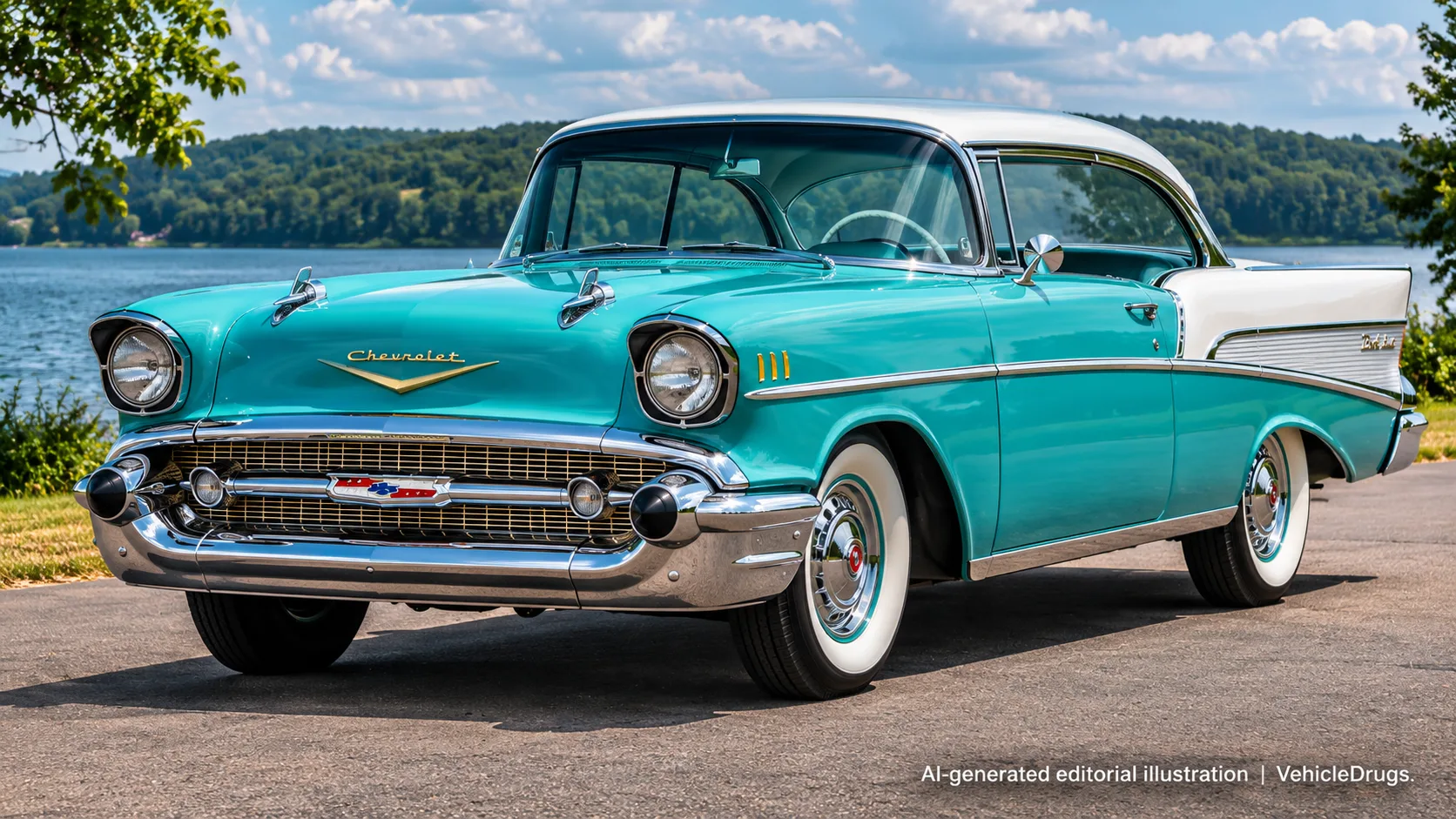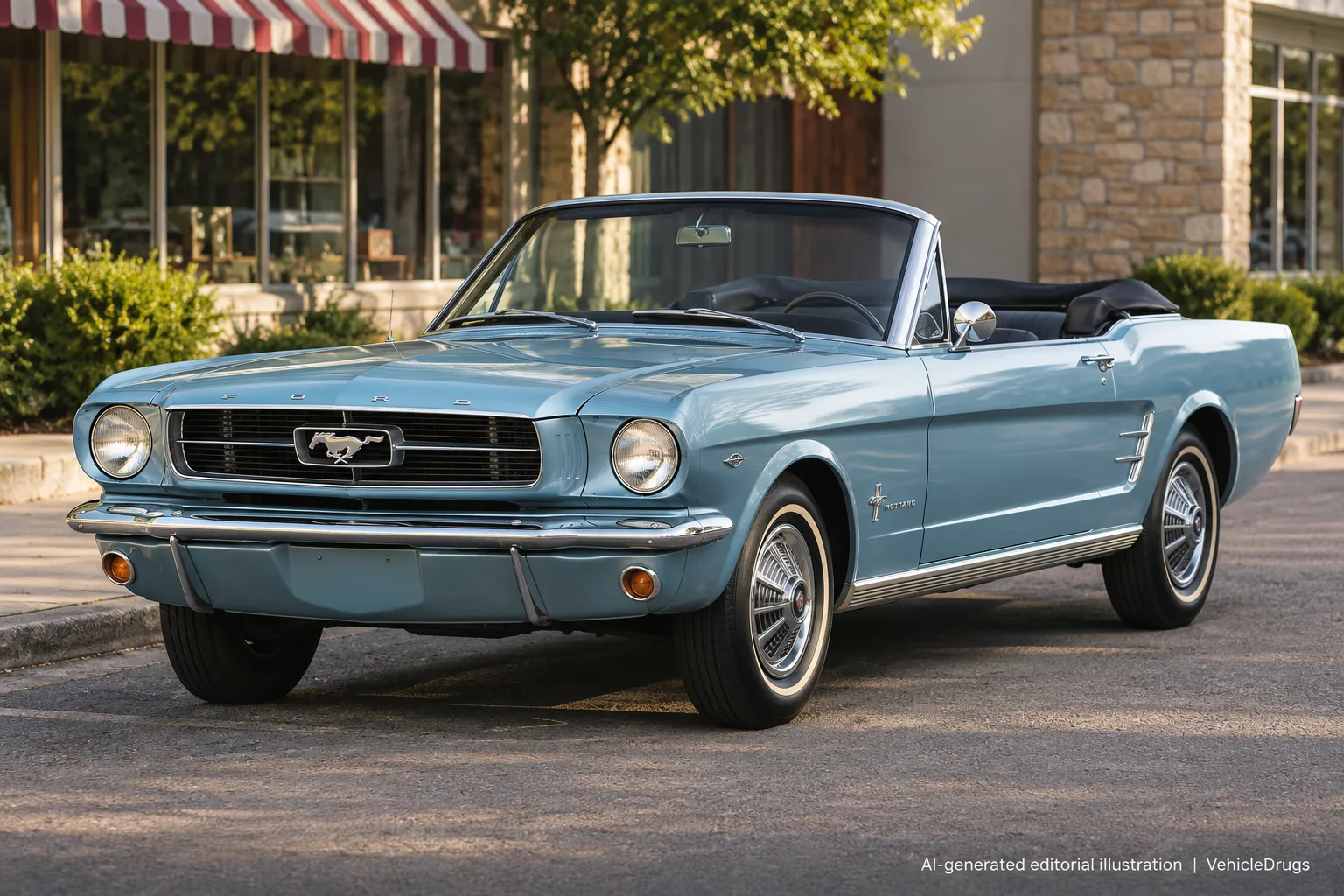

American V8 Engine: History, Types, Power and Legendary Engines
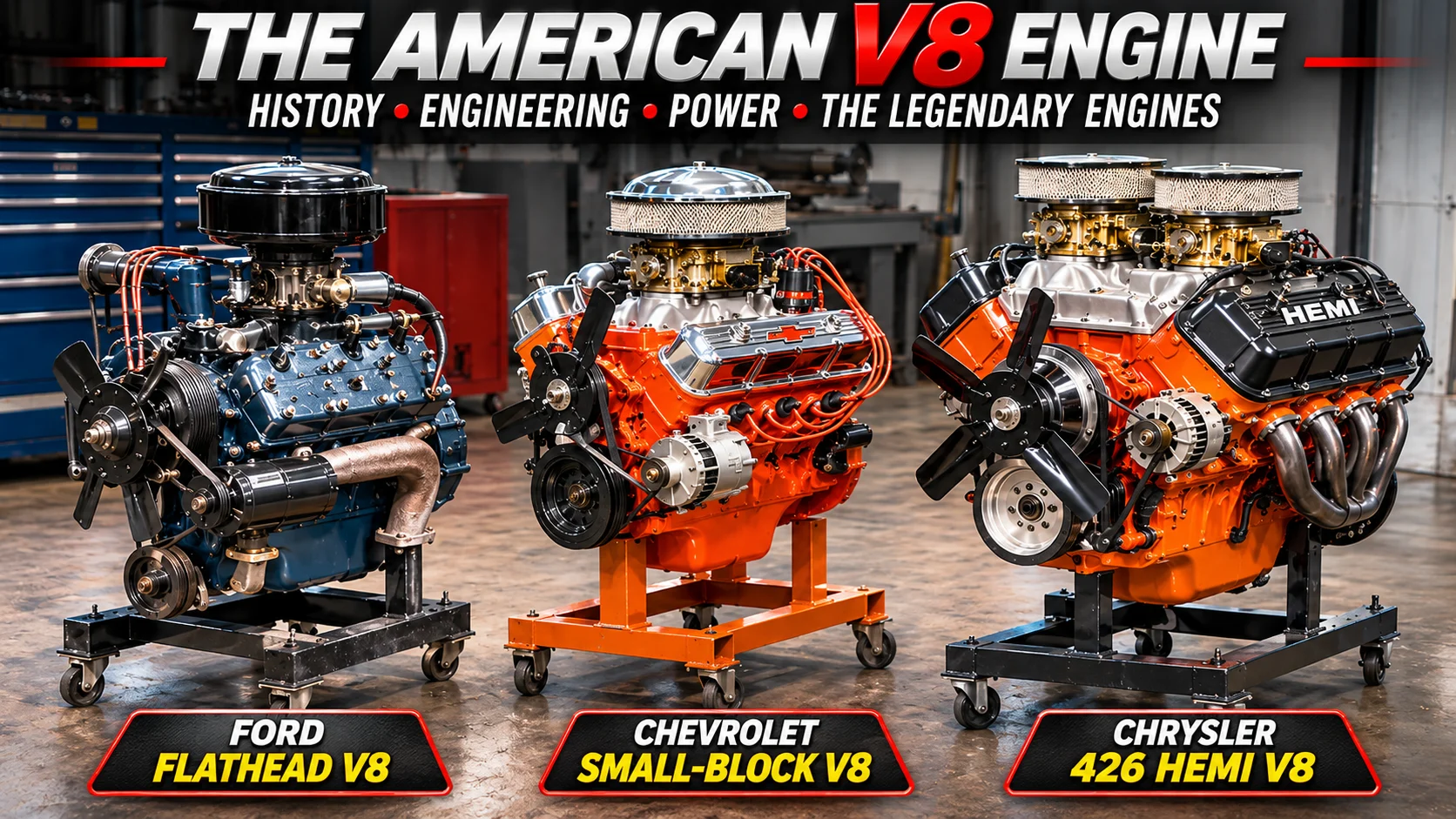
Explore the history of the American V8 engine, from the Ford Flathead to Chevrolet Small-Block and Chrysler 426 HEMI, including engineering and performance.
HEAD-TO-HEAD MUSCLE CAR VS COMPARISON
Compare 0-60, peak horsepower, torque, and quarter-mile times across iconic builds.
The American V8 Engine: History, Engineering, Power and the Legend Behind It
There is something special about an American V8 engine. It might be the deep exhaust note of a classic muscle car, the unmistakable sound of a big-block warming up, or the way a powerful V8 delivers torque when the accelerator is pressed. For generations of American drivers, the V8 has represented more than a way of producing horsepower. It has become part of the country's automotive identity.
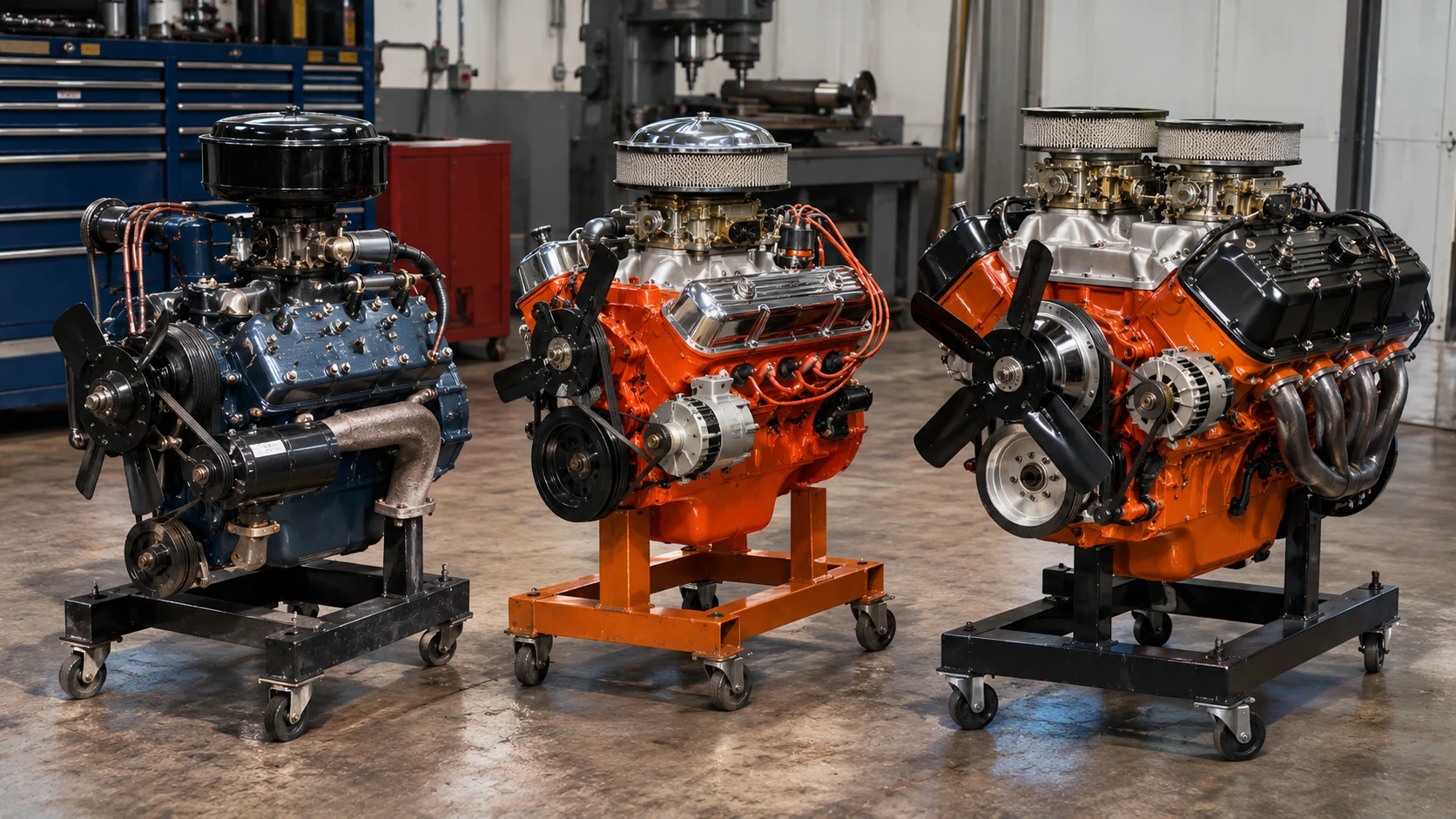
From the early Ford Flathead to Chevrolet's legendary small-block and Chrysler's 426 HEMI, V8 engines helped shape the development of American cars, trucks and motorsports. They powered family sedans, pickup trucks, racing machines and some of the most memorable muscle cars ever built.
The V8's popularity was not accidental. Its layout offered a useful combination of compact dimensions, smooth operation and the ability to produce substantial power. Manufacturers continued developing the design, increasing displacement, improving cylinder-head airflow and introducing better fuel-delivery and engine-management systems.
Today, modern V8 engines are very different from the carbureted powerplants of the muscle-car era. Electronic fuel injection, variable valve timing, advanced materials and supercharging have transformed what an eight-cylinder engine can achieve.
But the basic attraction remains the same.
To understand why the American V8 became such an important part of automotive history, it is worth looking at how the engine works, how it developed and what made certain V8 designs legendary.
1. What Exactly Is a V8 Engine?
A V8 is an internal-combustion engine with eight cylinders arranged in two banks of four. The cylinder banks sit at an angle to each other, forming a V-shaped layout around a common crankshaft.
Most traditional American automotive V8 engines use a 90-degree bank angle. This arrangement allows manufacturers to package eight cylinders into a relatively compact engine compared with an equivalent inline-eight design.
Each cylinder contains a piston that moves up and down as the engine operates. The pistons connect to the crankshaft through connecting rods. Their movement turns the crankshaft, which ultimately delivers rotational power to the transmission and drivetrain.
The engine works through four basic stages:
Intake: The piston moves down while the intake valve opens, allowing air and fuel to enter the cylinder in a traditional port-injected or carbureted engine.
Compression: The piston moves upward, compressing the mixture as the valves close.
Power: The spark plug ignites the compressed mixture, creating expanding gases that push the piston downward.
Exhaust: The exhaust valve opens, allowing burnt gases to leave the cylinder.
This is commonly known as the four-stroke combustion cycle.
A typical four-stroke V8 has eight power-producing cylinders working in a carefully arranged sequence. The crankshaft, camshaft and valve system coordinate the operation of the cylinders to keep the engine running smoothly.
One reason the V8 became so popular is its ability to produce substantial power without requiring an excessively long engine. The two-bank design also allows a relatively short crankshaft compared with a long inline-eight configuration.
However, not every V8 sounds or behaves the same. Crankshaft design, firing order, cylinder-head configuration, exhaust layout and engine tuning all influence the final result.
2. How the V8 Engine Produces Its Characteristic Sound
The sound of a V8 is one of the most recognizable features of American performance cars.
That deep exhaust note comes from a combination of combustion pulses, firing order, exhaust manifold design, exhaust pipe arrangement and engine speed.
In a traditional cross-plane V8, the crankshaft uses four crankpins arranged at 90-degree intervals. This design helps provide smooth operation and is widely associated with American road-going V8 engines.
The firing sequence determines when each cylinder produces its power stroke. A V8 does not have one universal firing order. Different manufacturers and engine families use different sequences.
The exhaust system also plays an important role. Exhaust pulses travel through the manifolds and pipes, creating the sound heard outside the vehicle.
Some V8 engines produce a deep, uneven exhaust tone, while others have a sharper and more aggressive sound at higher RPM.
The difference can be particularly noticeable between a traditional American cross-plane V8 and a flat-plane V8. Flat-plane designs have different crankshaft geometry and firing characteristics, often allowing higher engine speeds but producing a different exhaust sound.
The important point is that the familiar V8 sound is not created simply by having eight cylinders. It is the result of the entire engine and exhaust system working together.
3. The Ford Flathead V8 Changed American Automotive History
One of the most important moments in American V8 history came in 1932, when Ford introduced its affordable V8-powered passenger cars.
Before that point, V8 engines were generally associated with more expensive vehicles. Ford wanted to make eight-cylinder performance available to a much wider group of buyers.
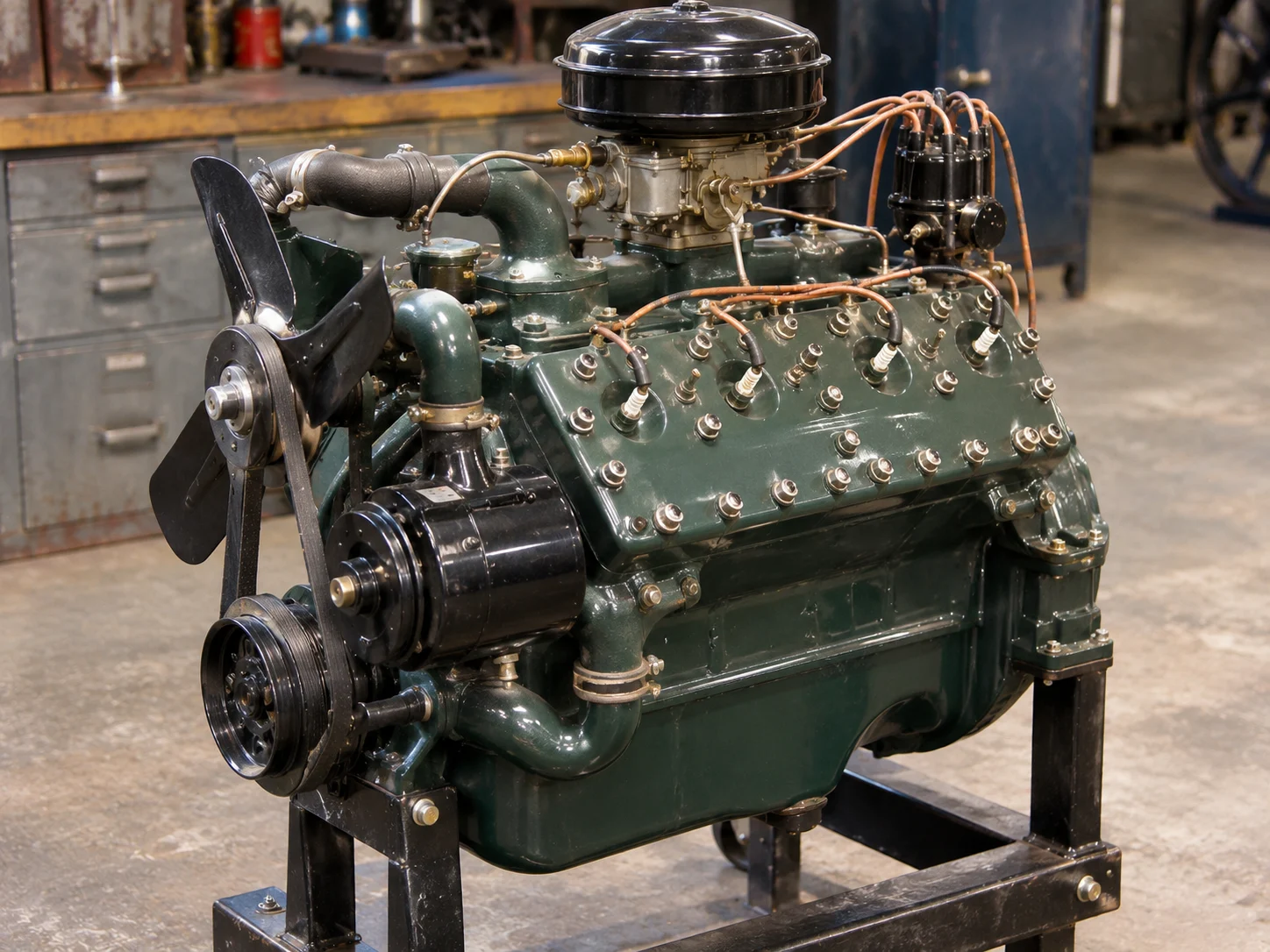
The result was the famous Ford Flathead V8.
The original engine displaced 221 cubic inches and used a side-valve arrangement. Unlike modern overhead-valve engines, the valves were located inside the engine block rather than in the cylinder heads.
This design gave the engine a relatively simple construction for its time.
Another important feature was Ford's one-piece engine block and crankcase casting. According to The Henry Ford museum, the design helped reduce manufacturing costs and made it possible to offer a V8 in a car priced below $500.
The Flathead quickly became popular with American motorists and later became a major part of the hot-rodding movement.
Its relatively simple design made it attractive to mechanics and enthusiasts who wanted to modify engines for more performance.
Ford continued developing the Flathead over the following years, increasing displacement and improving its construction.
The engine remained in production in American Ford vehicles until 1953, after which newer overhead-valve designs took over.
The Flathead's influence extended well beyond its original production period. It helped introduce V8 motoring to ordinary American buyers and created a foundation for the country's growing performance-car culture.
4. Chevrolet Small-Block V8: A New Era Begins in 1955
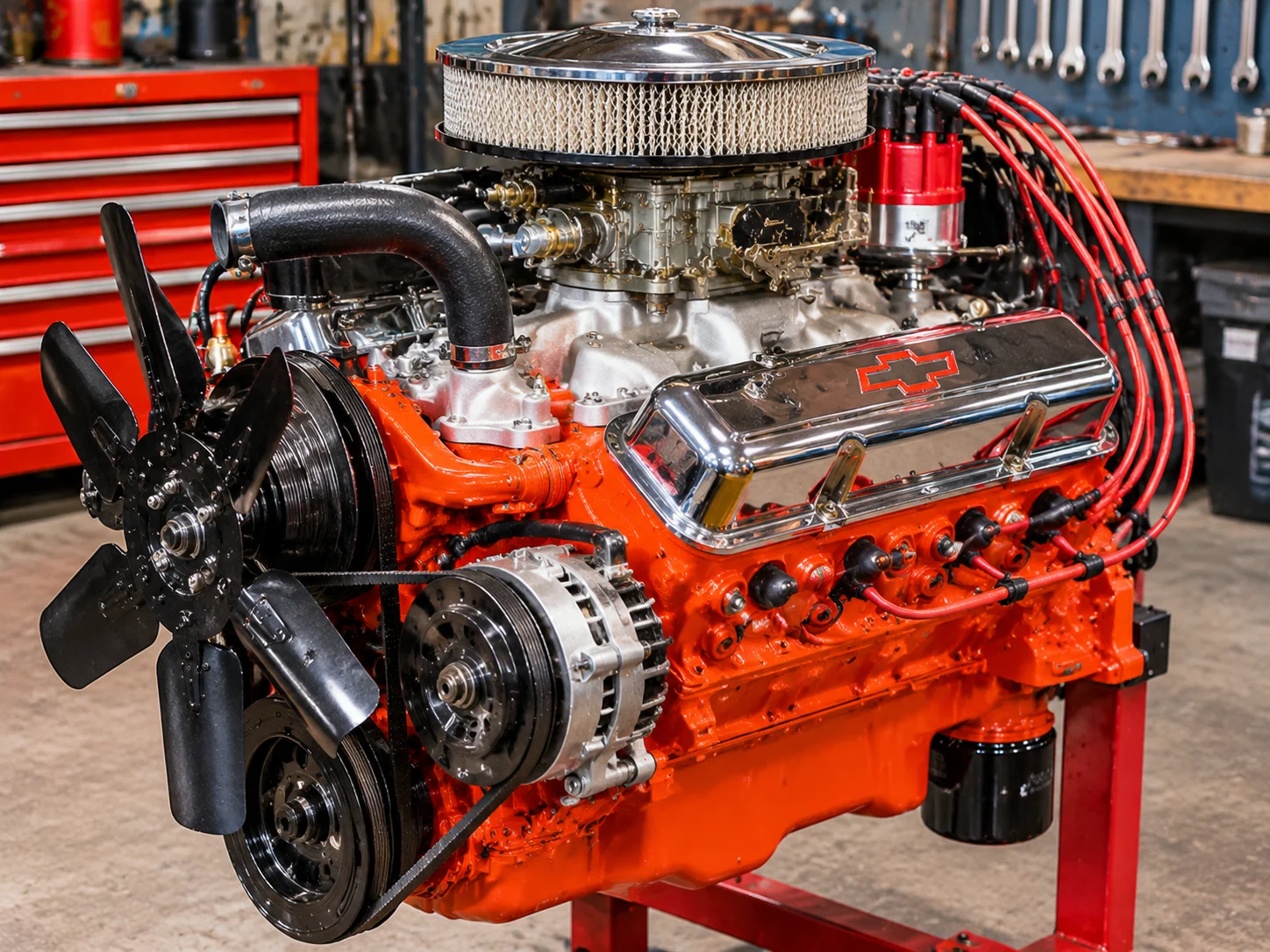
Chevrolet introduced its original small-block V8 for the 1955 model year.
The first version displaced 265 cubic inches and was designed to offer a compact and relatively lightweight eight-cylinder engine with strong performance potential.
Compared with earlier designs, the Chevrolet small-block featured an overhead-valve layout that allowed the engine to breathe more effectively.
Its compact construction also made it suitable for a wide variety of vehicles.
The small-block quickly developed into one of the most successful engine families in American automotive history.
Chevrolet expanded the design with several important versions over the years.
The 283 V8
Introduced during the 1957 model year, the 283-cubic-inch small-block became famous for Chevrolet's one-horsepower-per-cubic-inch milestone in certain high-performance configurations.
It helped establish the small-block's reputation as an engine with considerable performance potential.
The 327 V8
The 327 became another important development. Introduced in 1962, it offered increased displacement and became particularly well known in the Chevrolet Corvette.
Its combination of relatively compact dimensions and strong power output made it a popular performance engine.
The 350 V8
The 350 became one of the most recognizable Chevrolet V8 displacements.
Introduced in 1967, it eventually appeared in numerous passenger cars, trucks and performance models.
Its long production history and widespread availability helped make the 350 a favorite among restorers, engine builders and hot-rodders.
The small-block family continued to evolve through several generations, eventually leading to modern LS and LT engine designs.
General Motors has stated that it has produced more than 100 million Chevrolet small-block V8 engines over the engine family's history.
That figure illustrates how important the small-block became to Chevrolet and the wider American automotive industry.
5. Small-Block vs Big-Block: What Is the Difference?
The terms small-block and big-block are frequently used when discussing American V8 engines.
Although displacement is often associated with these names, the difference is not simply about how many cubic inches an engine has.
Small-block and big-block generally describe different engine families with different block dimensions, bore spacing, deck heights and overall architecture.
A big-block engine usually has a larger physical structure, providing room for larger displacement and different performance configurations.
However, there is no universal displacement threshold that applies to every manufacturer.
Small-block engines
Small-block V8 engines were designed to provide a relatively compact package with a useful balance of power, weight and manufacturing cost.
Examples include:
Chevrolet 265 V8.
Chevrolet 283 V8.
Chevrolet 327 V8.
Chevrolet 350 V8.
Ford Windsor 289 V8.
Ford Windsor 302 V8.
These engines became popular in passenger cars, sports cars, pickup trucks and performance applications.
Big-block engines
Big-block engines were generally developed for applications requiring larger displacement and substantial torque.
Some of the most famous American big-block engines include:
Chevrolet 396 V8.
Chevrolet 427 V8.
Chevrolet 454 V8.
Ford 427 FE V8.
Ford 428 Cobra Jet.
Chrysler 426 HEMI.
Chrysler 440 V8.
These engines became particularly important during the muscle-car era, when manufacturers competed to deliver more power and stronger acceleration.
It is important to remember that the terms are manufacturer-specific. A Chevrolet small-block and a Ford small-block do not share the same physical design simply because both are called small-blocks.
Likewise, the Chrysler 426 HEMI and Chevrolet 454 are very different engines despite both being considered big-block performance powerplants.
6. The Chrysler 426 HEMI: One of America's Most Famous V8 Engines
Few American engines have a reputation as strong as the Chrysler 426 HEMI.
Its development began in the early 1960s, when Chrysler wanted a powerful engine capable of competing successfully in NASCAR and drag racing.
The original 426 HEMI was developed around the idea of improving airflow through the cylinder heads.
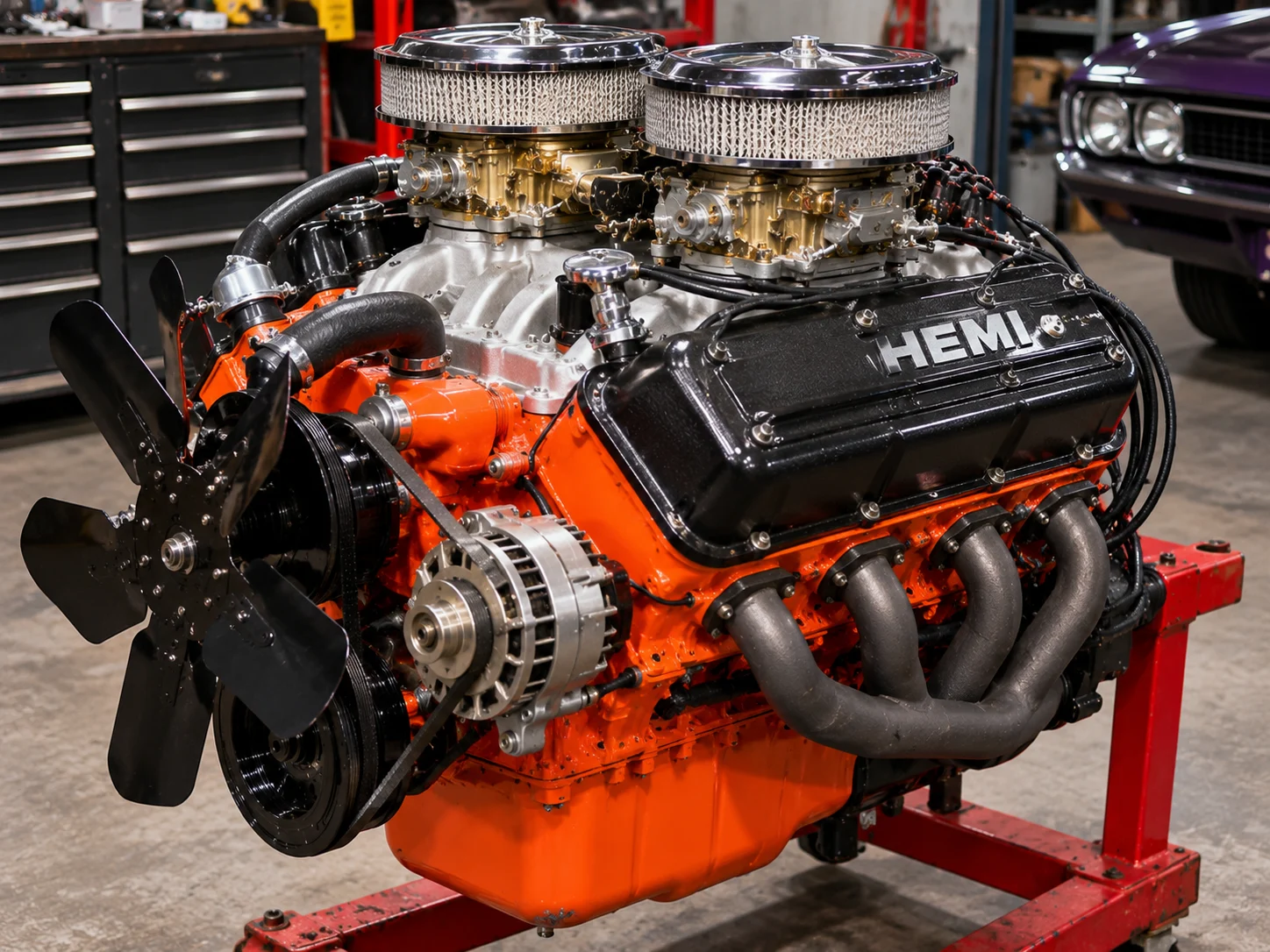
Its hemispherical combustion chambers positioned the valves at opposing angles, allowing large intake and exhaust valves and supporting strong airflow.
The engine made its racing debut during the 1964 competition season and quickly established itself as a serious performance powerplant.
Chrysler's racing HEMI helped dominate the 1964 Daytona 500. Richard Petty won the event in a Plymouth powered by the 426 HEMI, while Chrysler-powered cars occupied the first three finishing positions.
The racing success created enormous attention around the engine.
However, the racing versions were not identical to the later street engines.
Chrysler introduced the production Street HEMI for the 1966 model year, allowing buyers to experience a road-going version of the famous engine.
The 426 Street HEMI became available in high-performance Plymouth and Dodge models.
It used a 426-cubic-inch displacement, dual four-barrel carburetors and hemispherical combustion chambers.
Its familiar factory rating was 425 horsepower and 490 lb-ft of torque.
The engine became particularly famous in vehicles such as the Plymouth GTX, Plymouth Road Runner, Plymouth Barracuda and Dodge Charger.
Its engineering, racing history and limited production availability helped make it one of the most desirable classic American V8 engines.
7. Ford's Big-Block V8s: FE, Cobra Jet and the Boss Engines
Ford also developed several famous V8 engine families during the growth of American performance cars.
One of the most important was the Ford FE engine family.
The FE series appeared during the late 1950s and developed into several different displacement and performance configurations.
Among the most recognizable were the 390, 406, 427 and 428 versions.
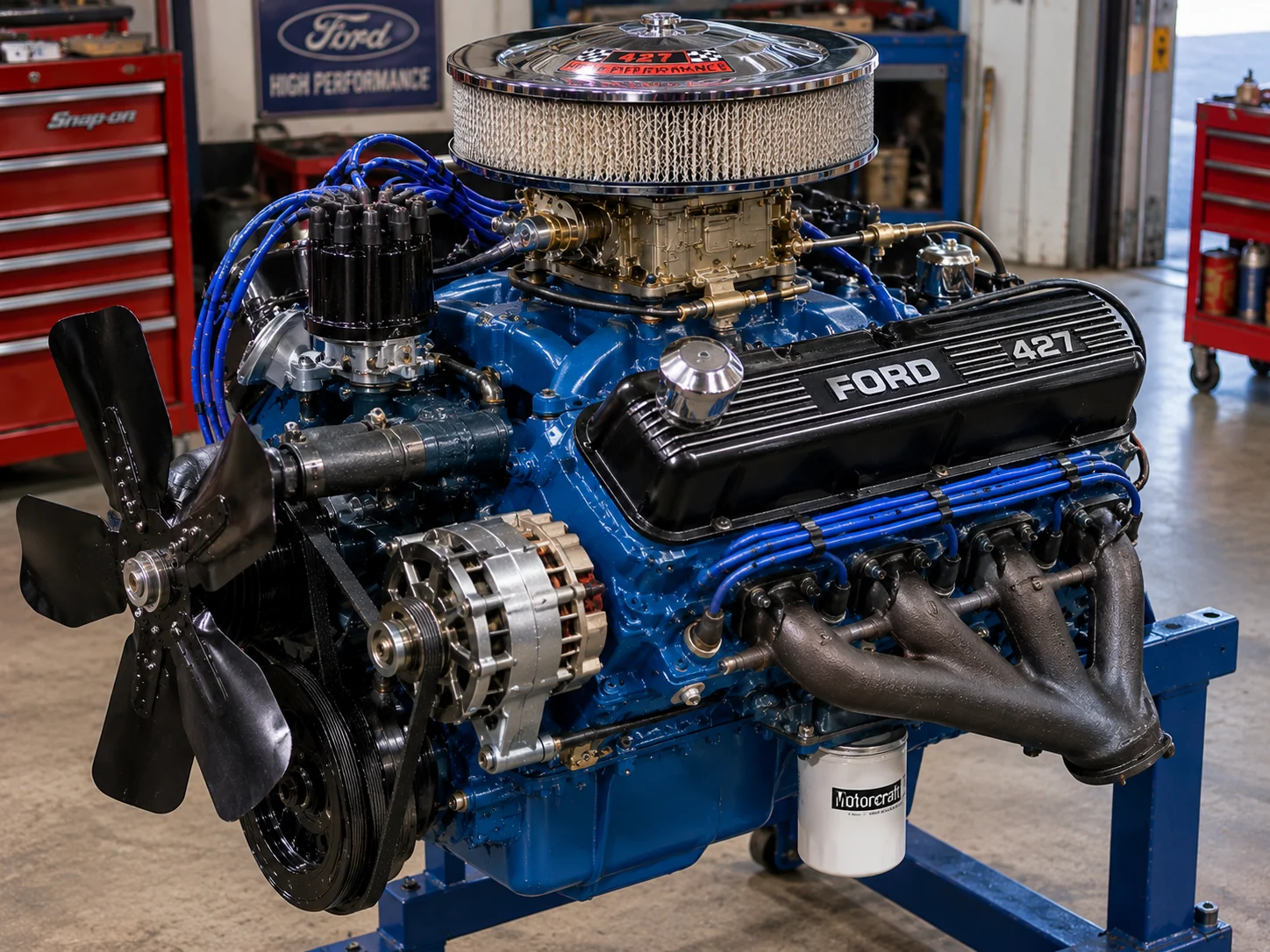
The 427 FE became particularly famous in motorsports and high-performance Ford vehicles.
It was used in racing applications and became an important part of Ford's competition history during the 1960s.
The 428 Cobra Jet followed a different approach. It combined a large displacement with strong street performance and became a popular engine option in high-performance Mustangs and other Ford models.
Ford also developed specialized performance engines such as the 429 Boss V8.
The Boss 429 was created in connection with Ford's NASCAR homologation efforts. Its distinctive cylinder-head design and semi-hemispherical combustion chambers made it very different from an ordinary production small-block.
The 1969 and 1970 Mustang Boss 429 became one of the most collectible Ford muscle cars.
These engines demonstrate how Ford approached V8 development through different designs for road performance, racing and homologation.
They were not simply larger versions of the same engine. Each family had its own engineering characteristics and intended purpose.
8. Horsepower vs Torque: What Makes a V8 Feel Powerful?
Horsepower and torque are two of the most important figures used to describe an engine.
Although they are closely related, they do not describe exactly the same thing.
Torque is the rotational force produced by an engine. In the United States, it is commonly measured in pound-feet.
Horsepower describes the rate at which work is performed. It is calculated using torque and engine speed.
The traditional relationship is:
Horsepower = (Torque × RPM) ÷ 5,252
This explains why an engine's horsepower figure can continue increasing as RPM rises, even when torque begins to decline.
Torque is particularly important when discussing how strongly an engine pulls under load.
A large-displacement V8 can often produce substantial torque at relatively low engine speeds. This characteristic makes many V8 engines suitable for heavy vehicles, towing and strong acceleration.
Horsepower becomes particularly important when evaluating how much work an engine can perform over time and how it maintains power as engine speed increases.
Neither figure should be considered in isolation.
A vehicle's weight, transmission ratios, rear axle ratio, tire grip and drivetrain losses all affect its real-world performance.
That is why two cars with similar horsepower ratings can deliver very different driving experiences.
9. Naturally Aspirated, Supercharged and Turbocharged V8 Engines
Not all V8 engines produce power in the same way.
The method used to supply air to the engine has a major influence on performance.
Naturally Aspirated V8
A naturally aspirated engine draws air into the cylinders without a turbocharger or supercharger.
Many classic American V8 engines used this arrangement.
Naturally aspirated V8s are often appreciated for their direct throttle response, mechanical simplicity and characteristic exhaust sound.
Examples include classic Chevrolet 350 engines, the 426 Street HEMI and many traditional Ford V8s.
Supercharged V8
A supercharger forces additional air into the engine using a mechanically driven compressor.
Because more air can enter the cylinders, the engine can burn more fuel and produce significantly more power when properly designed and tuned.
The supercharger is driven by the engine, commonly through a belt connected to the crankshaft.
Modern examples include the supercharged 6.2-liter HEMI engines used in high-performance Dodge Challenger models.
Turbocharged V8
A turbocharger uses energy from the exhaust gases to drive a turbine connected to a compressor.
The compressor forces additional air into the engine, allowing it to produce more power from a given displacement.
Turbocharging has become increasingly important in modern performance engineering because it can deliver substantial power while allowing manufacturers to use smaller displacement engines.
Superchargers and turbochargers both increase the amount of air entering an engine, but their operating characteristics and engineering requirements are different.
10. Modern American V8 Engines Are More Advanced Than Ever
The traditional carbureted V8 is now largely a part of automotive history, but the engine configuration has not disappeared.
Modern American V8s use technologies that were not available during the original muscle-car era.
Electronic fuel injection allows the engine control system to manage fuel delivery more precisely than a traditional carburetor.
Modern cylinder-head designs improve airflow and combustion efficiency. Variable valve timing can adjust valve operation according to engine speed and load.
Advanced engine-management systems monitor temperature, air pressure, fuel delivery, ignition timing and many other operating conditions.
Some modern V8 engines also use direct fuel injection, active fuel management or cylinder deactivation to improve efficiency under suitable operating conditions.
General Motors' modern small-block V8 family continues the tradition that began with the 1955 Chevrolet engine.
Ford's modern Coyote 5.0-liter V8 uses dual overhead camshafts and four valves per cylinder, making it a very different engine from the classic Windsor small-block.
Stellantis also continued the HEMI tradition with modern 5.7-liter, 6.4-liter and supercharged 6.2-liter V8 engines.
These modern engines demonstrate that the V8 layout can adapt to changing performance and emissions requirements.
11. Why V8 Engines Consume More Fuel
Fuel consumption is one of the biggest disadvantages associated with many traditional V8 engines.
A larger engine generally has greater internal friction and requires more fuel to operate at a given load than a smaller engine of similar technology.
However, displacement alone does not determine fuel economy.
Vehicle weight, aerodynamic drag, transmission gearing, axle ratio, tire size, engine design and driving conditions all affect fuel consumption.
A classic carbureted 426 HEMI, for example, operates very differently from a modern fuel-injected 5.0-liter V8.
Modern V8 engines can use technologies such as cylinder deactivation and variable valve timing to reduce fuel consumption under lighter operating conditions.
A V8-powered pickup truck may also consume considerably more fuel when towing a heavy trailer than when travelling without a load.
For enthusiasts, fuel economy is often part of the ownership decision. Buyers should consider how the vehicle will actually be used rather than relying only on the engine's displacement or horsepower rating.
12. Maintaining an American V8 Engine
A well-maintained V8 can provide many years of service, but regular maintenance is essential.
Classic engines often require different maintenance procedures from modern electronically controlled engines.
Oil changes, cooling-system inspections, ignition-system maintenance and valve-train checks are important parts of keeping an older V8 in good condition.
Carbureted engines may require periodic adjustment and inspection of the fuel-delivery system.
Modern fuel-injected V8 engines depend on electronic sensors, fuel-pressure systems and engine-control components that must operate correctly.
Some of the most important maintenance areas include:
Engine oil and filter replacement.
Cooling-system condition and coolant replacement.
Spark plugs and ignition components.
Air and fuel filtration.
Belt and hose inspections.
Valve-train and timing-system condition.
Exhaust-system leaks.
Transmission and drivetrain servicing.
Overheating is particularly dangerous for any V8 engine. A cooling-system problem can cause serious engine damage if ignored.
Classic engines also need attention to their age-related components. Rubber hoses, seals, gaskets and wiring can deteriorate over time, even when a vehicle has relatively low mileage.
For a restored muscle car, correct maintenance is just as important as using authentic parts.
13. Why the American V8 Still Matters
The V8 engine helped shape American automotive history in a way few other engine designs have.
Ford made V8 power accessible to ordinary buyers with the Flathead in 1932. Chevrolet introduced a compact small-block in 1955 that would become one of the most successful engine families in automotive history. Chrysler took its 426 HEMI racing technology into production and created one of the most famous muscle-car engines ever built.
Ford's FE and Boss engines, Chevrolet's big-blocks and small-blocks, and Chrysler's HEMI and RB engines all contributed to the golden age of American performance.
The V8 also became an important part of American motorsports, from NASCAR and drag racing to road racing and endurance competition.
Today, the automotive industry is moving toward electrification, hybrid technology and increasingly strict efficiency requirements.
Even so, V8 engines remain relevant in performance cars, trucks and specialist vehicles. Their sound, power delivery and engineering character continue to attract enthusiasts.
For many people, a V8 is not simply an engine specification. It represents a period when American manufacturers competed to build cars with more power, distinctive styling and strong mechanical personalities.
That legacy is why the American V8 remains one of the most recognizable symbols of automotive performance.
Final Verdict: The V8 Is More Than Eight Cylinders
The American V8 engine has never been defined by one manufacturer or one particular design.
Its history includes the simplicity of the Ford Flathead, the versatility of Chevrolet's small-block, the racing influence of the Chrysler 426 HEMI and the performance engineering behind Ford's FE and Boss engines.
Each family developed for different reasons, but all helped establish the V8 as a central part of American automotive culture.
Modern technology has changed how these engines are built and how they produce power. Electronic fuel injection, advanced cylinder heads, forced induction and improved engine management have taken V8 performance far beyond what early engineers could have imagined.
Yet the appeal of the V8 remains remarkably consistent.
It is the combination of engineering, sound, torque and performance that continues to make these engines special.
For enthusiasts, the American V8 is not just a chapter in automotive history. It is one of the reasons that history remains worth remembering.
Have thoughts, dyno data, or build feedback?
Join automotive enthusiasts in the paddock below to debate engineering, lap times, and modifications.
Community Pulse
How does this machine make you feel? Drop your reaction!

VehicleDrugs Editorial
VehicleDrugs Editorial Team
A passionate collective of automotive purists, track drivers, and mechanical engineers uncovering high-octane engineering breakthroughs worldwide.
🏁 Pit Crew Discussions
Drop your telemetry, debate the engineering, or talk track times with fellow petrolheads.
The Pit Lane is Quiet
Be the first driver to drop your opinion on this machine!