
1970 Plymouth HEMI 'Cuda: 426 HEMI V8 Specs and History
Discover the 1970 Plymouth HEMI 'Cuda, its 425-hp 426 HEMI V8, Shaker hood, four-speed transmission, factory features and rare production history.
HEAD-TO-HEAD MUSCLE CAR VS COMPARISON
Compare 0-60, peak horsepower, torque, and quarter-mile times across iconic builds.
1970 Plymouth HEMI 'Cuda: The 426 HEMI V8 That Defined American Muscle
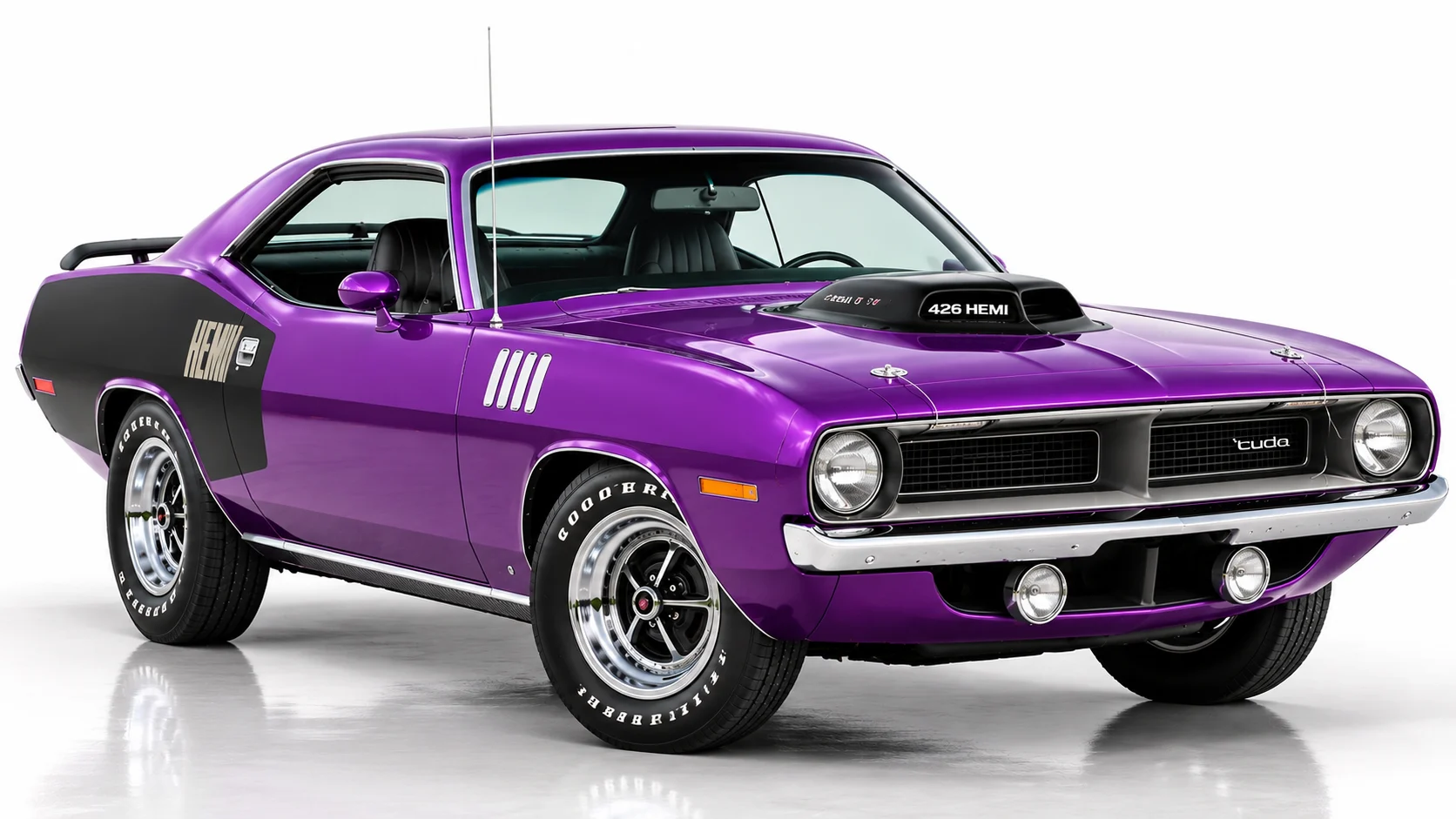
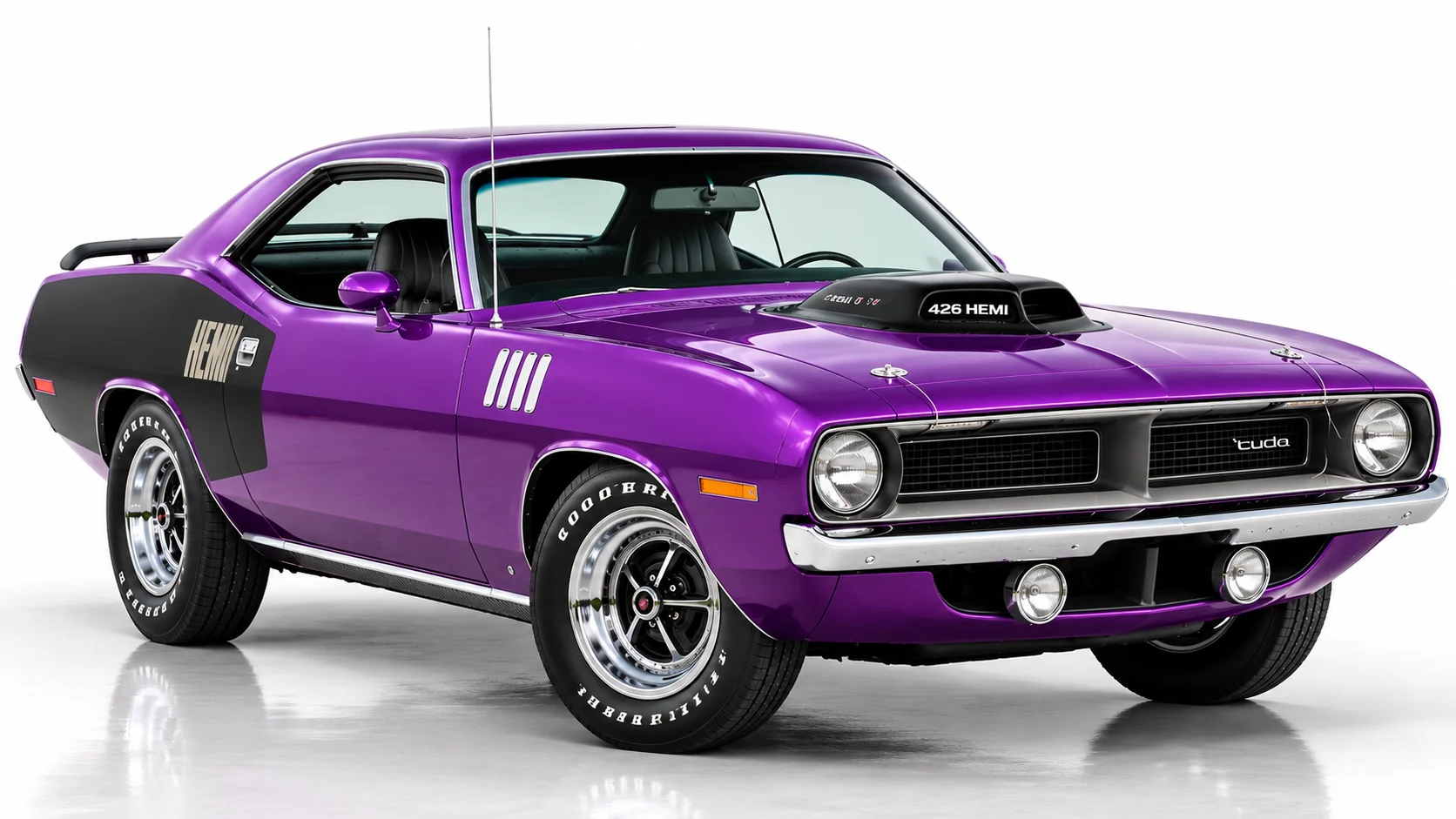
Few cars represent the golden age of American muscle quite like the 1970 Plymouth HEMI 'Cuda. With its aggressive E-body styling, unmistakable Shaker hood scoop and one of Chrysler's most powerful street engines, it became one of the most desirable performance cars of its generation.
At the heart of the HEMI 'Cuda was the legendary 426-cubic-inch V8. Factory-rated at 425 horsepower and 490 lb-ft of torque, the engine gave Plymouth's compact performance coupe the kind of power that made it a serious contender during the height of the American muscle-car era.
But the HEMI 'Cuda was more than just a powerful engine inside an attractive body. It combined specialized engineering, heavy-duty drivetrain components and distinctive factory equipment in a package that was expensive when new and exceptionally rare today.
More than five decades later, the 1970 Plymouth HEMI 'Cuda remains one of the defining achievements of Chrysler's high-performance engineering.
A New Generation of Barracuda Arrived in 1970
The 1970 model year marked a major turning point for the Plymouth Barracuda. Chrysler introduced an entirely new third-generation design based on the E-body platform, giving the car a more muscular appearance and a stronger performance identity.
Unlike the previous Barracuda generations, the new E-body car had a wider stance, longer-looking hood, shorter rear deck and more pronounced rear-quarter styling. Its proportions gave it a more aggressive appearance, especially when equipped with the larger V8 engines.
Plymouth offered three main versions of the redesigned Barracuda:
Barracuda
Gran Coupe
'Cuda
The standard Barracuda served as the regular model, while the Gran Coupe focused more on comfort and luxury. The 'Cuda was the performance-oriented version, with more powerful engine choices and additional performance equipment.
The 426 HEMI was available in the high-performance 'Cuda rather than the regular Barracuda or Gran Coupe. Once ordered with that engine, the car became what enthusiasts now recognize as the HEMI 'Cuda.
It was an expensive combination, but one that gave Plymouth a serious weapon in the increasingly competitive American muscle-car market.
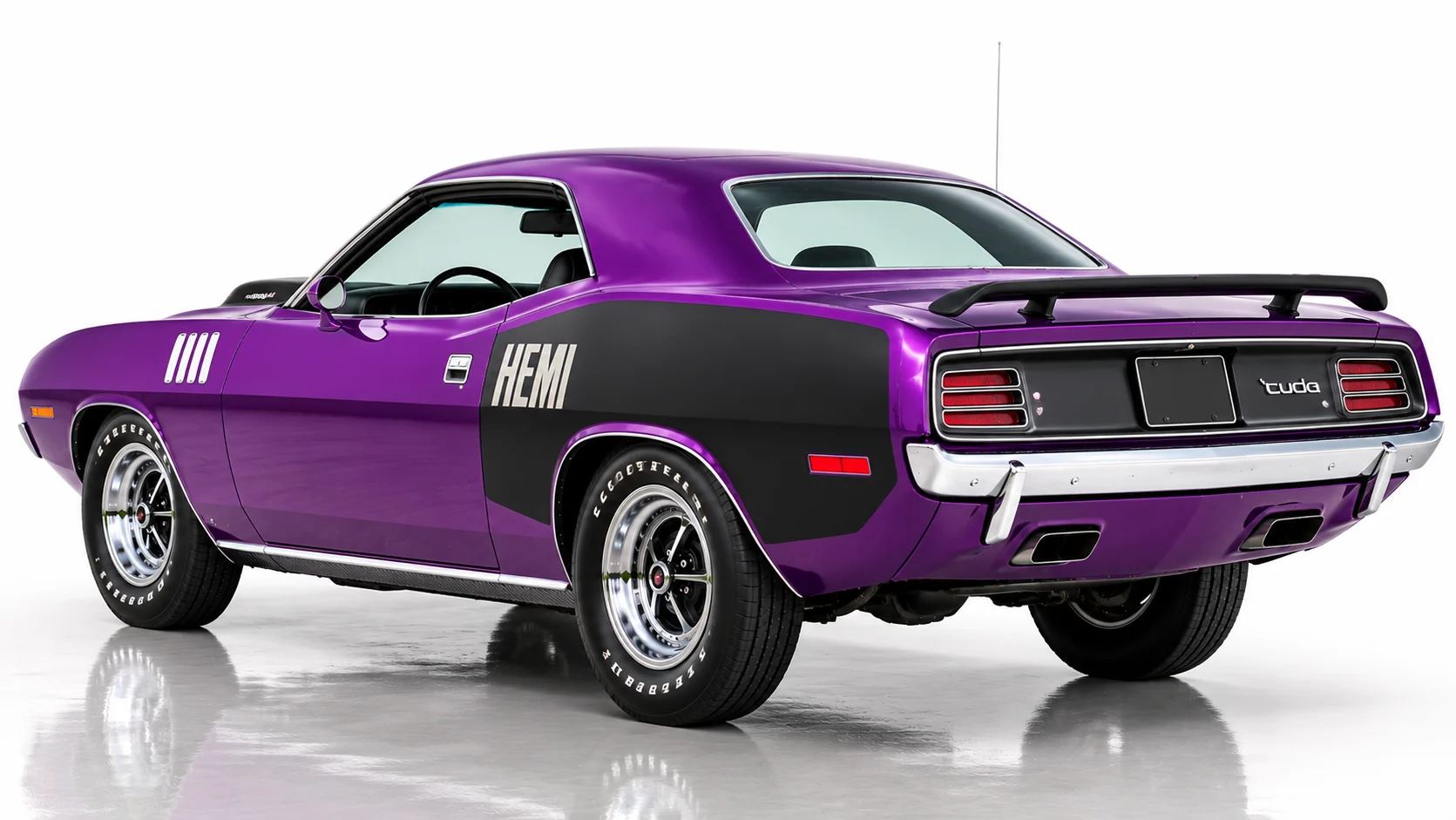
The Legendary 426 Street HEMI V8
The engine is the main reason the 1970 HEMI 'Cuda has achieved such legendary status.
Chrysler's 426 HEMI had already established its reputation through motorsport and high-performance street applications. By 1970, it was one of the most recognizable big-block V8 engines in American automotive history.
The engine displaced 426 cubic inches, equivalent to approximately 7.0 liters. It used a cast-iron V8 block and cylinder heads featuring hemispherical combustion chambers.
The hemispherical design allowed the intake and exhaust valves to be positioned at favorable angles within the combustion chamber. This helped improve airflow and supported the engine's ability to produce strong power at higher engine speeds.
For 1970, Plymouth's factory specification sheet listed the following figures:
Displacement: 426 cubic inches
Engine configuration: 90-degree V8
Factory-rated horsepower: 425 hp at 5,000 rpm
Factory-rated torque: 490 lb-ft at 4,000 rpm
Compression ratio: 10.2:1
Bore: 4.25 inches
Stroke: 3.75 inches
These were the published factory ratings using the gross horsepower measurement system of the period. They should not be directly compared with modern SAE net horsepower figures, which are measured under different conditions.
The HEMI's reputation was built on more than its official horsepower rating. Its strong torque output, breathing capability and distinctive mechanical character made it one of the most respected American V8 engines of its time.
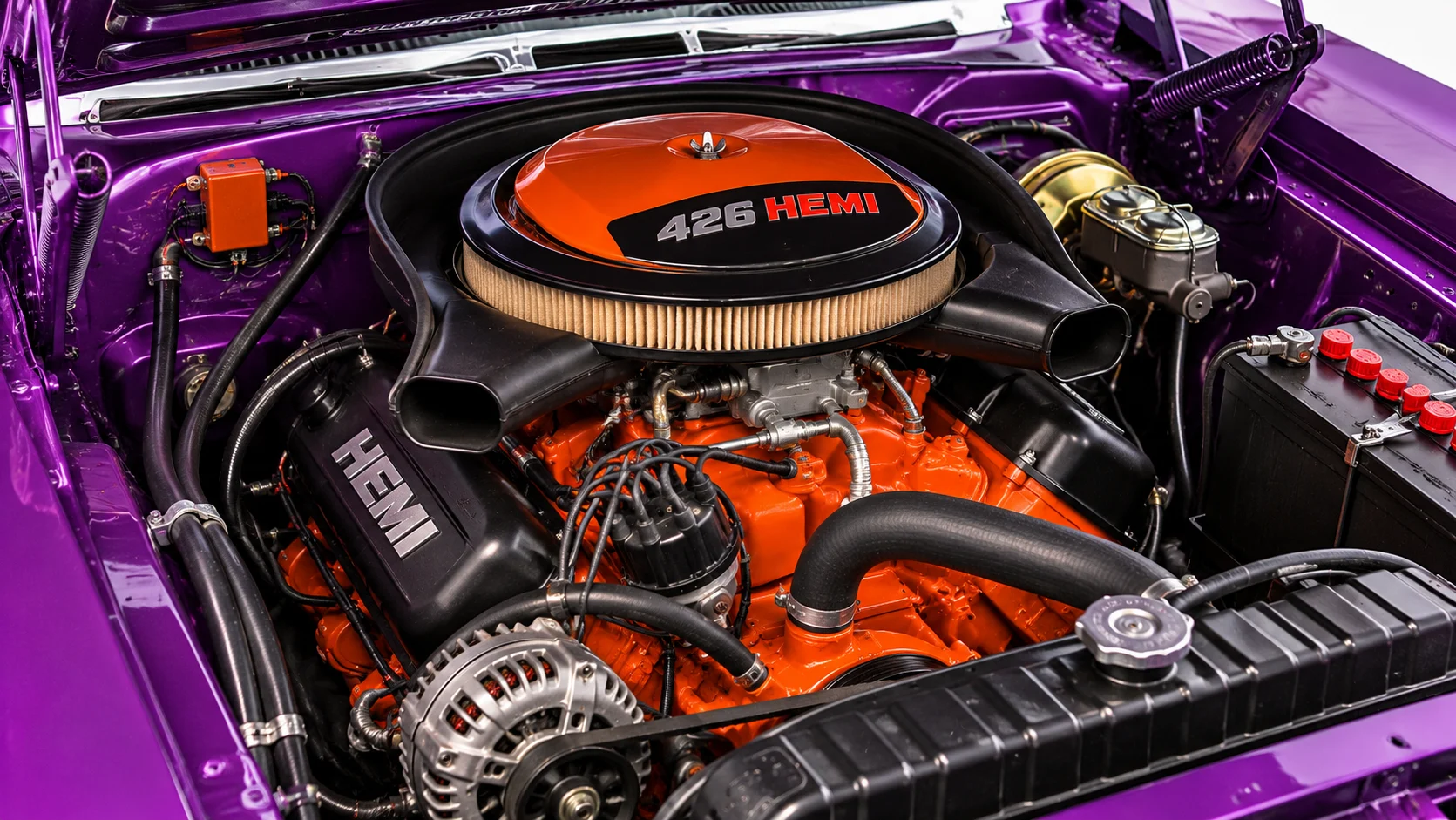
Dual Four-Barrel Carburetors and HEMI Engineering
The 426 Street HEMI used two four-barrel Carter carburetors to supply fuel and air to the engine.
This dual-carburetor arrangement was an important part of the HEMI's high-performance character. Instead of relying on a single carburetor, the system provided a larger overall airflow capacity to support the engine's power requirements.
The factory AMA specification records the Carter carburetor arrangement for both manual and automatic transmission applications, with different carburetor identification numbers depending on the configuration.
The engine also featured forged aluminum-alloy pistons, a cast-iron block and cylinder heads, and a performance-oriented internal design.
For 1970, Chrysler made an important change to the Street HEMI valvetrain by using hydraulic lifters instead of the solid-lifter arrangement associated with earlier versions. This reduced the need for frequent valve-lash adjustments and made the engine somewhat easier to maintain as a street car.
Despite these changes, the 426 remained a serious high-performance engine that demanded proper maintenance and premium fuel.
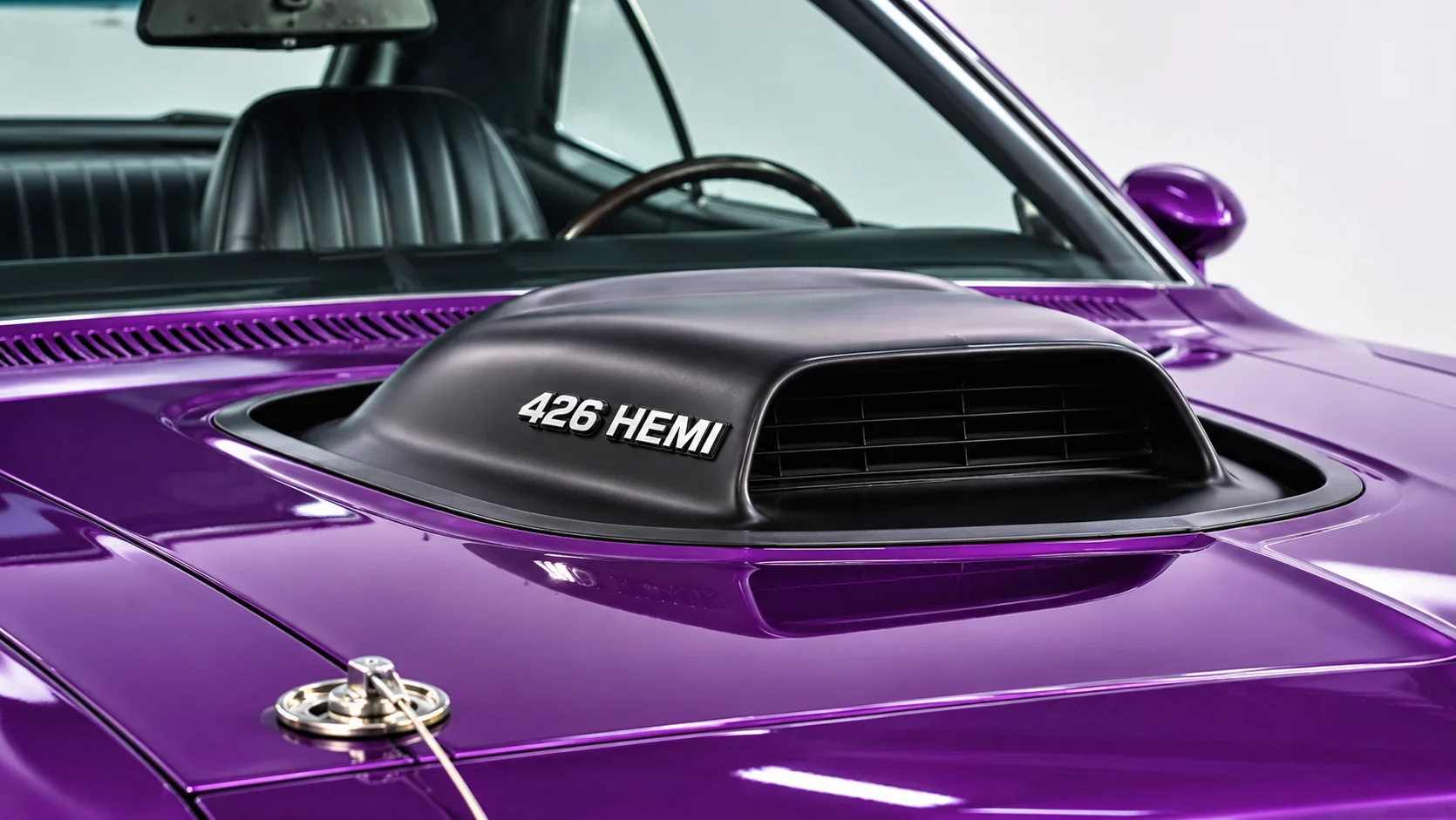
The Famous Shaker Hood Scoop
One of the most recognizable features of the 1970 HEMI 'Cuda is its Shaker hood scoop.
Unlike a conventional decorative hood scoop, the Shaker assembly was attached to the engine and extended through an opening in the hood. Because it was connected to the engine rather than fixed directly to the body, it moved slightly with the engine's vibration.
That movement gave the scoop its famous name.
The Shaker system was designed to draw cooler outside air into the engine's induction system. Cooler, denser air can support more efficient combustion under suitable conditions.
For the 1970 HEMI 'Cuda, the Shaker fresh-air package was standard equipment. The factory sales literature also listed it as available on the 440 Six Barrel-powered 'Cuda.
The scoop became one of the defining visual elements of the HEMI 'Cuda. Its position through the hood immediately communicated that the car carried something special underneath.
Transmission Choices: Four-Speed Manual or TorqueFlite Automatic
Plymouth buyers could choose between a four-speed manual transmission and the three-speed TorqueFlite automatic when ordering a 1970 HEMI 'Cuda.
The four-speed manual was particularly attractive to enthusiasts who wanted a more involved driving experience. Many examples featured the famous Hurst Pistol Grip shifter, which became one of the most recognizable interior details associated with high-performance Mopars.
The Pistol Grip design offered a distinctive handle shape and became closely associated with Chrysler's performance cars.
For buyers who preferred automatic operation, the TorqueFlite transmission offered a different way to enjoy the HEMI's strong torque output.
The factory AMA specifications identify the TorqueFlite as an automatic planetary-gear transmission with three forward ratios.
Both transmission choices gave the HEMI 'Cuda a strong performance identity, although the exact equipment and rear-axle configuration depended on the car's factory options.
Dana 60 Rear Axle and Heavy-Duty Performance Equipment
A powerful engine needs a drivetrain capable of handling its output. Plymouth equipped the HEMI 'Cuda with heavy-duty performance hardware to match the 426's substantial torque.
The Dana 60 rear axle is particularly associated with HEMI-powered E-body cars. Its strong construction made it suitable for high-performance applications.
Four-speed HEMI 'Cuda models are commonly documented with the Dana 60 as standard equipment. The axle specification on automatic cars should be checked against the individual vehicle's factory records and equipment documentation rather than assumed from appearance alone.
The HEMI package also included heavy-duty suspension equipment and firm-ride shock absorbers. These components helped the car handle the weight and performance demands of its large V8 engine.
The 1970 factory option literature identifies extra-heavy-duty handling equipment as standard with the 426 HEMI, while firm-ride shock absorbers were also listed as standard with the HEMI engine.
This combination helped make the HEMI 'Cuda more than a straight-line engine package. It was engineered as a complete high-performance vehicle.
Exterior Styling and the Famous 'Cuda Identity
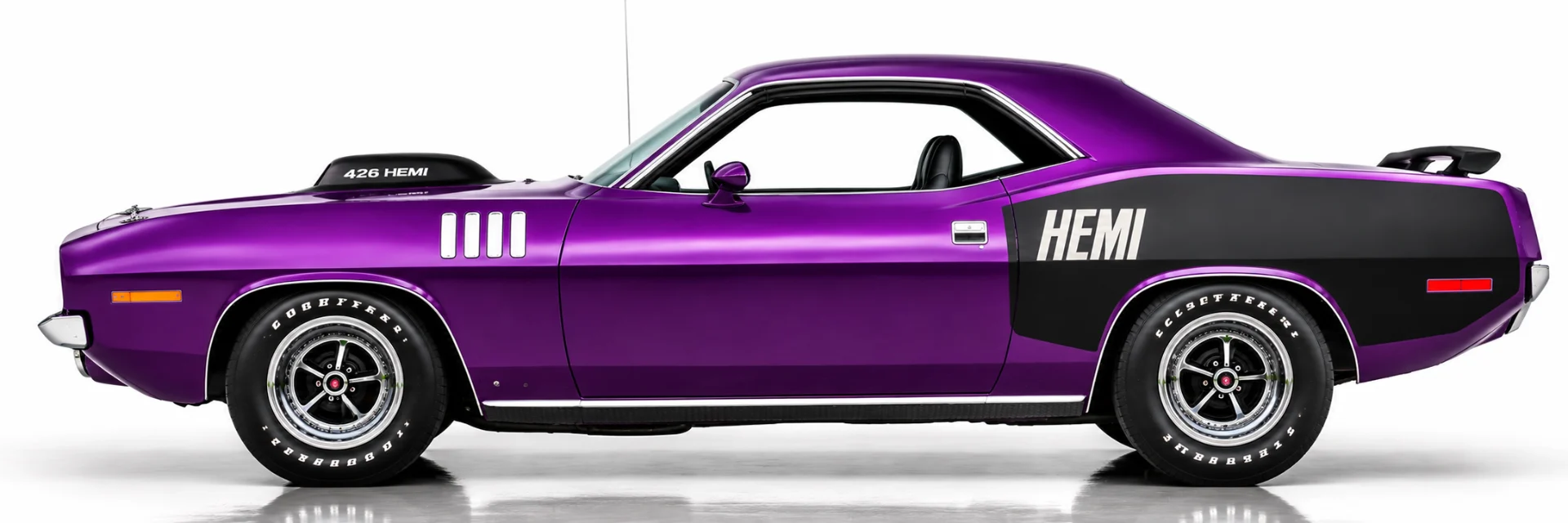
The 1970 HEMI 'Cuda had an unmistakable appearance.
Its long hood, wide front end, distinctive grille and muscular rear quarters gave it the proportions enthusiasts expected from a serious American performance coupe.
Plymouth also offered a range of high-impact exterior colors during this period. These finishes helped the 'Cuda stand out in an era when American manufacturers were increasingly using bold paint choices to attract performance buyers.
The 'Cuda's hockey-stick-style side graphics were another important visual detail. When the HEMI engine was ordered, the stripe carried HEMI identification, making the engine choice visible from the side.
Other distinctive features included the Shaker scoop, Rallye wheels and aggressive tire package.
For collectors today, the details matter. Original paint codes, factory stripe specifications, wheel combinations and engine identification can all help establish whether a surviving car retains its correct factory configuration.
Interior Design and Driver-Focused Equipment
Inside, the HEMI 'Cuda combined the straightforward layout of a classic American muscle car with performance-focused equipment.
Bucket seats, a center console, Rallye-style instrumentation and woodgrain interior details were among the features buyers could select depending on the car's equipment package.
Manual-transmission cars equipped with the Pistol Grip shifter had a particularly distinctive center-console arrangement.
The Rallye instrument cluster was also an important feature for performance enthusiasts. Its gauges provided the driver with additional information about the engine and vehicle operation.
Interior colors varied according to the original factory order. Black, white and other period-correct upholstery combinations could give the same exterior model very different personalities.
Not every HEMI 'Cuda received the same optional equipment. Original broadcast sheets, fender tags and factory documentation are therefore essential when identifying a particular car.
How Rare Was the 1970 Plymouth HEMI 'Cuda?
The 1970 HEMI 'Cuda was expensive and relatively uncommon when new.
The 426 HEMI engine option cost approximately $871 in 1970, with the exact listed amount varying slightly between published option-price references and transmission combinations.
That was a substantial addition to the price of the car. The HEMI option alone represented a significant portion of the original purchase price of a new 'Cuda.
Production records commonly identify 666 HEMI 'Cudas built for the 1970 model year:
652 hardtops
14 convertibles
The convertible models were particularly rare, accounting for only a small fraction of the total.
These figures are widely cited in historical production references, although individual cars should still be authenticated through their VIN, engine identification, broadcast sheet and other original documentation.
The limited production, expensive engine option and growing interest in original Mopar muscle cars have made the 1970 HEMI 'Cuda one of the most desirable American performance vehicles of its generation.
Why Collectors Value the HEMI 'Cuda Today
The modern collector market places enormous importance on originality and documentation.
A genuine 1970 HEMI 'Cuda is not simply a Barracuda with a large engine installed. Its factory identity needs to match the VIN and supporting documentation.
Collectors commonly examine:
The VIN and original model identification.
The factory engine identification and stamping.
The transmission and drivetrain configuration.
The fender tag and broadcast sheet.
Original paint and interior codes.
Factory equipment and restoration records.
This is particularly important because HEMI-powered replicas and tribute cars exist. A vehicle can look almost identical to an original HEMI 'Cuda without having left the factory with the 426 engine.
A documented original car therefore carries a different level of collector significance from a clone or recreation.
The convertible versions are especially sought after because of their extremely low production numbers.
Auction values vary considerably according to body style, originality, restoration quality, provenance and documentation. There is no single price that accurately represents every 1970 HEMI 'Cuda.
The Legacy of the 1970 Plymouth HEMI 'Cuda
The 1970 Plymouth HEMI 'Cuda arrived at a time when American manufacturers were competing to build increasingly powerful and distinctive performance cars.
Its combination of E-body styling, 426 Street HEMI power, Shaker hood scoop and heavy-duty drivetrain equipment made it one of the standout vehicles of the era.
It was not built in enormous numbers, and its high original price kept it out of reach for many buyers. Those factors helped create the rarity and collector demand associated with the car today.
More than fifty years later, the HEMI 'Cuda remains a symbol of the engineering ambition and bold design that defined American muscle cars at their peak.
The 426 HEMI V8 is at the center of that story. With 425 factory-rated horsepower and 490 lb-ft of torque, it gave the 1970 Plymouth HEMI 'Cuda a performance identity that continues to command respect among muscle-car enthusiasts.
It is one of the clearest examples of why the golden age of American V8 performance still captures the imagination of collectors around the world.
Have thoughts, dyno data, or build feedback?
Join automotive enthusiasts in the paddock below to debate engineering, lap times, and modifications.
Community Pulse
How does this machine make you feel? Drop your reaction!

VehicleDrugs Editorial
VehicleDrugs Editorial Team
A passionate collective of automotive purists, track drivers, and mechanical engineers uncovering high-octane engineering breakthroughs worldwide.
🏁 Pit Crew Discussions
Drop your telemetry, debate the engineering, or talk track times with fellow petrolheads.
The Pit Lane is Quiet
Be the first driver to drop your opinion on this machine!