
1969 Dodge Charger R/T 426 HEMI: Rare Bright Green One-of-One
Explore the rare 1969 Dodge Charger R/T with a numbers-matching 426 HEMI, Bright Green Metallic Spring Color, white interior and $176,000 auction history.
HEAD-TO-HEAD MUSCLE CAR VS COMPARISON
Compare 0-60, peak horsepower, torque, and quarter-mile times across iconic builds.
1969 Dodge Charger R/T 426 HEMI: The Rare Bright Green Muscle Car With One-of-One Status
Few American muscle cars capture the attitude of the late 1960s quite like the second-generation Dodge Charger. Its long hood, hidden headlights, fastback-inspired roofline and powerful V8 engines made it one of the most recognizable performance cars of its era. But among the many Chargers built during this period, some examples stand out for reasons beyond horsepower.
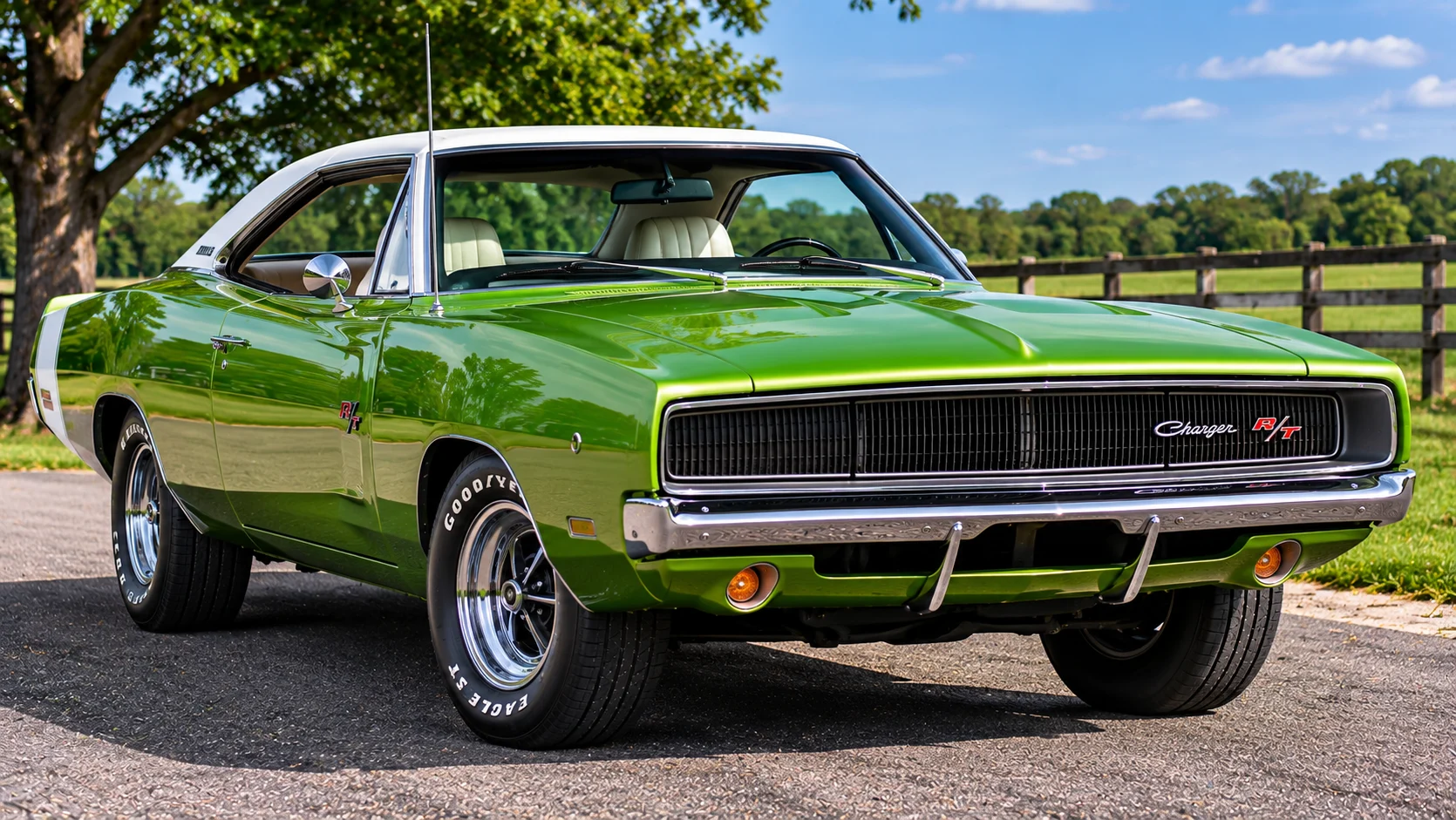
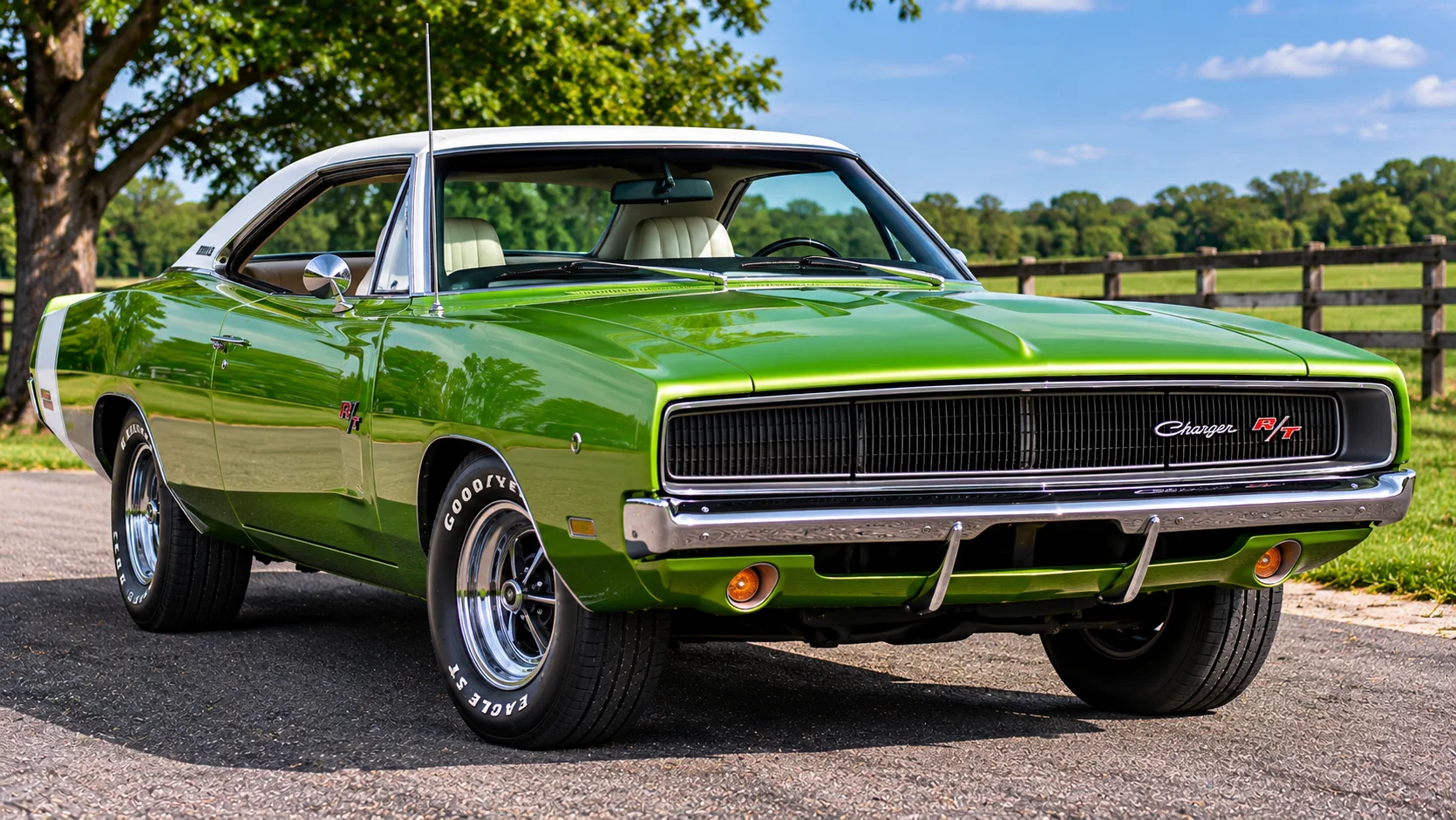
One particularly unusual 1969 Dodge Charger R/T combines the legendary 426 HEMI V8 with a rare Bright Green Metallic exterior, a white vinyl roof and matching white interior. Its factory configuration is recorded as one-of-one in the Chrysler Registry, making it an especially interesting car for Mopar collectors.
The car also has a documented auction history. It crossed the block at Mecum Harrisburg in July 2025 and sold for $176,000, including the buyer's premium. That result made it the most expensive 1969 HEMI Charger with an automatic transmission sold at public auction at the time.
This Charger is a reminder that the most memorable classic muscle cars are not always the ones with the loudest colors or the biggest engines alone. Sometimes, it is the combination of factory options, originality and documented history that makes a car truly special.
The 1969 Dodge Charger R/T: A Muscle Car With Serious Presence
By 1969, the Dodge Charger had established itself as one of the leading names in American performance. The second-generation design, introduced for 1968, gave the car a more aggressive appearance than its predecessor.
The body featured a broad front end, a full-width grille with concealed headlights, sculpted side panels and distinctive flying-buttress-style rear roof pillars. The recessed rear window and long rear deck gave the Charger a shape that was immediately recognizable.
The R/T, short for Road/Track, was the performance-focused version of the lineup. It came with upgraded suspension components, performance-oriented equipment and a more powerful standard engine than the regular Charger.
For 1969, the 440-cubic-inch Magnum V8 was standard in the R/T. Buyers who wanted something even more serious could order the 426 HEMI as an optional engine.
The result was a large American coupe with the sound, acceleration and road presence expected from a top-level Mopar performance car.
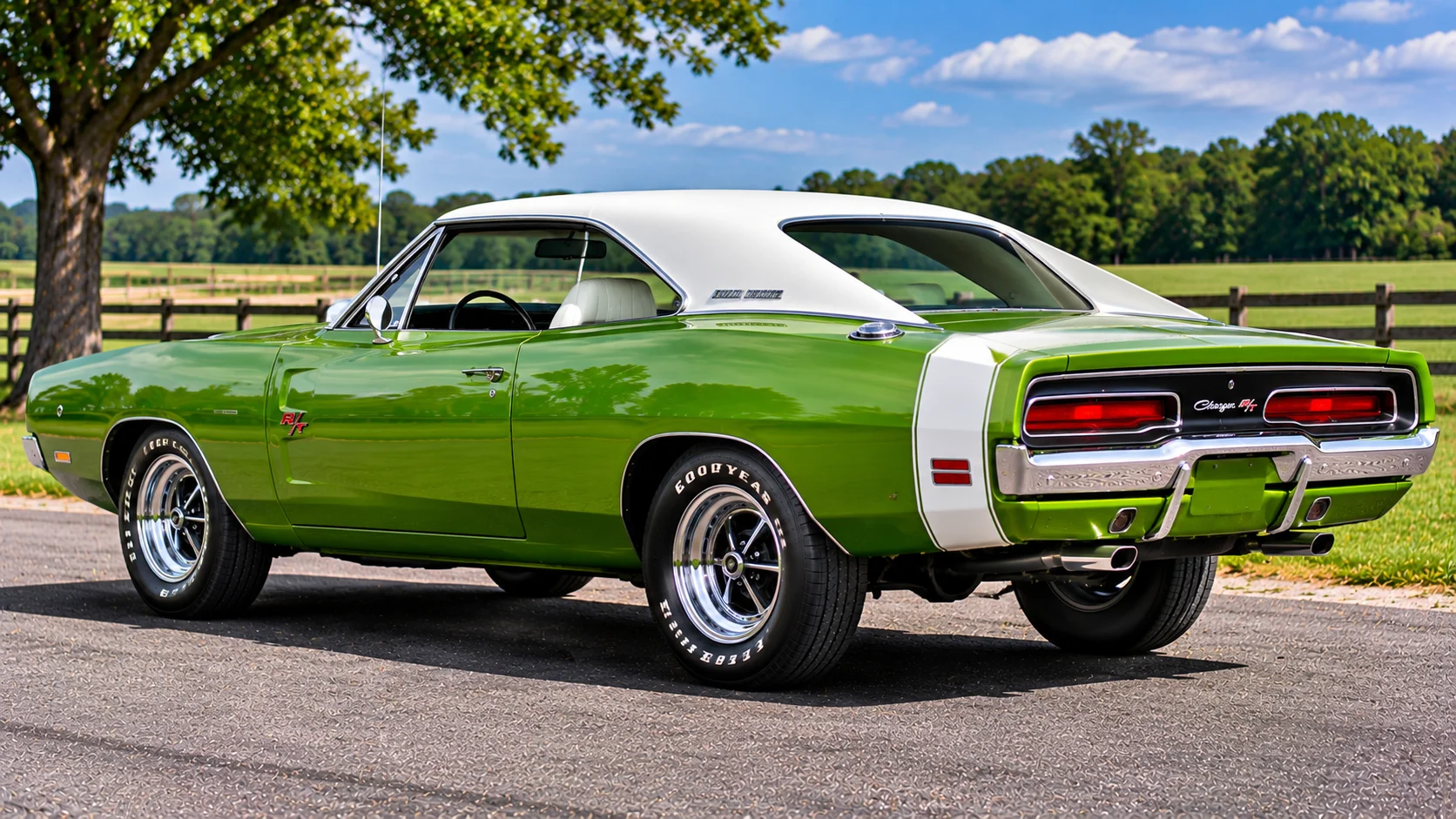
Bright Green Metallic: A Rare Spring Color
The paint is one of the first things that separates this particular Charger from other 1969 examples.
Dodge introduced a group of high-impact colors for the 1969 model year, including Bright Green, Go Mango, Butterscotch and HEMI Orange. These colors gave buyers a more expressive alternative to the traditional darker and more conservative finishes commonly seen on American cars.
Bright Green was especially unusual because it was a special-order Spring Color. Unlike regular production colors, it was available only during a limited period in the spring.
That short ordering window makes original Bright Green cars particularly interesting to collectors. The exact number of 1969 Chargers originally ordered in this shade is not clearly established, so it is better not to assign an unsupported production figure to the color.
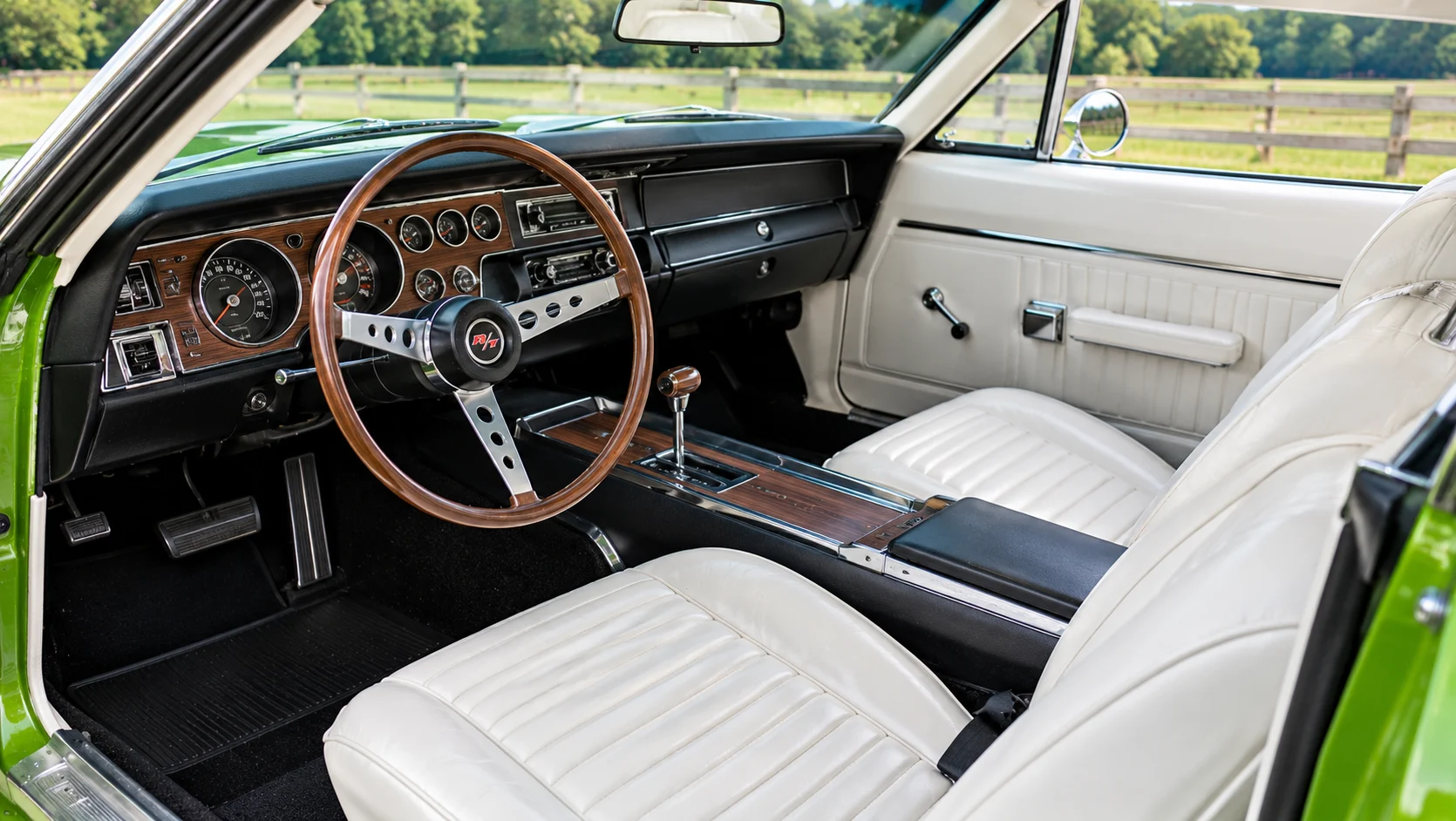
This Charger takes the unusual paint choice a step further with a white vinyl roof and matching white R/T stripe. The white theme continues inside, with white bucket seats, door panels and headliner.
The contrast between the vivid green exterior and the white trim gives the car a very different character from the familiar black, red and HEMI Orange Chargers.
According to the Chrysler Registry information cited in the car's coverage, this particular combination is listed as one-of-one as equipped. That description refers to its recorded factory configuration within the registry. It should not be interpreted as proof that no other similar car was ever built, because the registry covers only a portion of the original production.
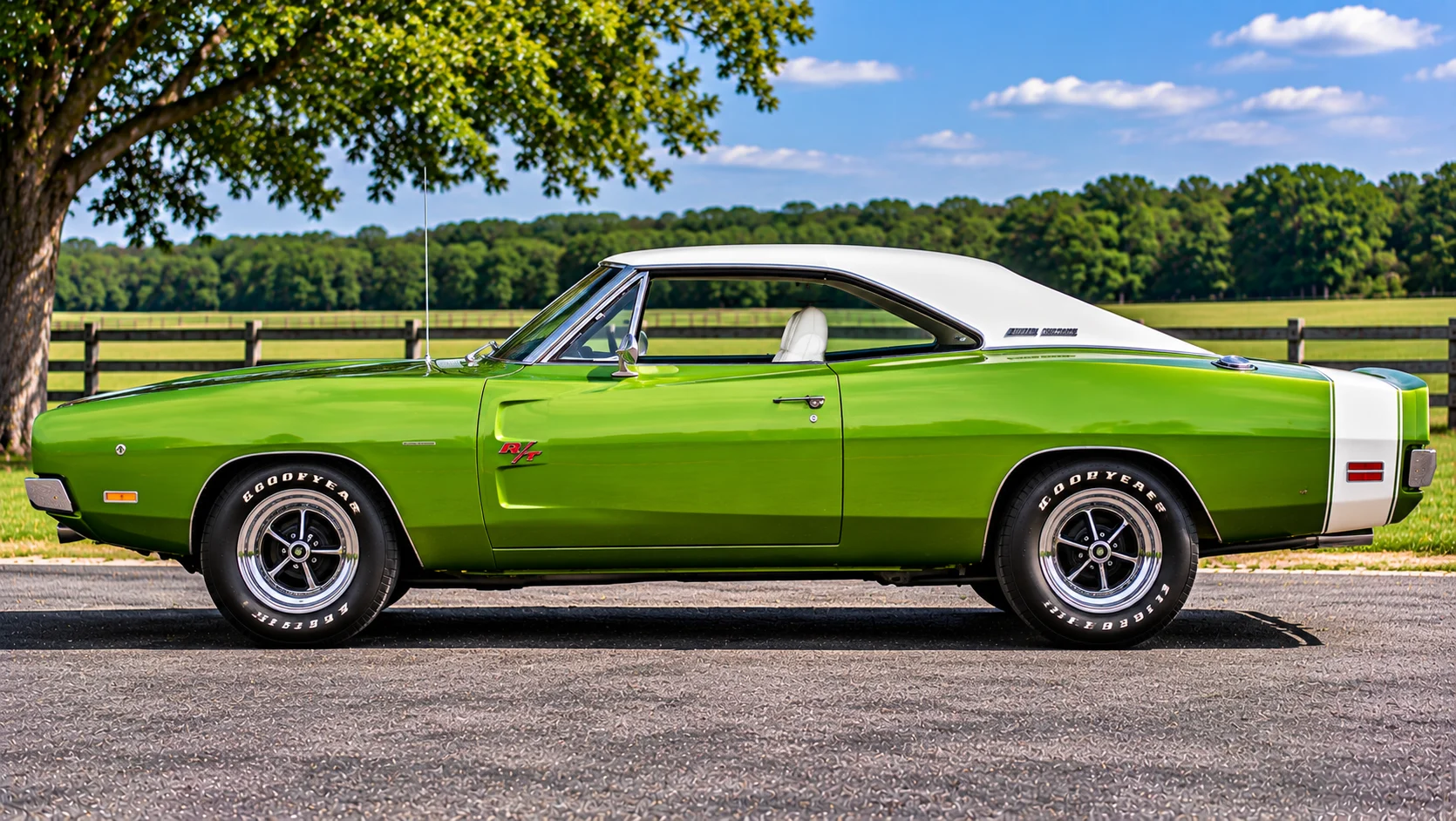
The Legendary 426 HEMI V8
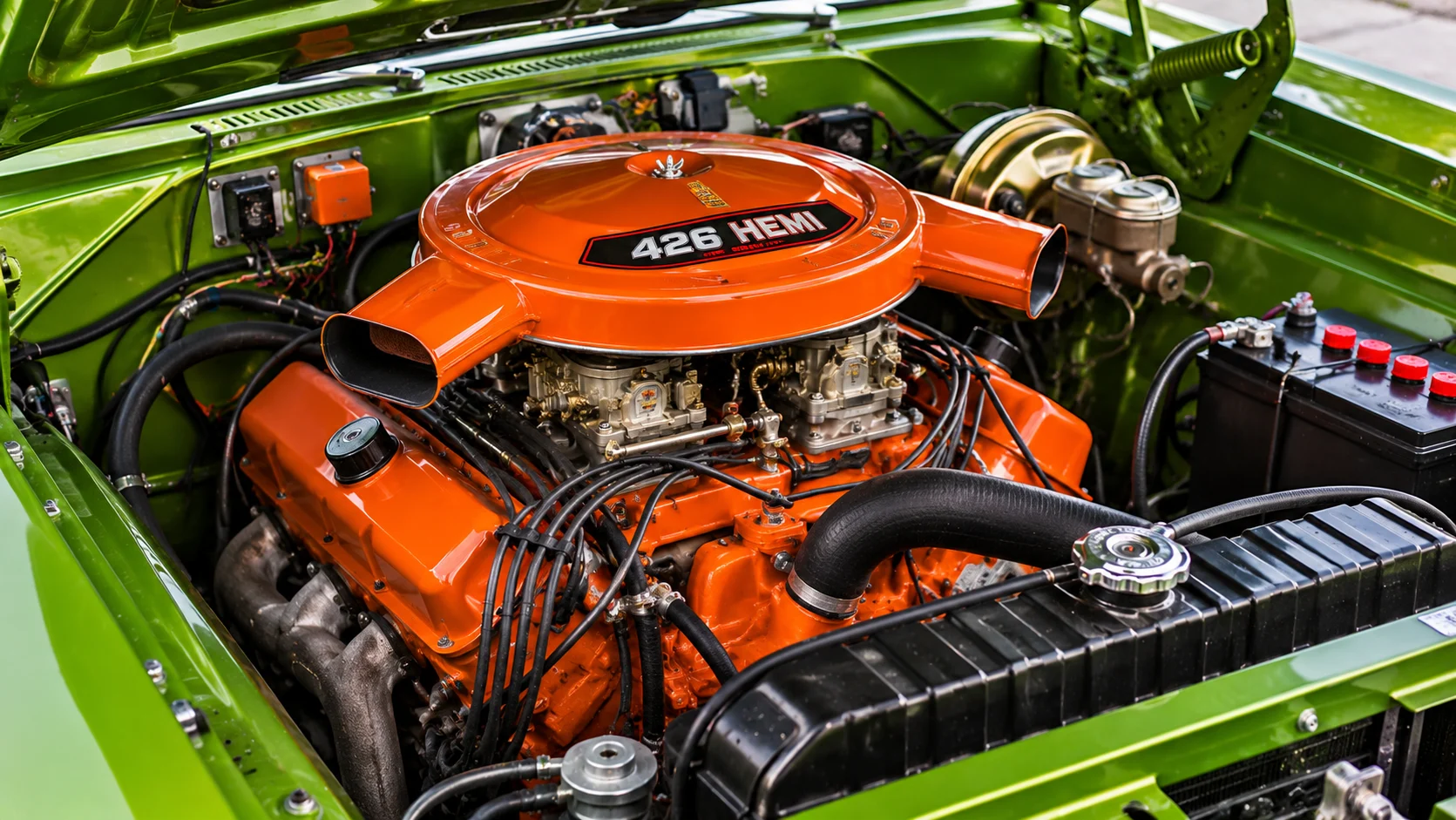
Under the long hood sits the engine that gives this Charger much of its legendary status: Chrysler's 426-cubic-inch HEMI V8.
With a displacement of 7.0 liters, the Street HEMI was developed from Chrysler's racing-engine experience and adapted for use in production performance cars. Its hemispherical combustion-chamber design was a major part of its reputation, helping it breathe efficiently and deliver strong high-rpm performance.
For 1969, the factory-rated output of the 426 Street HEMI was 425 horsepower. The engine used two four-barrel carburetors mounted on an intake manifold, along with a high-performance valvetrain and heavy-duty internal components.
The HEMI was not an inexpensive option. Its price, insurance costs and specialized performance character meant that relatively few Charger buyers selected it.
Commonly cited production records list 432 1969 Charger models equipped with the 426 HEMI. That small number helps explain why an authentic HEMI Charger is so desirable today.
The example featured here is particularly significant because it retains its original numbers-matching HEMI engine, according to its auction coverage. That means the engine corresponds to the car's documented factory identity rather than being simply a replacement HEMI installed during restoration.
Three-Speed TorqueFlite Automatic Transmission
Not every HEMI Charger left the factory with a four-speed manual transmission. This particular Bright Green example was equipped with a three-speed TorqueFlite automatic.
The A727 TorqueFlite was a heavy-duty automatic transmission used in a wide range of Chrysler performance applications. Its robust construction made it suitable for handling the substantial torque produced by the 426 HEMI.
The automatic transmission also gives this car a different personality from the four-speed examples often preferred by traditional muscle-car enthusiasts. Instead of requiring constant clutch work, the TorqueFlite allowed the driver to enjoy the engine's performance with a more relaxed driving experience.
The transmission is an important part of the car's identity because collectors generally evaluate a classic muscle car by its complete factory drivetrain, not just the engine.
The combination of the original HEMI, automatic gearbox and unusual exterior specification makes this Charger stand out among surviving 1969 examples.
White Interior and Period-Correct Details
The exterior color combination continues inside the cabin.
The car features white bucket seats, white door panels and a white headliner. Against the Bright Green exterior and white vinyl roof, the interior creates a consistent two-tone theme rather than looking like an unrelated collection of options.
The bucket seats and driver-focused layout reflect the performance character of the Charger R/T. The interior also retains the period styling that makes late-1960s Mopar cars distinctive.
The car's restoration was described as a professional rotisserie restoration, with attention given to factory specifications and period-correct details. The auction coverage also notes factory equipment such as power steering, power brakes and the correct dual-snorkel air-cleaner arrangement.
For collectors, these details matter. A restored car can look impressive in photographs, but the quality of the restoration and the accuracy of its equipment are what help establish its long-term credibility.
What Makes This Charger a One-of-One Example?
The phrase one-of-one is often used in classic-car advertising, but it needs to be understood carefully.
In this case, the Chrysler Registry reportedly lists the car as one-of-one produced as equipped. That means the documented combination of factory options and finishes is recorded as unique within the registry's information.
It does not automatically establish that this was the only Charger built with every individual option, or that another similar car could never have existed. The registry itself represents only a portion of the original production records.
Still, the combination is unusual. It brings together:
A 1969 Dodge Charger R/T body.
The 426-cubic-inch HEMI V8.
Bright Green Metallic special-order Spring Color paint.
A white vinyl roof.
A matching white R/T stripe.
White bucket seats and interior trim.
A three-speed TorqueFlite automatic transmission.
An original numbers-matching engine.
The importance is not simply that each item is rare on its own. It is the documented combination that makes this car interesting to serious Mopar collectors.
The $176,000 Mecum Harrisburg Auction Sale
The Charger attracted attention when it appeared at Mecum Harrisburg in July 2025.
It sold on July 26 for $176,000, including the buyer's premium. According to the published auction coverage, that result made it the most expensive 1969 HEMI Charger with an automatic transmission sold at public auction at that time.
The sale also placed it among the strongest auction results for non-Daytona 1969 HEMI Chargers. Only a small number of comparable cars had achieved higher public auction prices.
The result reflects several factors working together: the original HEMI drivetrain, rare Bright Green finish, white interior, documented configuration and quality of restoration.
It is also a reminder that the value of a classic muscle car cannot be judged by horsepower alone. Two cars with the same engine and model year can have very different values depending on originality, documentation, condition and factory options.
For this Charger, the auction result provided a clear example of how much collectors may be willing to pay for an unusual and well-documented Mopar.
Why the 1969 Dodge Charger R/T Still Matters
More than half a century after it left the factory, the 1969 Dodge Charger R/T remains one of the defining American muscle cars.
Its appeal comes from the combination of bold styling and serious V8 performance. The concealed headlights, wide grille, flowing roofline and muscular proportions gave it a character that few competitors could match.
The 426 HEMI made the R/T even more special, turning an already desirable performance coupe into one of the most sought-after Mopar combinations of the era.
This Bright Green example adds another layer to that story. Its unusual Spring Color, white vinyl roof, white interior and documented one-of-one-as-equipped registry status make it more than just another HEMI Charger.
It is a carefully restored piece of American automotive history, and its $176,000 auction result shows that originality and unusual factory specifications continue to matter in the collector-car market.
For enthusiasts who appreciate classic Mopar engineering, the 1969 Dodge Charger R/T 426 HEMI remains an unmistakable symbol of the golden age of American muscle.
Have thoughts, dyno data, or build feedback?
Join automotive enthusiasts in the paddock below to debate engineering, lap times, and modifications.
Community Pulse
How does this machine make you feel? Drop your reaction!

VehicleDrugs Editorial
VehicleDrugs Editorial Team
A passionate collective of automotive purists, track drivers, and mechanical engineers uncovering high-octane engineering breakthroughs worldwide.
🏁 Pit Crew Discussions
Drop your telemetry, debate the engineering, or talk track times with fellow petrolheads.
The Pit Lane is Quiet
Be the first driver to drop your opinion on this machine!