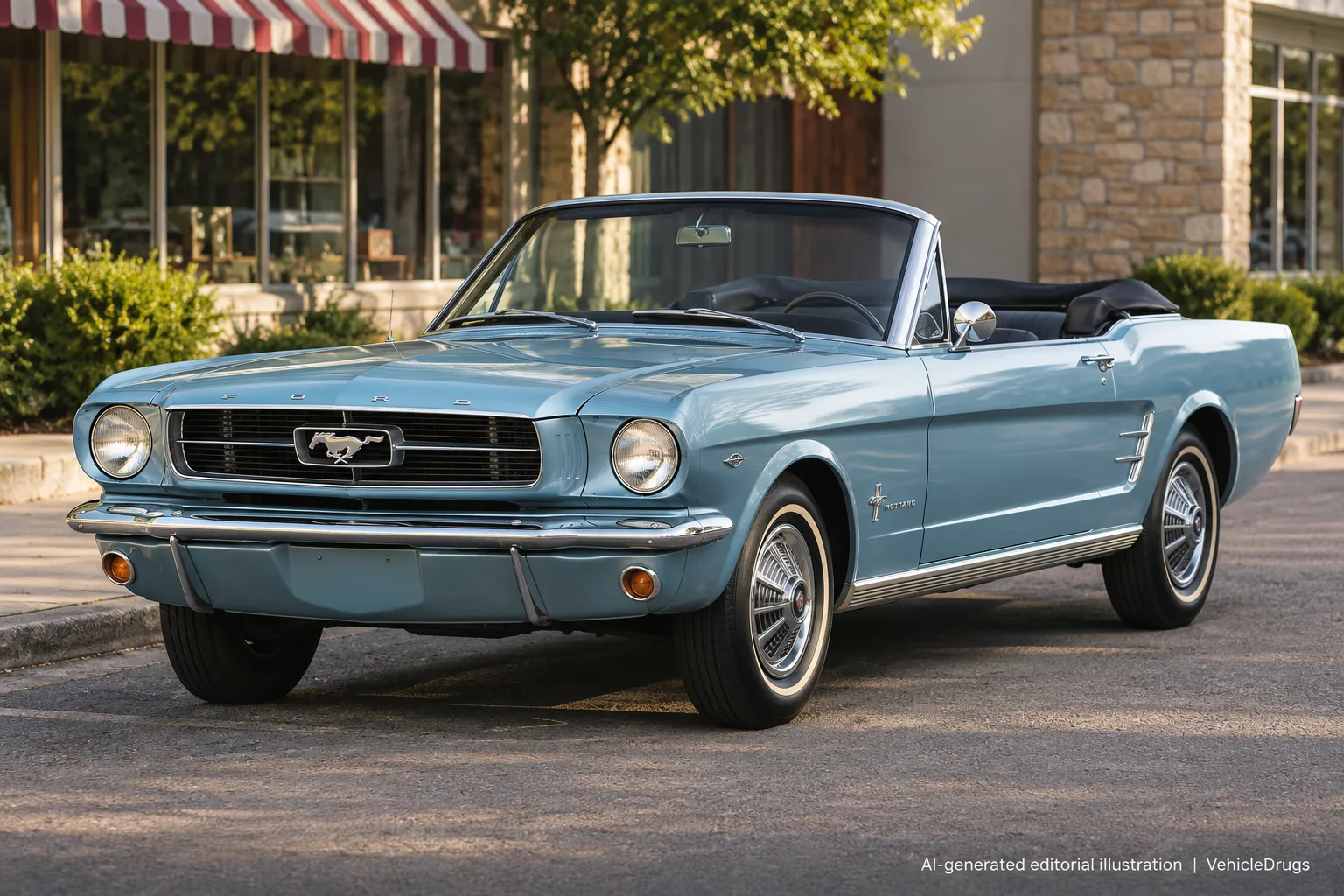

1965 Ford Mustang: History, 289 V8 & Specifications
Discover the 1965 Ford Mustang's history, 289 V8 engine options, 271-hp performance model, three body styles, GT package, and classic design.
HEAD-TO-HEAD MUSCLE CAR VS COMPARISON
Compare 0-60, peak horsepower, torque, and quarter-mile times across iconic builds.
1965 Ford Mustang: The
American Icon That Started the Pony Car Revolution
Few cars
have influenced American automotive history as profoundly as the Ford Mustang.
Introduced in April 1964, the Mustang brought together sporty styling,
accessible pricing, and extensive customization options in a package that
quickly attracted enormous public attention.
The 1965
Ford Mustang helped establish a new type of American automobile. Its long hood,
short rear deck, distinctive front grille, and available V8 power created a
combination that appealed to buyers looking for something sportier than an
ordinary family car.
Ford offered
the Mustang in multiple body styles and engine configurations, allowing
customers to choose between everyday transportation and more
performance-focused equipment. The introduction of the Fastback 2+2 and the
optional GT Equipment Package further strengthened its identity.
More than
six decades later, the first-generation Mustang remains one of the most
recognizable American classic cars ever produced.
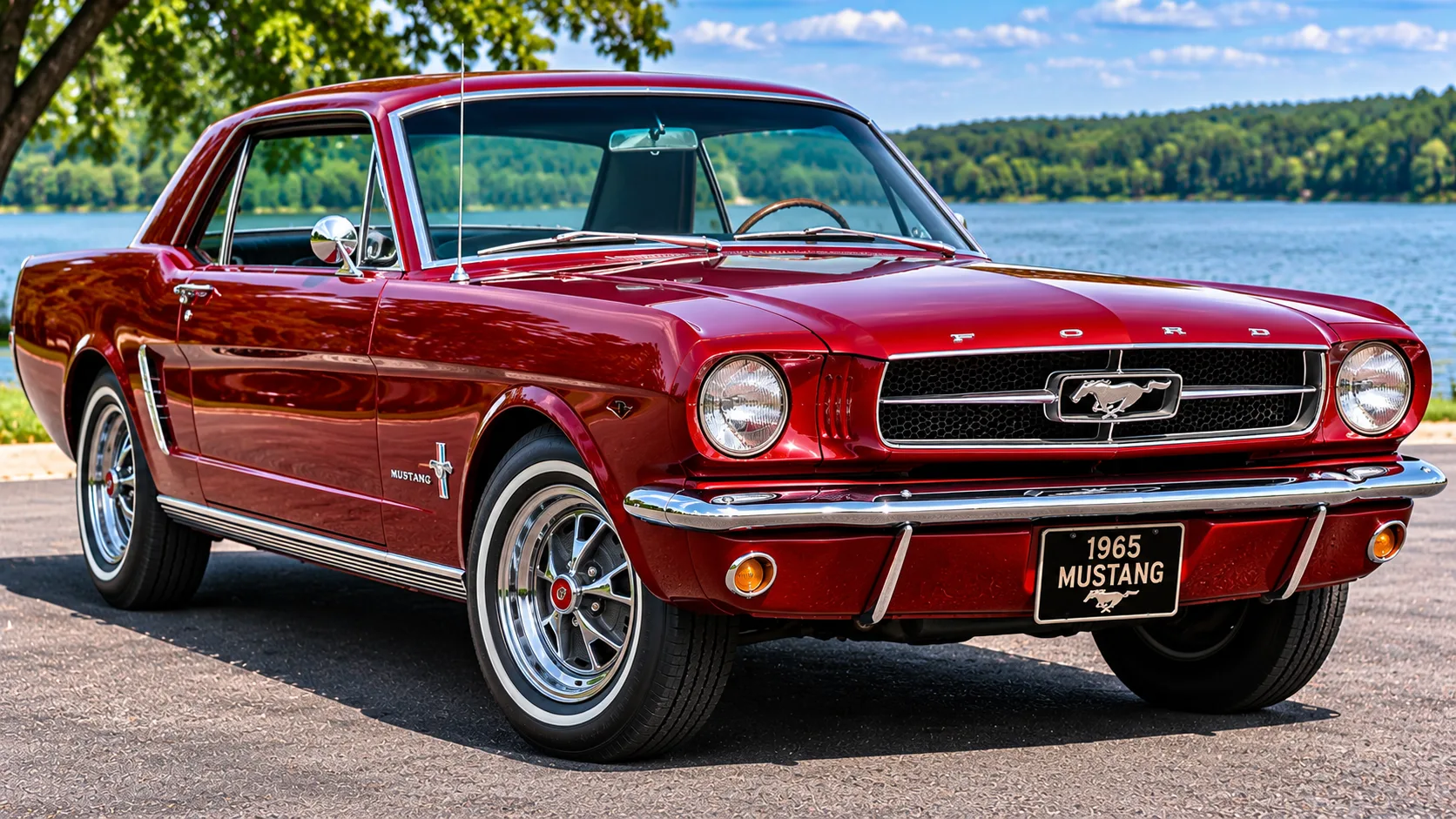
The 1965 Ford Mustang helped establish the pony car era with sporty styling, accessible pricing, and a wide range of factory options.
Quick Specifications: 1965 Ford Mustang
The 1965
model year included early-production and later-production cars with different
engine and equipment combinations. The following table summarizes the principal
later-1965 specifications rather than treating every 1965 Mustang as
mechanically identical.
|
Specification |
Later-1965 Ford Mustang |
|
Manufacturer |
Ford Motor
Company |
|
Model Year |
1965 |
|
Generation |
First
Generation |
|
Body
Styles |
Hardtop,
Convertible, Fastback 2+2 |
|
Standard
Engine |
200 cu in
inline-six |
|
Standard
Engine Output |
120 hp |
|
Optional
V8 |
289 cu in
V8 |
|
V8
Horsepower Options |
200 hp,
225 hp, 271 hp |
|
Drivetrain |
Rear-wheel
drive |
|
Wheelbase |
108 inches |
|
Overall
Length |
Approximately
181.6 inches for hardtop and convertible |
Horsepower
figures are period Ford ratings. They should not be confused with modern SAE
net horsepower measurements.
The Beginning of the Ford Mustang Story
Ford
introduced the Mustang to the public on April 17, 1964, at the New York World's
Fair. The launch created tremendous interest, with buyers responding to its
combination of sporty design, relatively affordable pricing, and extensive
optional equipment.
Although the
car was introduced during 1964, Ford marketed it as a 1965 model.
Early-production examples are commonly called 1964½ Mustangs by enthusiasts and
collectors.
The
distinction matters because Ford made production and equipment changes during
the model year. Early and later cars did not necessarily share identical engine
options, electrical equipment, or other specifications.
The Mustang
was developed around the idea of a personal sporty car. It was not intended to
be a traditional two-seat sports car. Instead, it offered practical passenger
accommodation, a choice of engines, and numerous customization options.
That
combination helped Ford reach a much broader audience.
Exterior Design: The Long Hood and Short Rear Deck
The original
Mustang's proportions became one of its most influential design features.
A long hood,
short rear deck, compact cabin, and sculpted bodywork gave the car an athletic
appearance. The design looked sporty without requiring the dimensions of a
full-size American performance car.
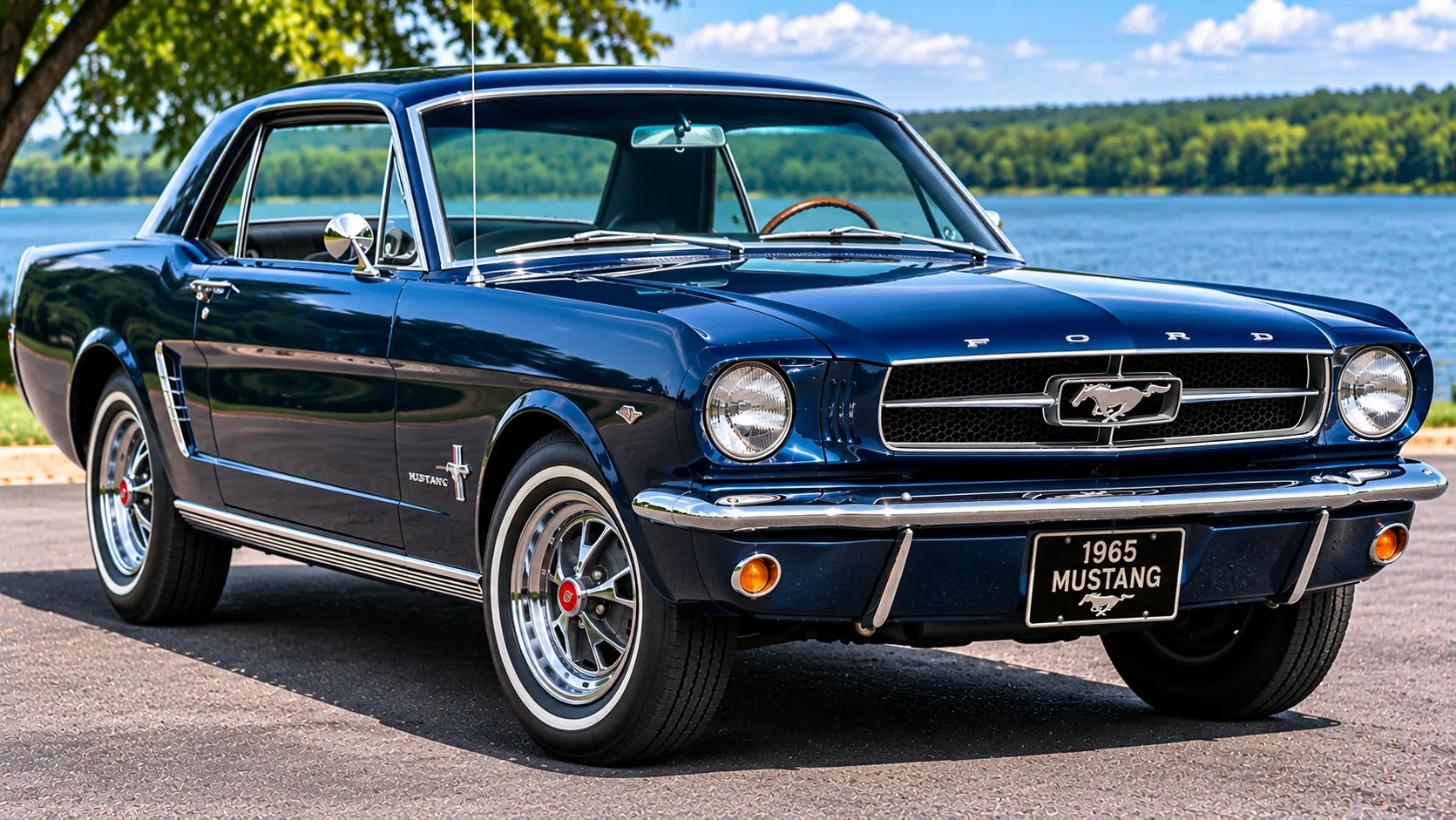
Front-End Styling
The
Mustang's front end featured a wide grille with the famous running-horse emblem
positioned in the center.
Round
headlights, a sculpted hood, and a clean front bumper arrangement helped create
an instantly recognizable appearance.
The grille
emblem became one of the most important visual elements of the Mustang
identity. It distinguished the car from other Ford passenger cars and
established a symbol that would continue through later generations.
Side Profile
The side
profile emphasized the long hood and short rear deck.
The body
featured sculpted side panels and a compact passenger compartment. Buyers could
further personalize the appearance through available wheel designs, exterior
colors, trim packages, and other factory options.
Three Body Styles: Hardtop, Convertible, and Fastback
2+2
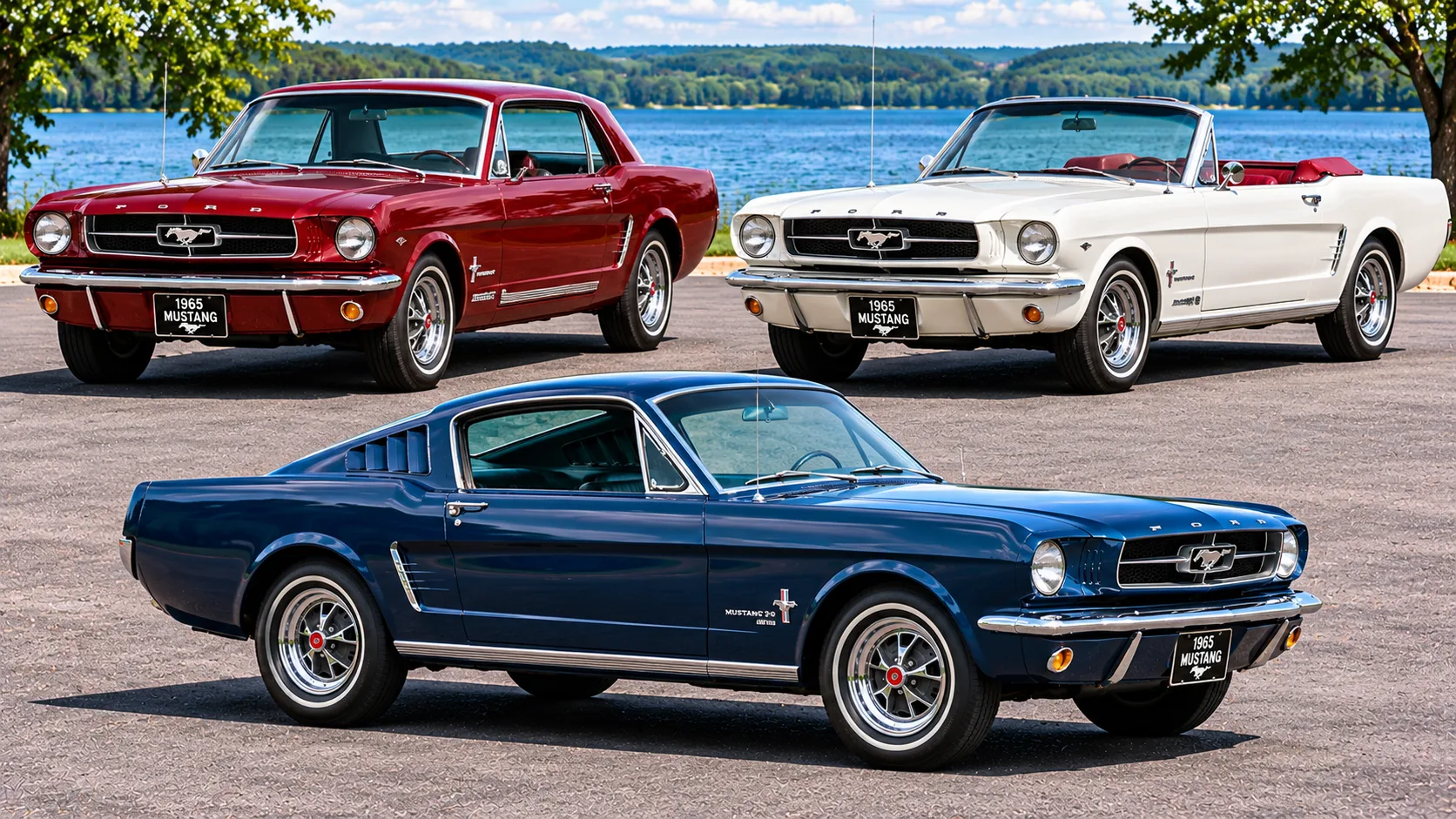
The
Mustang's body-style selection was an important part of its appeal.
The
later-1965 range included three principal configurations: the hardtop,
convertible, and Fastback 2+2.
Mustang Hardtop
The hardtop
was the traditional fixed-roof version. Its compact two-door body provided the
Mustang's familiar styling with the practicality of an enclosed passenger
cabin.
It became an
important choice for customers who wanted the Mustang appearance in a
conventional coupe-style body.
Mustang Convertible
The
convertible offered an open-air driving experience.
Its folding
soft top allowed drivers to enjoy the car in a different way while retaining
the same recognizable Mustang design.
The
convertible also helped establish the Mustang as a stylish personal car rather
than simply an inexpensive performance model.
Mustang Fastback 2+2
The Fastback
2+2 joined the Mustang lineup during the 1965 model year.
Its sloping
roofline created a more dramatic profile, giving the car a sportier appearance
than the hardtop.
The fastback
also offered a fold-down rear seat, providing additional luggage-carrying
flexibility.
The 2+2
designation reflected its seating arrangement, with two front seats and a
smaller rear seating area.
Engine Options: From the Inline-Six to the 289 V8
One of the
Mustang's biggest advantages was its range of engine choices.
Ford offered
economical six-cylinder power as well as several V8 configurations. This
allowed buyers to choose a Mustang that matched their budget and performance
expectations.
However, the
available engines changed during the 1965 model year. Early-production and
later-production specifications must be considered separately.
200-Cubic-Inch Inline-Six
The
later-1965 Mustang range used a 200-cubic-inch inline-six as its standard
engine.
Ford
published an output rating of 120 horsepower for this engine.
It provided
conventional everyday performance and allowed customers to purchase a Mustang
without selecting an optional V8.
Early-production
1965 Mustangs were also offered with a smaller 170-cubic-inch six-cylinder
engine rated at 101 horsepower. This is one reason it is important to identify
the production period when discussing original specifications.
289-Cubic-Inch Challenger V8
The
later-1965 range included the 289-cubic-inch Challenger V8.
The
two-barrel-carburetor version was rated at 200 horsepower.
It gave
Mustang buyers a conventional small-block V8 option with more power than the
standard six-cylinder engine.
289-Cubic-Inch Challenger Special V8
The
Challenger Special V8 used a four-barrel carburetor and was rated at 225
horsepower.
This
configuration offered a higher-performance alternative within the regular 289
engine range.
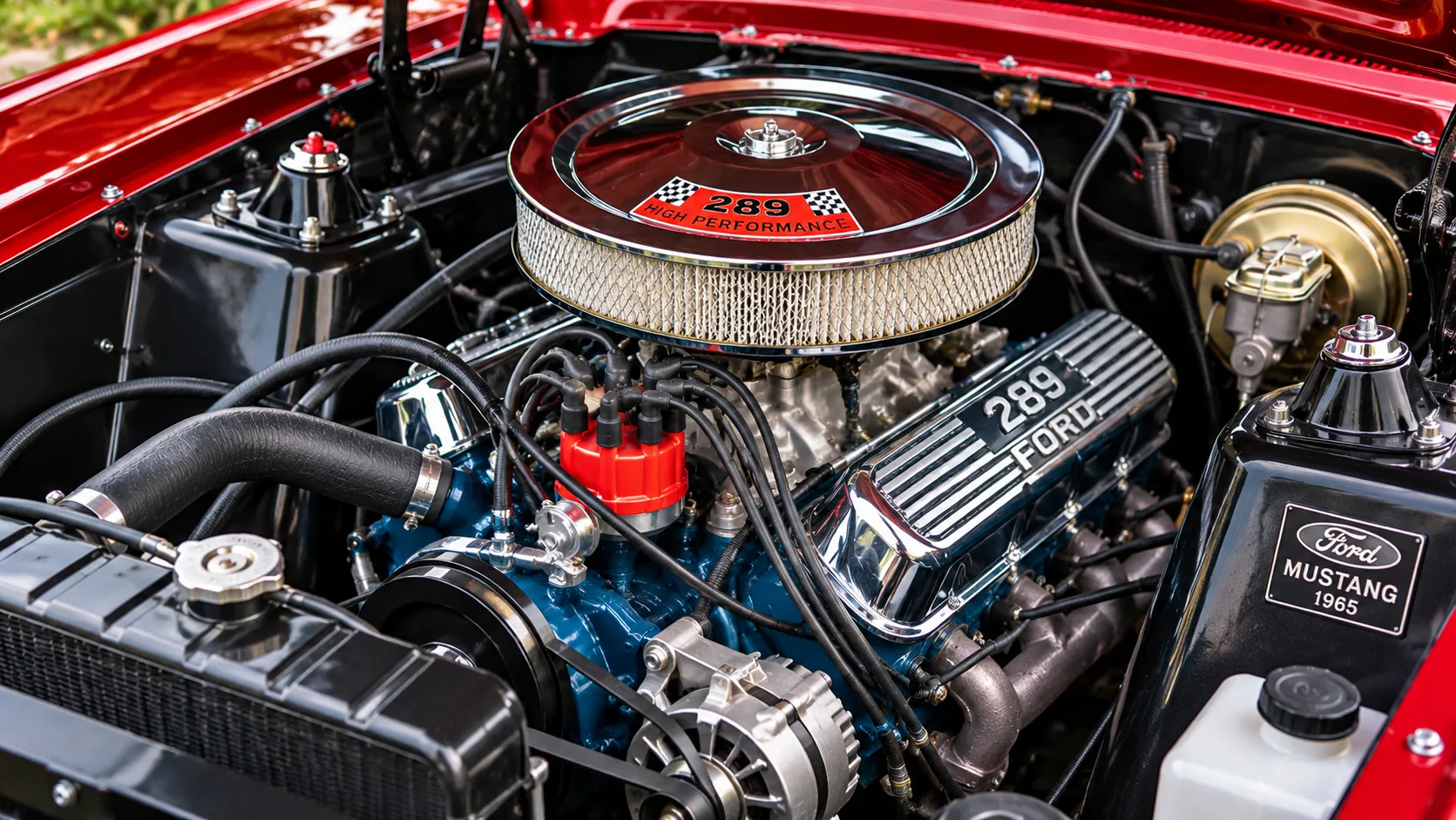
289-Cubic-Inch Challenger High Performance V8
At the top
of the later-1965 Mustang engine lineup was the 289 Challenger High Performance
V8.
Ford rated
this engine at 271 horsepower.
Its
performance-focused configuration included a four-barrel carburetor, higher
compression, and mechanical components designed for higher engine speeds.
This engine
became particularly important to Mustang enthusiasts because it gave the early
Mustang a genuine high-performance identity.
Later-1965 Factory Engine Ratings
|
Engine |
Carburetor |
Period Ford Rating |
|
200 cu in
inline-six |
Single-barrel |
120 hp |
|
289 cu in
Challenger V8 |
Two-barrel |
200 hp |
|
289 cu in
Challenger Special V8 |
Four-barrel |
225 hp |
|
289 cu in
Challenger High Performance V8 |
Four-barrel |
271 hp |
These
ratings describe the later-1965 engine range. Early-production cars also had
different engine combinations, including the 170-cubic-inch six and
260-cubic-inch V8.
Transmission and Rear-Wheel-Drive Layout
The 1965
Mustang used a conventional front-engine, rear-wheel-drive layout.
This
configuration was familiar to American car buyers and helped give the Mustang
its traditional driving character.
Ford offered
manual and automatic transmission choices, depending on the selected engine and
equipment.
The
available choices included manual transmissions and Ford's Cruise-O-Matic
automatic transmission.
The exact
transmission fitted to a particular Mustang depended on its original factory
configuration. Buyers researching a specific car should check its identification
information and original documentation rather than assume that every 1965
Mustang had the same gearbox.
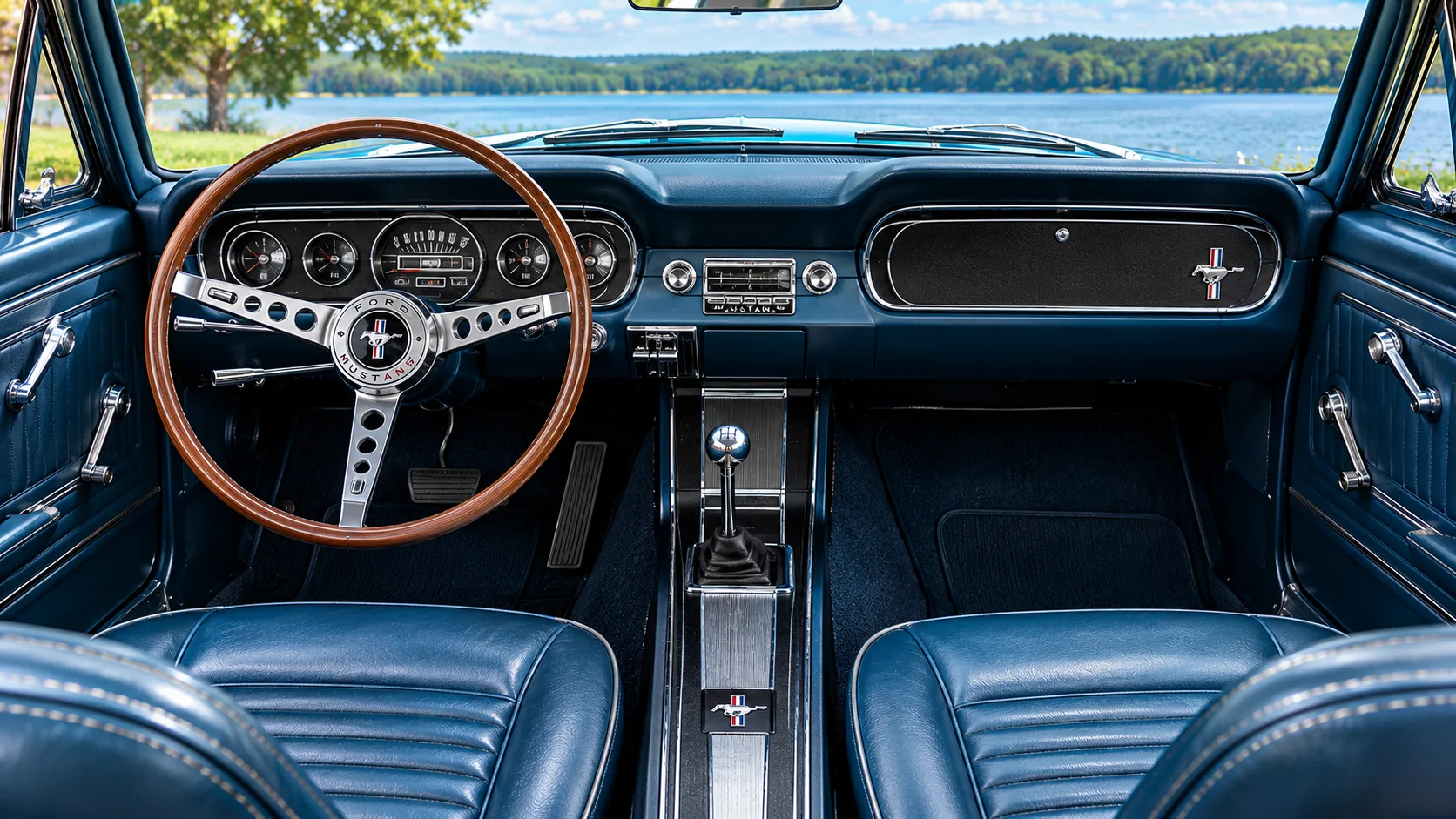
Interior Design and Practical Features
The
Mustang's interior combined a sporty appearance with features intended for
everyday use.
The cabin
included bucket-seat styling, a driver-focused instrument panel, and a range of
upholstery and trim choices.
Ford also
offered numerous optional features that allowed buyers to personalize their
cars.
Depending on
the selected equipment, customers could choose items such as air conditioning,
an AM radio, a full-length console, power steering, different wheel designs,
and additional interior trim.
The Fastback
2+2 also offered a fold-down rear seat, making it more practical for carrying
luggage.
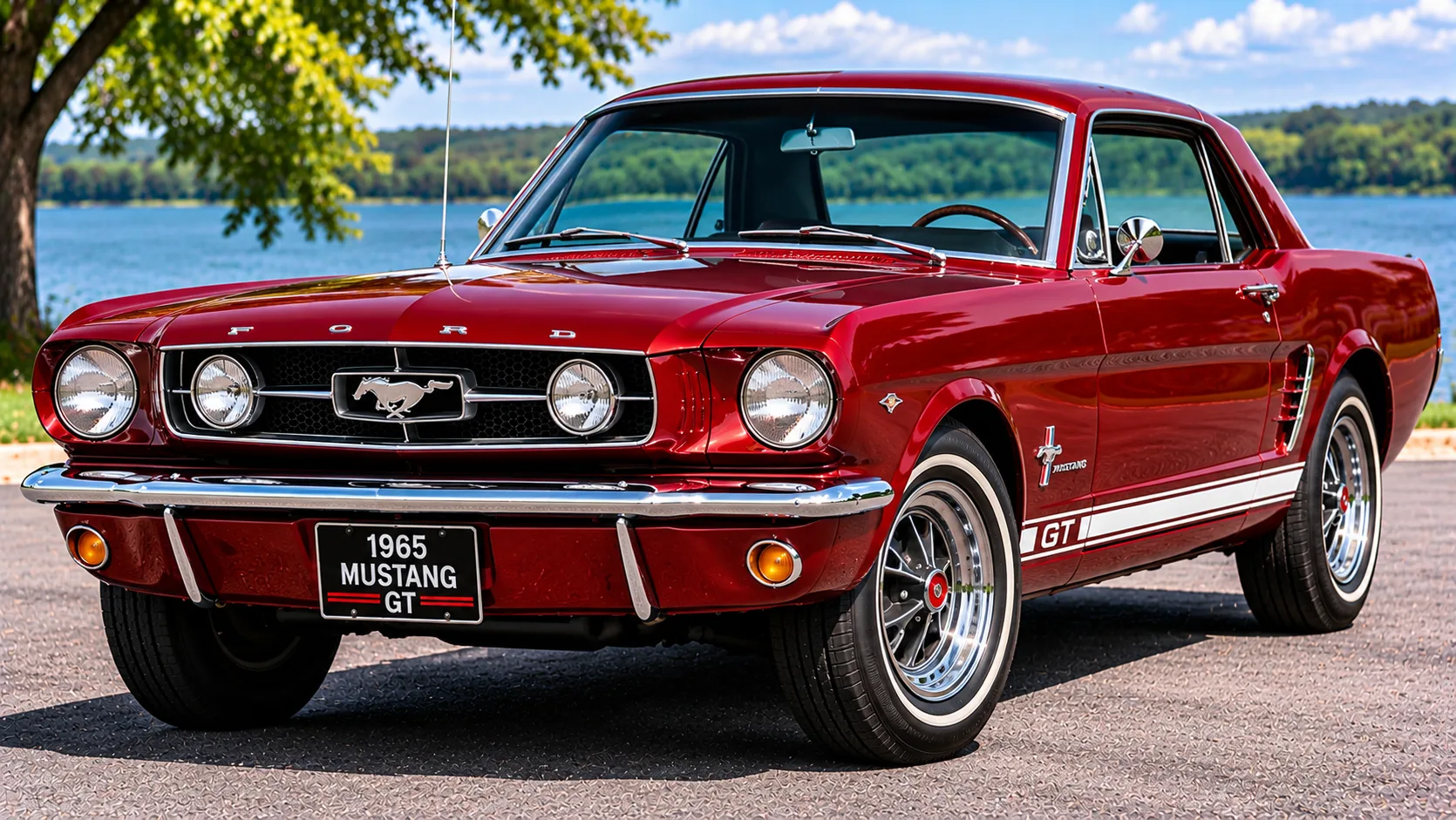
The 1965 Mustang GT Equipment Package
Ford
strengthened the Mustang's performance identity with the GT Equipment Package,
introduced in April 1965.
The package
added specific performance and appearance equipment. It was an optional
package, not standard equipment on every V8 Mustang.
Features
associated with the GT package included:
- Special Handling Package.
- Quick-ratio steering.
- Manual front disc brakes.
- GT identification emblems.
- Rocker-panel stripes.
- Grille-mounted fog lamps.
- A five-instrument dashboard in
place of the standard strip-style speedometer.
The GT
package helped distinguish performance-oriented Mustangs from regular models.
It also
demonstrated how Ford used optional equipment to create different personalities
within the same basic vehicle range.
A Mustang
with a V8 engine should not automatically be described as a factory GT. The GT
equipment must be verified separately.
Production History and the Mustang's Popularity
The
Mustang's early success was reflected in its remarkable production and sales
performance.
Ford's new
model attracted a broad range of buyers. Its combination of sporty styling,
multiple body styles, and numerous options helped it appeal to customers with
different budgets and preferences.
Production
figures can vary depending on whether a source is counting calendar-year
production, model-year production, specific body styles, or separately produced
Shelby models.
For that
reason, this article does not present a single combined production figure
without a clearly defined counting method.
The hardtop
became the most familiar version of the early Mustang, while the convertible
and fastback expanded the range.
The arrival
of the Fastback 2+2 during the 1965 model year was particularly important
because it gave the Mustang a more dramatic sporting profile.
The Mustang and the Birth of the Pony Car Era
The
Mustang's influence extended well beyond Ford.
Its
successful formula encouraged other American manufacturers to develop competing
sporty coupes.
The
combination of compact proportions, a long hood, short rear deck, affordable
entry pricing, and available V8 power became a defining formula for the pony
car category.
The Mustang
helped establish this market and became one of its most influential examples.
Its success
also provided Ford with a long-term performance identity that would continue
through later generations, special editions, motorsport programs, and
increasingly powerful engines.
Why the 1965 Ford Mustang Still Matters
The 1965
Ford Mustang remains historically important for several reasons.
First, it
helped establish the pony car category and influenced the direction of American
automotive design.
Second, its
choice of six-cylinder and V8 engines allowed buyers to select different levels
of performance.
Third, its
three body styles offered a range of designs for different customers.
Finally, the
Mustang's early popularity created a foundation for one of Ford's
longest-running and most recognizable nameplates.
For
classic-car collectors and enthusiasts, the 1965 Mustang represents the
beginning of an automotive story that continues today.
Frequently Asked Questions
1. What engines were available in the 1965 Ford
Mustang?
The 1965
model year included different engine combinations during early and later
production. Later-1965 cars offered a 200-cubic-inch inline-six and optional
289-cubic-inch V8 engines rated at 200, 225, and 271 horsepower.
Early-production cars also included a 170-cubic-inch six and a 260-cubic-inch
V8.
2. How much horsepower did the 1965 Ford Mustang
produce?
Horsepower
depended on the production period and engine. The later-1965 200-cubic-inch six
was rated at 120 hp, while the 289 V8 options were rated at 200, 225, and 271
hp.
3. Did the 1965 Mustang have a 289 V8?
Yes. Ford
offered several 289-cubic-inch V8 configurations during the 1965 model year,
including a high-performance version rated at 271 horsepower.
4. What body styles were available for the 1965
Mustang?
The
later-1965 Mustang range included the hardtop, convertible, and Fastback 2+2.
5. What is a 1964½ Mustang?
The term
1964½ is commonly used by enthusiasts to describe early-production Mustangs
introduced in April 1964. Ford marketed these cars as 1965 models, but some of
their equipment and engine combinations differed from later-production cars.
6. What was the 1965 Mustang GT Equipment Package?
It was an
optional package introduced in April 1965. It included performance and
appearance equipment such as special handling components, quick-ratio steering,
manual front disc brakes, GT emblems, rocker-panel stripes, and grille-mounted
fog lamps.
7. Was every 1965 Mustang equipped with a V8?
No. The
Mustang was also available with six-cylinder engines. V8 power was an optional
choice.
8. Was the 1965 Ford Mustang rear-wheel drive?
Yes. It used
a front-engine, rear-wheel-drive layout.
9. What made the Fastback 2+2 special?
The Fastback
2+2 introduced a distinctive sloping roofline and a fold-down rear seat, giving
the Mustang a sportier profile and additional luggage flexibility.
10. Why is the 1965 Ford Mustang historically
important?
It helped
establish the pony car category by combining sporty styling, accessible
pricing, multiple body styles, and available V8 performance. Its influence
shaped the American performance-car market for decades.
Final Thoughts
The 1965
Ford Mustang was more than a successful new car. It helped establish a new
direction for American automotive design.
Its long
hood, short rear deck, recognizable grille, and wide range of factory options
made it appealing to an enormous audience. The available 289 V8 engines also
gave buyers the opportunity to choose a more performance-focused version.
The
Mustang's early success helped create the pony car era and established a
nameplate that would remain important to Ford for generations.
For
classic-car enthusiasts, the 1965 Mustang remains one of the defining American
automobiles of the 1960s.
Sources and References
- Ford Motor Company – 1965
Mustang Sales Brochure, revised April 1965. Original period literature
covering the later-1965 body styles, engine ratings, and equipment.
https://www.auto-brochures.com/makes/Ford/Mustang/Ford_US%20Mustang_1965.pdf - Fordimages – Later 1965 Ford
Mustang: Specifications, Equipment & Factory Sources. A reference to
original Ford sales and dealer publications.
https://fordimages.com/pages/1965-ford-mustang-later-production-factory-reference - Hagerty – 1965 Ford Mustang
Valuation and Historical Overview.
https://www.hagerty.com/valuation-tools/ford/mustang/1965 - CJ Pony Parts – 1965 Mustang
History and Specifications.
https://www.cjponyparts.com/resources/1965-mustang-history - Mustang Attitude – 1965 Ford
Mustang Model and Production Information.
https://www.mustangattitude.com/cgi-bin/statsexplorer.cgi?f2=style&model=ford&year=1965
Editorial
note: The 1965
model year included early- and later-production differences. Engine ratings and
equipment in this article are identified by production period where necessary.
Period horsepower figures are not modern SAE net ratings.
Have thoughts, dyno data, or build feedback?
Join automotive enthusiasts in the paddock below to debate engineering, lap times, and modifications.
Community Pulse
How does this machine make you feel? Drop your reaction!

VehicleDrugs Editorial
VehicleDrugs Editorial Team
A passionate collective of automotive purists, track drivers, and mechanical engineers uncovering high-octane engineering breakthroughs worldwide.
🏁 Pit Crew Discussions
Drop your telemetry, debate the engineering, or talk track times with fellow petrolheads.
The Pit Lane is Quiet
Be the first driver to drop your opinion on this machine!