
1964 Pontiac GTO: 389 V8, Tri-Power & Muscle Car History
Discover the 1964 Pontiac GTO's history, 389 V8 engine options, 348-hp Tri-Power setup, factory specifications, production numbers, and muscle car legacy.
HEAD-TO-HEAD MUSCLE CAR VS COMPARISON
Compare 0-60, peak horsepower, torque, and quarter-mile times across iconic builds.
1964 Pontiac GTO: The Muscle
Car That Changed American Performance Forever
The 1964
Pontiac GTO occupies a special place in American automotive history. With its
powerful 389-cubic-inch V8, aggressive styling, unmistakable Pontiac character,
and performance-focused engineering, it helped establish a new kind of American
performance car.
At a time
when many manufacturers were concentrating on larger luxury cars and
traditional full-size performance models, Pontiac introduced something
different. The GTO brought big-engine performance to a smaller intermediate
platform, giving buyers an exciting combination of power, size, and everyday
usability.
Its arrival
helped establish the formula that would define the American muscle car: a
relatively lightweight intermediate car, a large-displacement V8, rear-wheel
drive, and an emphasis on straight-line performance.
But the
original GTO also has an important detail that many people overlook. In 1964,
it was not yet a separate Pontiac model. It began as a performance option
package for the Tempest LeMans.
Here is the
story behind the car that helped change American performance history.
The Birth of the Pontiac GTO
The GTO
story began during the development of Pontiac's 1964 Tempest lineup. Pontiac
engineers recognized that the intermediate platform could accommodate a larger
and more powerful engine than the standard offerings.
John
DeLorean, who was leading Pontiac's engineering organization, was among the key
figures behind the project. Engineers Bill Collins and Russ Gee also played
important roles in developing the concept.
The idea was
straightforward but significant: combine the 389-cubic-inch V8 from Pontiac's
larger performance-car lineup with the smaller Tempest LeMans platform.
The project
faced an important obstacle. General Motors had internal restrictions
concerning the engine sizes allowed in intermediate cars. Rather than
introducing an entirely new high-performance model, Pontiac pursued the GTO as
an option package.
This
approach allowed the division to offer a much more powerful intermediate car
without introducing a completely separate vehicle line.
Pontiac announced
the GTO option package for the 1964 model year in October 1963. It quickly
attracted attention from buyers looking for something more exciting than an
ordinary family-oriented intermediate car.
The original
GTO package was priced at $295.90, making it a relatively accessible route into
serious V8 performance.
The response
exceeded expectations. Pontiac sold 32,450 GTO-equipped cars during the 1964
model year, establishing a foundation for the performance-car movement that
followed.
Why the 1964 GTO Was an Option Package
One of the
most important facts about the first GTO is its relationship with the Tempest
LeMans.
For 1964,
buyers ordered the GTO as an option package on three two-door LeMans body
styles:
- Two-door Sports Coupe
- Two-door Hardtop Coupe
- Two-door Convertible
The GTO
package transformed the character of the LeMans by adding a high-performance
389 V8, dual exhausts, special identification badges, hood scoops, and
performance-related chassis equipment.
This
distinction matters when identifying an original 1964 GTO. The car was part of
the Tempest LeMans family rather than a separate GTO model series like the 1966
version.
Pontiac
eventually made the GTO its own standalone model for 1966, following the
success of the original option package.
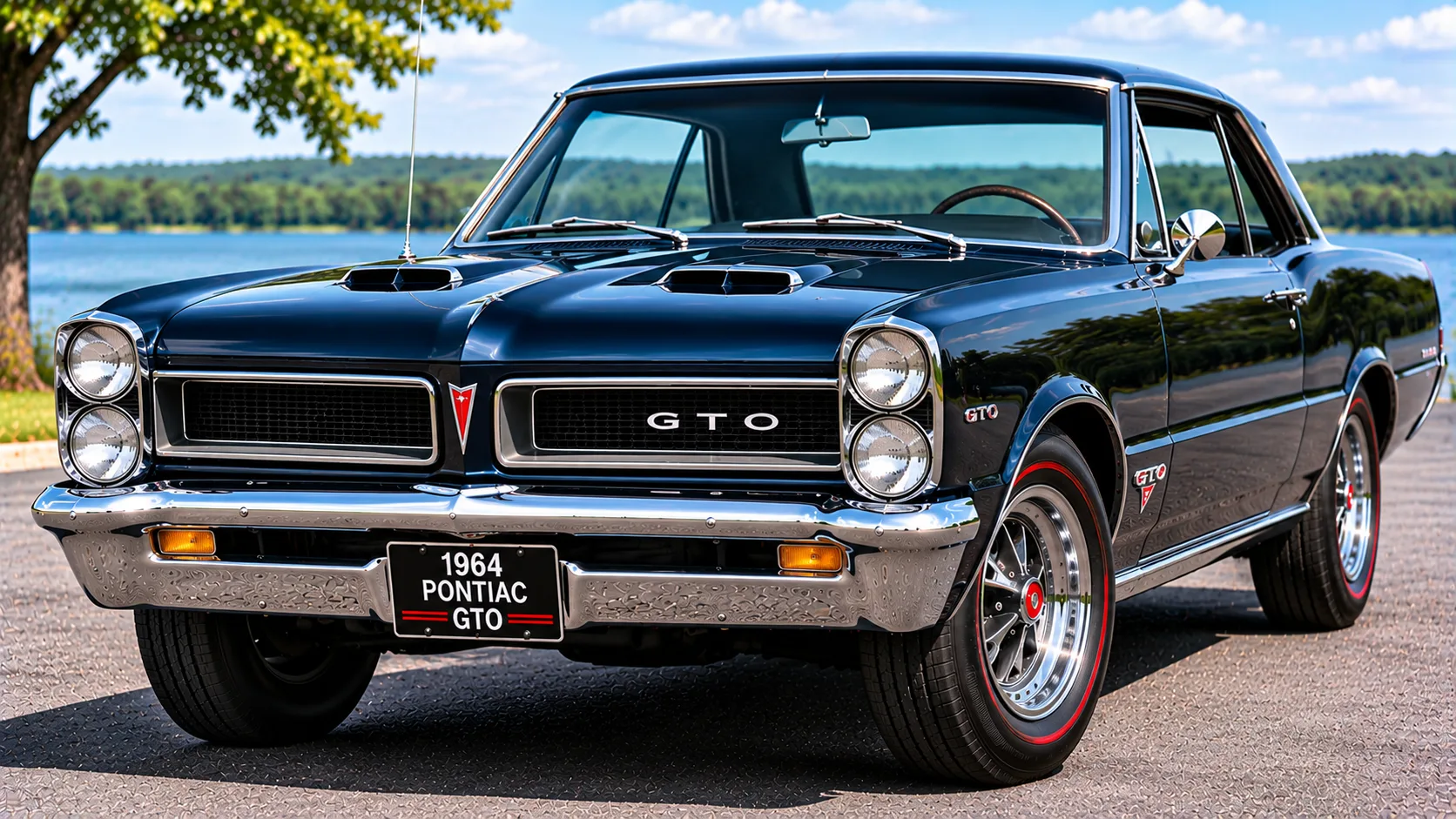
The 389-Cubic-Inch V8: The Heart of the GTO
The most
important part of the 1964 Pontiac GTO was its 389-cubic-inch overhead-valve V8
engine.
With a
displacement of approximately 6.4 liters, this Pontiac V8 delivered the
low-speed torque and strong acceleration expected from a serious American
performance car.
Pontiac
offered two principal 389 engine configurations for the 1964 GTO.
Standard 389 V8 — 325 Horsepower
The standard
GTO engine used a single Carter four-barrel carburetor.
Factory-rated
output was:
- Engine: 389 cubic inches (6.4
liters)
- Configuration: Overhead-valve
V8
- Carburetion: Single four-barrel
Carter carburetor
- Horsepower: 325 hp at 4,800 rpm
- Torque: 428 lb-ft at 3,200 rpm
- Compression ratio: 10.75:1
The engine
featured a high-performance hydraulic camshaft, high-compression pistons, dual
exhausts, and a five-main-bearing crankshaft arrangement.
Its 428
lb-ft of torque gave the GTO strong acceleration, particularly in the lower and
middle engine-speed ranges.
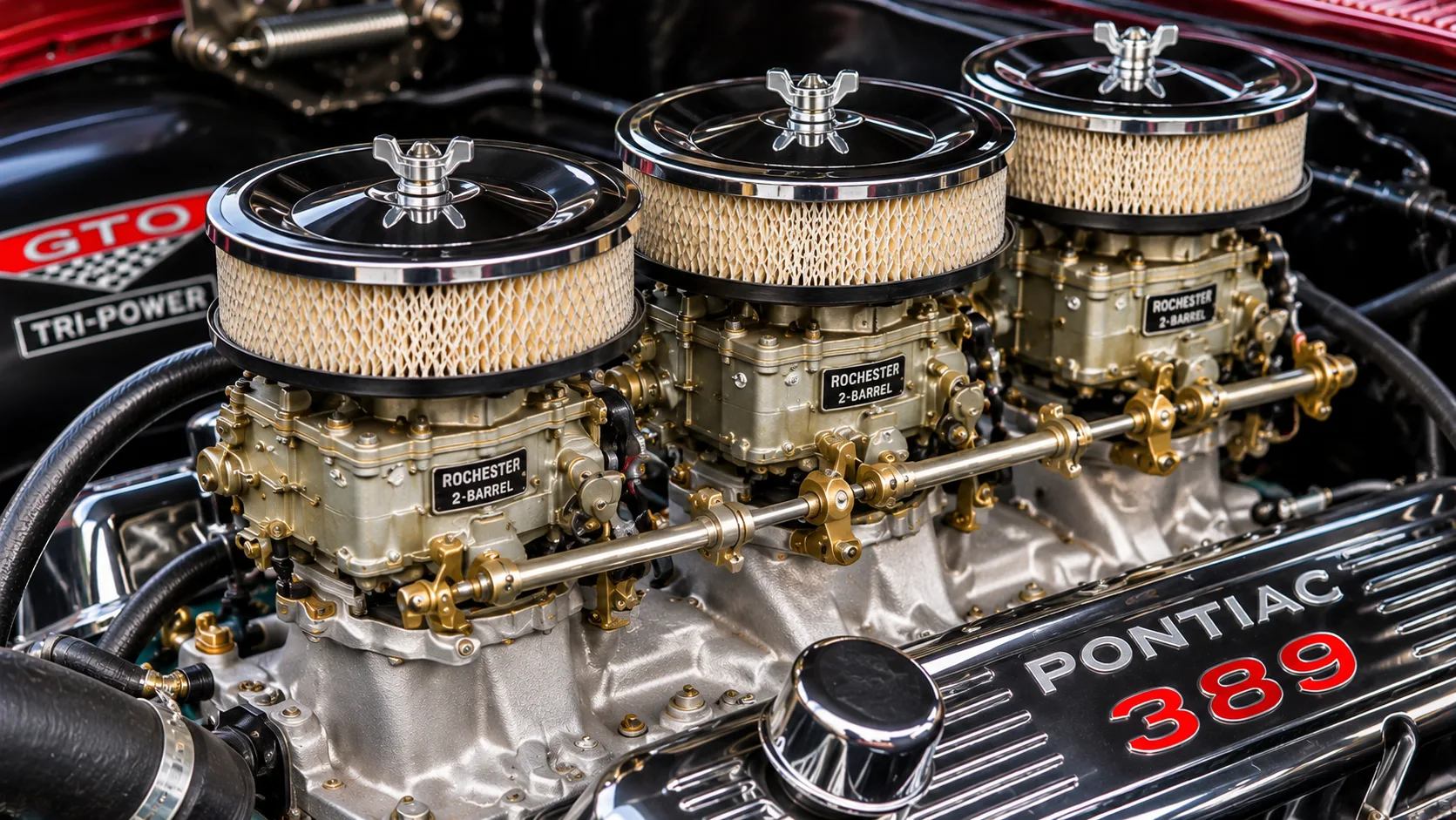
Optional 389 Tri-Power V8 — 348 Horsepower
For buyers
wanting additional performance, Pontiac offered the optional Tri-Power setup.
This
configuration used three Rochester two-barrel carburetors instead of the
standard single four-barrel arrangement.
Its
factory-rated output increased to:
- Engine: 389 cubic inches (6.4
liters)
- Carburetion: Three Rochester
two-barrel carburetors
- Horsepower: 348 hp at 4,900 rpm
- Torque: 428 lb-ft at 3,600 rpm
- Compression ratio: 10.75:1
The
Tri-Power engine became one of the most recognizable features associated with
early Pontiac GTO performance.
It was not
simply an appearance upgrade. The three-carburetor arrangement provided greater
potential airflow and supported the engine's higher horsepower rating.
Importantly,
the 325-hp and 348-hp figures are period gross horsepower ratings. They should
not be compared directly with modern SAE net horsepower ratings.
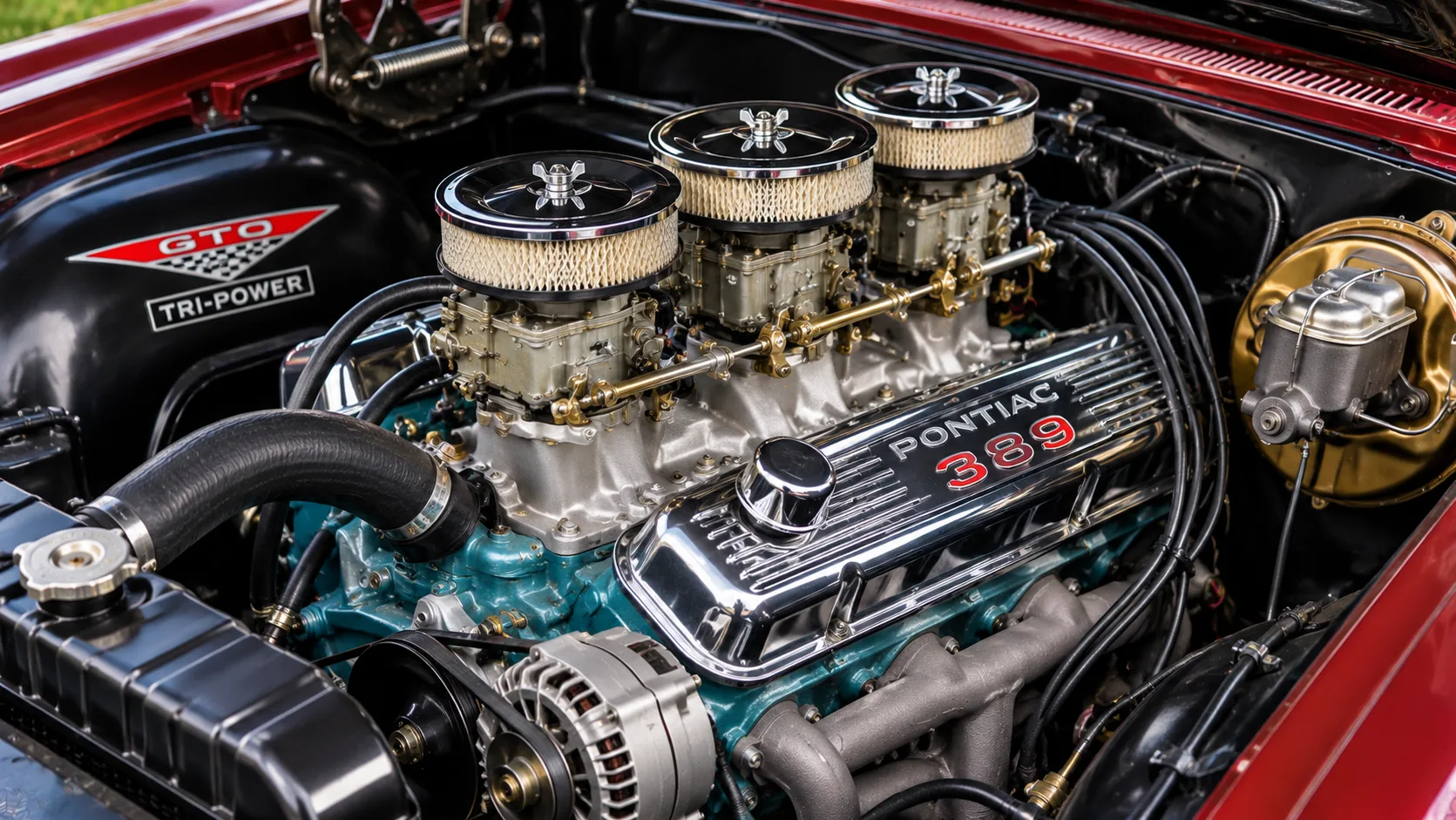
What Made the Tri-Power System Special?
The
Tri-Power setup deserves special attention because it became one of Pontiac's
most famous performance-engine features.
Instead of
relying on a single four-barrel carburetor, Pontiac equipped the optional 389
with three two-barrel Rochester carburetors mounted across the intake manifold.
The
arrangement used a progressive mechanical linkage. Under normal driving
conditions, the center carburetor handled much of the engine's operation. As
the throttle opened further, the outer carburetors joined in to supply
additional air and fuel.
This gave
the GTO a distinctive engine-bay appearance while supporting its higher factory
horsepower rating.
The
three-carburetor setup also became a major part of the GTO's identity. For
enthusiasts, the phrase "Tri-Power" remains closely associated with
classic Pontiac performance.
Pontiac's
original brochure listed the standard 389 at 325 bhp and the optional
three-carburetor version at 348 bhp. Both engines were rated at 428 lb-ft of
torque, although the peak torque occurred at different engine speeds.
Transmission Options: Three-Speed, Four-Speed, and
Automatic
Pontiac gave
1964 GTO buyers several transmission choices, allowing them to select a setup
that suited their driving preferences.
Three-Speed Manual
A
three-speed manual transmission was standard equipment.
It used a
floor-mounted Hurst shifter, giving the GTO a more direct performance-oriented
driving experience.
Four-Speed Manual
Buyers could
also select an optional fully synchronized four-speed manual transmission.
The factory
brochure describes a floor-mounted aluminum-case unit with a Hurst shifter.
Both wide-ratio and close-ratio four-speed configurations appeared in the 1964
GTO's available equipment documentation.
For drivers
who wanted greater control over engine speed and acceleration, the four-speed
was an important option.
Two-Speed Automatic
Pontiac also
offered an optional two-speed automatic transmission.
This
transmission provided a more convenient driving experience while retaining the
GTO's powerful V8 character.
The original
brochure identifies the automatic as a two-speed torque-converter unit, with
its selector mounted on the steering column unless the optional console
arrangement was specified.
The
availability of manual and automatic transmissions helped make the GTO
appealing to a wider range of buyers.
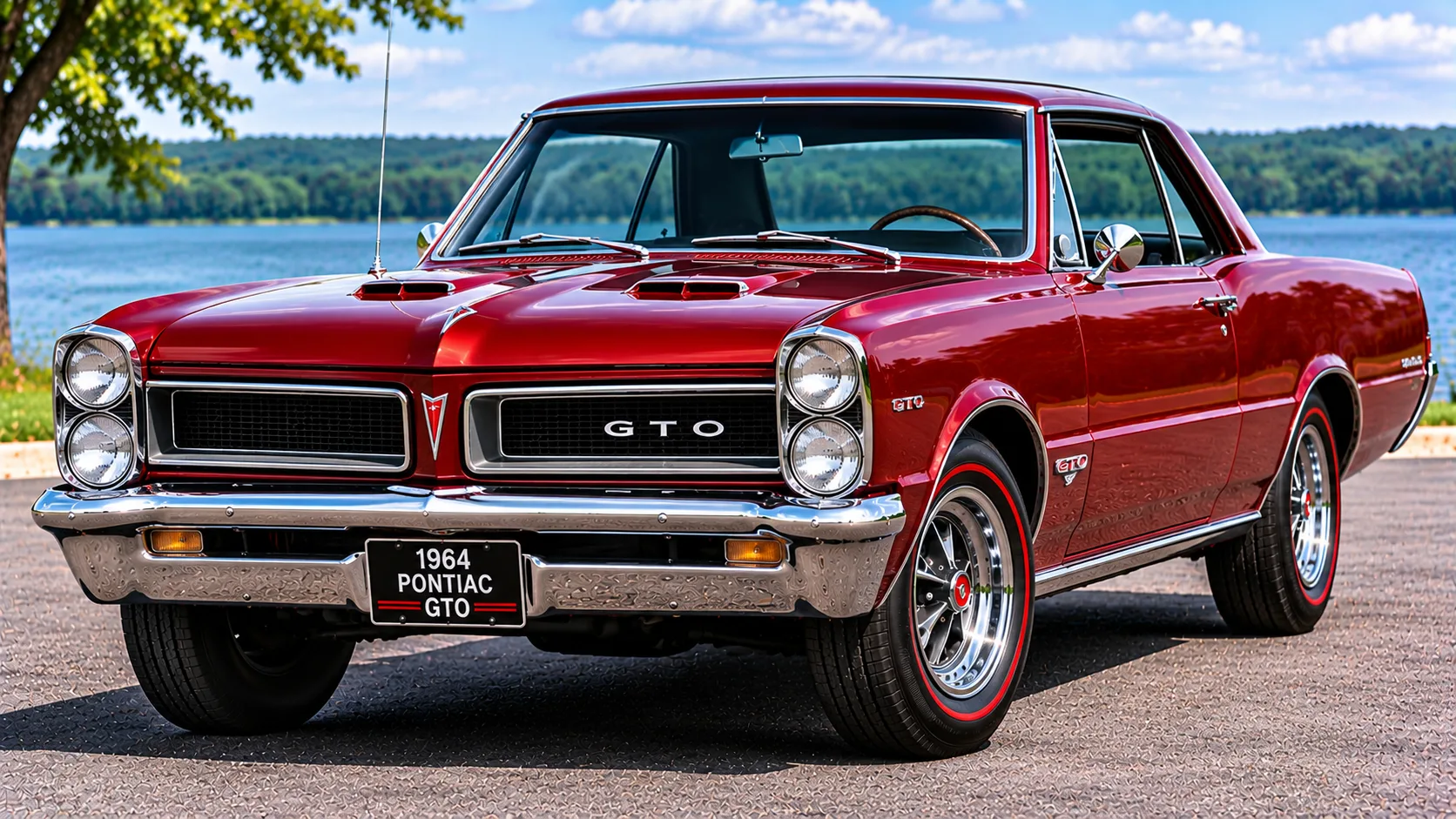
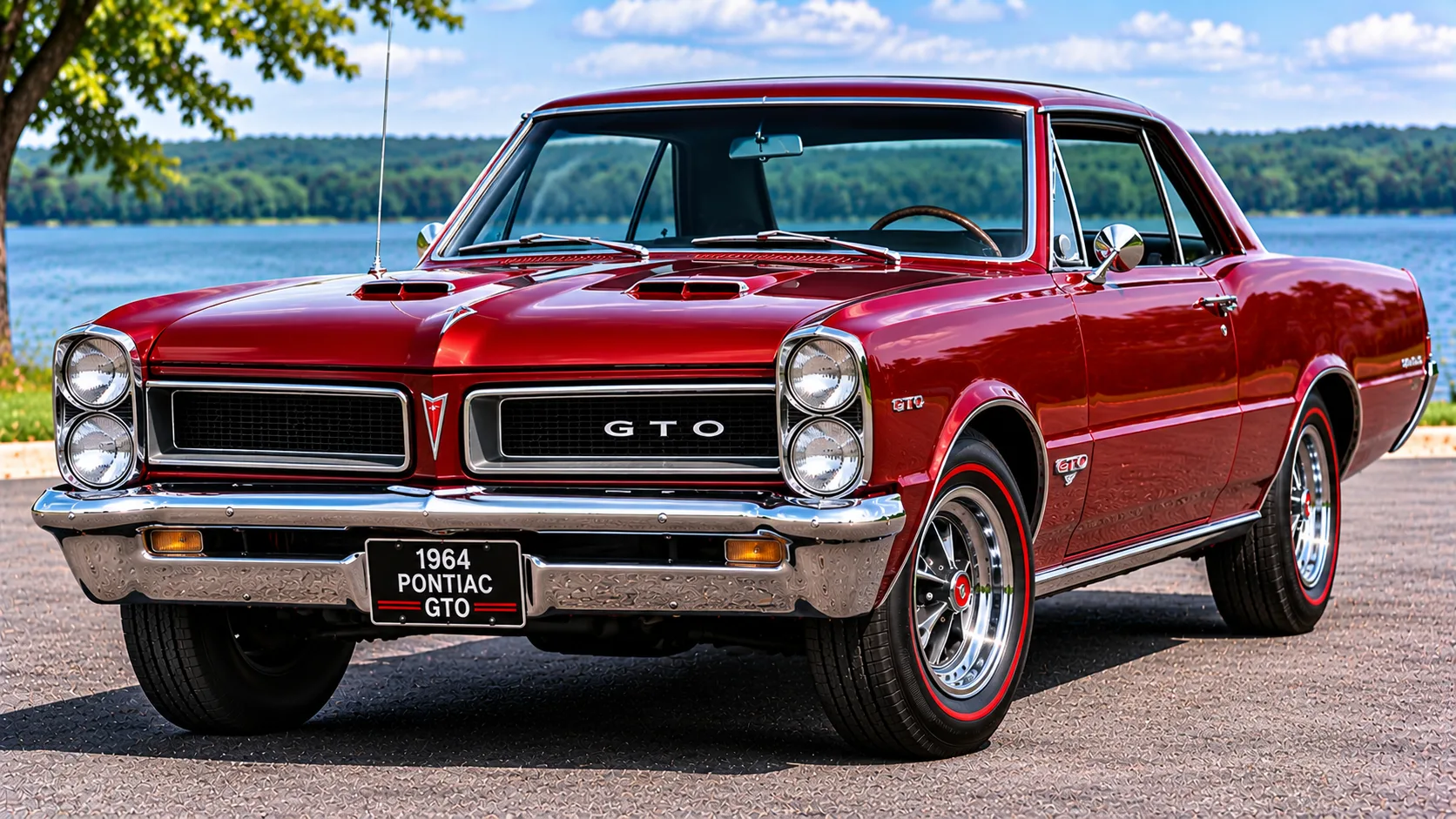
Exterior Design: Pontiac's Performance Identity
The 1964
Pontiac GTO did not need extreme styling changes to make its performance
intentions clear.
It retained
the recognizable design language of the 1964 Tempest LeMans while adding
details that gave it a more aggressive appearance.
The Split Grille
One of the
most recognizable features was Pontiac's divided front grille.
The grille
gave the car a distinctive face and helped establish its identity within the
Pontiac lineup.
The front
end also featured vertically stacked headlights, a design element that
contributed to the car's unmistakable 1964 Pontiac appearance.
Simulated Hood Scoops
The GTO
package included dual simulated hood scoops.
These
details helped distinguish the performance package from an ordinary LeMans,
although they were not functional cold-air induction openings.
GTO Identification
Special GTO
nameplates appeared on the grille, front fenders, deck lid, and glovebox door.
These badges
made the car's performance identity visible from several angles.
Wheels and Tires
The original
GTO package also included performance-oriented wheel and tire equipment,
including wider wheels and redline tire availability.
Together,
these exterior details gave the GTO a purposeful appearance without requiring
an entirely different body design.
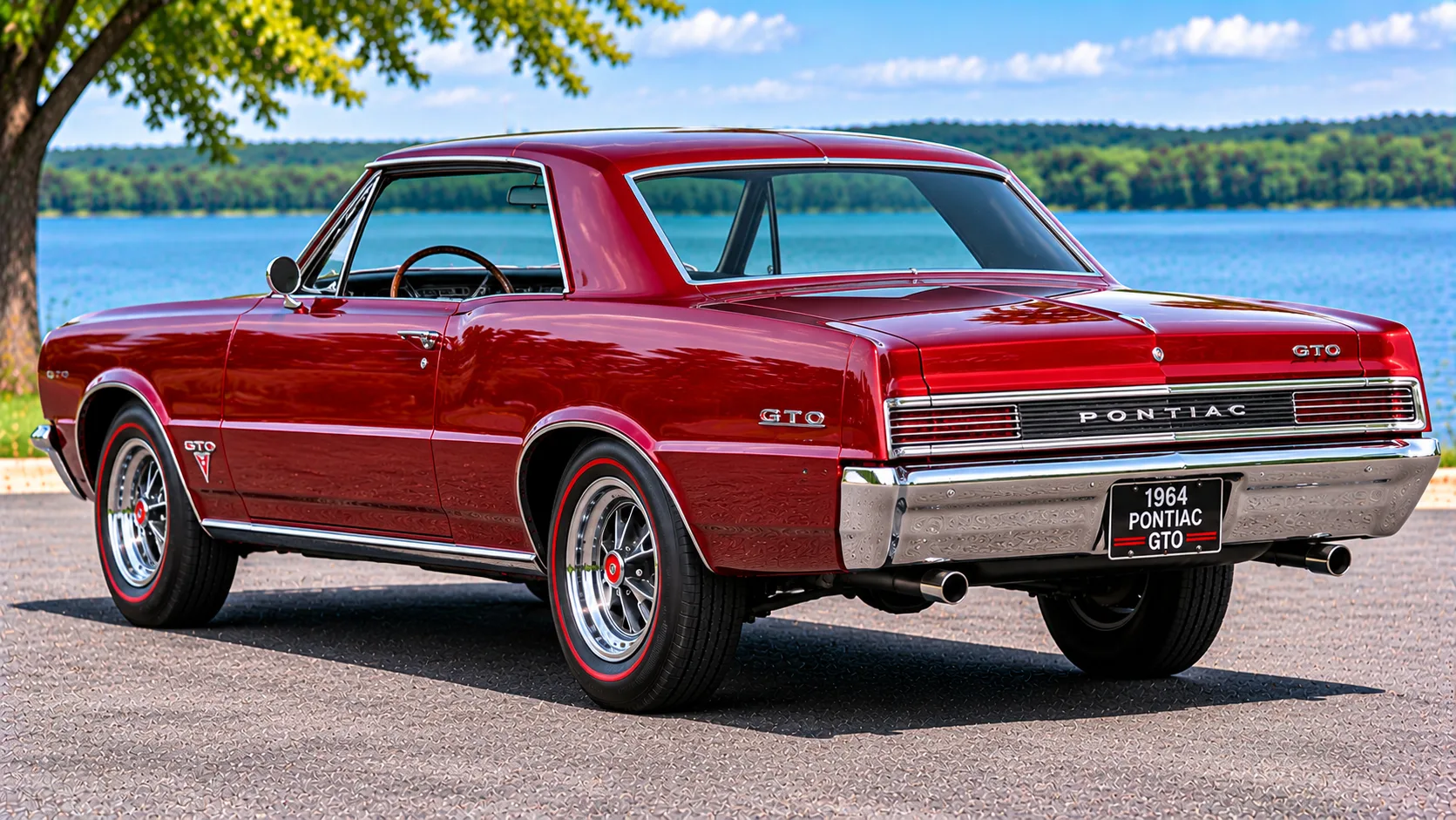
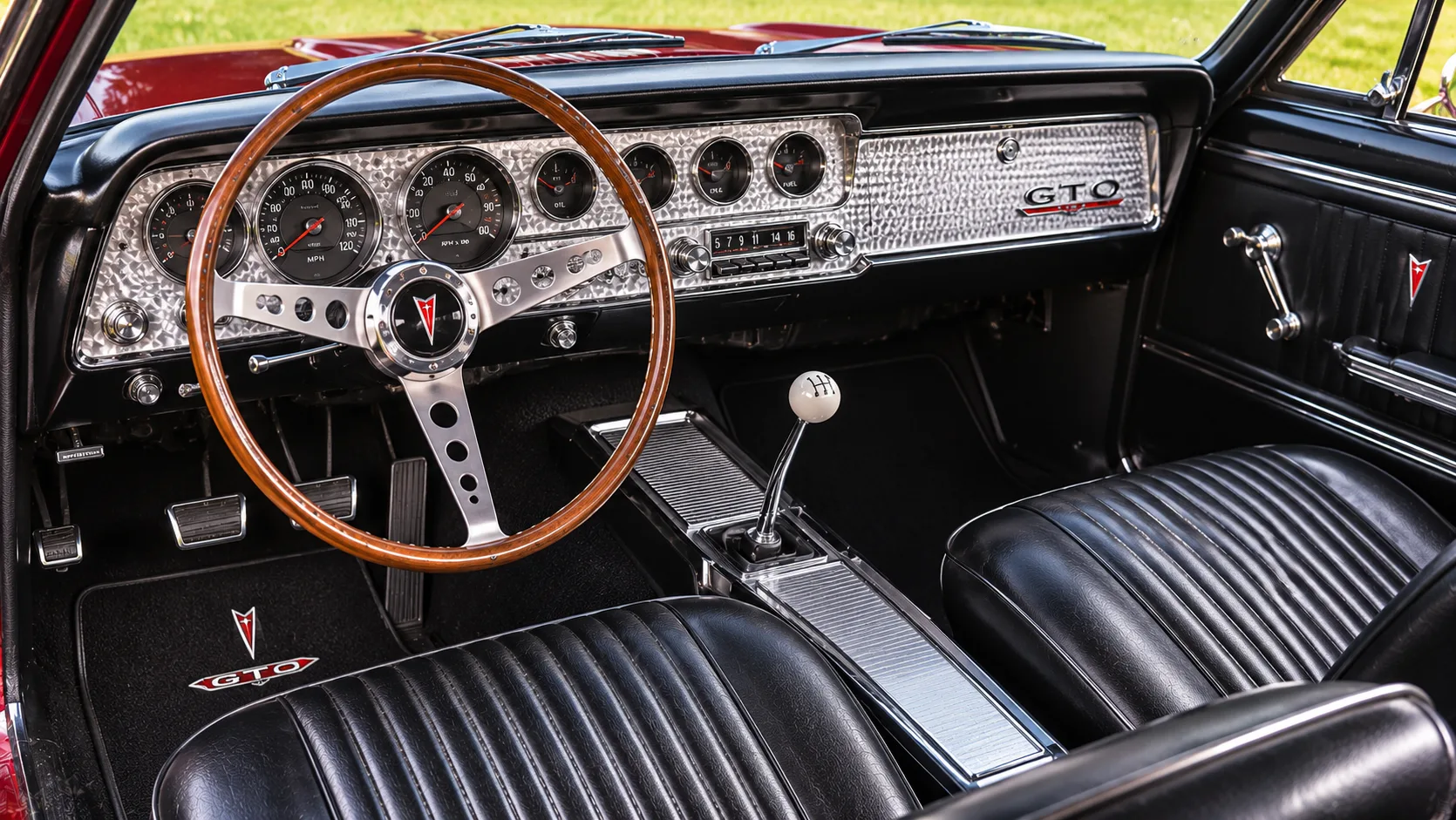
Interior: A Sportier LeMans Experience
The 1964 GTO
combined performance-focused equipment with the comfort and convenience
features expected from the LeMans line.
Bucket seats
were part of the GTO's sporty character, while special identification details
helped distinguish the interior from an ordinary Tempest.
The
dashboard featured simulated engine-turned aluminum inserts, one of the
package's distinctive interior details.
Depending on
the original order, buyers could also choose equipment such as:
- Floor console
- Custom sports steering wheel
- Tachometer
- Rally clock
- Vacuum gauge
- Radio and electric antenna
- Power steering
- Power brakes
- Air conditioning
- Power windows
Not every
GTO left the factory with all these features. Many were optional, and the
original equipment depended on the buyer's order.
This
combination of performance hardware and optional comfort equipment helped make
the GTO more versatile than a stripped-down competition-oriented car.
Suspension, Handling, and Performance Equipment
The GTO was
designed to deliver more than impressive engine specifications.
Pontiac also
equipped the package with chassis components intended to handle the additional
power.
Its
performance-oriented suspension included firmer springing and shock absorber
tuning, along with a larger front stabilizer bar compared with the ordinary
LeMans setup.
The original
brochure also listed optional handling equipment, including extra-stiff shocks
and quicker steering.
Other
available performance equipment included:
- Safe-T-Track limited-slip
differential
- Heavy-duty radiator
- Metallic brake linings
- High-performance transistor
ignition
- Performance axle ratios
- Tachometer
The
Safe-T-Track limited-slip differential was particularly useful for drivers
seeking improved traction during acceleration.
These
features allowed buyers to configure their GTO according to their preferred
balance of street comfort and performance.
1964 Pontiac GTO Performance and Dimensions
Pontiac's
factory brochure documented the car's principal dimensions and engine
specifications.
|
Specification |
1964 Pontiac GTO |
|
Engine |
389-cubic-inch
V8 |
|
Displacement |
6.4 liters |
|
Standard
horsepower |
325 hp at
4,800 rpm |
|
Optional
Tri-Power horsepower |
348 hp at
4,900 rpm |
|
Standard-engine
torque |
428 lb-ft
at 3,200 rpm |
|
Tri-Power
torque |
428 lb-ft
at 3,600 rpm |
|
Compression
ratio |
10.75:1 |
|
Standard
transmission |
3-speed
manual |
|
Optional
transmissions |
4-speed
manual, 2-speed automatic |
|
Drivetrain |
Rear-wheel
drive |
|
Wheelbase |
115 inches |
|
Overall
length |
203 inches |
|
Overall
width |
73.3
inches |
|
Fuel tank
capacity |
21.5
gallons |
The factory
brochure also listed shipping weights of 3,272 pounds for the Sports Coupe,
3,292 pounds for the Hardtop, and 3,422 pounds for the Convertible.
These are
brochure-listed shipping weights, not universal curb-weight figures for every
individual car.
1964 Pontiac GTO Production Numbers
The
first-year GTO was offered in three body styles, and each attracted buyers.
Pontiac
recorded a total of 32,450 GTO-equipped cars during the 1964 model year.
The
production breakdown was:
|
Body Style |
Production |
|
Sports
Coupe |
7,384 |
|
Hardtop
Coupe |
18,422 |
|
Convertible |
6,644 |
|
Total |
32,450 |
The Hardtop
Coupe was the most popular configuration, accounting for more than half of the
total production.
The engine
breakdown also reveals an interesting detail about buyer preferences.
|
Engine Configuration |
Production |
|
389 V8
with four-barrel carburetor |
24,205 |
|
389 V8
with Tri-Power carburetion |
8,245 |
|
Total |
32,450 |
Most buyers
selected the standard four-barrel engine, but more than 8,000 customers chose
the optional Tri-Power setup.
These
figures demonstrate that the original GTO was not a limited-production
experiment. It became a major success for Pontiac during its first year.
Why the 1964 Pontiac GTO Changed American Muscle Cars
The
importance of the 1964 GTO goes beyond its engine specifications or production
numbers.
Before its
arrival, high-performance American cars were often associated with larger and
more expensive full-size vehicles.
Pontiac
demonstrated that a powerful V8 could be combined with a smaller intermediate
car to create an exciting performance package that appealed to a broader
audience.
The GTO
helped establish a formula that other American manufacturers would soon follow.
Its success
encouraged competition across the industry, contributing to the development of
other legendary intermediate performance cars.
The
Chevrolet Chevelle SS, Oldsmobile 4-4-2, and later Buick performance models
became part of the growing American muscle-car landscape.
The GTO did
not single-handedly create every aspect of American performance history, but
its commercial success helped make the intermediate muscle car a major part of
the industry.
In 1966,
Pontiac made the GTO a separate model rather than an option package within the
LeMans lineup. That decision reflected how important the name had become.
Is the 1964 Pontiac GTO Still Collectible?
The 1964
Pontiac GTO remains one of the most historically significant American
performance cars.
Its value to
collectors comes from several factors:
First-year
significance: The 1964
model represents the beginning of the GTO story and the early success of
Pontiac's performance formula.
389 V8
heritage: The
original 389 engine is central to the GTO's identity, particularly the optional
348-hp Tri-Power configuration.
Three body
styles: The Sports
Coupe, Hardtop Coupe, and Convertible offer different ownership and collector
experiences.
Factory
documentation: Original
build documentation, engine identification, transmission codes, and other
matching-numbers evidence can be important when assessing authenticity.
Historical
importance: The 1964
GTO helped establish the American intermediate muscle car as a major
performance category.
For
collectors, originality and documentation matter. A car wearing GTO badges is
not automatically a factory-built GTO. Buyers should verify the original
equipment through reliable Pontiac Historical Services documentation and other
appropriate factory records.
Frequently Asked Questions
Was the 1964 Pontiac GTO a separate model?
No. The 1964
GTO began as an option package for the Pontiac Tempest LeMans. Pontiac made it
a standalone model for the 1966 model year.
How much horsepower did the 1964 Pontiac GTO produce?
The standard
389 V8 was rated at 325 horsepower. The optional 389 Tri-Power engine produced
348 horsepower. These were period gross horsepower ratings.
What engine came in the 1964 GTO?
Every
factory 1964 GTO package included a 389-cubic-inch Pontiac V8. Buyers could
choose between the standard four-barrel configuration and the optional
Tri-Power setup.
What was the 1964 GTO Tri-Power engine?
It was an optional
389 V8 equipped with three Rochester two-barrel carburetors. Pontiac rated it
at 348 horsepower at 4,900 rpm.
What transmissions were available?
The standard
transmission was a three-speed manual. Optional choices included a fully
synchronized four-speed manual and a two-speed automatic.
How many 1964 Pontiac GTOs were built?
Pontiac sold
32,450 GTO-equipped cars during the 1964 model year: 7,384 Sports Coupes,
18,422 Hardtop Coupes, and 6,644 Convertibles.
What did the GTO package cost?
The original
GTO option package was priced at $295.90. The final vehicle price depended on
the underlying LeMans body style and additional factory options.
What made the 1964 GTO historically important?
It helped
establish the successful formula of combining a powerful V8 engine with an
intermediate-size American car, influencing the muscle-car competition that
followed.
Final Thoughts
The 1964
Pontiac GTO was more than another powerful American car. It represented a new
direction for Pontiac and helped establish a performance category that would
define an important period in American automotive history.
Its
389-cubic-inch V8, optional 348-horsepower Tri-Power configuration, manual
transmission choices, distinctive Pontiac styling, and impressive first-year sales
made it an instant success.
Most
importantly, the original GTO proved that a relatively compact intermediate car
could deliver the kind of performance that enthusiasts wanted.
More than
six decades later, the 1964 Pontiac GTO remains a defining symbol of the
beginning of the American muscle-car era.
Sources & References
- General Motors Heritage Collection – 1964 Pontiac
Tempest LeMans GTO — historical overview, engine output,
package details, and production total.
- Original 1964 Pontiac GTO Sales Brochure —
factory engine specifications, dimensions, transmission options, and
equipment.
- GTO
Association of America – 1964 GTO Archive — factory literature,
technical resources, and historical documentation.
- GM News – Retro Rides: Muscling into the Future with
the 1964 Pontiac GTO — historical context and the GTO's
development.
- Hagerty – 1964 Pontiac GTO Valuation Report
— production, body-style breakdown, engine configurations, and historical
market information.
Historical
note: Original factory horsepower figures are presented using the period
gross-rating system. AI-generated images used with this article should be
identified as editorial illustrations rather than original factory photographs.
Have thoughts, dyno data, or build feedback?
Join automotive enthusiasts in the paddock below to debate engineering, lap times, and modifications.
Community Pulse
How does this machine make you feel? Drop your reaction!

VehicleDrugs Editorial
VehicleDrugs Editorial Team
A passionate collective of automotive purists, track drivers, and mechanical engineers uncovering high-octane engineering breakthroughs worldwide.
🏁 Pit Crew Discussions
Drop your telemetry, debate the engineering, or talk track times with fellow petrolheads.
The Pit Lane is Quiet
Be the first driver to drop your opinion on this machine!