
Dodge Muscle Cars: Classic HEMI, Viper and Hellcat Legends
Explore six legendary Dodge performance cars, from the 1969 Charger R/T and Viper GTS to the 797-hp Hellcat Redeye and modern Charger.
HEAD-TO-HEAD MUSCLE CAR VS COMPARISON
Compare 0-60, peak horsepower, torque, and quarter-mile times across iconic builds.
Dodge Muscle Cars: From Classic HEMI Legends to Viper and Hellcat Supercars
Few American automotive brands have built a performance identity as recognizable as Dodge. From the powerful muscle cars of the late 1960s to the legendary Viper V10 and supercharged Hellcat models, Dodge has spent decades creating vehicles that celebrate horsepower, aggressive styling and unmistakable American performance.
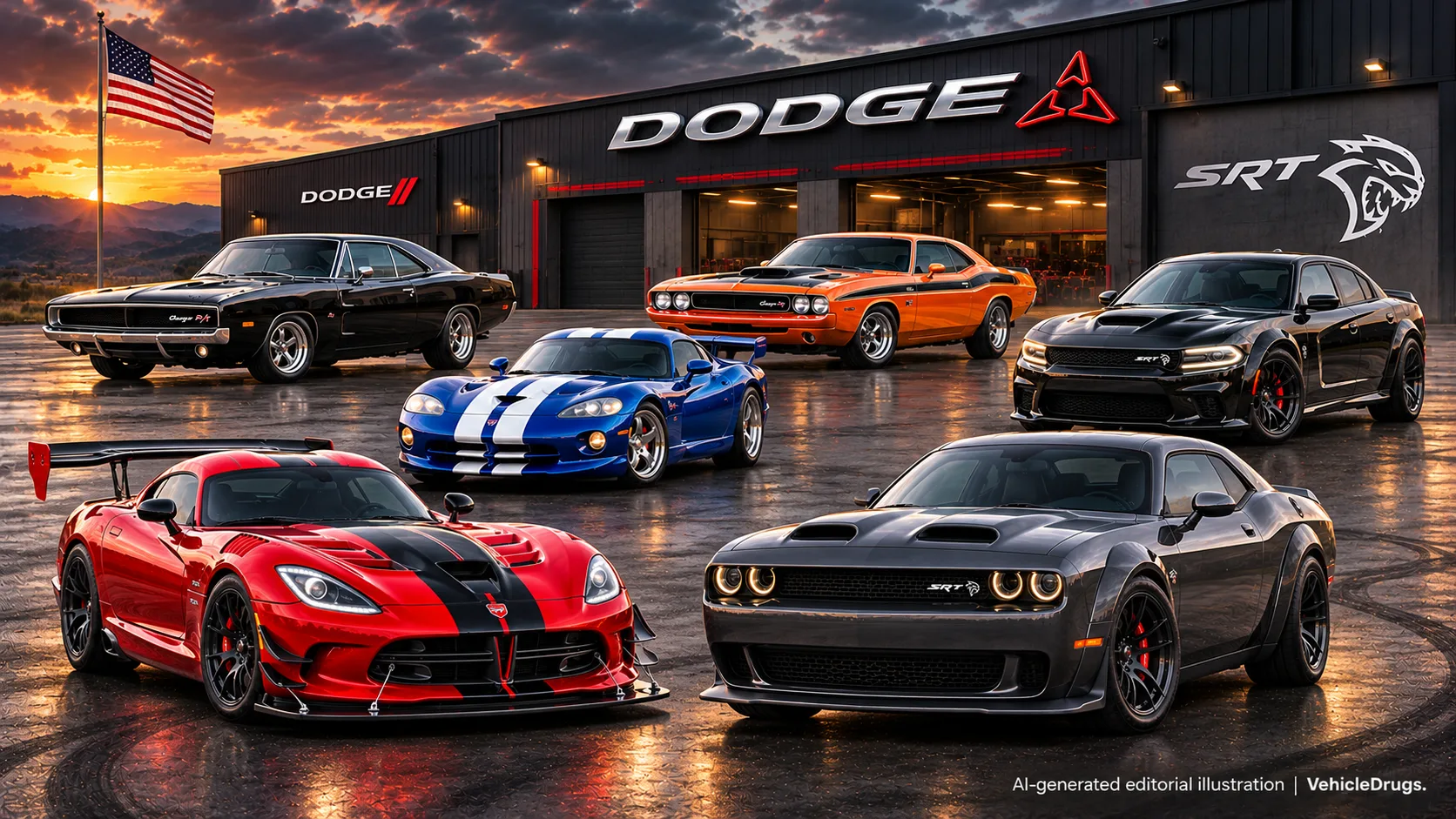
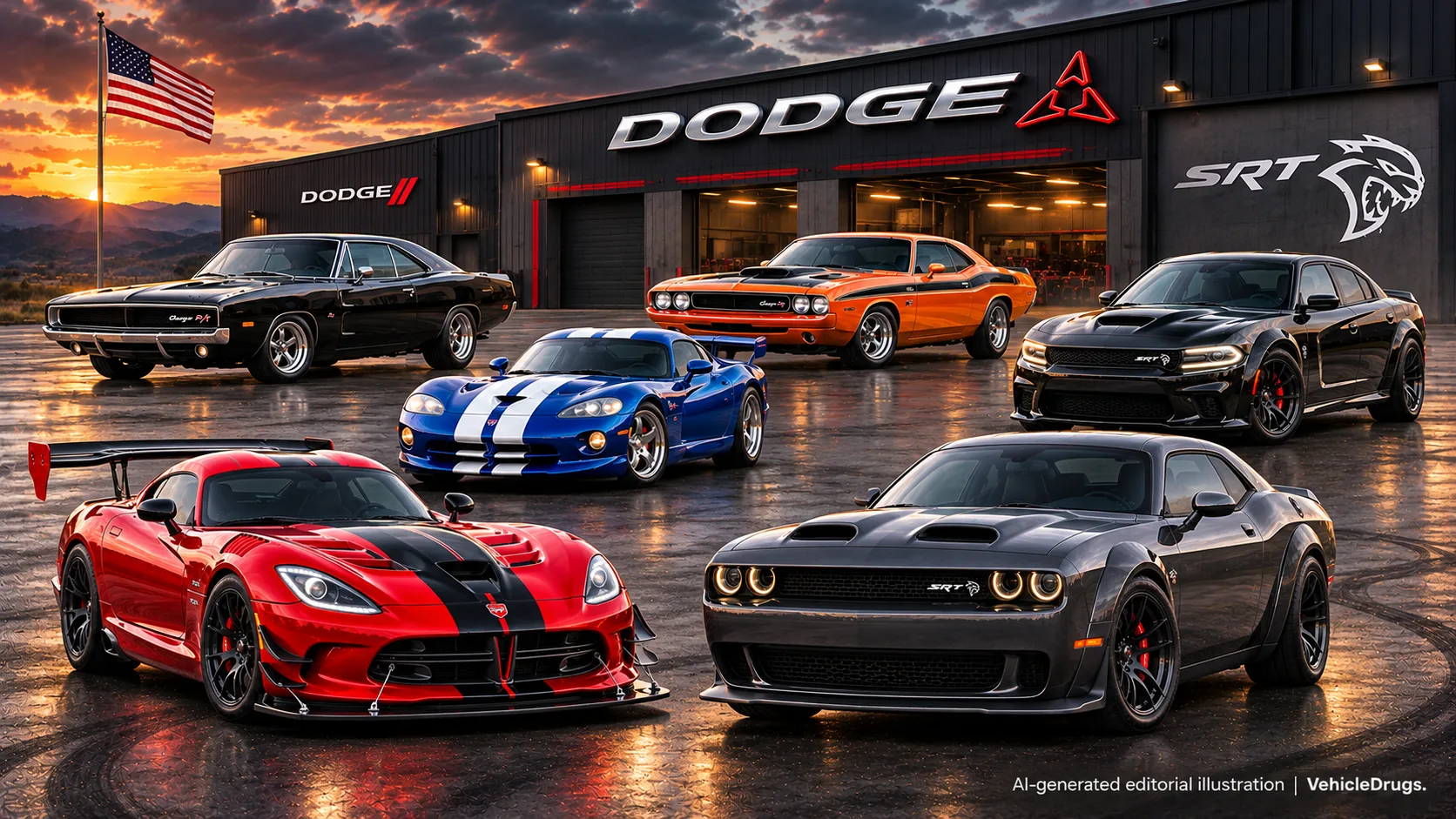
The 1969 Dodge Charger R/T, 1970 Dodge Challenger R/T, Dodge Viper GTS, Viper ACR, Challenger SRT Hellcat Redeye and Charger SRT Hellcat represent different chapters in that history.
Each vehicle brought a different interpretation of performance. Some were built around big-displacement V8 engines and straight-line acceleration. Others focused on high-speed handling, track capability and extreme supercharged power.
Together, they tell the story of how Dodge helped shape the American performance-car industry.
Quick Specs: Six Legendary Dodge Performance Cars
| Vehicle | Engine | Horsepower |
|---|---|---|
| 1969 Dodge Charger R/T | 440 Magnum / optional 426 HEMI V8 | Up to 425 hp |
| 1970 Dodge Challenger R/T | 383 / 440 Magnum / 440 Six Pack / 426 HEMI | Up to 425 hp |
| 1996 Dodge Viper GTS | 8.0L V10 | Approximately 450 hp |
| 2016 Dodge Viper ACR | 8.4L V10 | 645 hp |
| Dodge Challenger SRT Hellcat Redeye | Supercharged 6.2L HEMI V8 | 797 hp |
| 2021 Dodge Charger SRT Hellcat | Supercharged 6.2L HEMI V8 | 717 hp |
Horsepower figures depend on the exact model year and engine configuration. The classic V8 ratings are original factory gross-horsepower figures, while modern ratings use different measurement standards.
1. The Classic Muscle Era: 1969 Dodge Charger R/T
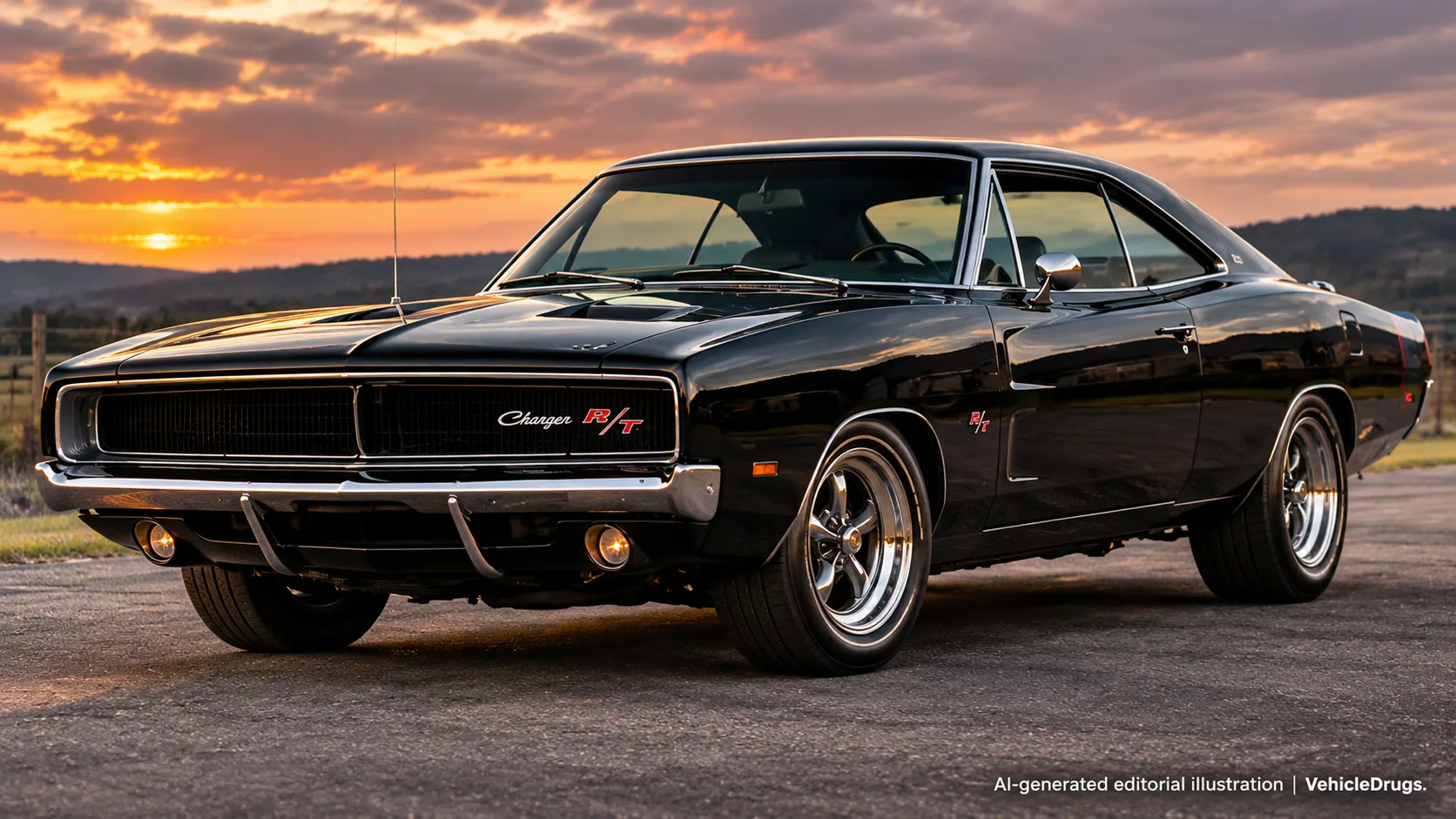
The 1969 Dodge Charger R/T remains one of the most recognizable American muscle cars ever produced.
Its long hood, muscular proportions, aggressive front styling and distinctive rear design helped establish the Charger as a major performance icon during the golden age of American muscle.
The R/T badge stood for Road/Track, identifying Dodge's performance-oriented Charger models.
One of the most important engine options was the 440-cubic-inch Magnum V8. Buyers seeking maximum performance could also select the legendary 426-cubic-inch HEMI V8.
The 426 HEMI was factory-rated at 425 horsepower, making it one of the most famous engines of the muscle-car era. The 440 Magnum was another major performance option, rated at 375 horsepower in the relevant high-performance configuration.
This distinction matters because the 1969 Charger R/T did not automatically produce 425 horsepower. That figure belongs to the 426 HEMI-equipped version.
The Charger's combination of big-block V8 power, rear-wheel drive and unmistakable styling made it a defining example of Dodge's muscle-car philosophy.
1969 Dodge Charger R/T – Key Highlights
Model year: 1969
Body style: Two-door performance coupe
Engine options: 440 Magnum V8 and optional 426 HEMI V8
Maximum factory-rated output: 425 hp with the 426 HEMI
Performance identity: Classic American big-block muscle
2. The Challenger Arrives: 1970 Dodge Challenger R/T
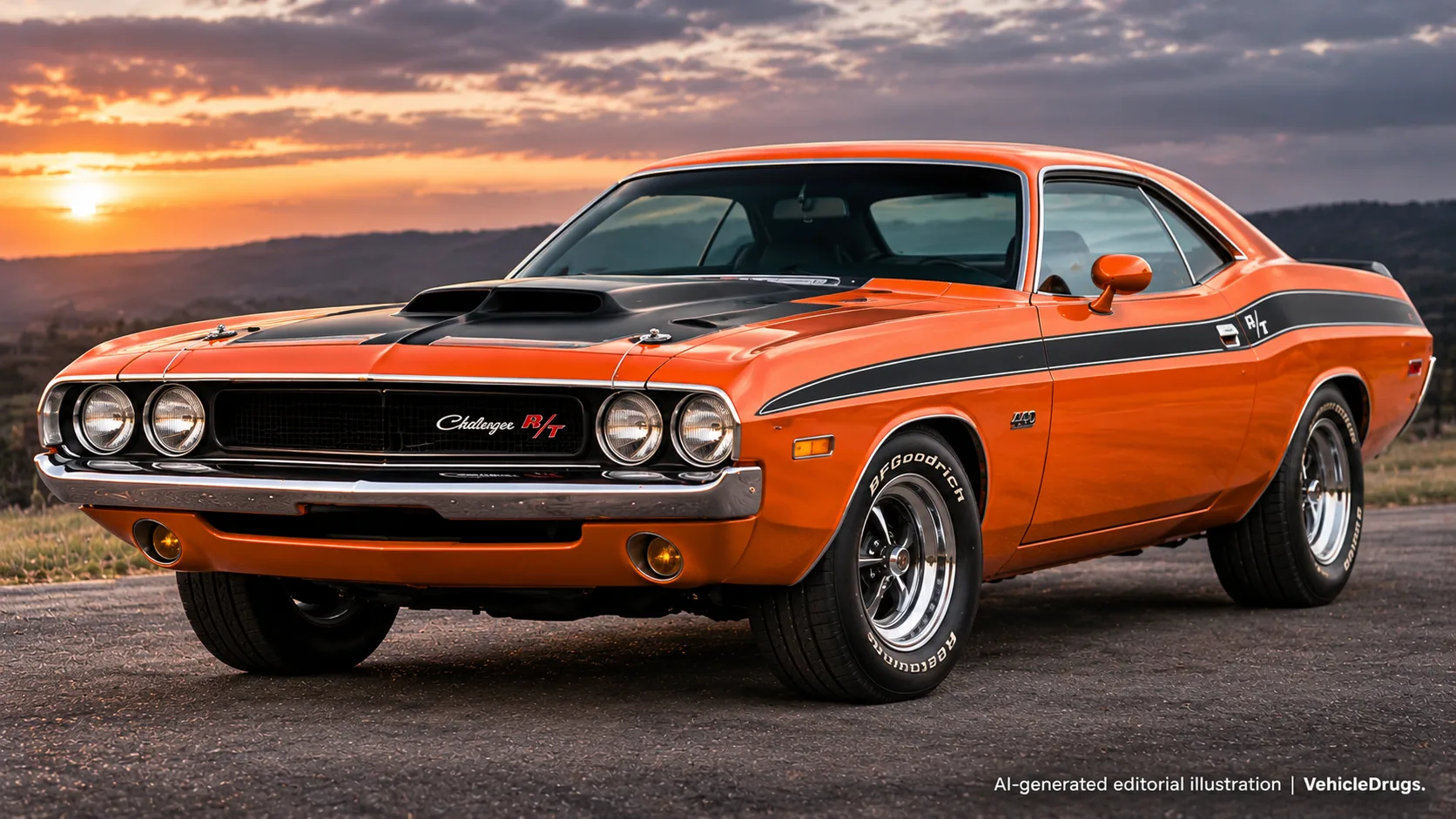
Dodge introduced the Challenger for the 1970 model year, bringing another serious competitor into the American pony-car and muscle-car market.
The Challenger shared its E-body platform with the Plymouth Barracuda but had its own styling identity. Its long hood, short rear deck and wide range of available engines made it one of the most exciting performance cars of its time.
The R/T version was designed for buyers looking for stronger performance. Its standard engine was a 383-cubic-inch V8, while optional engines included the 440 Magnum, 440 Six Pack and 426 HEMI.
The 440 Six Pack used three two-barrel carburetors and was rated at 390 horsepower. The 426 HEMI produced a factory-rated 425 horsepower.
These different configurations helped make the 1970 Challenger R/T one of the most desirable classic Dodge muscle cars.
The Challenger also became famous for its high-impact paint colors, including Plum Crazy, HEMI Orange and Go Mango, which helped define the bold visual character of the era.
1970 Dodge Challenger R/T – Key Highlights
Model year: 1970
Body style: Two-door coupe or convertible
Standard R/T engine: 383-cubic-inch V8
Optional engines: 440 Magnum, 440 Six Pack and 426 HEMI
Maximum factory-rated output: 425 hp with the 426 HEMI
Performance identity: Classic E-body American muscle
The image's 370-horsepower label should not be treated as the standard factory rating for every 1970 Challenger R/T. The documented 440 Magnum rating was 375 hp, the 440 Six Pack was 390 hp, and the 426 HEMI was 425 hp.
3. The Viper Era: 1996 Dodge Viper GTS
By the 1990s, Dodge had developed a different approach to high-performance cars.
Instead of focusing only on traditional muscle-car proportions and big V8 engines, the company introduced the Viper, a dramatic two-seat sports car built around a massive V10 engine.
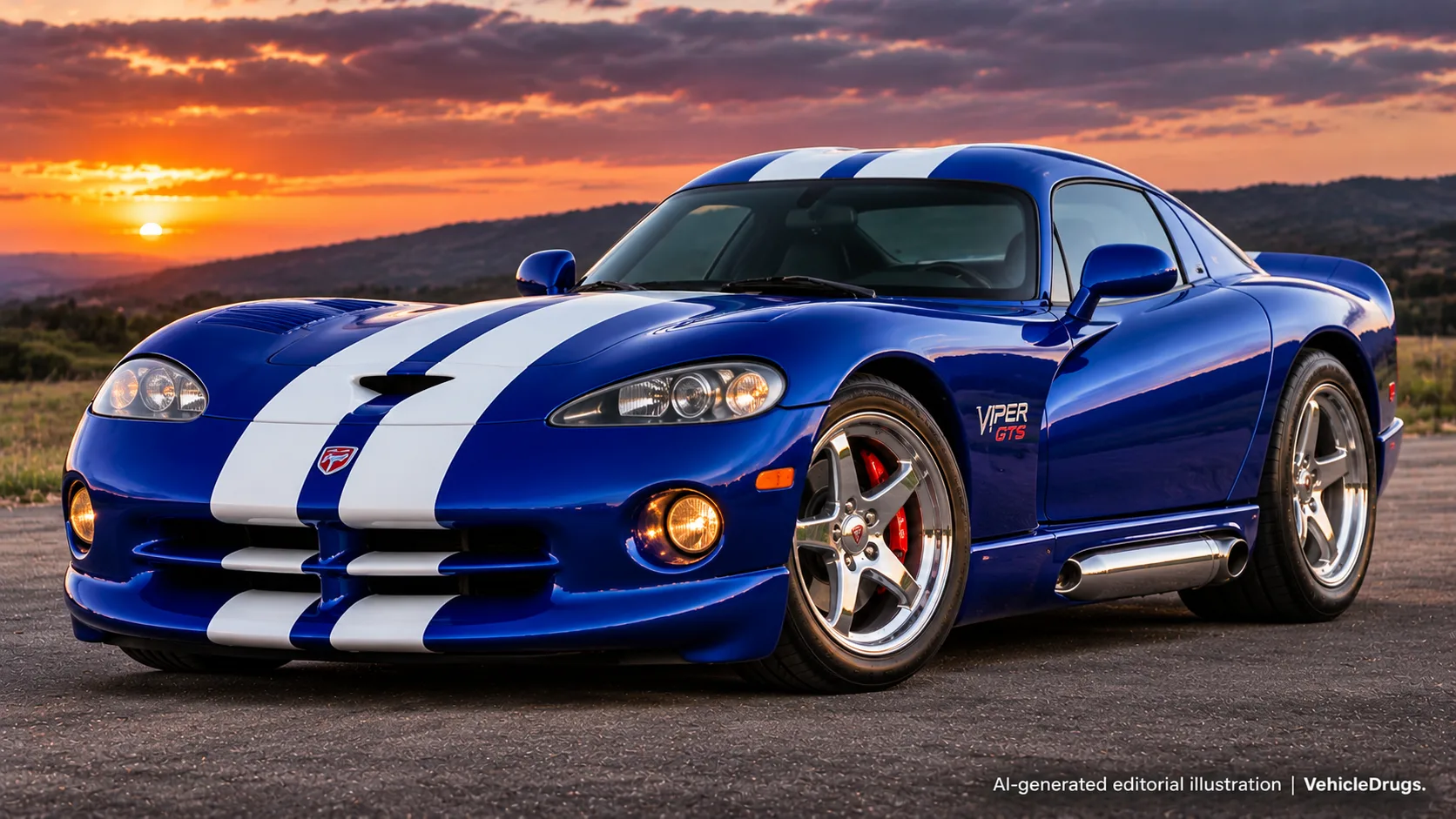
The 1996 Dodge Viper GTS became one of the defining models of the first-generation Viper family.
Its long hood, low body, wide rear tires and distinctive double-bubble roof created an unmistakable appearance. The GTS coupe also became famous for its blue bodywork and white racing stripes.
Under the hood was an 8.0-liter V10 engine producing approximately 450 horsepower and 490 lb-ft of torque.
Unlike many modern performance cars, the Viper emphasized a direct connection between the driver and the machine. Its powerful naturally aspirated engine, six-speed manual transmission and rear-wheel-drive layout delivered a demanding but rewarding driving experience.
The Viper was not simply another Dodge muscle car. It was a purpose-built American sports car that competed with some of the world's most respected performance machines.
1996 Dodge Viper GTS – Key Highlights
Model year: 1996
Engine: 8.0-liter naturally aspirated V10
Horsepower: Approximately 450 hp
Torque: Approximately 490 lb-ft
Transmission: Six-speed manual
Drivetrain: Rear-wheel drive
Body style: Two-seat sports coupe
4. Track-Focused Engineering: 2016 Dodge Viper ACR
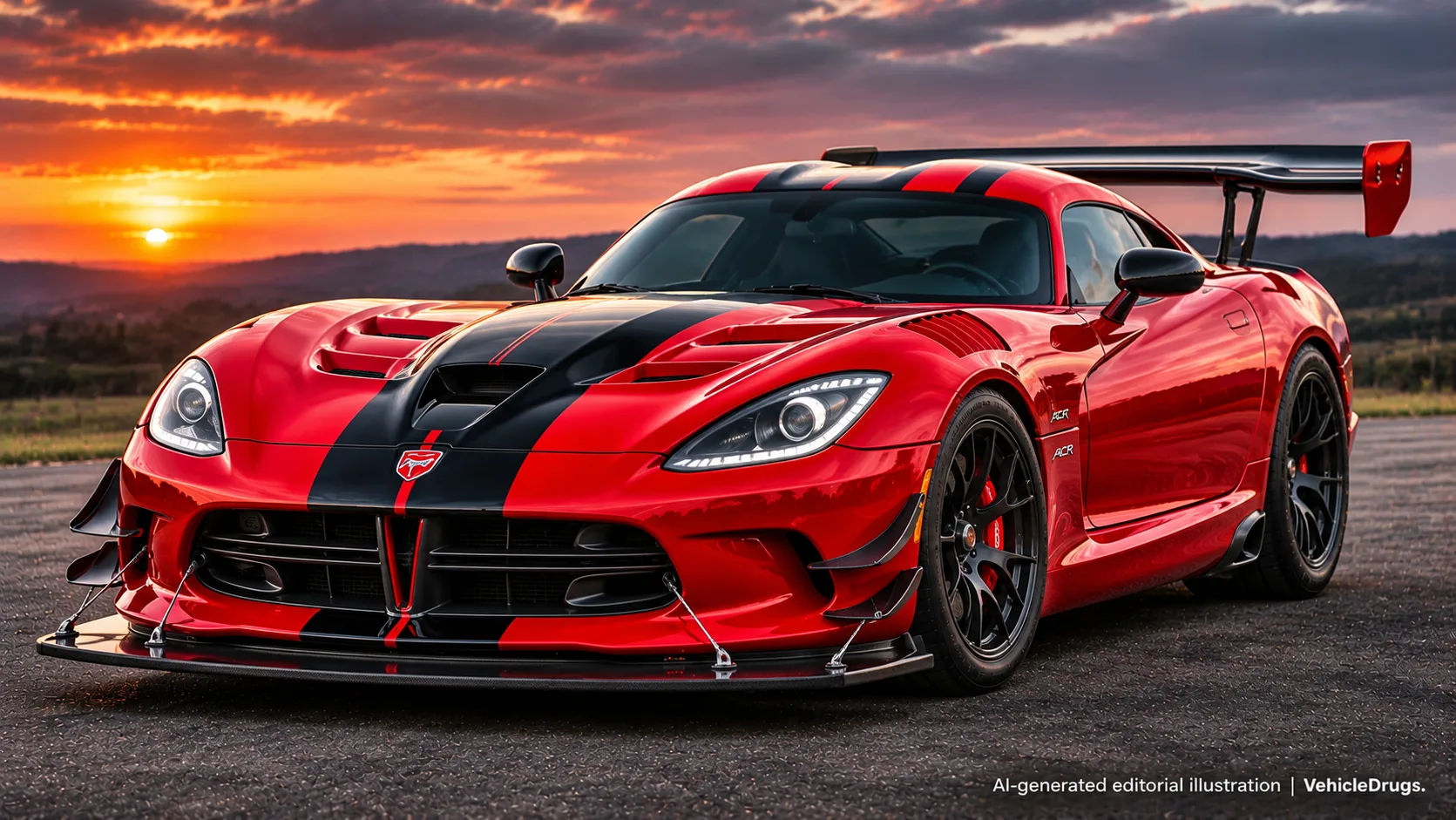
The Dodge Viper ACR represented a more specialized approach to performance.
ACR stands for American Club Racer, a name that reflects the model's track-focused engineering.
The 2016 Viper ACR was developed with serious circuit performance in mind. Its extensive aerodynamic package, large rear wing, adjustable suspension, powerful braking system and specialized tires were designed to improve performance on a race circuit.
Power came from an 8.4-liter naturally aspirated V10 engine producing 645 horsepower and 600 lb-ft of torque.
Unlike a supercharged Hellcat, the Viper ACR achieved its performance through a large naturally aspirated engine and a chassis package designed for demanding track use.
One of its most important features was its aerodynamic package. The large adjustable rear wing and other aerodynamic components helped generate substantial downforce, improving stability and cornering performance at speed.
The ACR also featured carbon-ceramic brakes and adjustable Bilstein racing suspension, reinforcing its role as a serious road-legal track machine.
2016 Dodge Viper ACR – Key Highlights
Model year: 2016
Engine: 8.4-liter naturally aspirated V10
Horsepower: 645 hp
Torque: 600 lb-ft
Transmission: Six-speed manual
Drivetrain: Rear-wheel drive
Performance equipment: Adjustable suspension, aerodynamic package and carbon-ceramic brakes
The Viper ended production in 2017, making the final-generation ACR one of the last chapters in the nameplate's history.
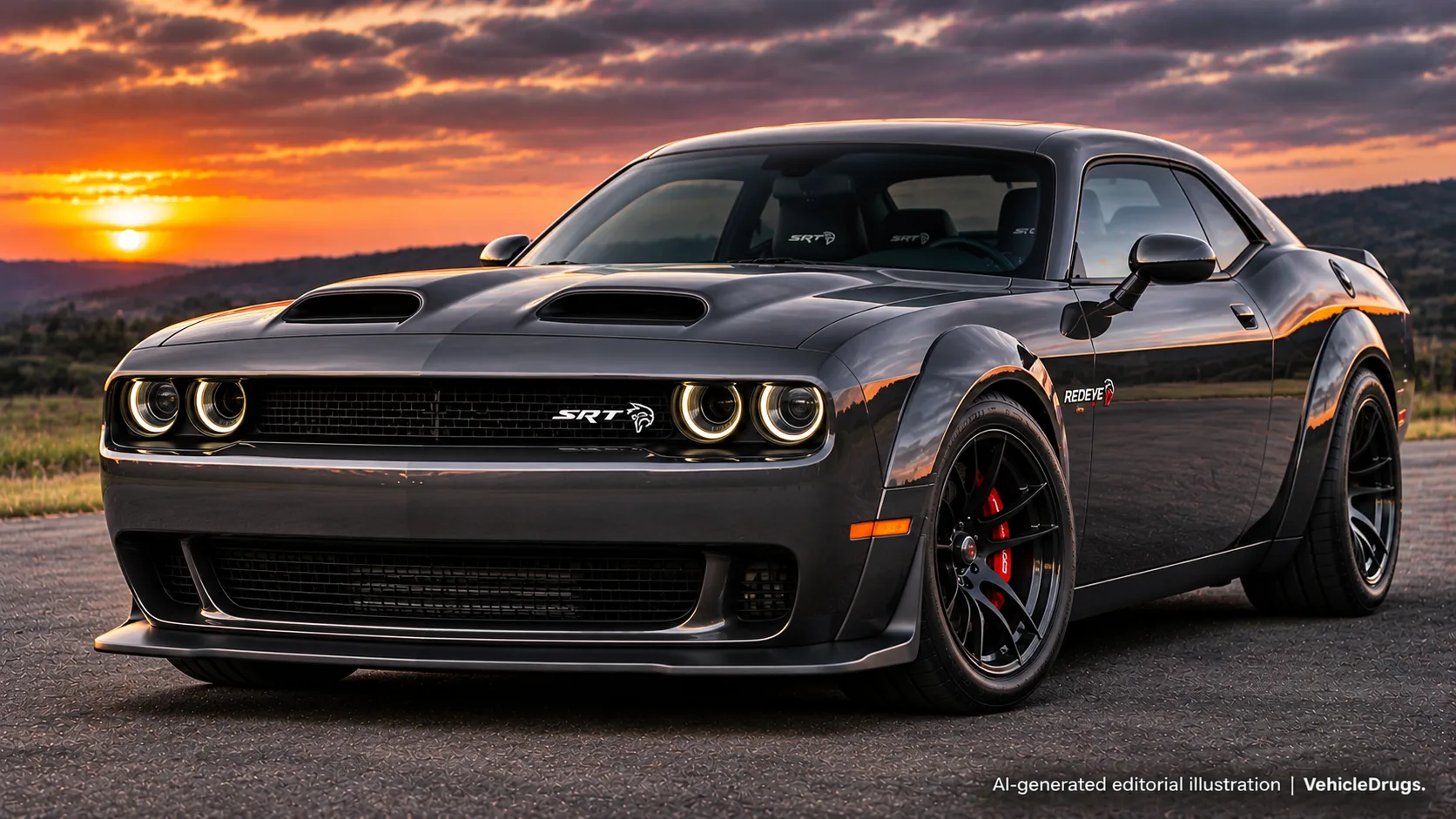
5. The Hellcat Revolution: Dodge Challenger SRT Hellcat Redeye
Dodge entered a new chapter of extreme production-car performance with the introduction of the supercharged Hellcat engine.
The Challenger SRT Hellcat became famous for combining traditional American muscle-car styling with enormous supercharged V8 power.
The later Challenger SRT Hellcat Redeye took that formula even further.
Introduced for the 2019 model year, the Redeye featured a supercharged 6.2-liter HEMI V8 producing 797 horsepower and 707 lb-ft of torque.
The engine was derived from the high-output powertrain developed for the Challenger SRT Demon. It included upgraded components and performance technology designed to handle the increased output.
The Redeye's performance figures were extraordinary for a production muscle car. Dodge quoted a 0–60 mph time of 3.4 seconds and a quarter-mile time of 10.8 seconds at 131 mph under its stated test conditions.
Its aggressive hood design, wide bodywork, distinctive Redeye badging and supercharged V8 made it one of the most recognizable modern Dodge performance models.
Challenger SRT Hellcat Redeye – Key Highlights
Introduction: 2019 model year
Engine: Supercharged 6.2-liter HEMI V8
Horsepower: 797 hp
Torque: 707 lb-ft
Transmission: Eight-speed automatic or six-speed manual availability depending on configuration
Drivetrain: Rear-wheel drive
Dodge-quoted 0–60 mph: 3.4 seconds
The Redeye demonstrated how far the traditional American muscle-car formula could evolve with modern supercharging and performance technology.
6. Four-Door Muscle: Dodge Charger SRT Hellcat
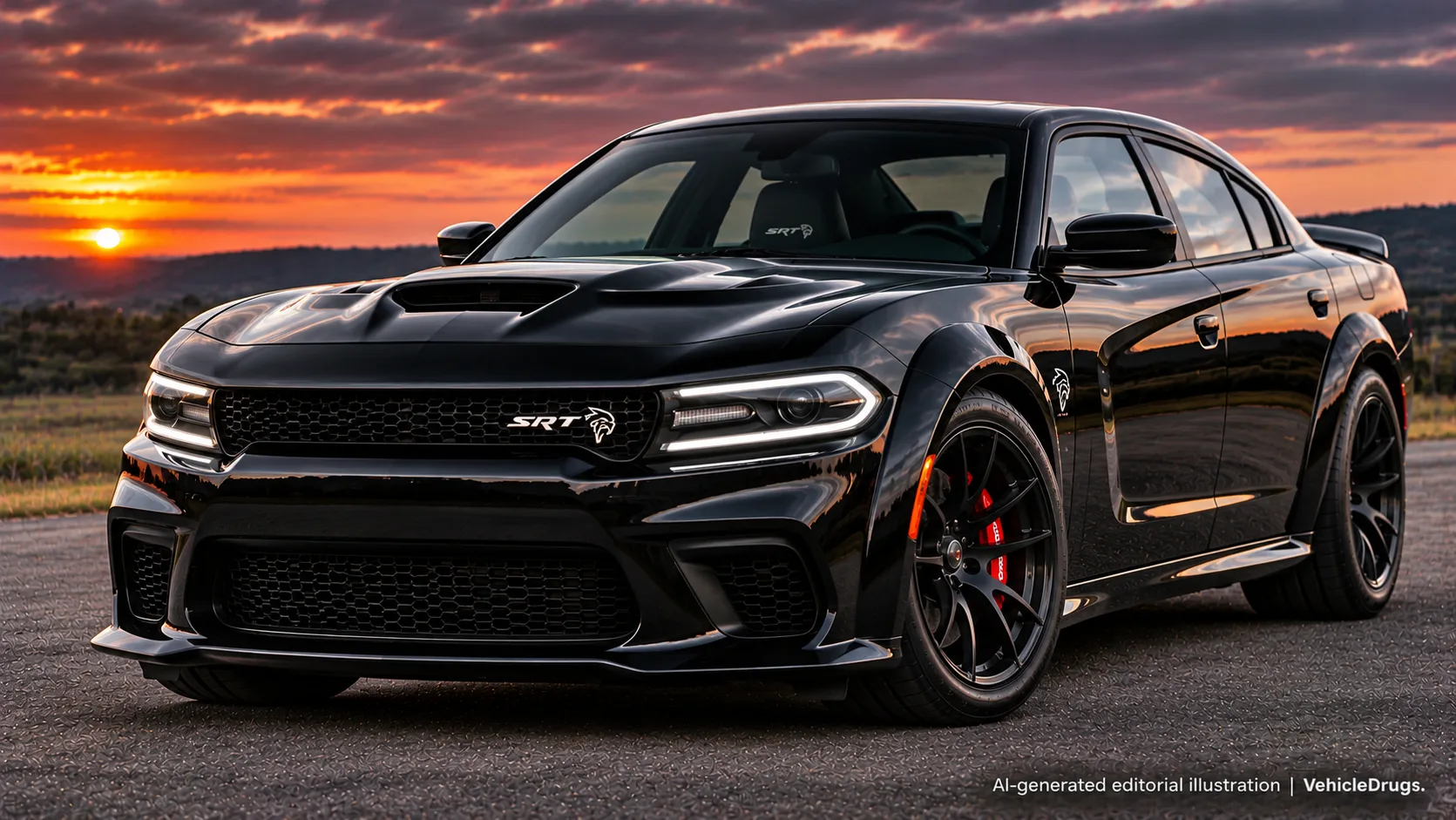
The Dodge Charger SRT Hellcat proved that extreme American performance did not have to come in a two-door coupe.
The modern Charger combined four-door practicality with a supercharged HEMI V8, creating one of the most powerful production sedans of its era.
The original 2015 Charger SRT Hellcat produced 707 horsepower and 650 lb-ft of torque from its supercharged 6.2-liter HEMI V8.
For the 2021 model year, the standard Charger SRT Hellcat Widebody received a higher 717-horsepower rating. The Charger SRT Hellcat Redeye went even further, producing 797 horsepower.
This distinction is important when discussing the Charger in the supplied infographic. Its 717-horsepower figure corresponds to the 2021 Charger SRT Hellcat, rather than every model year of the Hellcat sedan.
The Charger delivered a combination of high-speed performance, rear-wheel-drive muscle-car character and four-door practicality.
It became an important part of Dodge's modern performance identity and demonstrated that a full-size sedan could compete in the extreme horsepower category.
Dodge Charger SRT Hellcat – Key Highlights
Engine: Supercharged 6.2-liter HEMI V8
Original 2015 output: 707 hp
2021 standard Hellcat output: 717 hp
Torque: Up to 650 lb-ft for the 717-hp standard Hellcat
Drivetrain: Rear-wheel drive
Body style: Four-door performance sedan
7. What Happened to Dodge's V8 Muscle-Car Era?
The classic Charger, Challenger and Hellcat generations helped establish Dodge as one of America's leading performance brands.
However, the company eventually reached the end of an important chapter.
Production of the modern Dodge Challenger ended in December 2023. The previous-generation Charger also reached the end of its production run as Dodge prepared its next-generation performance lineup.
The Viper had already ended production in 2017.
These changes marked the conclusion of several important performance-car eras.
But Dodge did not abandon the Charger name.
The next-generation Charger introduced a multi-energy approach, offering both battery-electric Daytona models and gasoline-powered SIXPACK versions.
For the 2026 model year, the Charger R/T uses a 3.0-liter twin-turbocharged SIXPACK engine producing 420 horsepower, while the Charger Scat Pack delivers 550 horsepower. The all-electric Charger Daytona Scat Pack offers a different performance experience with 670 horsepower.
This is a significant change from the old supercharged HEMI formula. It shows how Dodge is attempting to carry its performance identity into a new generation of vehicles.
The modern Charger may look and perform differently from its predecessors, but the brand's focus on high-output performance remains central to its identity.
Final Thoughts: Dodge's Performance Legacy Lives On
From the 1969 Charger R/T and 1970 Challenger R/T to the Viper GTS, Viper ACR and supercharged Hellcat models, Dodge has produced some of the most memorable performance cars in American automotive history.
The classic muscle cars celebrated large-displacement V8 engines and aggressive styling. The Viper introduced a unique naturally aspirated V10 sports-car experience. The Hellcat generation then brought supercharged horsepower to a level that few production muscle cars could match.
Today, the next-generation Charger represents a new direction for Dodge, with both gasoline-powered and electric performance options.
The technology may change, but the legacy of Dodge performance continues to influence the American automotive world.
Frequently Asked Questions
1. What was the most powerful classic Dodge muscle car in this comparison?
The 1969 Charger R/T and 1970 Challenger R/T could both be equipped with the 426 HEMI V8, which was factory-rated at 425 horsepower.
2. How much horsepower did the 1970 Dodge Challenger R/T produce?
Its horsepower depended on the selected engine. The 440 Magnum was rated at 375 hp, the 440 Six Pack at 390 hp and the 426 HEMI at 425 hp.
3. How much horsepower did the 1996 Dodge Viper GTS have?
The 1996 Viper GTS produced approximately 450 horsepower and 490 lb-ft of torque from its 8.0-liter V10 engine.
4. How much horsepower did the 2016 Dodge Viper ACR produce?
The 2016 Viper ACR produced 645 horsepower and 600 lb-ft of torque from its naturally aspirated 8.4-liter V10.
5. How much horsepower did the Challenger SRT Hellcat Redeye produce?
The Challenger SRT Hellcat Redeye produced 797 horsepower and 707 lb-ft of torque from its supercharged 6.2-liter HEMI V8.
6. How much horsepower did the 2021 Dodge Charger SRT Hellcat produce?
The standard 2021 Charger SRT Hellcat produced 717 horsepower. The separate Charger SRT Hellcat Redeye version produced 797 horsepower.
7. Is the Dodge Viper still in production?
No. Dodge ended Viper production in 2017.
8. Is the Dodge Challenger still in production?
No. Challenger production ended in December 2023.
9. What replaced the traditional Dodge Charger?
The next-generation Charger introduced gasoline-powered SIXPACK models and all-electric Charger Daytona models.
10. Does Dodge still build high-performance cars?
Yes. The next-generation Charger lineup includes the 420-horsepower R/T, 550-horsepower Scat Pack and 670-horsepower all-electric Daytona Scat Pack for the 2026 model year.
Sources
Dodge – Official Dodge Viper History
Stellantis – 2019 SRT Lineup and Challenger Hellcat Redeye Specifications
Stellantis – 2021 Dodge Charger SRT Fact Sheet
Hagerty – 1970 Dodge Challenger R/T History and Specifications
FCA / Dodge – 2016 Dodge Viper ACR Technical Information
1969 Dodge Charger – Historical AMA Specifications
Editorial note: Classic-car horsepower ratings are original factory gross figures where applicable. Modern horsepower ratings are manufacturer-published figures. Engine options and output vary by model year and configuration.
Have thoughts, dyno data, or build feedback?
Join automotive enthusiasts in the paddock below to debate engineering, lap times, and modifications.
Community Pulse
How does this machine make you feel? Drop your reaction!

VehicleDrugs Editorial
VehicleDrugs Editorial Team
A passionate collective of automotive purists, track drivers, and mechanical engineers uncovering high-octane engineering breakthroughs worldwide.
🏁 Pit Crew Discussions
Drop your telemetry, debate the engineering, or talk track times with fellow petrolheads.
The Pit Lane is Quiet
Be the first driver to drop your opinion on this machine!