
Dodge Charger Daytona EV Backlash vs. The $50K Gas Sixpack
Americans rejected the heavy, $61k+ Charger Daytona EV—forcing Dodge to slash prices and fast-track the $49,995 twin-turbo Charger Sixpack. Full breakdown.
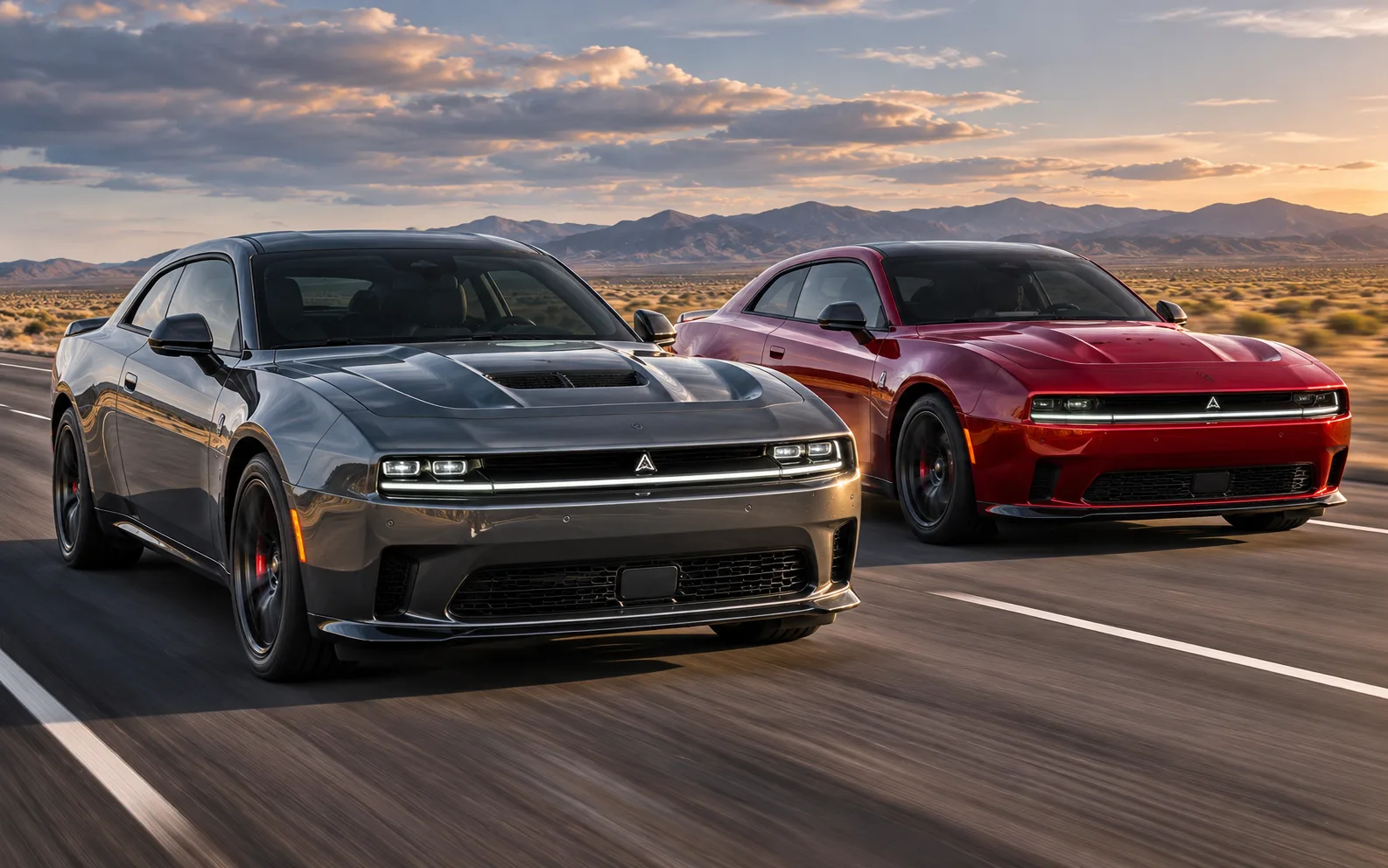
HEAD-TO-HEAD MUSCLE CAR VS COMPARISON
Compare 0-60, peak horsepower, torque, and quarter-mile times across iconic builds.
Dodge Charger Daytona EV Backlash: Why American Muscle Buyers Rejected the Electric Era for the Gas Sixpack
When Dodge unveiled the eighth-generation Charger as an all-electric coupe, corporate executives pitched it as the future of American performance. They promised 670 horsepower, standard all-wheel drive, and a patented speaker system engineered to scream at 126 decibels.
There was just one problem: nobody wanted to buy it.
Within months of hitting U.S. dealership lots, brand-new Charger Daytona EVs began collecting dust. According to market reports from Edmunds and CarScoops, dealers slapped massive discounts on window stickers—slashing $61,595 entry-level R/T models down below $40,000 just to clear floorplan space. By the 2026 model year, Dodge quietly pulled the plug on the electric R/T altogether, blaming tariff reviews while industry analysts pointed to a much simpler truth: muscle car buyers refused to pay luxury-car money for a 5,800-pound battery pack.
Now, the real savior of Dodge's showroom has finally arrived. Meet the 2026 Dodge Charger Sixpack—a twin-turbocharged, gas-burning machine that costs thousands less than the electric version and proves why internal combustion refuses to die quietly (a shift we also explored in our earlier feature on why the V8 is dead and the Sixpack takes over).
The Three-Ton Reality: Why the Daytona EV Failed the Driveway Test
On paper, the Charger Daytona EV looked unstoppable. The flagship Scat Pack pushes 630 horsepower (670 hp for 15-second bursts using PowerShot), rockets from 0 to 60 mph in 3.3 seconds, and clears the quarter-mile in 11.5 seconds.
Yet specs don't sell American muscle cars. Emotion and value do. Look at why America fell back in love with the Ford Mustang in 2026—buyers flocked to the Blue Oval precisely because Ford didn't force an electric compromise down their throats.
The Daytona EV tripped over three fatal flaws the moment enthusiasts saw it in person:
- The Curb Weight Problem: Carrying a 100.5-kWh battery pack and a heavy steel unibody pushed the Charger Daytona EV's curb weight between 5,698 and 5,838 pounds. That is heavier than a standard-cab Ford F-150. You can mask weight in a straight line with instant electric torque, but you cannot hide nearly three tons of mass when braking hard or pitching into a corner.
- Sticker Shock for Blue-Collar Buyers: For decades, the Charger and Challenger R/T were accessible, working-class heroes priced in the low-$40,000s. Pricing the electric R/T at $61,590 and the Scat Pack north of $75,000 priced out the exact demographic that kept Dodge dealerships alive.
- The Fratzonic Exhaust Gimmick: As detailed by Green Car Reports, Dodge spent years developing the "Fratzonic Chambered Exhaust"—an acoustic amplifier and tuning chamber mounted under the rear bumper to mimic a V8 roar. While clever on an engineering whiteboard, purists immediately rejected the idea of paying $70,000 for a car that plays artificial engine noises through a weatherproof speaker.

Enter the 2026 Charger Sixpack: Cheaper, Lighter, and Gas-Powered
Recognizing that the "Brotherhood of Muscle" wasn't ready to plug in, Stellantis accelerated the rollout of the Charger Sixpack—powered by the 3.0-liter twin-turbocharged "Hurricane" inline-six engine.
It is not a V8, and Dodge isn't pretending it is. Instead, it is a genuine, high-boost mechanical powerhouse utilizing dual 54mm Garrett GT2054 turbochargers.
The 2026 Charger Sixpack arrives in two distinct trims:
- Charger R/T (Standard-Output): Produces 420 horsepower and 468 lb-ft of torque, hitting 0–60 mph in 4.6 seconds and the quarter-mile in 12.9 seconds.
- Charger Scat Pack (High-Output): Cranks out 550 horsepower and 531 lb-ft of torque, sprinting from 0–60 mph in 3.9 seconds, running the quarter-mile in 12.2 seconds, and topping out at 177 mph.
Here is the irony that makes the electric Charger's pricing look absurd: The gas-powered 2026 Charger R/T starts at $49,995.
That makes it $11,595 cheaper than the discontinued electric R/T's launch price, yet it actually beats the EV to 60 mph (4.6 seconds vs. 4.7 seconds). Step up to the 550-hp Scat Pack Sixpack at $54,995, and you save roughly $18,000 to $20,000 compared to a Daytona Scat Pack EV while keeping real turbos, real combustion, and hundreds of pounds less weight over the tires.
Head-to-Head: Charger Daytona EV vs. Charger Sixpack Gas
| Feature / Spec | 2025 Charger Daytona Scat Pack (EV) | 2026 Charger Sixpack Scat Pack (Gas) | 2026 Charger Sixpack R/T (Gas) |
|---|---|---|---|
| Starting MSRP | ~$73,190 – $76,890+ | $54,995 | $49,995 |
| Powertrain | Dual Electric Motors (100.5 kWh) | 3.0L Twin-Turbo Inline-6 (HO) | 3.0L Twin-Turbo Inline-6 (SO) |
| Horsepower | 670 HP (with PowerShot) | 550 HP | 420 HP |
| Torque | 627 lb-ft | 531 lb-ft | 468 lb-ft |
| 0–60 MPH | 3.3 seconds | 3.9 seconds | 4.6 seconds |
| Drivetrain | Standard AWD | AWD w/ 100% RWD Disconnect | AWD w/ 100% RWD Disconnect |
| Sound | 126-dB Fratzonic Speaker | Real Twin-Turbo Exhaust | Real Twin-Turbo Exhaust |
Can You Still Do Burnouts? Yes—With One Button
One of the biggest fears surrounding the new STLA Large platform was the loss of rear-wheel-drive hooliganism. Every 2026 Charger Sixpack comes with standard All-Wheel Drive to put power down cleanly on wet pavement and winter roads.
Thankfully, Dodge engineers knew better than to lock out the tire smoke.
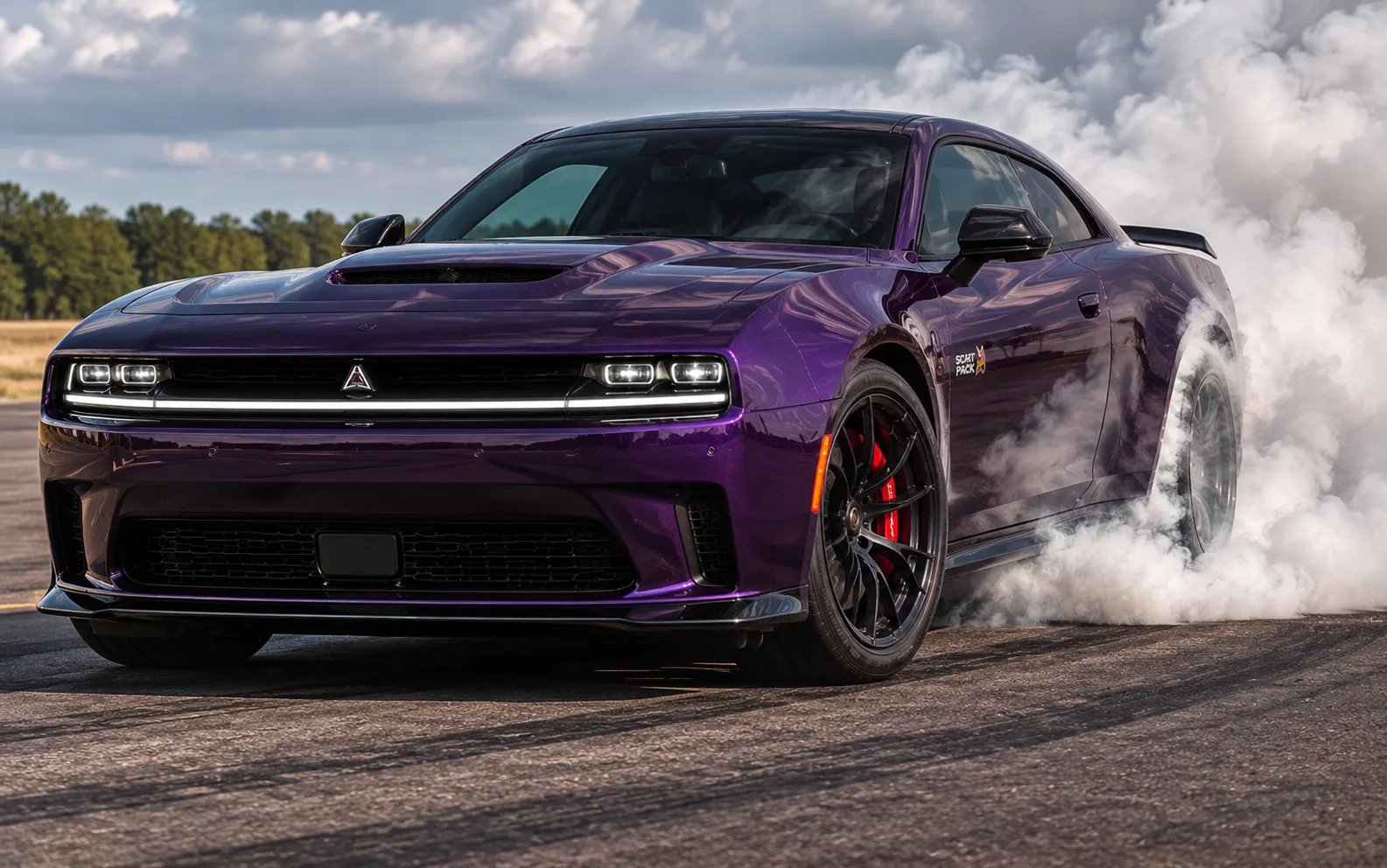
Built into the drive-mode selector is a dedicated 100% Rear-Wheel-Drive disconnect. Push the button, and the front axle mechanically decouples, routing every ounce of that 531 lb-ft of torque strictly to the rear tires. Combined with standard Line Lock—which locks the front brakes while leaving the rears free—the Sixpack still does smoky, effortless burnouts and donuts just like its Hellcat ancestors.
The Remaining Question: Will Six Cylinders Satisfy V8 Loyalists?
[Editor's Drive Impression: Insert real track/road notes here]
Let's be honest: the Hurricane inline-six is a beast, and its tuning ceiling is massive. Because it uses forged internals and dual Garrett turbos, aftermarket tuners are already eyeing easy 650+ horsepower gains with simple downpipes and ECU calibrations—something you cannot do on a sealed electric battery pack.
Yet a vocal segment of the Mopar faithful still misses the visceral chop of the legendary HEMI V8 era. An inline-six sounds smooth, urgent, and mechanical—closer to a BMW M3 or Toyota Supra than a classic Detroit small-block. That relentless demand from fans is exactly why rumors around Dodge's massive U-turn for a future V8 return refuse to go away.
For buyers who refuse to compromise on eight cylinders, the used market for 2023 "Last Call" Challengers and Chargers remains red hot. For everyone else who wants modern grip, brutal twin-turbo acceleration, and a reasonable monthly payment, the Sixpack fixes almost every mistake Dodge made with the Daytona EV.
VehicleDrugs Editorial Verdict: Buy the Sixpack, Skip the EV Markup
Dodge learned a brutal, expensive lesson over the last two years: you cannot force an enthusiast community to abandon internal combustion just by adding more horsepower and a loud speaker.
The Charger Daytona EV proved that straight-line speed alone doesn't define a muscle car. Weight, price, repairability, and mechanical soul still matter to American buyers.
Unless you specifically want a commuter EV and can snag a leftover Daytona R/T on a massive $20,000 dealer clearance discount, wait for the 2026 Charger Sixpack. At $49,995 to $54,995, it delivers sharper handling, real turbo theater, and the burnout-ready attitude Dodge should have led with from day one.
Frequently Asked Questions
Why did Dodge cancel the Charger Daytona R/T EV for 2026?
Dodge postponed and effectively discontinued the entry-level Daytona R/T EV for the 2026 model year following sluggish sales, large inventory pile-ups, and changing U.S. auto tariff conditions. Dealerships were forced to discount remaining 2024 and 2025 R/T models by over $20,000 to move them off lots.
How much does the gas-powered 2026 Dodge Charger Sixpack cost?
The gas-powered 2026 Dodge Charger R/T (with the 420-hp Hurricane inline-six) starts at $49,995, while the 550-hp Charger Scat Pack starts at $54,995—making both models significantly cheaper than their electric Daytona counterparts.
Is the 2026 Dodge Charger Sixpack AWD or RWD?
It is both. Every 2026 Charger Sixpack comes standard with All-Wheel Drive for year-round traction, but includes a driver-selectable 100% Rear-Wheel-Drive mode that disconnects the front axle for drifting, donuts, and Line Lock burnouts.
Sources & References
- Official Specifications & Pricing: Dodge Official / Stellantis North America Media
- Daytona R/T Discontinuation & Market Data: Edmunds Automotive
- Dealership Inventory & Discount Tracking: CarScoops / The Drive
- Fratzonic Exhaust Engineering: Green Car Reports
Have thoughts, dyno data, or build feedback?
Join automotive enthusiasts in the paddock below to debate engineering, lap times, and modifications.
Community Pulse
How does this machine make you feel? Drop your reaction!

VehicleDrugs Editorial
VehicleDrugs Editorial Team
A passionate collective of automotive purists, track drivers, and mechanical engineers uncovering high-octane engineering breakthroughs worldwide.
🏁 Pit Crew Discussions
Drop your telemetry, debate the engineering, or talk track times with fellow petrolheads.
The Pit Lane is Quiet
Be the first driver to drop your opinion on this machine!