
2025 Toyota 4Runner Review: Worth $67K Without the V6?
Toyota killed the 4Runner V6 for a 326-hp turbo-hybrid. We break down 2025 pricing ($40K–$67K), 6,000-lb towing, cargo compromises, and which trim to buy.
HEAD-TO-HEAD MUSCLE CAR VS COMPARISON
Compare 0-60, peak horsepower, torque, and quarter-mile times across iconic builds.
2025 Toyota 4Runner Review: Is the $67K Turbo-Hybrid Still Worth Your Trust?
For fifteen years, the fifth-generation Toyota 4Runner operated under a simple, bulletproof philosophy: don't fix what refuses to break. While competitors chased touchscreens and turbochargers, Toyota kept selling a boxy, body-on-frame SUV powered by a 4.0-liter V6 and a five-speed automatic transmission that felt archaic in 2015, let alone 2024.
Buyers didn't care. They lined up to pay full sticker price because they knew that truck would still start on a freezing Monday morning at 300,000 miles.
For 2025, that safety blanket is gone. Toyota has finally launched the all-new, sixth-generation 4Runner—built on the modern TNGA-F truck architecture shared with the Tacoma and Land Cruiser. The legendary V6 is dead, replaced by turbocharged four-cylinders and an electrified hybrid powertrain, with top trims pushing nearly $70,000 out the door. It is vastly quicker, sharper, and smarter. The only question that matters is whether long-haul Toyota loyalists will trust it.
Under the Hood: Goodbye V6, Hello 465 lb-ft of Turbo-Hybrid Torque
The biggest change sits beneath the sculpted hood. Out goes the naturally aspirated 4.0-liter V6 (270 hp / 278 lb-ft) and its sluggish five-speed gearbox. In its place, Toyota installs two variations of a 2.4-liter turbocharged inline-four paired with a crisp eight-speed automatic:
- i-FORCE (Standard Turbo-4): Delivers 278 horsepower and 317 lb-ft of torque—a 39 lb-ft jump over the old V6. Crucially, peak torque arrives at just 1,700 rpm, meaning the engine no longer has to scream up highway grades just to maintain 70 mph. Independent testing from Edmunds clocks 0–60 mph in roughly 7.5 to 8.2 seconds depending on weight.
- i-FORCE MAX (Turbo-Hybrid): Pairs the same 2.4L turbo engine with an electric motor inside the transmission bellhousing to unleash 326 horsepower and a massive 465 lb-ft of torque. The instant electric fill completely erases turbo lag, making highway passing feel effortless compared to any 4Runner before it.
Towing capacity also gets a practical bump. Where the outgoing V6 maxed out at 5,000 pounds, both the gas and hybrid 2025 4Runners are officially rated to pull up to 6,000 pounds—giving weekend boaters and small camper owners a welcome 1,000-pound cushion.
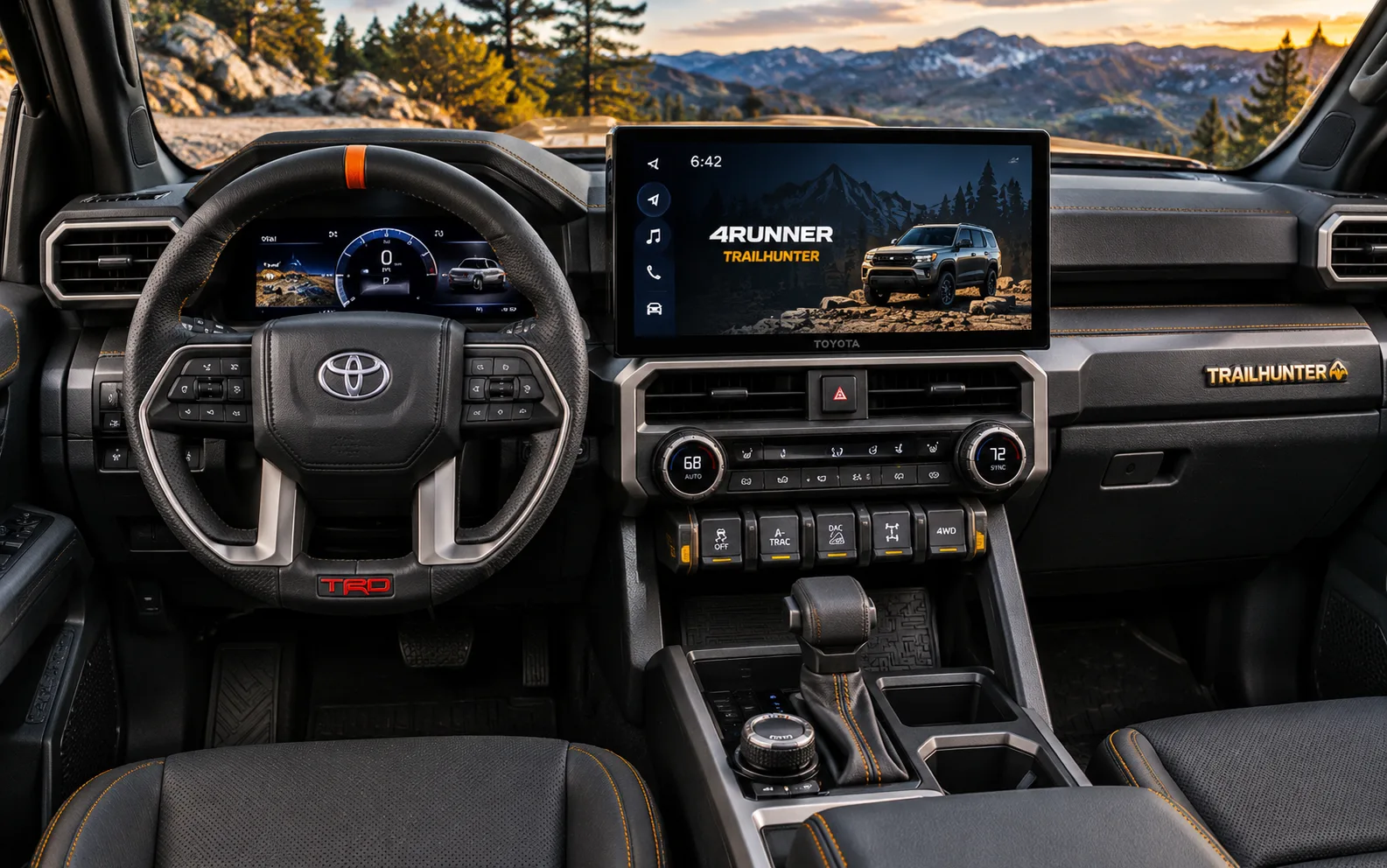
The Hidden Catch: Cargo Space, Third Rows, and Fuel Reality
Read most first-drive reviews, and the 2025 4Runner sounds flawless. Look closer at the packaging, however, and you will hit three real-world compromises buyers need to catch before signing a finance sheet:
- The Hybrid Cargo Floor Penalty: On i-FORCE MAX hybrid models, the nickel-metal hydride battery pack sits beneath the rear load floor. That raises the cargo floor noticeably, eating into vertical storage height for tall coolers or overland gear—and it eliminates the optional third-row seat entirely. If you need seven-passenger flexibility, you are forced into a non-hybrid gas trim like the SR5 or Limited.
- Boxy Aerodynamics Still Limit Highway MPG: While city fuel economy climbs nicely on the hybrid (an EPA-estimated 23 mpg city / 24 highway / 23 combined vs. the old V6's dismal 16/19 mpg), highway returns remain modest. Pushing a tall, brick-shaped off-roader through 75-mph headwinds means real-world highway numbers hover right around 21–24 mpg.
- Third-Row Legroom Is Still Kid-Sized: Even on gas trims equipped with the jump seats, adults won't survive more than 20 minutes back there. Families prioritizing true three-row comfort over rock-crawling capability are still better served by crossovers like the Grand Highlander or looking at Toyota's upcoming next-gen RAV4 lineup.
2025 Toyota 4Runner Pricing & Trim Breakdown
Toyota expanded the 2025 lineup to nine distinct grades—including the luxury-oriented Platinum and the factory-built overlanding Trailhunter. Note that prices below exclude Toyota's mandatory $1,450 destination fee:
| Trim Level | Starting MSRP | Powertrain | Best For |
|---|---|---|---|
| SR5 | $40,770 | 2.4L Turbo (278 hp) | Value buyers & families needing an optional 3rd row |
| TRD Sport / Premium | $47,250 – $52,610 | 2.4L Turbo (278 hp) | On-road commuters wanting sporty suspension & 20-in wheels |
| TRD Off-Road / Premium | $49,190 – $57,770 | Gas or Hybrid Opt. | The sweet spot: Bilstein shocks, locking rear diff, real trail grit |
| Limited | $55,400 – $60,200 | Gas or Hybrid Opt. | Full-time 4WD luxury cruisers |
| Platinum | $62,860 | i-FORCE MAX Hybrid (326 hp) | Executive comfort with heated 2nd-row seats & head-up display |
| TRD Pro | $66,900 | i-FORCE MAX Hybrid (326 hp) | High-speed desert runners (Fox QS3 internal bypass shocks) |
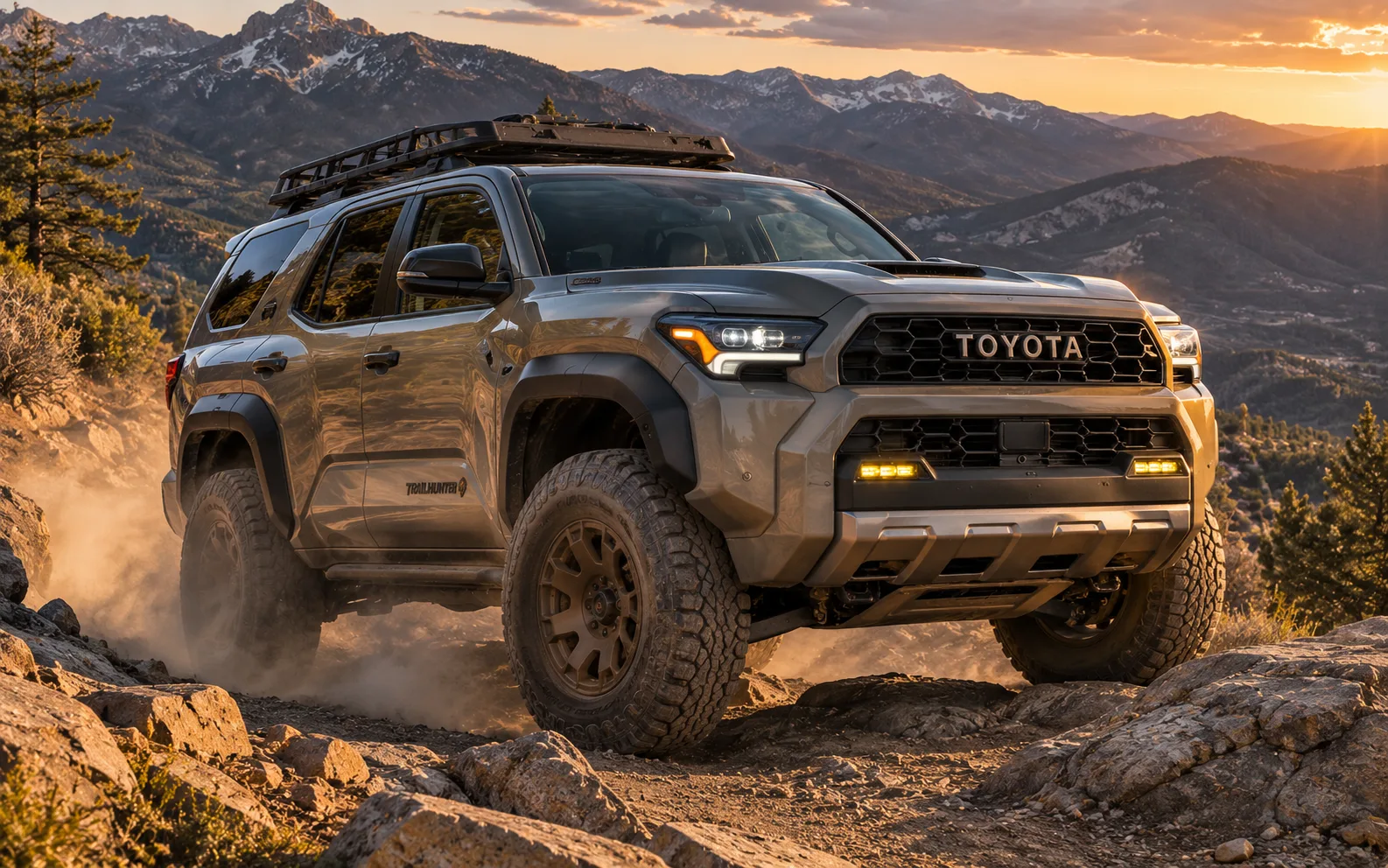
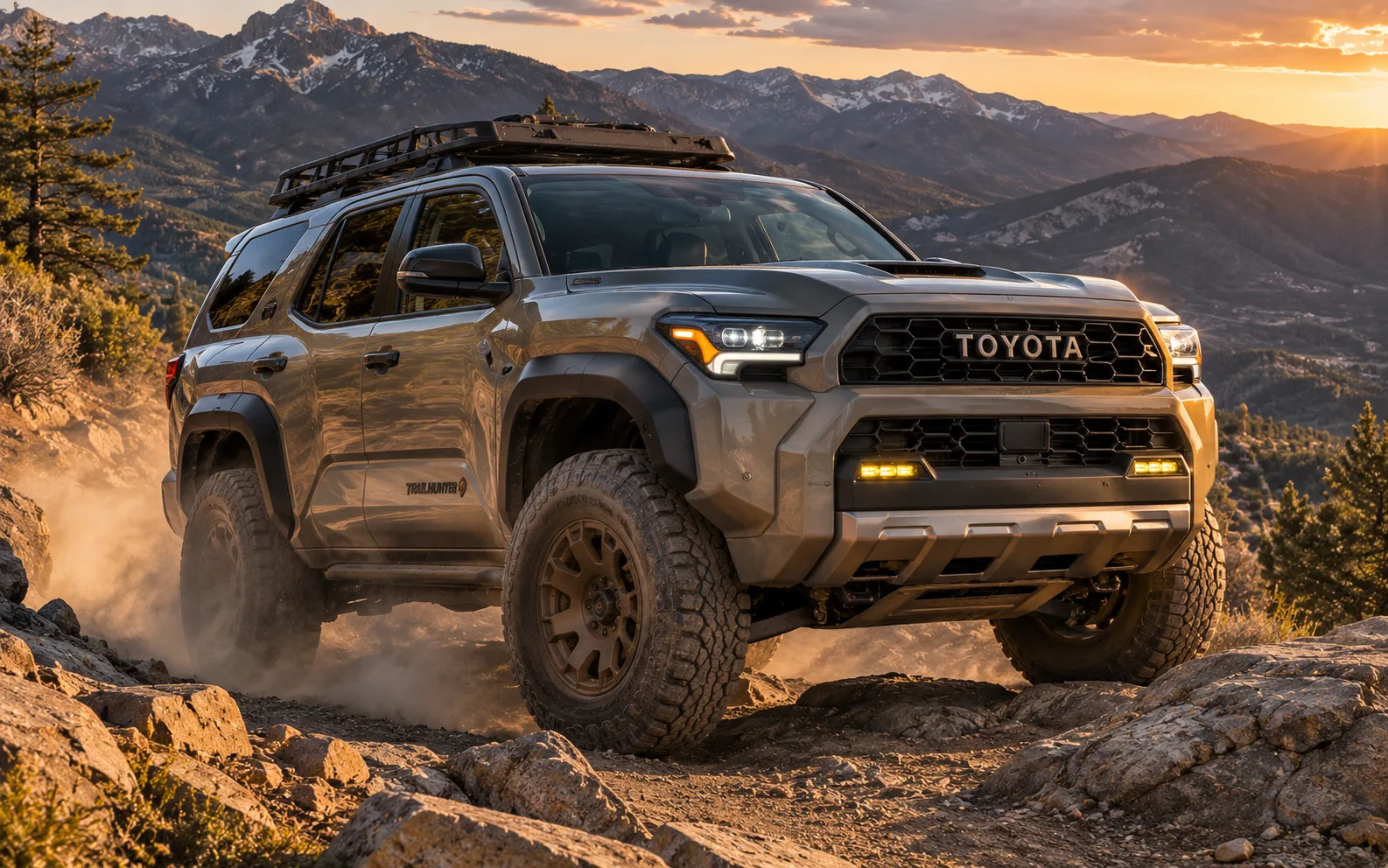
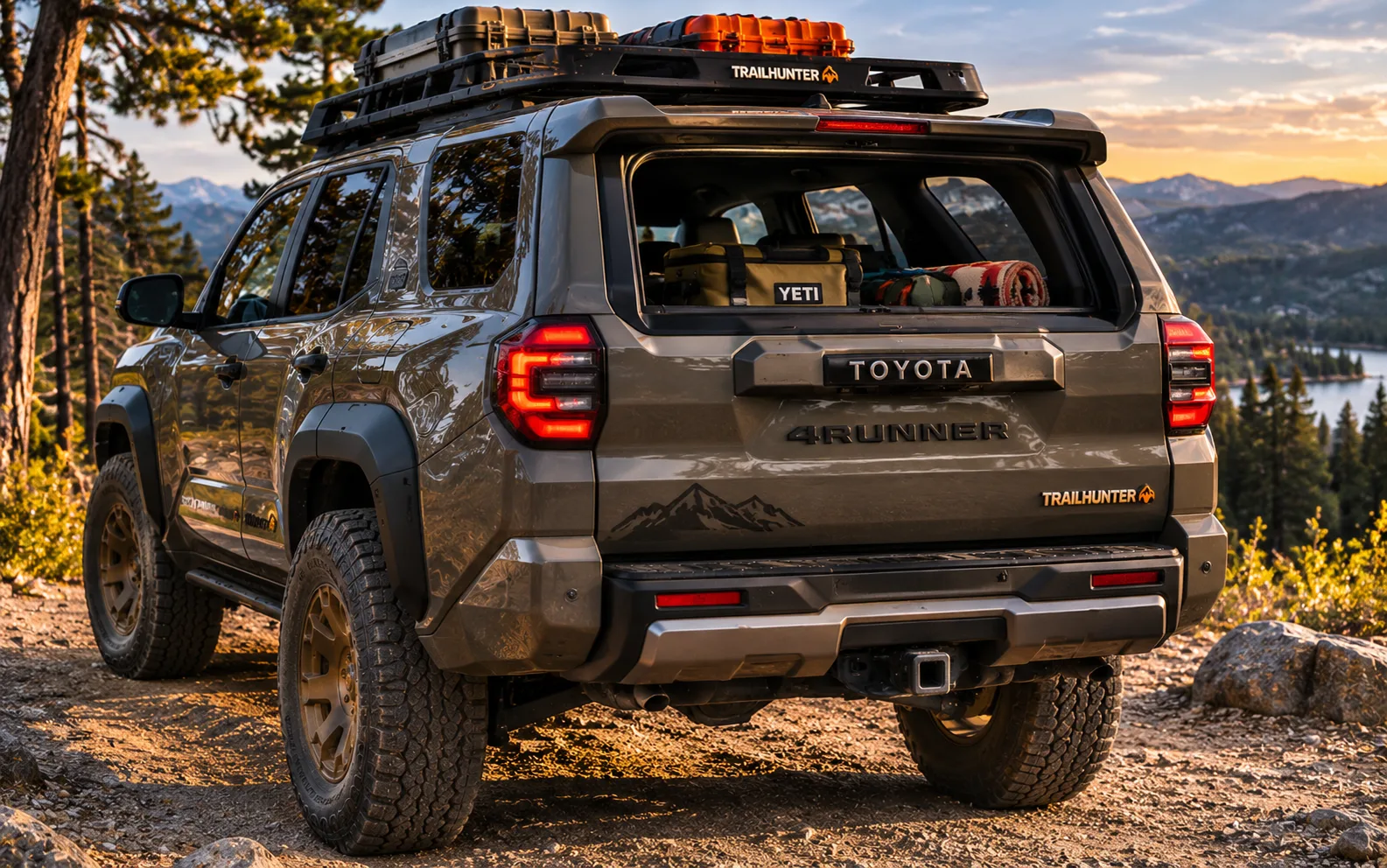
| Trailhunter | $66,900 | i-FORCE MAX Hybrid (326 hp) | Turnkey overlanders (Old Man Emu shocks, ARB rack, high air intake) |
The $67,000 Dilemma: 4Runner vs. Land Cruiser
Here is the elephant sitting in every Toyota showroom: a TRD Pro or Trailhunter 4Runner stickers at $68,350 with destination—more expensive than a base 2025 Toyota Land Cruiser 250.
Why would anyone spend nearly $70,000 on a 4Runner when the Land Cruiser badge sits two parking spots away with the exact same hybrid powertrain?
First, the 4Runner keeps its iconic, beloved power roll-down rear tailgate window—a feature missing from the new Land Cruiser. Second, the Trailhunter and TRD Pro bring far more aggressive off-road hardware straight from the factory (33-inch Toyo tires, stabilizer bar disconnect, steel skid plates, and high-clearance bumpers) that would cost thousands to add to a Land Cruiser aftermarket.
Will the Turbo-4 Last 300,000 Miles?
[Editor's Drive Impression: Insert real track/road notes here]
As Car and Driver notes, the coil-spring rear suspension and hydraulic steering precision make this the best-riding 4Runner ever built. On broken pavement, the old truck's bouncy, jittery manners are completely gone.
Still, longtime buyers have a right to ask about longevity. Replacing an under-stressed, naturally aspirated V6 with a high-compression turbocharged four-cylinder carrying high-voltage hybrid cooling systems introduces more points of potential failure over 15 years of ownership. Even Toyota isn't immune to growing pains—just look at recent large-scale safety campaigns like the 314,029-vehicle Toyota and Lexus airbag recall or early transmission software hiccups on the shared Tacoma platform.
While Toyota's hybrid engineering track record is unmatched in the industry, conservative buyers who keep vehicles for two decades should consider skipping the complex hybrid hardware and grabbing a simpler TRD Off-Road Gas model—saving nearly $3,000 upfront while keeping maximum cargo room.
VehicleDrugs Editorial Verdict: Which 2025 4Runner Should You Buy?
The 2025 Toyota 4Runner isn't trying to be a soft, car-like crossover. It stays true to its body-on-frame DNA while finally delivering the torque, towing capacity, and cabin tech modern buyers expect in the 2020s—much like we've seen in the truck market in our ultimate guide to full-size utility.
Skip the $67,000 TRD Pro and Trailhunter unless you genuinely spend your weekends crawling technical desert trails. For 90% of American buyers, the TRD Off-Road ($49,190 Gas / $51,990 Hybrid) hits the absolute sweet spot—delivering all the legendary trail capability, a locking rear differential, and modern comfort without crossing into luxury-SUV pricing territory.
Frequently Asked Questions
Does the 2025 Toyota 4Runner still have a V6 engine?
No. Toyota retired the 4.0-liter V6 after the 2024 model year. The 2025 4Runner is powered exclusively by a 2.4-liter turbocharged inline-4 (278 hp) or the i-FORCE MAX 2.4-liter turbo-hybrid powertrain (326 hp).
Can you get a 3rd-row seat in the 2025 Toyota 4Runner Hybrid?
No. Because the i-FORCE MAX hybrid battery pack is packaged beneath the rear cargo floor, hybrid models are strictly two-row, five-passenger SUVs. The optional third-row seat is only available on non-hybrid gas trims (such as the SR5 and Limited).
What is the towing capacity of the 2025 Toyota 4Runner?
Both the standard 2.4L turbo gas engine and the i-FORCE MAX hybrid are rated to tow up to 6,000 pounds when properly equipped—a 1,000-pound increase over the outgoing V6 model's 5,000-pound limit.
Sources & References
- Official Pricing, Trims & Towing Specs: Toyota USA Official Pressroom
- 0–60 Testing & First Drive Analysis: Edmunds Automotive / Car and Driver
Have thoughts, dyno data, or build feedback?
Join automotive enthusiasts in the paddock below to debate engineering, lap times, and modifications.
Community Pulse
How does this machine make you feel? Drop your reaction!

VehicleDrugs Editorial
VehicleDrugs Editorial Team
A passionate collective of automotive purists, track drivers, and mechanical engineers uncovering high-octane engineering breakthroughs worldwide.
🏁 Pit Crew Discussions
Drop your telemetry, debate the engineering, or talk track times with fellow petrolheads.
The Pit Lane is Quiet
Be the first driver to drop your opinion on this machine!