
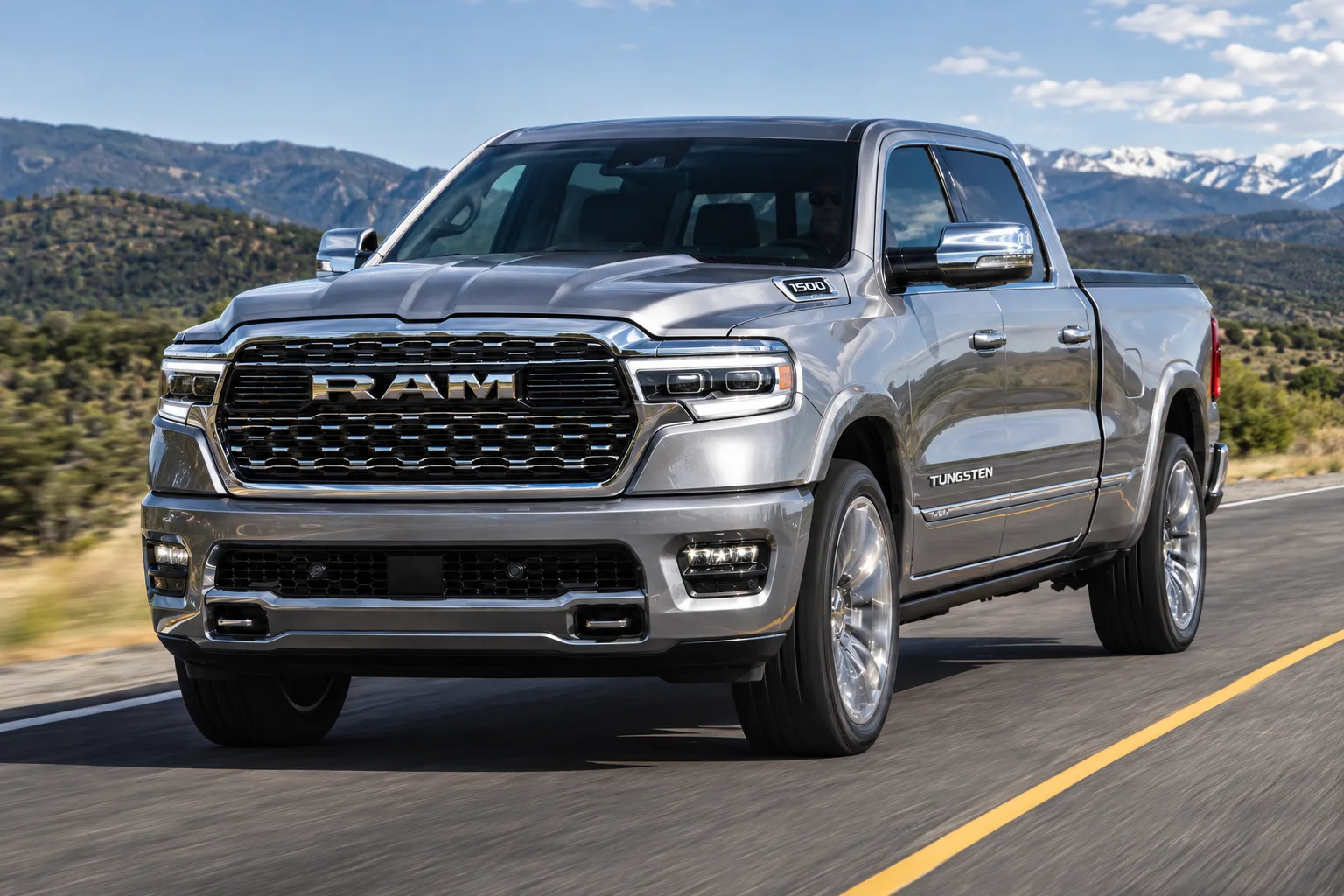
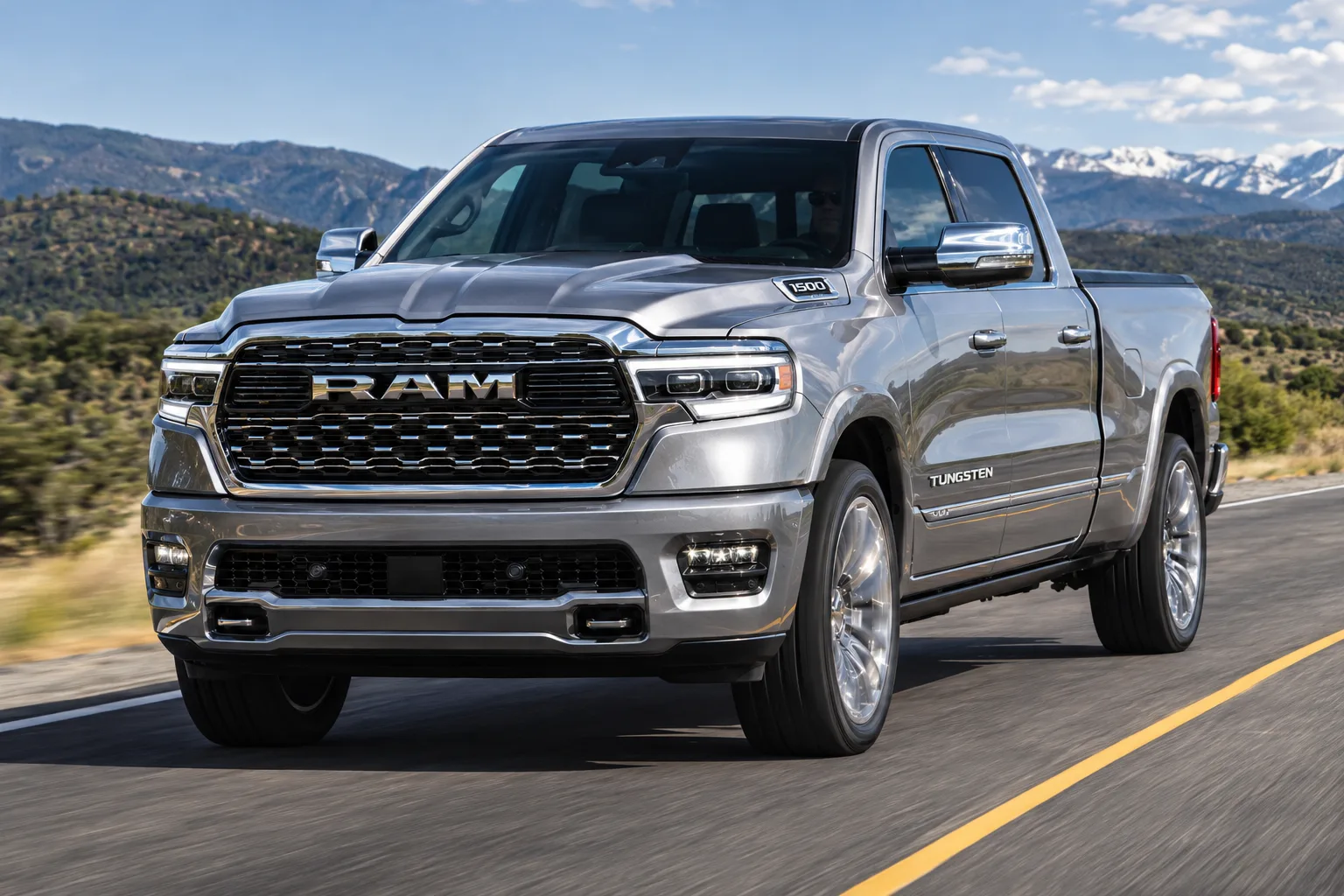
2025 Ram 1500 Hurricane vs HEMI V8: Better or a Step Back?
Ram killed the 5.7L HEMI V8 for the twin-turbo Hurricane I-6. We break down the 540-hp gains, the 1,200-lb towing drop, and real-world reliability trade-offs.
HEAD-TO-HEAD MUSCLE CAR VS COMPARISON
Compare 0-60, peak horsepower, torque, and quarter-mile times across iconic builds.
2025 Ram 1500 Hurricane I-6 vs. 5.7L HEMI: Faster on Paper, but Can It Earn
Your Trust?
For more than two decades, walking into a Ram showroom was simple. If you
wanted serious work capability and an exhaust note that rattled suburban
fences, you checked the box for the 5.7-liter HEMI V8. It was a staple of
modern American truck culture—uncomplicated, vocal, and dependable.
For 2025, that chapter is officially closed.
Stellantis has retired the venerable pushrod HEMI from the half-ton lineup,
replacing it with a clean-sheet, 3.0-liter twin-turbocharged inline-six known
as the Hurricane. The corporate sales pitch is predictable: more horsepower,
mountains of low-end torque, and reduced emissions. On a spec sheet, the new
engine embarrasses the V8 it replaces. Yet out in the real world—where trucks
haul cattle trailers, idle on dusty job sites, and log 150,000 hard miles—truck
buyers aren't entirely sold.
Speed is cheap in the modern automotive landscape. Long-term trust,
especially in the pickup segment, is expensive.
The Engineering Shift: What Is the Hurricane Six?
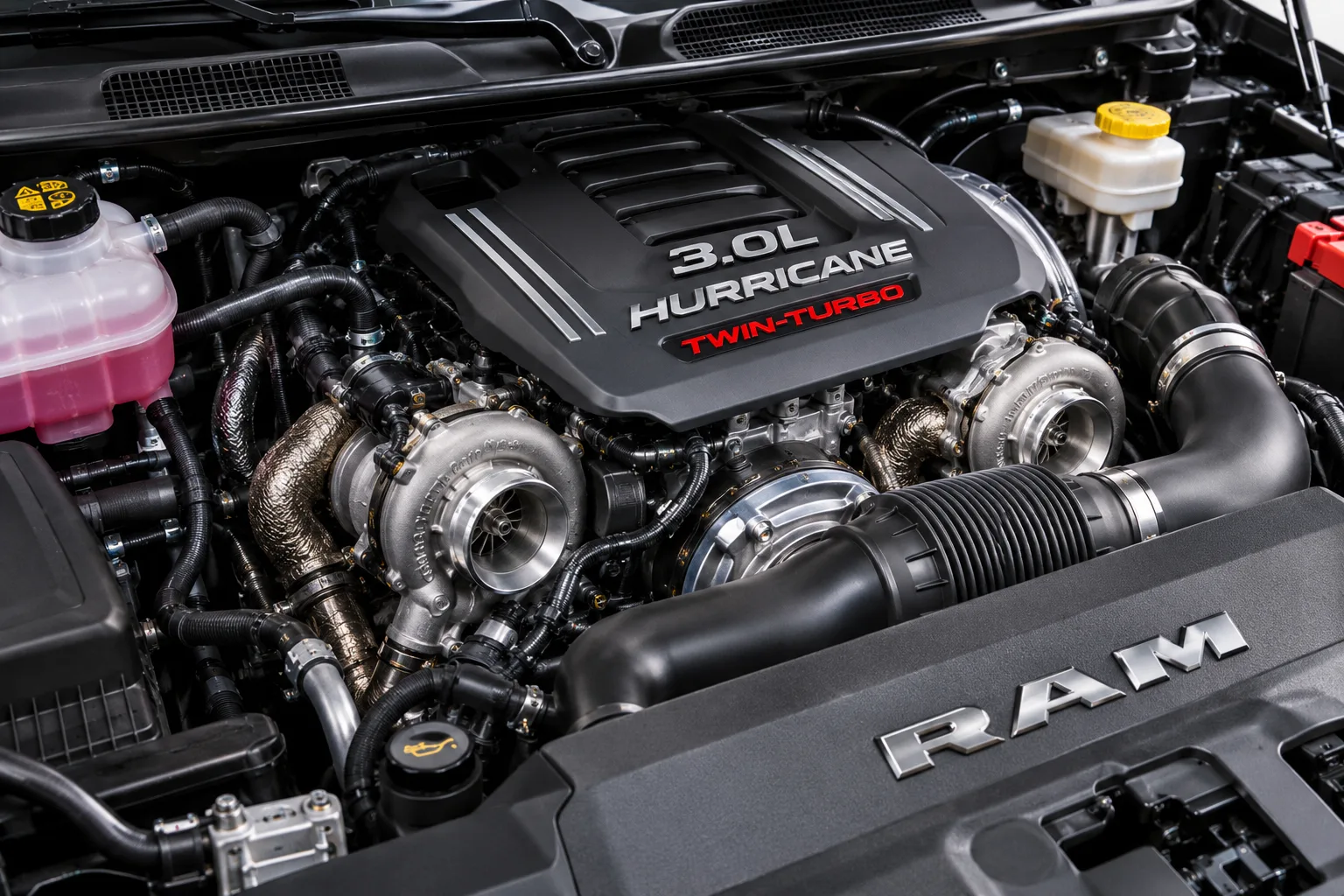
The Hurricane isn't a modified passenger-car motor adapted for light truck
duty. Engineered by Stellantis as a dedicated modular platform, it features a
deep-skirt cast-aluminum block, structural aluminum oil pan, cross-bolted steel
main bearing caps, and dual overhead camshafts with variable valve timing.
For the 2025 Ram 1500, Stellantis splits the Hurricane into two distinct
flavors:
1. Standard-Output
(SO): Delivers 420 horsepower and 469 lb-ft of torque. It comes
standard on high-volume trims like the Laramie and Rebel.
2. High-Output
(HO): Pushes 540 horsepower and 521 lb-ft of torque. It occupies the
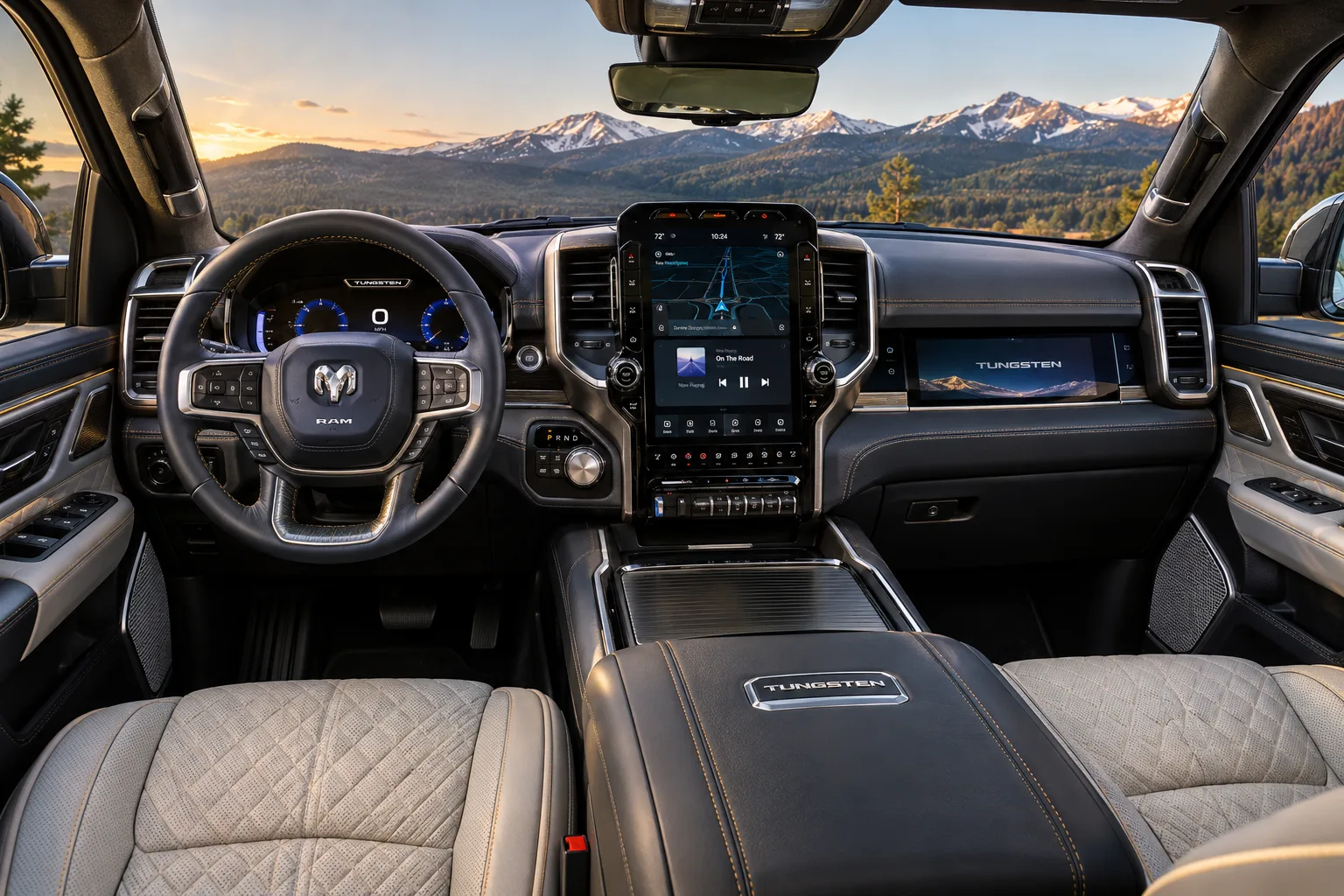
top tier, standard on the ultra-luxury Tungsten and off-road RHO.
For perspective, the outgoing naturally aspirated 5.7L HEMI wheezed out 395
horsepower and 410 lb-ft of torque. The Standard-Output Hurricane beats it by
25 horses and nearly 60 lb-ft. The High-Output blows it into another postal
code.
On asphalt, the difference is immediate. In independent instrumental
testing, a Standard-Output Ram 1500 sprints from zero to 60 mph in roughly 4.8
seconds. The 540-hp High-Output variant stops the clock at a ridiculous 4.2 seconds.
The old HEMI took six full seconds to complete the same task. The Hurricane
makes passing loaded semi-trucks on two-lane highways effortless; the twin
small-inertia Garrett turbos spool quickly, delivering peak torque as low as
2,500 rpm.
The Dirty Little Secret: The Missing 1,200 Pounds of Towing
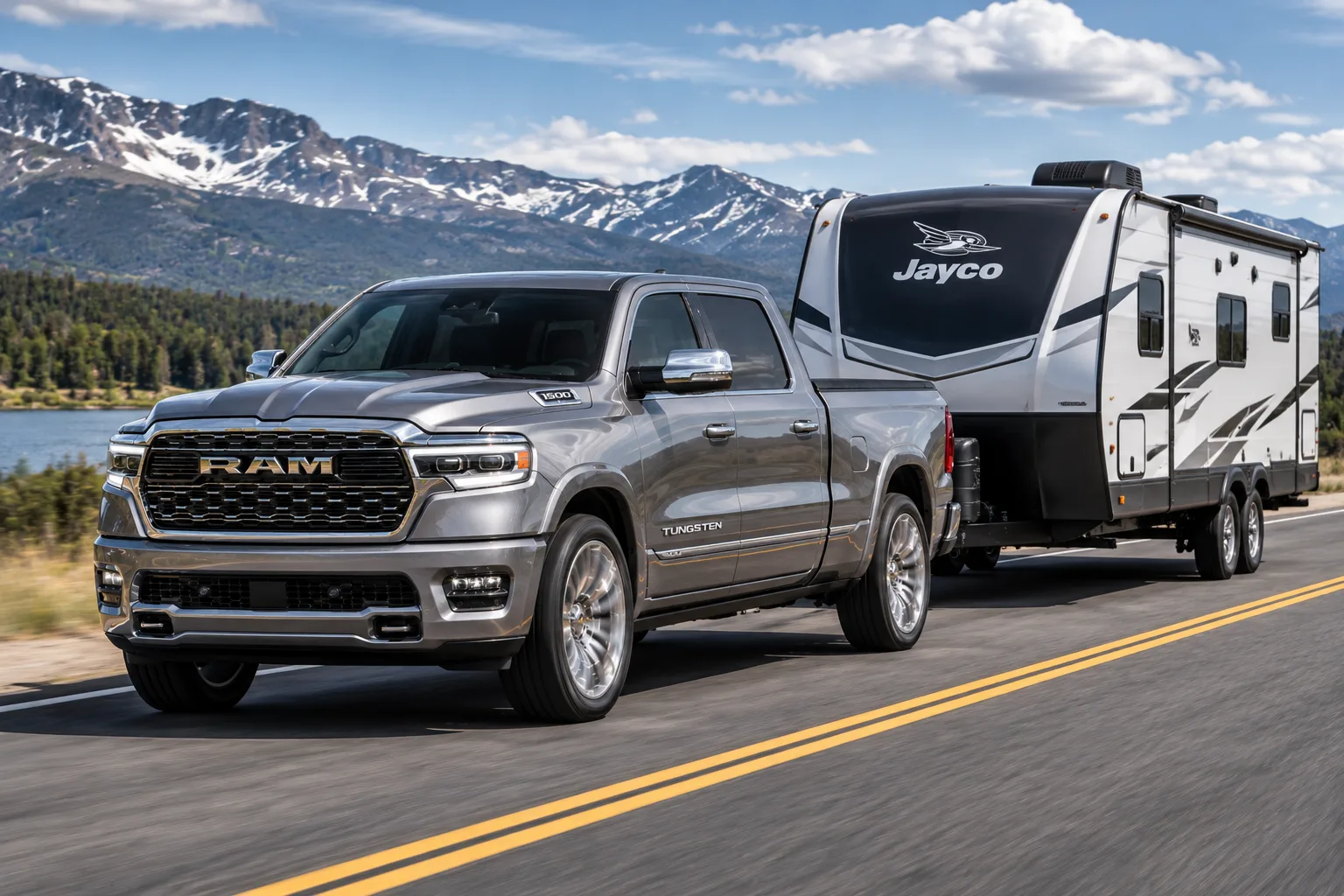
Read the glossy manufacturer brochures, and you would think the Hurricane
does everything better. Dig into the gross vehicle weight and trailering
charts, however, and a different story emerges.
The final iteration of the 5.7L HEMI V8 boasted a maximum tow rating of 12,750
pounds and hauled up to 2,300 pounds of payload when
properly equipped.
With the 2025 redesign, the maximum tow rating for the Hurricane
Standard-Output drops to 11,550 pounds—a direct loss of 1,200
pounds of pulling capacity. Payload similarly shrinks to 1,980 pounds.
Step up to the 540-horsepower High-Output engine, and towing drops further to 9,920
pounds, while payload plummets to 1,520 pounds.
Why does an engine with 540 horses tow less than an old 395-hp V8?
Weight and heat. The high-output powertrain components, extensive cooling
plumbing, intercoolers, and the heavy luxury hardware standard on upper trims
eat into the truck's Gross Combined Weight Rating (GCWR). While an 11,500-lb
limit is more than sufficient for weekend boaters and travel trailers, owners
who operate near the ceiling of half-ton capability will notice the downgrade
immediately.
The Octane Catch: Real-World Operating Costs
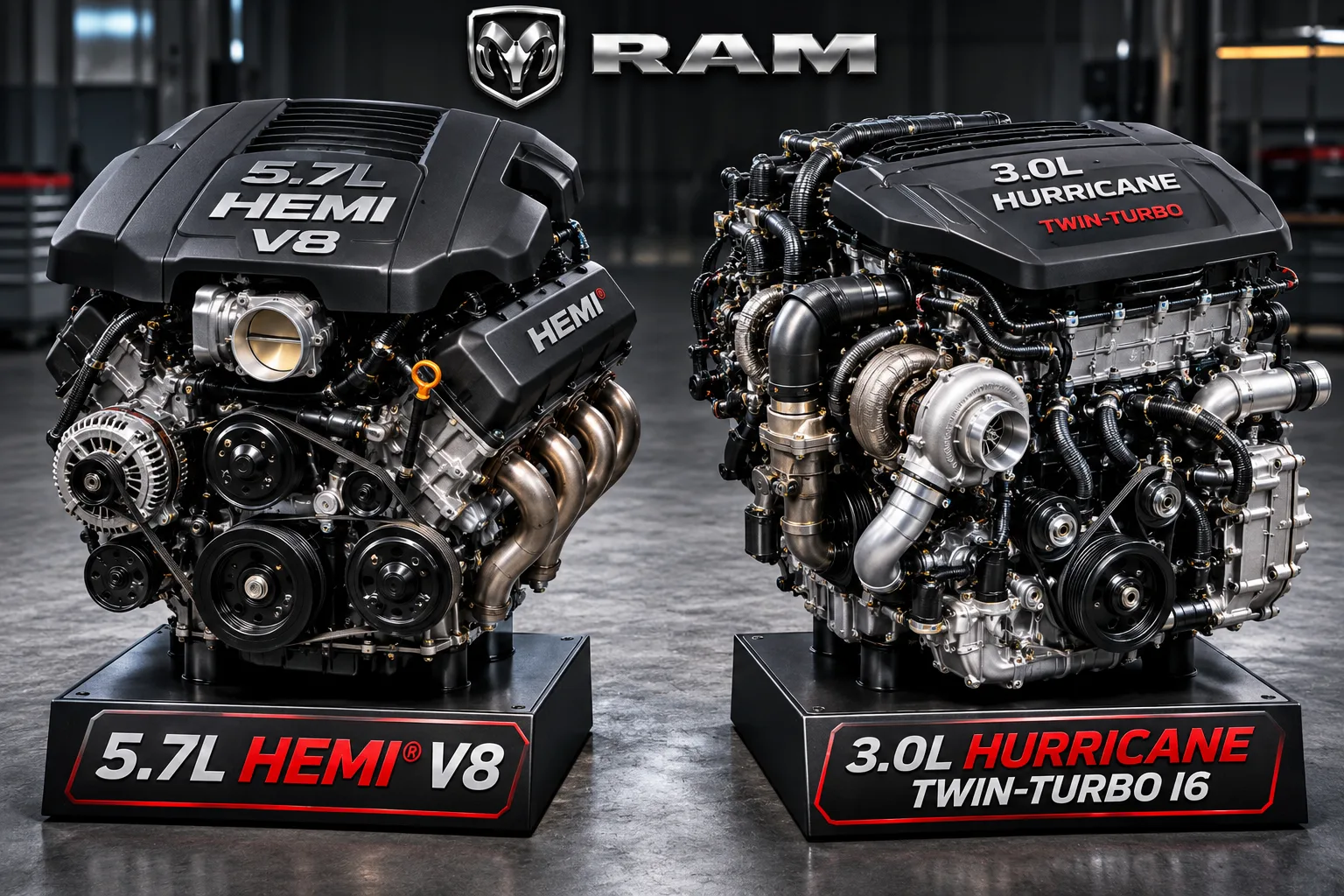
Stellantis touts the Hurricane’s efficiency, and the EPA ratings look
respectable:
·
Hurricane SO (4WD): 17 mpg City
/ 24 mpg Highway / 19 mpg Combined
·
Outgoing HEMI eTorque (4WD): 15
mpg City / 21 mpg Highway / 17 mpg Combined
A gain of 2 to 3 mpg on the highway is meaningful on cross-country road
trips. But forced induction comes with an asterisk that rarely makes the
showroom window sticker: Octane sensitivity.
To achieve its advertised 420 horsepower and fuel efficiency targets, the
Hurricane is tuned specifically for 91-octane premium fuel.
While the engine management computer can retard ignition timing to run on
87-octane regular without mechanical damage, doing so strips roughly 10% of
your peak power and blunts throttle response.
If premium fuel costs $0.70 to $0.90 more per gallon in your region, that
minor 2-mpg highway improvement evaporates at the pump. Furthermore, turbo
engines drink fuel aggressively when under heavy boost. Hook up an 8,000-pound
box trailer against a prairie headwind, and that 3.0-liter straight-six will
burn through fuel just as thirsty as any V8 ever did.
Simplicity vs. Thermal Stress: The Reliability Dilemma
Here lies the primary source of owner friction.
The 5.7-liter HEMI was far from perfect. It was notorious for exhaust
manifold bolt shears and occasional lifter tap if idled excessively. But it was
fundamentally a simple, cast-iron pushrod V8 with a single camshaft in the
block. Virtually every independent mechanic between Maine and California can
rebuild one with basic hand tools, and replacement parts are plentiful.
The Hurricane represents a massive leap in underhood complexity:
·
Twin water-cooled turbochargers generating up to
26 psi of boost on the HO.
·
Dual water-to-air charge coolers with dedicated
low-temperature cooling circuits.
·
High-pressure direct-injection operating at
5,075 psi (350 bar).
·
Miles of high-pressure vacuum lines, electronic
sensors, and electronic wastegates.
Extreme heat is the enemy of long-term durability. Cramming twin turbos into
a working engine bay generates thermal soak that tests gaskets, plastic
fittings, wiring harnesses, and coolant hoses over a decade of heat cycles. For
fleet managers and blue-collar owners who hold trucks past the 150,000-mile
mark, that complexity introduces legitimate anxiety.
Behind the Wheel: How It Drives vs. What You Hear
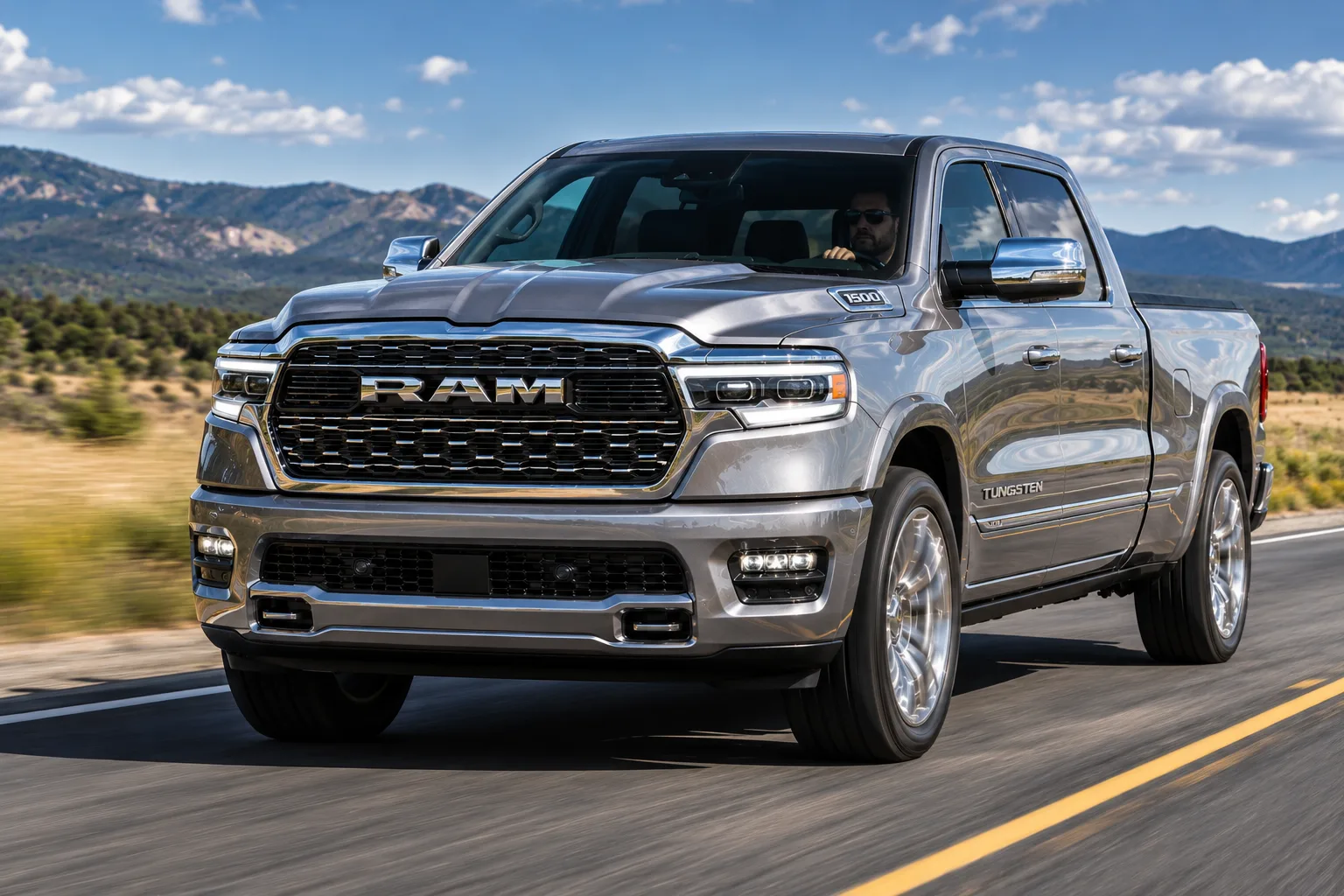
Drive the 2025 Ram 1500 back-to-back with a 2024 model, and the chassis
refinement is undeniable. The inline-six configuration possesses perfect
primary and secondary mechanical balance. It revs without the coarse vibrations
of a V6 or the heavy reciprocating mass of a big V8.
The cabin is library-quiet at 75 mph. Gear hunting is virtually absent
because the low-rpm torque shelf allows the 8-speed automatic transmission to
hold higher gears effortlessly on moderate highway grades.
What is missing is visceral theater.
The 5.7 HEMI had a rich, brassy idle that turned into a mechanical roar when
you floored it. The Hurricane, by contrast, emits a refined, muted turbine hiss
accompanied by faint wastegate whooshes. It sounds European—more like a BMW
sports sedan than an American work truck. To some, that is sophisticated
progress. To the driver wearing work boots who loved warming up their V8 on a
freezing morning, it feels sterile.
2025 Trim Breakdown: Where Does the Value Lie?
|
Trim Level |
Starting MSRP
(Approx.) |
Standard Engine |
The Verdict |
|
Tradesman |
$40,275 |
3.6L Pentastar V6 |
Pure fleet special. Vinyl floors, steel wheels, honest
work utility. |
|
Big Horn / Lone Star |
$45,230 |
3.6L V6 (Hurricane Opt.) |
The volume seller. Option the Hurricane SO here for the
best balance of price and muscle. |
|
Laramie |
$60,030 |
3.0L Hurricane SO (420 hp) |
The sweet spot. Heated/ventilated leather, 12-inch screen,
standard twin-turbo power. |
|
Rebel |
$64,440 |
3.0L Hurricane SO (420 hp) |
Off-road focused. 1-inch lift, rear locker, aggressive
aesthetics. |
|
Limited |
$75,450 |
3.0L Hurricane HO (540 hp) |
Executive hauler. Genuine open-pore wood, air suspension,
effortless high-output thrust. |
|
Tungsten |
$87,320 |
3.0L Hurricane HO (540 hp) |
Full luxury. 24-way massaging seats, 23-speaker Klipsch
audio, leather headliner. |
VehicleDrugs Editorial Take: Who Should Buy, and Who Should Walk Away?
Who the 2025 Ram 1500 Suits:
·
The Daily Commuter & Highway
Cruiser: If your truck spends 85% of its time unladen on the
interstate, the Hurricane’s refined cabin, smooth power delivery, and
effortless passing speed make it the best-driving half-ton on the market today.
·
Tech and Performance Enthusiasts:
If you value blistering 4.2-second 0–60 times and cutting-edge digital cockpits
over retro exhaust rumble, the High-Output Hurricane makes the outgoing TRX
feel like a dinosaur.
Who Should Hunt for a Leftover 2024 HEMI:
·
The Heavy Hauler: If you
routinely tow near the 12,000-lb threshold, the older HEMI gives you structural
margin and pulling headroom that the 2025 simply cannot match.
·
The 10-Year / 200,000-Mile Owner:
If you keep trucks long after the factory powertrain warranty expires and
handle your own maintenance in the driveway, the simpler naturally aspirated
pushrod V8 remains the safer long-term bet.
·
The V8 Purist: If an exhaust
rumble is non-negotiable, do not buy this truck hoping an aftermarket muffler
will fix it. You cannot make an inline-six sound like a small-block V8.
Frequently Asked Questions
Why did Ram discontinue the 5.7L HEMI V8?
Stellantis retired the 5.7L HEMI primarily to comply with tightening federal
Corporate Average Fuel Economy (CAFE) standards and global carbon emission
mandates. The 3.0L Hurricane inline-six produces significantly lower greenhouse
emissions while delivering higher horsepower and torque outputs.
Can the 2025 Ram 1500 Hurricane run on regular 87-octane gas?
Yes. The Standard-Output (420 hp) Hurricane can run on 87-octane unleaded
without knocking. However, the engine’s electronic control unit will retard ignition
timing, causing a drop of roughly 10% in horsepower and a slight decrease in
fuel efficiency. The 540-hp High-Output variant strictly recommends 91-octane
or higher.
Does the Hurricane inline-six tow more than the old HEMI?
No. Despite having more horsepower and torque, the 2025 Ram 1500 max tow
rating is 11,550 lbs with the Hurricane Standard-Output and 9,920 lbs with the
High-Output. Both are lower than the outgoing 5.7L HEMI's maximum capacity of
12,750 lbs.
Sources
1. Title:
2025 Ram 1500 Drops Hemi V8 for High-Tech Hurricane Twin-Turbo Inline-Six
Publisher: Car and Driver
URL: https://www.caranddriver.com/news/a45749386/2025-ram-1500-hurricane-engine-specs/
Date: November 2024
2. Title:
2025 Ram 1500 Official Specifications and Technical Guide
Publisher: Stellantis North America Media
URL: https://media.stellantisnorthamerica.com
Date: Official Manufacturer Release
3. Title:
2025 Ram 1500 In-Depth Review, Trims, and Pricing
Publisher: Edmunds Automotive
URL: https://www.edmunds.com/ram/1500/2025/
Date: Late 2024
4. Title:
Tested: 2025 Ram 1500 Tungsten Hurricane High Output 0-60 & Highway MPG
Publisher: Car and Driver Instrumental Testing
URL: https://www.caranddriver.com/reviews/a60124901/2025-ram-1500-tungsten-test/
Date: 2024
Have thoughts, dyno data, or build feedback?
Join automotive enthusiasts in the paddock below to debate engineering, lap times, and modifications.
Community Pulse
How does this machine make you feel? Drop your reaction!

VehicleDrugs Editorial
VehicleDrugs Editorial Team
A passionate collective of automotive purists, track drivers, and mechanical engineers uncovering high-octane engineering breakthroughs worldwide.
🏁 Pit Crew Discussions
Drop your telemetry, debate the engineering, or talk track times with fellow petrolheads.
The Pit Lane is Quiet
Be the first driver to drop your opinion on this machine!