Geely Xingyao 6 Methanol Race Car: 250-HP Racing Sedan
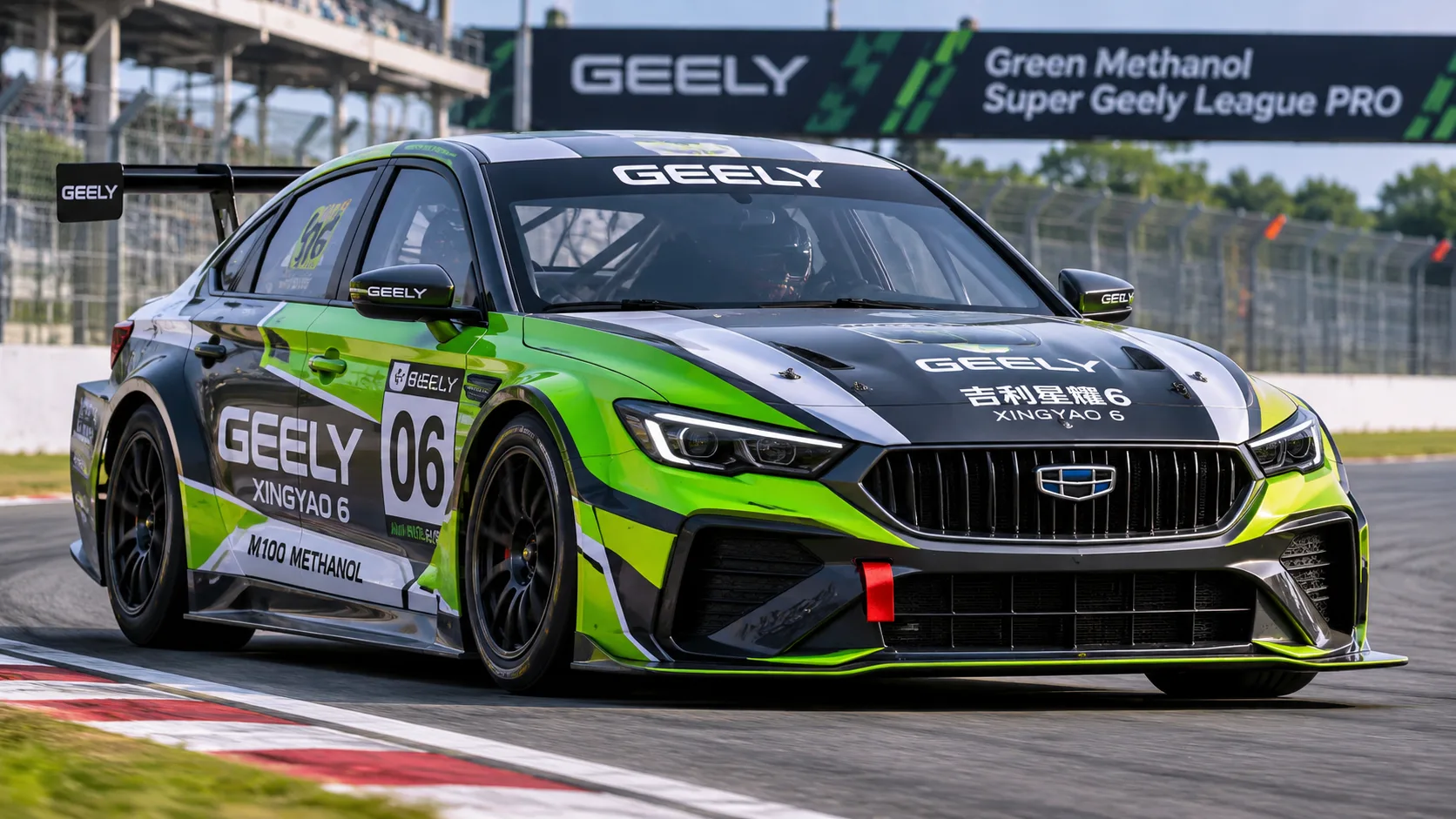
Geely's Xingyao 6 methanol race car produces around 250 hp and 400 Nm using M100 fuel. Explore its engine technology and new racing league.
HEAD-TO-HEAD MUSCLE CAR VS COMPARISON
Compare 0-60, peak horsepower, torque, and quarter-mile times across iconic builds.
Geely Unleashes a Methanol-Powered Race Car: Meet the 250-HP Xingyao 6 and Its New Racing League
Geely is taking an unconventional route into the future of motorsport. Instead of relying exclusively on battery-electric power, the Chinese automotive group is bringing methanol-powered internal-combustion technology to the racetrack with a dedicated race car and a new one-make touring car championship.
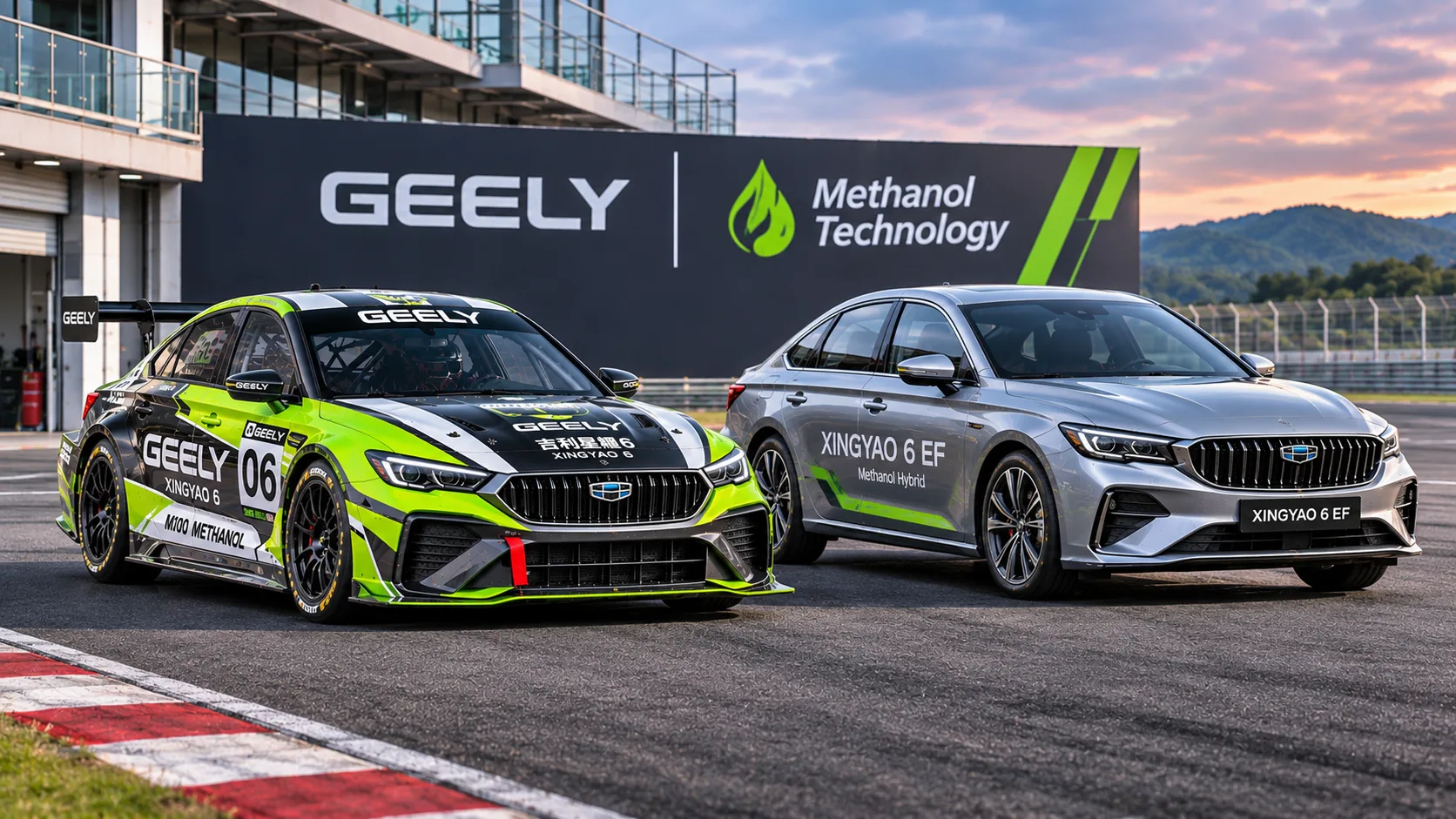
The centerpiece of the project is the Geely Xingyao 6 Green Methanol Racing Car, a track-focused machine powered by a DHE20TDM methanol engine. Designed to operate on M100 methanol fuel, the race car produces approximately 250 horsepower and 400 Nm of peak torque, while achieving reported thermal efficiency of more than 48%.
Announced on March 20, 2026, the project also introduced the Green Methanol Super Geely League PRO, a Chinese motorsport series intended to put the technology through the demands of competitive racing.
The project represents another step in Geely's broader multi-energy strategy, demonstrating that the company's motorsport ambitions extend beyond conventional gasoline engines and battery-electric vehicles.
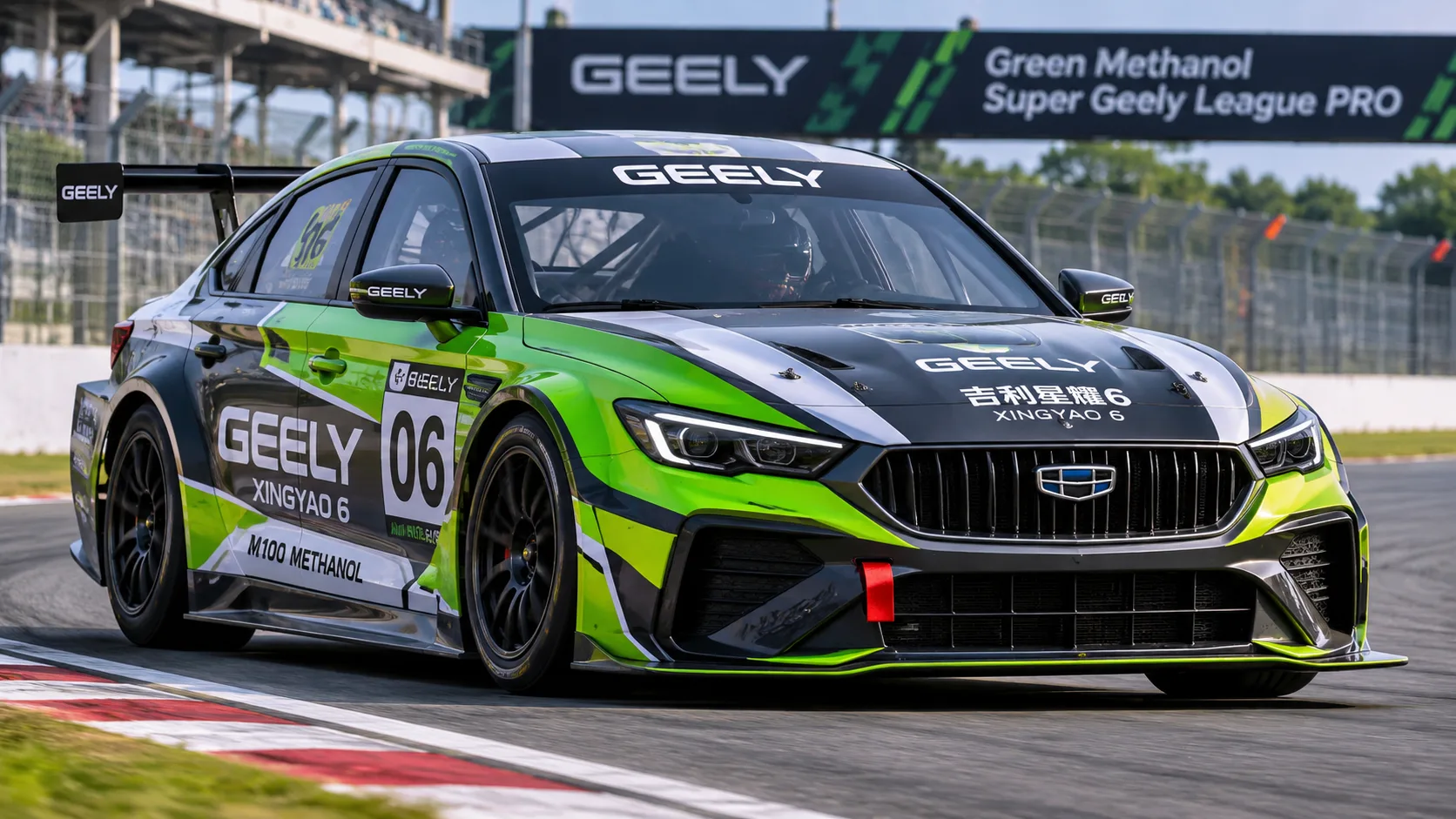
Geely Xingyao 6 Methanol Race Car: Quick Specs
| Specification | Details |
|---|---|
| Race car | Geely Xingyao 6 Green Methanol Racing Car |
| Engine | DHE20TDM methanol engine |
| Engine type | Internal combustion |
| Fuel | M100 methanol |
| Maximum power | Approximately 250 hp |
| Peak torque | 400 Nm |
| Reported thermal efficiency | Over 48% |
| Compression ratio | 15:1 |
| Racing championship | Green Methanol Super Geely League PRO |
| Racing format | One-make touring car series |
| Announcement date | March 20, 2026 |
| Market | China |
Specifications are based on Geely's announcement and published reporting. Detailed engine displacement, transmission ratios, vehicle weight and acceleration figures have not been confirmed in the cited reports.
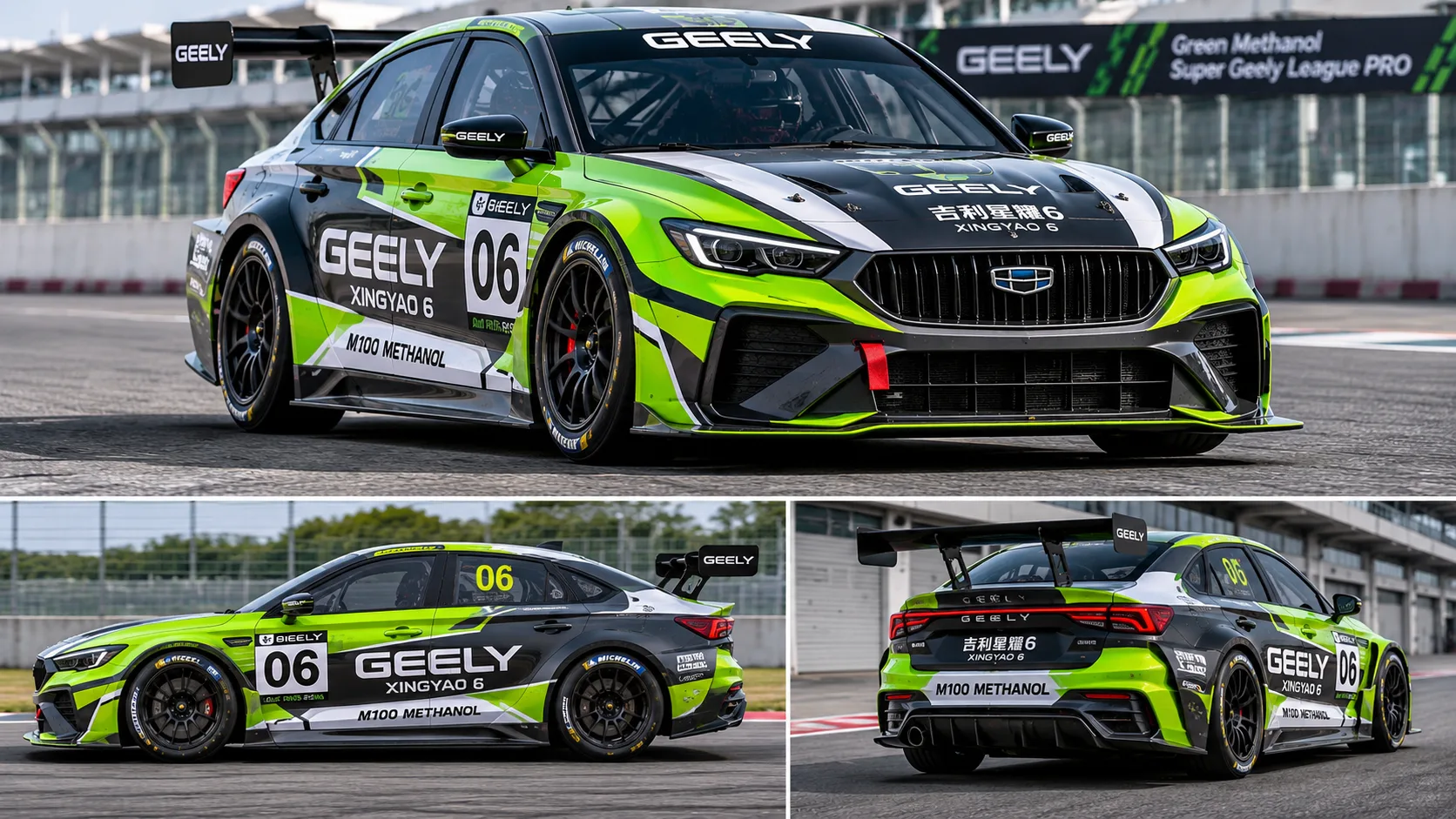
1. Geely Xingyao 6: A New Kind of Touring Race Car
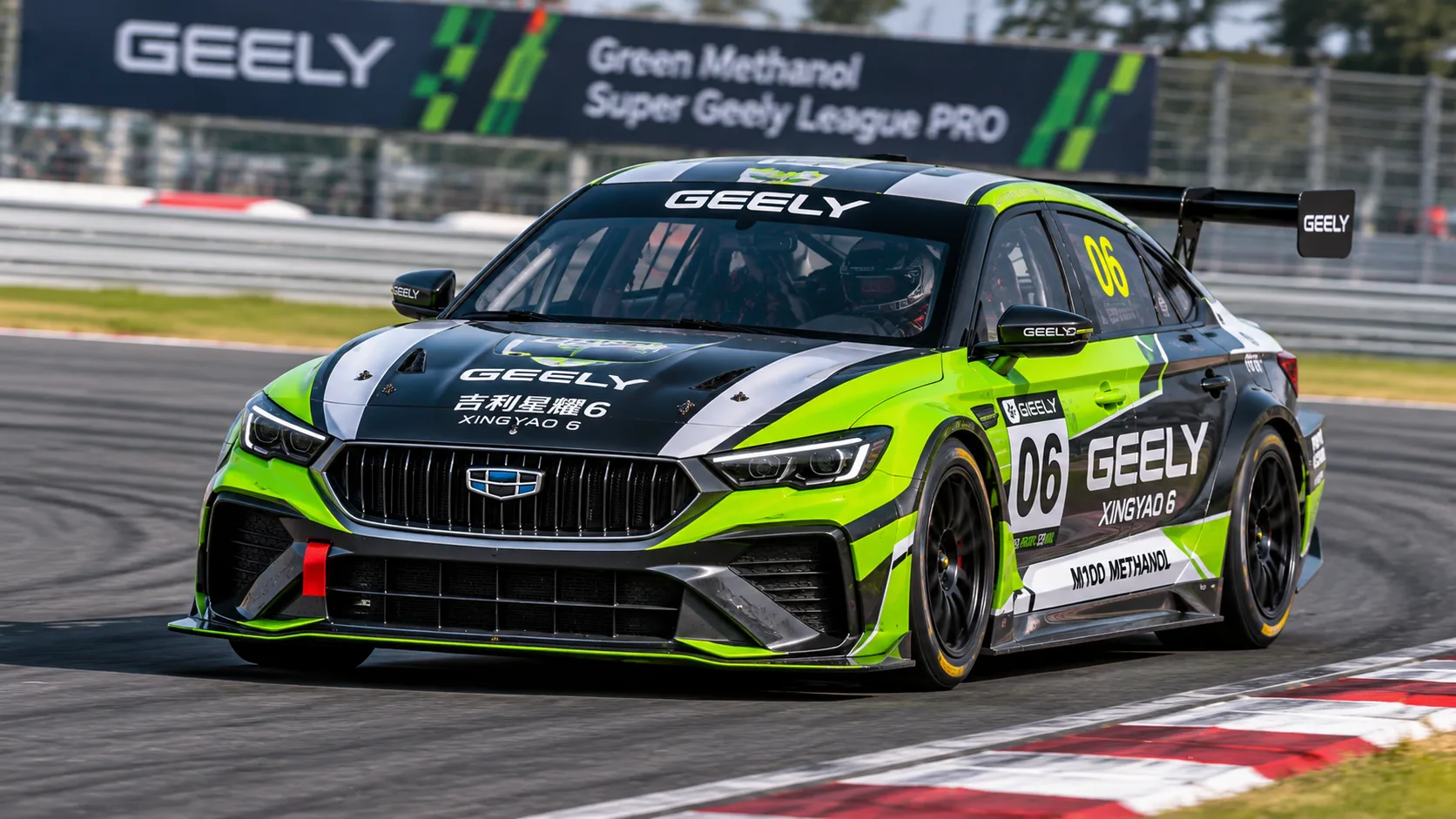
The Xingyao 6 is not simply a production sedan with racing graphics. It has been developed as a one-make competition vehicle for Geely's new methanol-powered racing championship.
Its most important distinction is the fuel and powertrain technology underneath the bodywork. Rather than using a conventional gasoline engine or a fully electric drivetrain, the car uses a dedicated methanol combustion engine designed for demanding track conditions.
Geely's decision to introduce methanol into a purpose-built racing application gives the company an opportunity to evaluate the fuel under sustained high-load operation, repeated acceleration and braking, and the demanding conditions of competitive motorsport.
The one-make format is also important. Competitors use the same fundamental vehicle specification, helping place greater emphasis on driver ability, race strategy and team execution rather than allowing unlimited differences in vehicle development.
For Geely, the Xingyao 6 is both a racing machine and a technology demonstration platform.
2. DHE20TDM Methanol Engine: Approximately 250 Horsepower
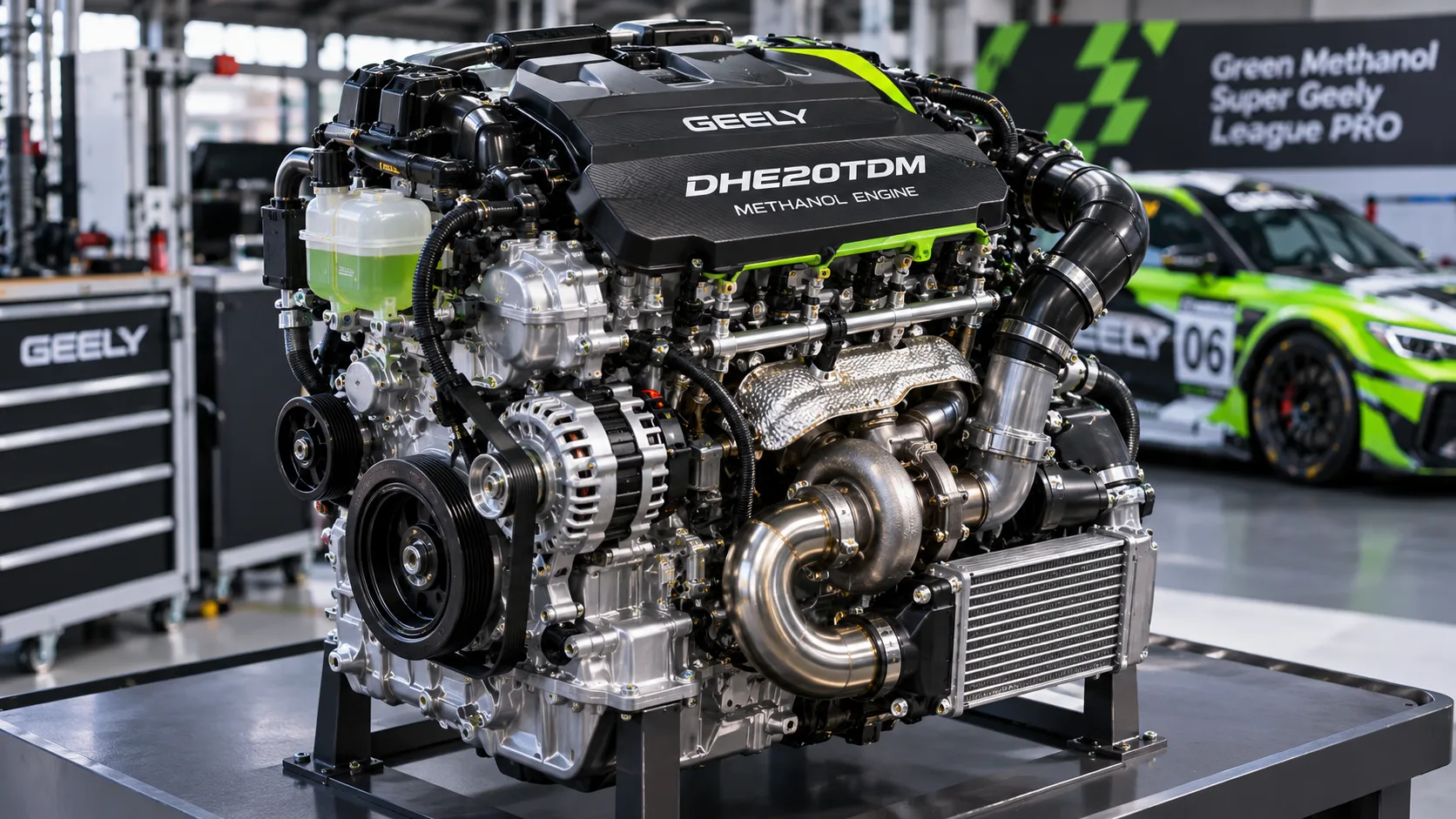
At the heart of the Xingyao 6 is the DHE20TDM methanol engine, developed by Geely and designed to operate using M100 methanol fuel.
Its published performance figures include approximately 250 horsepower and 400 Nm of peak torque.
Those numbers are particularly interesting because the engine is designed to operate on methanol rather than conventional gasoline. Geely is using its experience with methanol powertrains to demonstrate how alternative liquid fuels can be adapted for high-performance applications.
The engine's reported specifications include:
Engine: DHE20TDM methanol powertrain
Fuel compatibility: M100 methanol
Maximum output: Approximately 250 hp
Peak torque: 400 Nm
Thermal efficiency: More than 48%
Compression ratio: 15:1
The high thermal-efficiency figure is one of the most significant technical details. Thermal efficiency describes how effectively an engine converts the energy contained in fuel into useful mechanical work.
An efficiency figure exceeding 48% is a notable engineering achievement for a combustion powertrain. However, the published announcement does not provide a detailed independent test procedure or measurement conditions.
The reported 15:1 compression ratio is another important characteristic of the engine's design.
3. Why M100 Methanol Matters in Motorsport
M100 refers to methanol fuel in its essentially pure form, rather than a conventional gasoline-methanol blend.
For Geely, the decision to use M100 is central to the Xingyao 6 project. The company is using the race car to demonstrate how methanol can support a dedicated performance application rather than remaining limited to conventional road-going powertrain development.
Methanol has different combustion characteristics from gasoline. Its use requires an engine and fuel-delivery system designed around the properties of the fuel. That makes the DHE20TDM more than a conventional gasoline engine simply running on a different fuel.
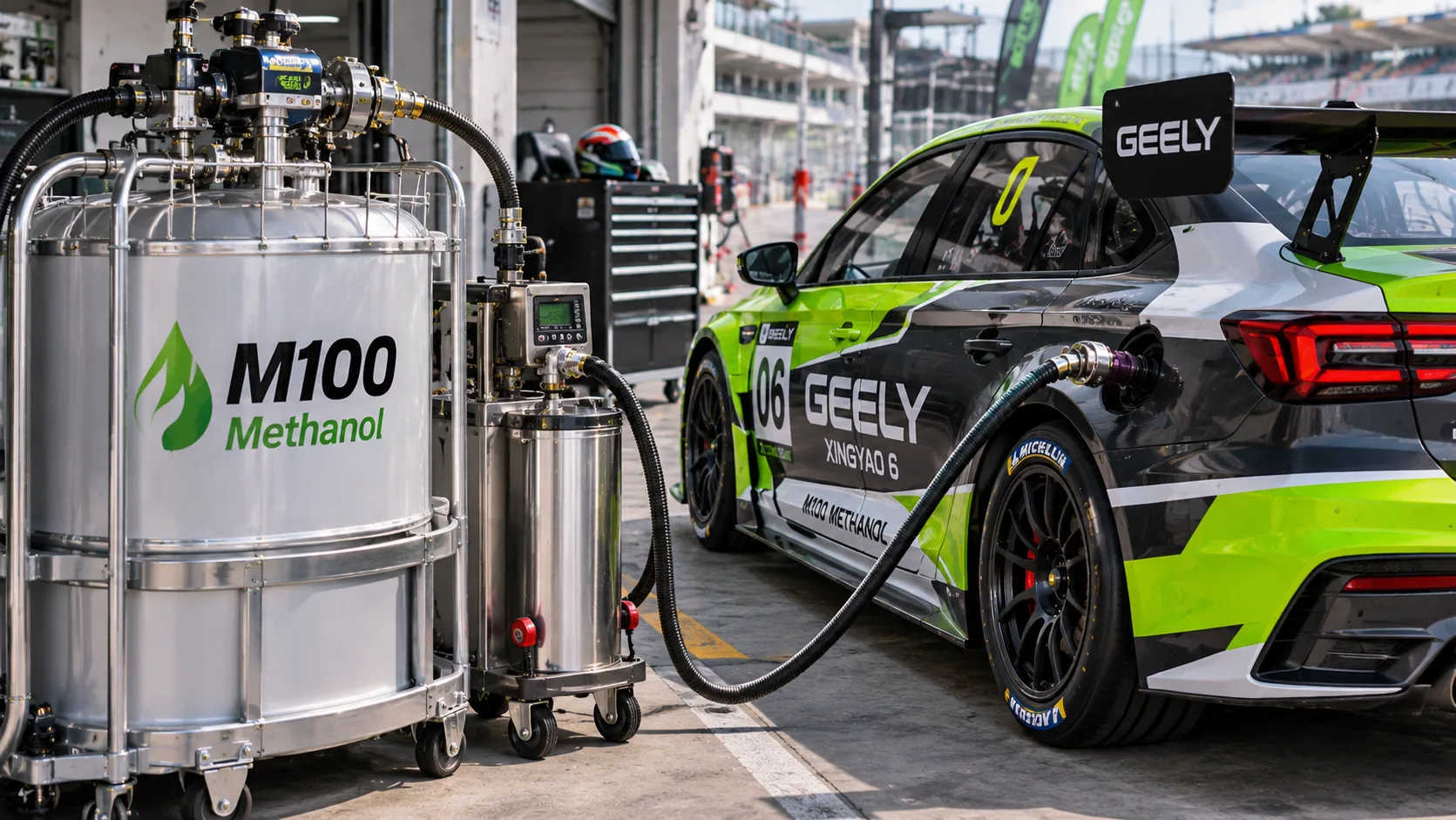
In racing, the fuel system must also cope with repeated high-load operation and the practical demands of service between sessions.
Geely's announcement highlights a rapid-refueling system intended to reduce turnaround times during tightly scheduled racing events. This is an important consideration in a championship environment, where minimizing time spent in the pits can help teams maintain operational efficiency.
Methanol also offers a different engineering route from battery-electric racing. A combustion-powered race car does not need the same large traction battery required by a high-performance electric vehicle. That changes the vehicle's packaging and weight-distribution considerations.
However, methanol should not automatically be described as a zero-emission or carbon-neutral fuel. Its overall environmental impact depends heavily on how the methanol is produced, the energy used in production and its wider supply chain. The environmental case for green methanol therefore depends on the fuel's actual production pathway.
4. Racing Performance Without a Large Battery Pack
One of the key differences between the Xingyao 6 and a battery-electric racing car is its powertrain architecture.
The Geely race car uses an internal-combustion engine and liquid fuel rather than a large traction battery and electric motors. This avoids the mass associated with a large battery pack and preserves the familiar mechanical character of a combustion-powered touring car.
That does not automatically make the Xingyao 6 lighter than every electric competitor. Actual vehicle weight depends on the complete engineering specification, including its safety equipment, chassis reinforcement, fuel system and other racing components.
Nevertheless, the absence of a large traction battery gives Geely a different set of packaging and weight-management opportunities.
The car also retains characteristics that traditional motorsport fans associate with combustion racing: engine sound, mechanical gear changes, pit-lane refueling and the familiar relationship between engine response and driver input.
Geely has not positioned the Xingyao 6 as a replacement for electric racing. Instead, it represents another approach to performance development within a motorsport environment that is increasingly exploring alternative energy technologies.
5. Green Methanol Super Geely League PRO: A New Racing Championship
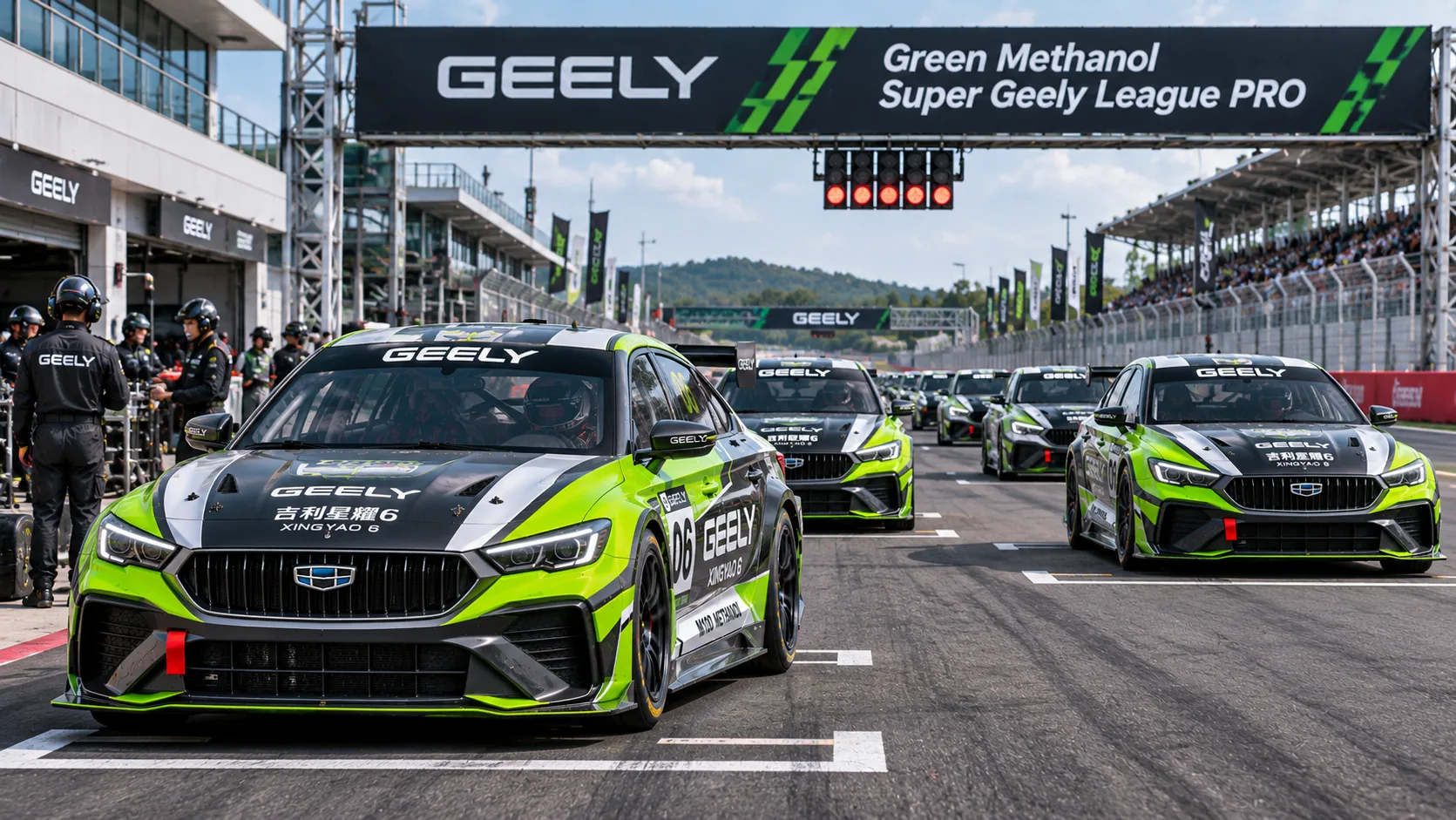
The race car is only one part of Geely's announcement. The company also introduced the Green Methanol Super Geely League PRO, a dedicated one-make touring car championship designed around the Xingyao 6.
The series aims to establish a professional racing platform in China, with a competitive ambition comparable to established touring-car championships such as TCR. This is a comparison of the intended competition level, not an indication that the series is officially part of TCR.
The one-make format gives teams access to a common vehicle platform. This helps create a more standardized competitive environment and allows drivers to demonstrate their abilities without the wide technical differences found in some open-development racing categories.
Geely's initial March 2026 announcement described a planned season of five rounds and ten races, with Chengdu, Zhuzhou, Wuhan and Ningbo among the named circuits.
However, a later 2026 calendar update described a revised schedule of three rounds and six races, including Guangdong International Circuit, Chengdu Tianfu International Circuit and Xiamen International Circuit. The original five-round announcement should therefore be treated as the initial plan rather than the latest published calendar.
The championship is intended to do more than provide entertainment. It creates a structured environment in which the methanol-powered race car can be operated, evaluated and developed under competitive conditions.
6. How the Project Fits Geely's Wider Motorsport Strategy
Geely's methanol racing program is part of a much broader motorsport strategy.
The group has established an international presence through its Lynk & Co Cyan Racing program, which began its Lynk & Co touring-car partnership in 2019 and achieved multiple championship titles.
Cyan Racing's official history records major touring-car championship successes with Lynk & Co, including the 2025 FIA TCR World Tour drivers' and teams' titles.
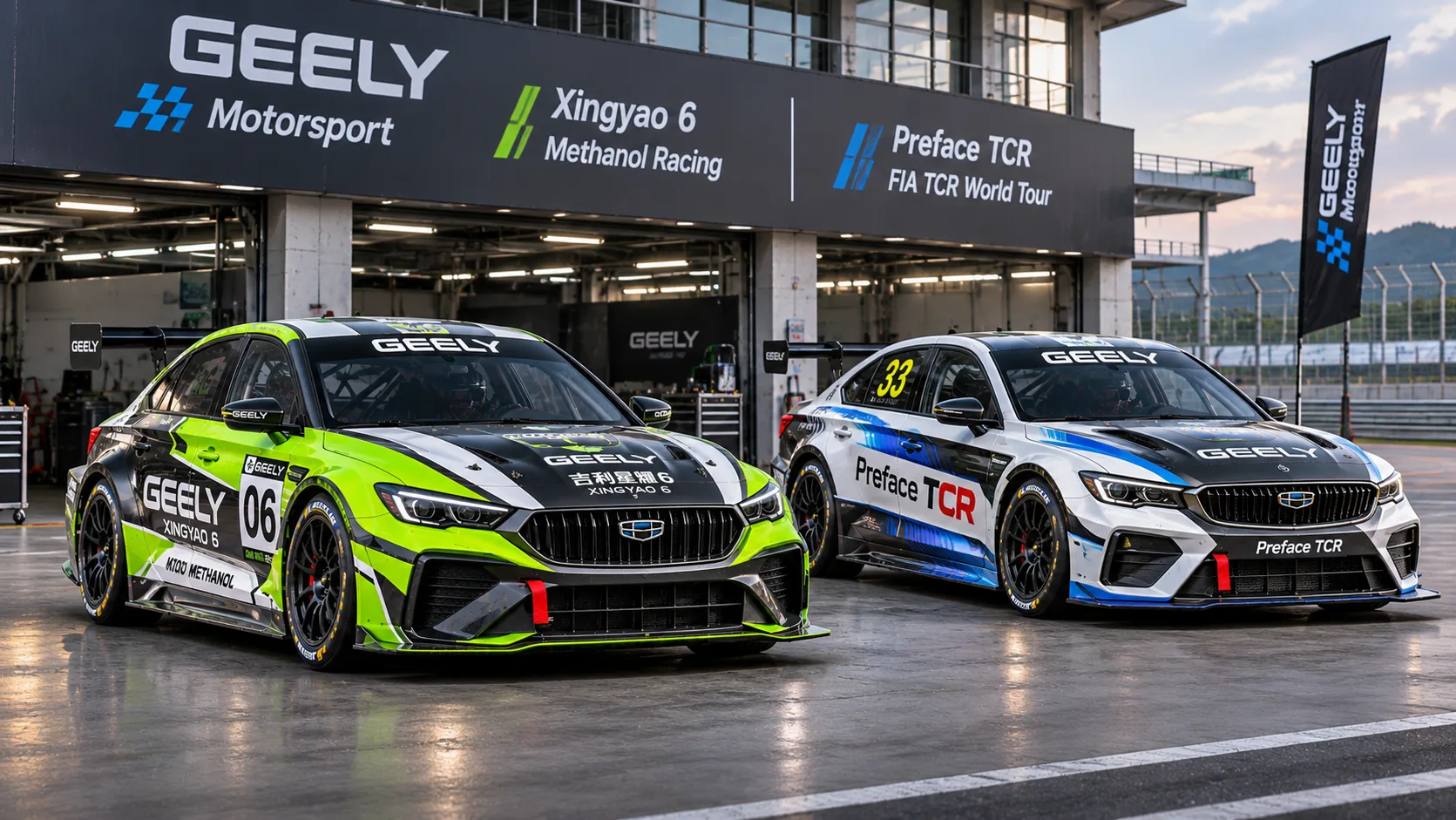
In November 2025, Cyan Racing also announced a new chapter with Geely for 2026, including development of the Geely Preface TCR race car for the FIA TCR World Tour.
The Xingyao 6 methanol project is a separate domestic one-make racing initiative. It should not be confused with the Geely Preface TCR international racing program.
These activities demonstrate how Geely is developing different motorsport platforms for different purposes.
The new methanol championship creates opportunities for drivers, teams and technical personnel to gain experience in a dedicated competition environment.
The connection between a manufacturer's racing activities and its road-car technology is not always direct. However, motorsport can provide valuable opportunities to test components, study high-load operating conditions and develop engineering experience.
For Geely, the methanol project adds another dimension to its existing racing activities.
7. Methanol, Hybrid and Electric: Geely's Multi-Energy Approach
The Xingyao 6 is particularly interesting because it highlights Geely's willingness to pursue several powertrain technologies rather than concentrating exclusively on one solution.
The company's broader strategy includes battery-electric vehicles, hybrid systems, efficient combustion engines and methanol technology.
Each approach serves a different purpose and presents different engineering challenges.
Battery-electric powertrains offer immediate motor response and eliminate tailpipe combustion emissions during driving. Hybrid systems combine electric assistance with an internal-combustion engine. Conventional combustion engines remain widely used, while methanol provides another liquid-fuel pathway that can be explored through dedicated engine development.
In November 2026, Geely also announced new methanol-hybrid technology and introduced the Xingyao 6 EF in China. This road-going hybrid application is separate from the Xingyao 6 racing car.
The environmental performance of methanol depends on its production. Methanol produced using renewable energy and suitable low-carbon feedstocks can offer a different emissions profile from methanol produced using conventional fossil-based processes.
That distinction matters when evaluating Geely's green-methanol ambitions. The fuel itself does not guarantee a low-carbon outcome; the production process is a critical part of the equation.
By bringing methanol into motorsport, Geely is creating a visible platform for developing and demonstrating this alternative energy pathway.
8. Could Methanol Become a Bigger Part of Future Motorsport?
The Xingyao 6 raises an interesting question for the future of racing: could methanol-powered combustion engines become a more significant part of motorsport's alternative-fuel landscape?
The answer will depend on several factors.
Fuel availability, production costs, infrastructure, engine durability, safety requirements and the overall carbon footprint will all influence whether methanol racing can expand beyond a dedicated championship.
The technology also needs to demonstrate its competitiveness over an entire racing season. Peak horsepower and thermal efficiency are important, but endurance, reliability, refueling performance and operating costs are equally important in a real competition environment.
Geely's new series provides an opportunity to collect experience in these areas.
Rather than treating methanol as a theoretical alternative, the company is putting the technology into a structured racing environment where performance and reliability can be evaluated under demanding conditions.
The longer-term significance of the project will depend on how successfully Geely develops the championship and whether the experience gained can support wider applications.
Final Verdict: Geely Is Giving Methanol a New Role in Modern Motorsport
The Geely Xingyao 6 is an unusual addition to the modern motorsport landscape. Its DHE20TDM methanol engine, M100 fuel compatibility, output of approximately 250 horsepower and 400 Nm of torque, and reported thermal efficiency exceeding 48% make it an interesting technical project.
More importantly, Geely is supporting the car with a dedicated one-make racing championship rather than presenting it as a standalone concept.
The Green Methanol Super Geely League PRO gives the company a platform to explore alternative-fuel performance, develop motorsport talent and demonstrate its multi-energy engineering strategy.
It is not a declaration that methanol will replace gasoline or battery-electric racing. Instead, it shows that the future of automotive performance may involve more than one powertrain solution.
For a company already active in electric vehicles, hybrids and international touring-car competition, the Xingyao 6 represents another ambitious step.
Geely is taking methanol from fuel-development programs to the racetrack—and the results could make this one of the more interesting alternative-fuel motorsport projects to watch.
Frequently Asked Questions
What is the Geely Xingyao 6 methanol race car?
It is a dedicated one-make touring race car developed by Geely and powered by the DHE20TDM methanol engine.
How much horsepower does the Geely Xingyao 6 race car produce?
Published reports describe approximately 250 horsepower and 400 Nm of peak torque from its methanol-powered engine.
What fuel does the Geely methanol race car use?
The car is designed to run on M100 methanol, a fuel consisting essentially of methanol rather than a conventional gasoline blend.
What is the thermal efficiency of the Geely methanol engine?
Geely's reported figure is more than 48%. The public announcement does not provide a detailed independent test procedure.
What is the Green Methanol Super Geely League PRO?
It is a one-make touring car championship introduced alongside the Xingyao 6 methanol race car. Its original 2026 plan was later updated in published calendar information.
Is methanol racing carbon-neutral?
Not automatically. Methanol's lifecycle emissions depend on its production method. Renewable green methanol may offer lower lifecycle emissions, but its environmental benefits depend on the energy and feedstocks used to produce it.
Is Geely's methanol race car coming to the United States?
The available announcement describes a Chinese racing initiative. No confirmed US launch or US racing program has been announced in the sources cited here.
Sources
Gasgoo – Geely brings methanol power to motorsport with new race car and series, March 20, 2026.
https://autonews.gasgoo.com/articles/ev/geely-brings-methanol-power-to-motorsport-with-new-race-car-and-series-2034896568497373185IT Home – Geely unveils its first green methanol race car, March 20, 2026.
https://www.ithome.com/0/930/946.htmRace24 Asia – Geely launches a methanol-based one-make racing series and 2026 season information.
https://www.race24.asia/en-us/articles/41885Cyan Racing – Official racing history and Lynk & Co championship record.
https://www.cyanracing.com/discoverCyan Racing – Lynk & Co Cyan Racing claims double FIA TCR World Tour titles, November 16, 2025.
https://www.cyanracing.com/cn/news/2025/11/16/lynk-and-co-cyan-racing-claims-double-fia-tcr-world-tour-titles-as-most-successful-tcr-team-everCyan Racing – New chapter with Geely in FIA TCR World Tour from 2026.
https://www.cyanracing.com/newsGeely Auto Group – Geely launches methanol hybrid technology and the Xingyao 6 EF, November 3, 2026.
https://www.geelyautogroup.com/en/media/20261103/
Editorial note: The technical specifications and initial championship announcement are attributed to published reporting. The later calendar update is distinguished from the original plan. Environmental benefits of methanol depend on its production pathway and should not be assumed without lifecycle evidence.
Have thoughts, dyno data, or build feedback?
Join automotive enthusiasts in the paddock below to debate engineering, lap times, and modifications.
Community Pulse
How does this machine make you feel? Drop your reaction!

VehicleDrugs Editorial
VehicleDrugs Editorial Team
A passionate collective of automotive purists, track drivers, and mechanical engineers uncovering high-octane engineering breakthroughs worldwide.
🏁 Pit Crew Discussions
Drop your telemetry, debate the engineering, or talk track times with fellow petrolheads.
The Pit Lane is Quiet
Be the first driver to drop your opinion on this machine!